This subject punishes readers who start in the middle. The Great Leap Forward was not a single policy but the collision of collectivisation, backyard steel production, grain requisitioning and a political culture in which reporting bad news was dangerous. Drop into a famine narrative without the preceding decade and the catastrophe reads as inexplicable cruelty rather than as the outcome of a system.
There is a second reason to read in sequence. The death toll is genuinely contested — published estimates range from roughly fifteen million to forty-five million — and so are the methods used to reach them. The historians on this list disagree with each other in print, sometimes sharply, about archives, sampling and what the demographic record can support. A reading order that puts the general histories first lets you assess those arguments instead of absorbing whichever one you happened to read first.
Start with the wider frame
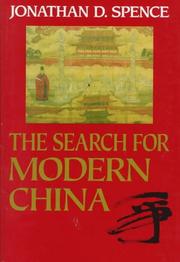
The search for modern China is Jonathan D. Spence's survey from the late Ming to the twentieth century, and it is the book that gives everything else a place to sit. It is long. Read the chapters on the 1949 revolution onward first and treat the rest as reference.
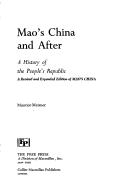
Mao's China and after is Maurice J. Meisner's political history of the People's Republic, written from a scholarly left position that takes the revolution's stated aims seriously while documenting what they produced. It is the best account of the internal party politics that made the Leap possible.
The famine itself
Hungry ghosts is Jasper Becker's 1996 book, the first sustained account in English and still the most readable entry into the subject.
Mao's great famine is Frank Dikötter's archive-based study, which put the figure at a minimum of forty-five million and argues for a substantial share of violent rather than purely starvation deaths. It is the most cited book on the famine and its methodology has drawn serious criticism from other historians, particularly over how provincial archive figures were extrapolated. Read it, and read the criticism as part of the subject rather than as noise.
Tombstone is the essential counterpart: Yang Jisheng, a Xinhua journalist whose own father starved, spent years gathering internal party documents and arrived at roughly thirty-six million. It is banned in mainland China and remains the most detailed account from inside the system.
The primary and the personal
Fanshen sits deliberately out of chronological place. William Hinton documented land reform in a single village in the late 1940s from a committed sympathetic position, before the famine and before most of what followed. Read it as a primary document of what the revolution looked like to a believer at village level; it is not a corrective to the famine books and it was never meant to be.
The private life of Chairman Mao is the memoir of Mao's physician, Li Zhisui, and one of the few close-range portraits available. Some who worked in the same circles have disputed parts of it, and it is worth reading with that flagged.
Mao's War against Nature is Judith Shapiro on the environmental logic of the period — the campaigns against sparrows, the deforestation, the belief that nature was an enemy to be defeated. It explains mechanisms the political histories leave implicit.
What came next
The Origins of the Cultural Revolution is Roderick MacFarquhar's multi-volume study of how the failure of the Leap led directly to the upheaval of 1966. The cultural revolution is Dikötter completing his trilogy, of which The tragedy of liberation covers the early 1950s and is worth reading before the famine volume if you want his argument in full.
Close with Wild Swans. Jung Chang's family memoir across three generations is not a work of history and does not pretend to be, but it does what no archive study can, which is give the period a shape a reader can hold.
Follow the full path below for the sequence in order.
Follow the full ordered path here: The Great Leap Forward and the Great Famine: Books in Reading Order.