Aldous Huxley Reading Order: Where to Start
This curriculum traces Aldous Huxley's full intellectual arc — from sharp-tongued social satirist to visionary mystic — in four carefully sequenced stages. Each stage builds the thematic and stylistic vocabulary needed for the next, so that by the end the reader can see how one restless mind moved from wit to wonder.
The Satirist Arrives
BeginnerGet comfortable with Huxley's voice, wit, and early preoccupations — class, intellectualism, and the absurdity of modern life — through his most accessible fiction.
▸ Study plan for this stage
Pace: 4–5 weeks total: Weeks 1–2 for Crome Yellow (~20–25 pages/day, it's short at ~200 pages), Weeks 3–5 for Antic Hay (~20–25 pages/day across its ~250 pages), leaving a few days at the end of each book for reflection and journaling.
- Huxley's satirical voice: the use of irony, wit, and detached observation to skewer intellectual pretension and social performance
- The 'country house' as a literary device: in Crome Yellow, Huxley uses the isolated estate as a pressure cooker that exposes the absurdity of its inhabitants' ideas and egos
- The ineffectual intellectual protagonist: both Denis Stone (Crome Yellow) and Theodore Gumbril Jr. (Antic Hay) are self-aware yet paralyzed men who observe life more than they live it
- Dialogue as comedy and critique: Huxley's characters talk endlessly — their conversations are the primary vehicle for satirizing philosophy, art, science, and social class
- Post-WWI disillusionment: Antic Hay captures the aimless hedonism and spiritual emptiness of London's bohemian class in the 1920s, reflecting a generation unmoored after the war
- Class and intellectualism as performance: characters in both novels use ideas and aesthetics as social currency rather than genuine pursuit of truth
- The gap between thought and action: Huxley repeatedly stages the comedy of characters who theorize brilliantly about life but fail to actually engage with it
- In Crome Yellow, how does the setting of Crome itself — the country house and its eccentric guests — function as a satirical stage? What does each major character represent or parody?
- Denis Stone in Crome Yellow is a would-be poet who constantly misreads social situations. How does Huxley use Denis's failures to critique both Romantic idealism and intellectual self-importance?
- In Antic Hay, Theodore Gumbril Jr. invents his 'Complete Man' persona (the false beard and confident swagger) as an escape from his timid self. What does this comic device reveal about identity, authenticity, and self-deception?
- Both novels are heavily dialogue-driven. Choose one extended conversation from each book and analyze how Huxley uses it to satirize a specific idea, ideology, or social type.
- How does Antic Hay portray post-WWI London? What does the characters' restless pleasure-seeking suggest about Huxley's view of modern life and its lack of meaning?
- Compare Denis Stone and Theodore Gumbril Jr. as protagonists: in what ways are they similar 'Huxleyan' hero-types, and how do their respective novels use them differently?
- Character map exercise: After finishing Crome Yellow, draw a simple map of Crome house and place each guest on it with a one-sentence satirical 'label' (e.g., 'Mr. Scogan — the cold rationalist who mistakes cleverness for wisdom'). This forces you to articulate what each character represents.
- Dialogue annotation: Select one page of dense conversation from each novel and annotate it line by line — note what idea is being mocked, what the speaker reveals about themselves, and where Huxley's irony is sharpest. Compare your two annotated pages side by side.
- Imitation writing: Write a short scene (300–400 words) in Huxley's early satirical style — place two or three intellectually pretentious characters at a dinner party and let them talk past each other. Focus on mimicking his detached, slightly cruel narrative voice.
- Thematic journal: Keep a running journal as you read, logging every moment a character chooses talk/theory over action. By the end of Antic Hay, review your log — what pattern emerges, and what does Huxley seem to be saying about the intellectual life?
- Contextual research sprint: Spend one focused hour reading about the Bloomsbury Group and the social world of 1920s London literary bohemia. Then re-read one chapter of Antic Hay and note which details land differently with that context in mind.
- Comparative paragraph: Write a short (200–300 word) comparison of Denis Stone and Theodore Gumbril Jr., arguing which one Huxley treats more sympathetically and why. Use at least one specific scene from each novel as evidence.
Next up: By mastering Huxley's satirical toolkit and his recurring figure of the paralyzed intellectual in these two early novels, the reader is primed to watch him deepen and darken those same preoccupations — moving from social comedy toward genuine philosophical and moral urgency — in his more ambitious middle-period work.
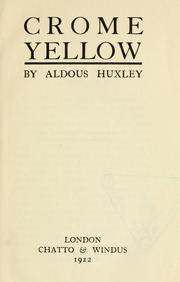
Huxley's debut novel is short, funny, and light — a perfect entry point that introduces his satirical style and his habit of using characters as mouthpieces for competing ideas.
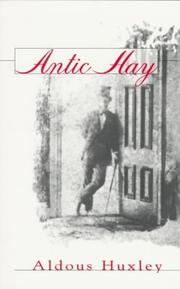
A step up in ambition and darkness, this portrait of directionless London intellectuals after WWI deepens the satirical mode and introduces Huxley's growing anxiety about modern meaninglessness.
The Satirist at Full Power
BeginnerExperience Huxley's satirical fiction at its richest and most complex, preparing the reader for the philosophical weight of Brave New World.
▸ Study plan for this stage
Pace: 8–10 weeks total: spend 4–5 weeks on Those Barren Leaves (~25–30 pages/day) and 4–5 weeks on Point Counter Point (~30–35 pages/day), given its length and density. Read in the morning when focus is sharpest; allow one day per week for reflection and note-taking.
- Satirical polyphony: Huxley's technique of placing multiple, contradictory intellectual voices in dialogue to expose the emptiness of fashionable ideas
- The country-house novel subverted: how Those Barren Leaves uses the Italian villa setting as a pressure cooker for idle intellectualism and spiritual bankruptcy
- The 'novel of ideas' form: characters as mouthpieces for competing philosophies rather than purely psychological beings
- Counterpoint as structure: how Point Counter Point mirrors musical counterpoint — parallel plotlines that comment on each other without resolving into harmony
- The crisis of modernity: both books diagnose a post-WWI European intelligentsia adrift from meaning, community, and authentic feeling
- Ironic detachment vs. genuine longing: Huxley's narrators mock their characters yet betray a sincere hunger for something beyond cynicism
- Sex, power, and self-deception: how romantic and sexual relationships in both novels reveal characters' philosophical failures rather than just personal ones
- Philip Quarles as authorial surrogate: the self-reflexive novelist-within-the-novel in Point Counter Point as Huxley's meditation on the limits of his own method
- In Those Barren Leaves, what does the Italian villa setting reveal about the characters' relationship to culture, beauty, and genuine experience — and why does Huxley choose to end the novel with Calamy's retreat into solitude?
- How does Huxley use Mrs. Aldwinkle in Those Barren Leaves as a satirical target, and what broader social or intellectual type does she represent?
- What does the musical metaphor of 'counterpoint' actually do structurally in Point Counter Point — can you identify at least two pairs of plotlines or characters that 'answer' each other thematically?
- How does Philip Quarles's notebook function within Point Counter Point, and what does it suggest about Huxley's anxieties regarding the novel of ideas as a form?
- Both novels are populated by characters who talk brilliantly but live badly. What, according to Huxley's satire, is the root cause of this gap between intellect and life?
- How do the endings of both books differ in tone and implication — does Huxley offer any exit from the spiritual barrenness he diagnoses, or only irony?
- Character voice log: As you read, keep a running one-paragraph 'manifesto' for each major character — written in that character's own voice — summarizing their worldview. At the end, lay them side by side and note where they clash. This trains you to hear Huxley's polyphony.
- Counterpoint map for Point Counter Point: Draw a simple two-column diagram pairing characters or subplots that mirror, invert, or comment on each other (e.g., Rampion's vitalism vs. Spandrell's nihilism). Add a one-sentence note on what the pairing reveals. Update it chapter by chapter.
- Philip Quarles imitation: After finishing Point Counter Point, write a half-page notebook entry in Philip Quarles's style — detached, analytical, slightly self-lacerating — reflecting on a contemporary social situation. This forces you to inhabit Huxley's self-critical intellectual mode.
- Satirical target audit: Make a list of every institution, ideology, or personality type Huxley mocks across both books (e.g., spiritualism, Fascism, Bloomsbury aestheticism, sexual liberation). For each, write one sentence on whether Huxley's critique still lands today and why.
- Close-reading passage comparison: Select one passage of witty dialogue from Those Barren Leaves and one from Point Counter Point. Write a short paragraph on each identifying the specific satirical technique at work (irony, bathos, juxtaposition, etc.) and how Huxley's craft has evolved between the two books.
- Thematic journal entry: After finishing both books, write a one-page personal response to this question: 'Is Huxley's satire ultimately hopeful or despairing?' Use at least one specific scene from each book as evidence.
Next up: Mastering the satirical machinery and the 'novel of ideas' structure in these two books equips the reader to recognize how Huxley distills both techniques into their most concentrated and consequential form in Brave New World, where the polyphonic debate is no longer set in a villa or a London drawing room but projected onto an entire civilization.
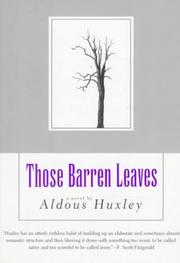
The most philosophically layered of the early novels, it introduces a character who withdraws from society in search of something deeper — a direct preview of Huxley's own later turn.
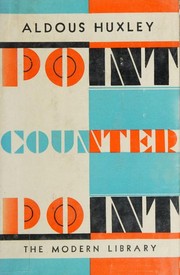
Huxley's most ambitious satirical novel, weaving together many characters and ideas in a novelistic 'counterpoint.' Reading it here gives the reader full command of his satirical range before the dystopia.
The Great Dystopia
IntermediateRead and fully understand Brave New World as the culmination of Huxley's satirical project and the pivot toward his later philosophical and spiritual concerns.
▸ Study plan for this stage
Pace: 6–7 weeks total. Weeks 1–4: Read Brave New World at a pace of ~25–30 pages/day (the novel is ~311 pages), pausing at natural chapter breaks to journal and reflect. Weeks 5–7: Read Brave New World Revisited (~120 pages of essays) at ~15–20 pages/day, reading each essay chapter as a self-contained uni
- The World State's stability triad — Community, Identity, Stability — and how each pillar is engineered through biological conditioning, hypnopaedia, and soma
- Fordism as a secular religion: the replacement of God with Henry Ford and the commodification of human life and reproduction
- The Savage Reservation as a counter-world: how John's Shakespearean romanticism exposes the hollowness of 'civilized' happiness
- Consumerism and engineered pleasure as instruments of totalitarian control — the idea that a population can be enslaved by its own gratification
- The tension between freedom and happiness: Mustapha Mond's argument that stability requires the sacrifice of truth, beauty, and God
- Huxley's satirical method: using science fiction extrapolation to critique 1930s trends in Taylorism, behaviourism, advertising, and mass media
- Brave New World Revisited as self-critique and prophecy: Huxley's 1958 reassessment of which dystopian predictions had already come true, and which threats he underestimated
- The pivot from satire to prescription: how Revisited's closing chapters on education, democracy, and decentralisation signal Huxley's turn toward constructive philosophy
- How does the Bokanovsky Process function as both a literal plot device and a metaphor for the dehumanising logic of industrial mass production?
- What does John the Savage's fate reveal about the novel's central argument — is Huxley suggesting that the 'uncivilised' life is truly preferable, or is he diagnosing an irresolvable dilemma?
- In Brave New World Revisited, which specific predictions from the novel does Huxley consider already fulfilled by 1958, and what new threats does he identify that the novel did not anticipate?
- How does Mustapha Mond's debate with John in Chapters 16–17 function as the philosophical heart of the novel, and whose position does Huxley ultimately endorse — or does he refuse to choose?
- How does Huxley's treatment of propaganda, over-organisation, and chemical persuasion in Brave New World Revisited connect to and extend the fictional mechanisms of control depicted in the novel?
- In what ways does Brave New World Revisited move beyond satire toward a manifesto, and what does this shift tell us about the evolution of Huxley's intellectual project between 1932 and 1958?
- Annotated re-reading of the Mond–John debate (Chapters 16–17): mark every claim each character makes, label it as utilitarian, romantic, or theological, and write a one-paragraph verdict on who wins the argument and why.
- Comparative mapping exercise: create a two-column table listing each dystopian mechanism in Brave New World (e.g., soma, hypnopaedia, Bokanovsky Process) alongside the real-world 1950s–60s analogue Huxley identifies for it in Brave New World Revisited — note where the real world had already surpassed the fiction.
- Character perspective journal: write a 400-word first-person diary entry from Bernard Marx's point of view after his exile is announced, then a second entry from Helmholtz Watson's — use the exercise to articulate why each character's dissatisfaction is ultimately insufficient to challenge the system.
- Close-reading of the Ford/Freud wordplay: catalogue every instance where 'Our Ford' or 'Our Freud' appears in the novel, analyse the pattern, and write a short paragraph explaining what Huxley achieves by fusing these two figures into a single deity.
- Essay draft — 600–800 words: 'Is the World State a warning or an inevitability?' Use evidence from both books to argue a clear thesis, integrating at least one passage from the novel and one from Revisited's essays on over-organisation or propaganda.
- Discussion or debate simulation: stage (alone in writing, or with a partner) a structured argument between a defender of the World State's logic and a defender of John's values, drawing only on dialogue and arguments that appear in the novel — then write a reflection on which side Huxley's narrative structure implicitly favours.
Next up: Mastering Brave New World and its Revisited companion establishes the reader's understanding of Huxley's satirical peak and his growing urgency to move from diagnosis to remedy, directly preparing them for his later philosophical, mystical, and utopian works — where the questions raised by Mustapha Mond are answered not with despair but with a constructive vision of human possibility.
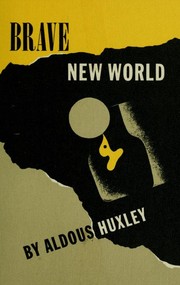
The masterpiece that synthesizes everything from the earlier novels — social satire, the critique of shallow happiness, the loss of authentic humanity — now projected into a chilling future.
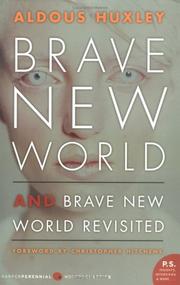
Written 27 years later, this non-fiction companion shows Huxley reassessing his own prophecy with alarm; it bridges the satirical and the essayistic, and sets up the late mystical work.
The Mystic and the Philosopher
ExpertFollow Huxley into his late, deeply serious engagement with mysticism, perception, and the nature of consciousness — understanding how the satirist became a seeker.
▸ Study plan for this stage
Pace: 10–12 weeks total: ~3–4 weeks for "The Perennial Philosophy" (dense anthology-style prose, ~30 pages/day with note-taking pauses); ~1–2 weeks for "The Doors of Perception" (short but demands slow, reflective reading — 1–2 sittings with journaling between); ~5–6 weeks for "Island" (novel pacing, ~25–
- The Perennial Philosophy as a cross-cultural meta-religion: Huxley's argument that a single 'Highest Common Factor' of mystical insight underlies Hinduism, Buddhism, Christian mysticism, Sufism, and other traditions
- The Divine Ground: Huxley's central metaphysical claim that ultimate reality is an impersonal, infinite consciousness from which individual selves are temporary differentiations
- Self-transcendence vs. ego-inflation: the distinction Huxley draws between genuine mystical union (annihilation of the separate self) and pseudo-mystical experiences that merely amplify the ego
- Mescaline as philosophical instrument: in 'The Doors of Perception,' how Huxley frames the psychedelic experience not as escapism but as empirical evidence for the Mind at Large — a consciousness ordinarily filtered by the brain's 'reducing valve'
- The reducing-valve theory of consciousness: the brain as a filter that narrows infinite Mind at Large into a trickle useful for biological survival — and what happens when that filter is temporarily suspended
- Pala as utopian synthesis: how 'Island' dramatizes the Perennial Philosophy in practice — a society that integrates Tantric Buddhism, Western science, Jungian psychology, and moksha-medicine into a coherent way of life
- The tension between vision and power: 'Island's' tragic ending as Huxley's honest admission that mystical societies are fragile against political and economic violence — utopia is always contingent
- The satirist-turned-seeker arc: tracing the intellectual and spiritual trajectory from Huxley's earlier cynicism (relevant as biographical context) to the earnest, even urgent, moral seriousness of these three late works
- According to 'The Perennial Philosophy,' what are the four fundamental doctrines that Huxley identifies as common to all genuine mystical traditions, and how does he use primary source quotations to substantiate each one?
- How does Huxley's 'reducing valve' metaphor in 'The Doors of Perception' relate to the concept of the Divine Ground introduced in 'The Perennial Philosophy' — and does the mescaline experience confirm, complicate, or contradict his earlier philosophical framework?
- In 'The Doors of Perception,' Huxley reflects on art — particularly Vermeer and Botticelli — while under mescaline. What does his aesthetic experience reveal about his theory of perception, and how does he distinguish visionary art from merely decorative art?
- How does the society of Pala in 'Island' operationalize the teachings of 'The Perennial Philosophy'? Identify at least three specific institutions or practices in Pala and trace each back to a principle Huxley articulates in the earlier non-fiction work.
- Will Farnaby in 'Island' is an outsider and a damaged man — what is his narrative function, and why does Huxley choose a cynical journalist rather than a believer as the novel's point-of-view character?
- Huxley was writing 'Island' while also grieving the loss of his home, his manuscripts, and eventually his wife — and he died the day of the Kennedy assassination. How does the novel's ending reflect both his philosophical honesty and his personal despair about the modern world's capacity to receive mystical wisdom?
- Commonplace book for 'The Perennial Philosophy': As you read, keep a two-column journal — left column records Huxley's own synthesis and argument; right column records the primary source quotation (Eckhart, Shankara, St. John of the Cross, etc.) he uses to support it. At the end, review which traditions appear most and least frequently, and write a one-page reflection on what that selection reveal
- Consciousness log during 'The Doors of Perception': Each day of reading, spend 10 minutes immediately after waking — before screens or conversation — and write a raw description of your perceptual field (colors, sounds, the texture of objects). After finishing the book, re-read your log entries alongside Huxley's mescaline descriptions and note where ordinary perception overlaps with or diverges f
- Doctrine-to-Pala mapping exercise for 'Island': Create a three-column table — Column 1: a teaching from 'The Perennial Philosophy' (e.g., 'charity and non-attachment'); Column 2: the corresponding institution or practice in Pala (e.g., the Mutual Adoption Clubs); Column 3: your critical assessment of whether Huxley's fictional implementation is convincing or idealized. Aim for at least eight rows.
- Comparative close reading — two passages on vision: Select the passage in 'The Doors of Perception' where Huxley describes the legs of a garden chair, and a passage from 'The Perennial Philosophy' where he discusses the mystic's perception of the 'isness' of things. Write a 500-word analysis arguing whether these two descriptions of heightened perception are philosophically identical or meaningful
- Devil's advocate essay: Write a 600–800 word critique of Huxley's position from the perspective of a skeptic — either a materialist neuroscientist who rejects the 'Mind at Large' hypothesis, or a traditional religious thinker who objects to chemical shortcuts to mystical experience. Use specific passages from 'The Doors of Perception' and 'The Perennial Philosophy' as your targets.
- Utopia autopsy for 'Island': After finishing the novel, write a 'post-mortem report' on why Pala fails. Identify the internal vulnerabilities Huxley himself builds into the society (e.g., its isolation, its lack of military defense, its dependence on a single royal line) and argue whether the ending is a tragic flaw in Pala's design, a deliberate authorial statement about the limits of mysticism i
Next up: Mastering Huxley's mature philosophical vision — his synthesis of mysticism, consciousness, and utopian ethics — equips the reader to step back and evaluate his entire body of work as a unified intellectual project, tracing the through-line from early satirist to late prophet and assessing his lasting relevance and limitations.
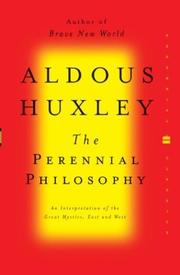
Huxley's landmark anthology and commentary on mystical thought from all traditions; this is the intellectual foundation of his late worldview and should be read before the experiential accounts.
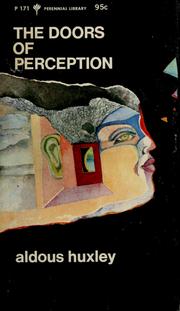
His famous account of a mescaline experience, best understood after The Perennial Philosophy — the ideas from that book are now tested against direct, altered perception.
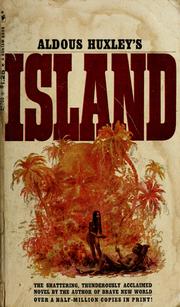
Huxley's final novel and his answer to Brave New World: a utopia rather than a dystopia, drawing on everything he learned about mysticism, psychology, and human potential. The perfect capstone.
Discussion
Keep reading
Paths that share books, cover the same subject, or open a related topic.