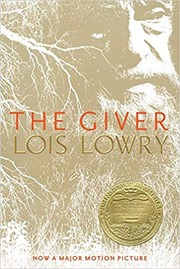
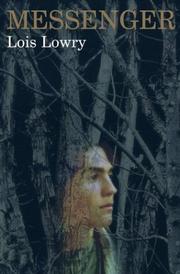
Read the four in publication order: The Giver, Gathering Blue, Messenger (The Giver #3), Son. There is no chronological alternative worth arguing about and no reordering that improves anything. The real question readers ask is different — why the series seems to fall apart at book two — and the answer is structural.
The Giver ends without resolving. Gathering Blue then opens on a different village, with different characters, and makes no visible reference to Jonas' community at all. A large share of readers conclude at that point that it is not really a sequel and stop. It is, and Messenger (The Giver #3) is the book that proves it by putting the three settings in one world. Son closes the circuit from the point of view of Claire, the birthmother of the infant Jonas carried away. Read all four close together and do not let the second one throw you.
What is on this page besides Lowry
Only five of the fourteen books here are hers — the quartet plus her memoir. The other nine are deliberately not Lowry, and they are the reason this page exists alongside a Lois Lowry author page. Four are the adult dystopias The Giver is arguing with. Four are the children's dystopias it made possible. One is the book that turned the whole lineage into a mass market.
The quartet
The Giver is 200 pages: a twelve-year-old is selected to hold the memories his community has given up, including colour, music, love and pain. It contains the euthanasia of an infant and of an elderly man, both performed as routine administrative procedure and named as "release", and it deals with the suppression of adolescent sexual feeling by daily medication. Those two things are why it is one of the most frequently challenged books in American schools. Gathering Blue (219 pages) follows a disabled orphan in a brutal village who is spared because she can embroider.
Messenger (The Giver #3) is the pivot, and the shortest at 175 pages: Matty, a minor character from the second book, is living in a third settlement, and the three societies are revealed as one world offering three different answers to human pain. Read it immediately after Gathering Blue. One note on the record: its author field carries a narrator and a translator alongside Lowry, which usually means an audiobook edition that has inherited a print page count, so treat the 175 as approximate. Son is the longest and darkest at 397 pages and only works as an ending.
The adult dystopias it argues with
This stage reads at roughly a third the pace of the quartet — allow about three times as long per page. Zamyatin's 1921 novel, titled simply We, invented the form: a glass city, numbered citizens, and a surgical cure for imagination. Both of the next two are downstream of it. Brave New World (240 pages) is the direct ancestor of Lowry's premise — a society that has abolished suffering and paid for it with art, attachment and everything else. Nineteen Eighty-Four (318 pages) is the opposite pole, control by pain rather than by comfort, and is the model The Giver deliberately does not follow. Lord of the Flies is not a dystopia at all but is the book that made children a serious subject for this kind of argument, which is why it has been The Giver's standard classroom companion for thirty years.
The children's dystopias it made possible
Among the Hidden is a third child hiding in an attic under a two-child law, 160 pages and the closest in reading level to Lowry. The City of Ember (The First Book of Ember) is the purest version of the structure — a sealed community, failing lights, two children working out what the adults will not say. The House of the Scorpion is substantially longer and harder at 380 pages: a clone raised as an organ source for a drug lord. Feed is the most formally ambitious of the four, narrated in a degraded teenage vernacular that is itself the argument.
After the quartet
The Hunger Games is where this lineage became a mass market, and is the book most readers arrive at The Giver from rather than the other way round. Looking back is Lowry's memoir in photographs and short essays; most entries give away a novel, so read it after the fiction.
The full staged order is at the Giver quartet reading path.
Ready to learn something deeply?
Build a reading path — free