Old Man's War Reading Order and Guide
John Scalzi's Old Man's War series is a military science fiction saga best read in internal publication order, as each book builds on the characters, world, and lore established before it. The curriculum is divided into three stages: the essential core trilogy that every reader must experience, the direct sequels that deepen the universe, and the optional companion works that enrich but are not required for the main story.
The Essential Core — Start Here
BeginnerUnderstand the foundational premise of the Old Man's War universe: how humanity fights interstellar wars, the Colonial Defense Forces, and the moral questions Scalzi raises about war, identity, and what it means to be human.
▸ Study plan for this stage
Pace: 8–10 weeks total: ~2–3 weeks per book at a relaxed pace of 20–25 pages/day. Old Man's War (~351 pp): weeks 1–3; The Ghost Brigades (~343 pp): weeks 4–6; The Last Colony (~320 pp): weeks 7–9, with a final reflection week for review and synthesis.
- The CDF Bargain — humanity's elderly trade their remaining years for young, enhanced bodies in exchange for military service, raising questions about consent, desperation, and the value of life
- The Green Soldiers — the biological and technological transformation into CDF supersoldiers (BrainPal, chlorophyll-enhanced skin, enhanced strength/senses) and how physical identity shapes self-perception
- The Morality of Interstellar War — Scalzi presents war as simultaneously necessary and horrifying; the universe is brutally Darwinian, with hundreds of species competing for a finite number of habitable planets
- The Special Forces and the Ghost Brigades — soldiers grown from the DNA of deceased or unwilling donors, exploring questions of personhood, free will, and whether a consciousness built from another's template has its own authentic identity (central to The Ghost Brigades via Jared Dirac)
- Colonialism and Governance — The Last Colony shifts focus from the soldier's perspective to civilian colonial life, interrogating who controls humanity's expansion and at what cost to individual colonies
- The Colonial Union vs. The Conclave — the political conflict between humanity's secretive governing body and an alien coalition forces readers to question whether the CDF's version of events — and humanity's moral standing — can be trusted
- Perspective and Unreliable Framing — each book shifts its point-of-view character (John Perry → Jared Dirac → John & Jane Perry), showing the same universe through radically different lenses and challenging the reader to synthesize a fuller truth
- Identity Continuity — across all three books, Scalzi probes what makes a person 'themselves': is it the body, the memories, the consciousness, or something else entirely?
- In Old Man's War, why do elderly recruits willingly join the CDF despite near-certain death, and what does their motivation reveal about the social contract Scalzi has constructed?
- The Ghost Brigades centers on Jared Dirac, a Special Forces soldier grown from Charles Boutin's DNA but implanted with his consciousness. Does Jared become Boutin, or does he become someone new — and what evidence from the novel supports your answer?
- How does The Last Colony reframe the events and institutions of the first two books? In what ways does John Perry's civilian perspective reveal blind spots in the CDF soldier's worldview presented in Old Man's War?
- Scalzi's universe offers no clear villains in the interstellar war — most alien species fight for survival just as humans do. How does this moral ambiguity complicate the reader's ability to root for the CDF?
- Across all three novels, Jane Sagan/Perry undergoes a significant arc from Ghost Brigade soldier to colonial leader. How does her evolution reflect the series' broader themes of identity and what it means to be fully human?
- By the end of The Last Colony, the Colonial Union's secrecy and manipulation are exposed. Does this revelation retroactively change how you interpret the heroism depicted in Old Man's War? Why or why not?
- **The Bargain Audit (after Old Man's War):** Write a 1-page personal response as if you were 75 years old and received the CDF offer. Would you enlist? List your top three reasons for or against, grounding each in specific details from the novel (e.g., the body transformation, the 10-year service commitment, the fate of the Realborn).
- **Identity Comparison Chart (after The Ghost Brigades):** Create a two-column chart contrasting Jared Dirac and John Perry across five dimensions: origin of consciousness, relationship to their pre-war self, emotional development, loyalty, and ultimate moral choice. Use direct quotes or scene references from both books to populate each cell.
- **Alien Encounter Dossier (spanning all three books):** Pick two alien species encountered across the trilogy (e.g., the Consu, the Obin, or the Whaidian). For each, write a short paragraph summarizing their biology, motivation, and the ethical dilemma their conflict with humanity raises — resisting the urge to frame them as simply 'the enemy.'
- **Perspective Rewrite Exercise (after The Last Colony):** Choose one scene from Old Man's War (e.g., John Perry's first battle or his conversation with Kathy's consciousness-copy) and rewrite it in 300–400 words from the perspective of a Colonial Union administrator or an alien combatant. Reflect on how the change in perspective alters the moral weight of the scene.
- **Series Thesis Statement:** After finishing all three books, draft a single, arguable thesis sentence that captures what you believe Scalzi's central argument about war and humanity is across the trilogy. Then write three bullet-point pieces of evidence — one from each book — that support it. Share or discuss with a reading partner if possible.
- **Timeline & Power Map:** Draw a simple visual timeline of major political and military events across the three novels, and sketch a 'power map' showing the relationships between the Colonial Union, the CDF, the Ghost Brigades, individual colonies, and the Conclave. Use this to identify moments where information was withheld from characters (and readers) and why that withholding mattered narrative
Next up: Completing the core trilogy gives readers a firm grasp of the CDF's universe, its moral contradictions, and its key players — the perfect foundation for exploring companion novels and novellas that zoom into side characters, untold perspectives, and the political fallout that the trilogy only begins to unravel.
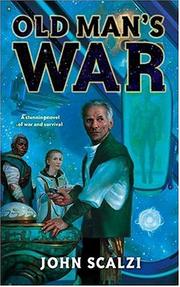
The entry point to the entire series. It introduces John Perry, the CDF, and the shocking premise of elderly soldiers given young, engineered bodies to fight alien wars. Read this first — everything else builds on it.

Shifts focus to the Special Forces soldiers (the 'ghost brigades') and deepens the universe's lore and moral complexity. Read second, as it directly expands on mysteries introduced in book one.
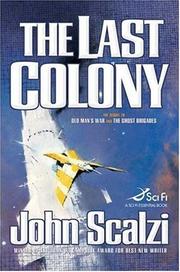
Brings back John Perry and Jane Sagan as colonists, escalating the political stakes to a galaxy-wide conflict. This is the climax of the original trilogy and should be read third to pay off the prior two books.
Deepening the Universe — Direct Sequels
IntermediateFollow the story beyond the original trilogy, experiencing new perspectives and a maturing, more politically complex version of the universe Scalzi built.
▸ Study plan for this stage
Pace: 8–10 weeks total: ~2 weeks for Zoe's Tale (~30 pages/day), ~3 weeks for The Human Division (~25 pages/day, reading each episode as a self-contained unit before continuing), ~3 weeks for The End of All Things (~20 pages/day, pausing between the four novellas to reflect).
- Perspective shift and narrative reliability — Zoe's Tale retells events from The Last Colony through a teenage girl's eyes, forcing the reader to question what earlier narrators omitted or misrepresented.
- Agency vs. protection: Zoe Boutin-Perry's arc explores how young people carve out genuine autonomy inside systems (family, colony, military) designed to keep them safe.
- The Obin as a mirror for consciousness and emotion — their devotion to Zoe raises philosophical questions about what makes a being a moral subject.
- Institutional fracture within the Colonial Union — The Human Division dramatizes how bureaucratic infighting, political spin, and competing factions erode a once-monolithic power.
- Episodic serialization as storytelling form — The Human Division was released as individual episodes; understanding its structure reveals how Scalzi builds suspense and theme across discrete but linked vignettes.
- The Colonial Union–Earth–Conclave triangle: The End of All Things resolves (and complicates) the geopolitical standoff, showing that no single faction holds the moral high ground.
- Manufactured conflict and false-flag operations — both The Human Division and The End of All Things hinge on the revelation that wars can be engineered by hidden third parties for profit or power.
- Narrative fragmentation as theme — The End of All Things' four-novella structure mirrors the fractured state of the universe itself, with each section adding a new layer of political and moral complexity.
- How does Zoe's perspective in Zoe's Tale change or deepen your understanding of the decisions John and Jane Perry made in The Last Colony — and what does Zoe's account reveal that John's narration concealed?
- In The Human Division, what does the recurring sabotage of Harry Wilson and Ambassador Abumwe's missions suggest about the true source of tension between the Colonial Union and Earth, and who ultimately benefits from that tension?
- How does the Obin relationship with Zoe function as a philosophical argument about consciousness, emotion, and moral worth — and does the series treat them as fully realized moral subjects by the end of Zoe's Tale?
- The End of All Things is structured as four linked novellas from four different viewpoints. How does this fragmented structure reinforce the book's central theme that no single actor controls or fully understands the conflict?
- Across all three books, how does Scalzi depict institutional loyalty — to the Colonial Union, to Earth, to the Conclave — as both a motivating force and a source of moral compromise for individual characters?
- By the close of The End of All Things, the Colonial Union, Earth, and the Conclave are forced into an uneasy alignment. What has each faction had to sacrifice or admit to reach that point, and is the resulting peace convincing?
- Dual-narrator journal: After finishing Zoe's Tale, pick one key scene that overlaps with The Last Colony and write two short journal entries — one from John Perry's point of view and one from Zoe's — then annotate the differences in what each narrator notices, prioritizes, or hides.
- Episode scorecard for The Human Division: As you finish each episode/chapter, jot down (a) the standalone conflict, (b) the clue or thread it adds to the larger conspiracy, and (c) which faction it makes look worse. Review the full scorecard at the end to map the arc of the Colonial Union's credibility.
- Political faction diagram: Draw a three-way relationship map of the Colonial Union, Earth, and the Conclave. After each of the three books, update the map with arrows showing alliance, hostility, or manipulation — tracking how the geometry shifts across the stage.
- False-flag analysis essay (500–700 words): Using evidence from The Human Division and The End of All Things, argue who the real antagonist of this stage is. Is it a person, an institution, or a structural feature of the universe? Support your claim with specific scenes.
- Character motivation tracker for The End of All Things: For each of the four novella protagonists, write a one-paragraph profile covering their loyalty, their breaking point, and what they ultimately choose — then compare how Scalzi uses each to illuminate a different corner of the same crisis.
- Thematic comparison: Write a short essay (400–600 words) comparing how 'growing up' functions metaphorically in Zoe's Tale (a literal teenager) and in The Human Division (institutions and alliances forced to mature past naive assumptions). What does Scalzi seem to be saying about the cost of losing innocence at both scales?
Next up: By the end of this stage the reader has seen the Colonial Union's moral authority fully dismantled and a fragile new order take shape, which sets the stage for exploring the standalone and anthology works in the universe — stories that can now be read with a sophisticated, skeptical eye toward every faction and narrator Scalzi presents.
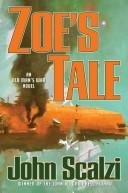
Retells the events of The Last Colony from the perspective of Zoe, the Perrys' teenage daughter — a fresh and emotionally resonant lens. Read after The Last Colony, as it recontextualizes events you already know.

Originally published as an episodic serial, this book follows Colonial Union diplomat Harry Wilson navigating a fragile political landscape. Read here as it marks a clear tonal shift toward political intrigue and sets up the final chapter.

The direct sequel to The Human Division and the concluding chapter of the main narrative arc. Read last in this stage to get the payoff of the political storylines built across the series.
Optional Companion — For Dedicated Fans
IntermediateExplore a standalone story set in the same universe that enriches the world without being required reading — ideal for readers who want more after finishing the main series.
▸ Study plan for this stage
Pace: 1–2 weeks, ~30–40 pages/day — a light, enjoyable read best consumed in long, leisurely sittings rather than broken into small chunks; treat it as a palate-cleanser reward after the main series
- Scalzi's use of humor and pop-culture satire as a vehicle for serious themes — The Kaiju Preservation Society wraps commentary on labor, corporate greed, and pandemic-era disillusionment inside a gleefully absurd premise
- World-building through parallel dimensions — the novel introduces a mirror Earth where kaiju are real apex predators, demonstrating how Scalzi constructs internally consistent alternate realities with their own ecology and rules
- The 'competent everyman' protagonist archetype — Jamie Gray echoes the Old Man's War tradition of an ordinary person thrust into an extraordinary institution, learning its ropes through wit and adaptability
- Institutional culture and found family — the KPS organization mirrors the Colonial Defense Forces as a bureaucratic yet oddly warm community that gives outsiders a sense of purpose and belonging
- Ecological and environmental allegory — kaiju are presented as endangered megafauna requiring active conservation, inviting readers to think about humanity's relationship with nature and the ethics of intervention
- Scalzi's signature dialogue-driven pacing — rapid-fire banter, pop-culture references, and self-aware humor as stylistic hallmarks consistent across his universe
- Standalone vs. series storytelling — analyzing how The Kaiju Preservation Society delivers a complete, satisfying arc without requiring serialized context, and what trade-offs that entails
- Thematic resonance with the Old Man's War universe — shared preoccupations with identity, institutional loyalty, and what it means to fight for something larger than oneself
- How does The Kaiju Preservation Society use its outlandish premise to comment on real-world issues like gig-economy labor, corporate exploitation, and the COVID-19 pandemic era — and how effective is that approach?
- In what ways does Jamie Gray's journey into the KPS mirror or diverge from the protagonist arc established in Old Man's War, and what does the comparison reveal about Scalzi's recurring thematic interests?
- How does Scalzi construct the alternate-Earth ecosystem to make kaiju feel like believable biological organisms rather than mere movie monsters, and why does that ecological grounding matter to the story's themes?
- What role does institutional belonging play in the novel — how does the KPS function as a found-family structure, and how does that compare to the Colonial Defense Forces in the main series?
- The novel was openly described by Scalzi as a 'fun' book written during a difficult period. How does that authorial intent manifest in the text, and does the lightness of tone strengthen or limit its thematic ambitions?
- How does the standalone format shape the novel's narrative choices — what freedoms does it enjoy and what depths might it sacrifice compared to a multi-book series?
- Comparative character sketch: Write a one-page side-by-side profile of Jamie Gray (The Kaiju Preservation Society) and John Perry (Old Man's War), focusing on motivation, adaptability, and relationship to the institution they join — note where Scalzi reuses his archetype and where he deliberately subverts it
- Ecology design exercise: Using the novel's kaiju biology as a model, sketch out the ecosystem of the alternate Earth — food chain, kaiju role as apex predators, human impact — then write a short paragraph arguing whether the conservation mission is ethically justified
- Satire identification log: As you read, keep a running list of every real-world target the novel satirizes (gig apps, corporate culture, pandemic life, etc.) and rate how effectively each is skewered; reflect on which landed best and why
- Tone analysis: Select two passages — one primarily comedic, one where genuine stakes emerge — and write a brief close reading of each, examining how Scalzi signals tonal shifts through sentence structure, dialogue rhythm, and character reaction
- Standalone vs. series reflection essay: Write 300–400 words arguing whether The Kaiju Preservation Society would be improved or harmed by being expanded into a trilogy, using specific plot and character evidence from the novel to support your position
- Personal reading journal entry: After finishing the book, write an honest reflection on how reading it as an 'optional companion' after the main series affected your experience — did the Scalzi universe context enrich it, or did it stand entirely on its own merits?
Next up: By experiencing how Scalzi applies his signature voice and thematic preoccupations — institutional belonging, the competent outsider, ecology of conflict — to a completely self-contained and tonally lighter story, readers are now equipped to step back and evaluate the Old Man's War universe as a whole, making them ready for any retrospective, critical, or comparative reading that follows.

While not part of the Old Man's War series, this standalone Scalzi novel is recommended for fans who love his voice and want more of his accessible, witty sci-fi style after completing the series.
Discussion
Keep reading
Paths that share books, cover the same subject, or open a related topic.