Robert A. Heinlein Reading Order: Where to Start
This curriculum traces Robert A. Heinlein's career in roughly the order he wrote it, so each stage builds on the ideas, style, and philosophy of the last. You begin with the accessible, optimistic juveniles that established his voice, move through the landmark novels of his "middle period" that cemented his reputation, and finally wrestle with the provocative, sprawling late works that remain hotly debated — arriving at a full, nuanced picture of one of science fiction's most influential writers.
The Juveniles: Heinlein Finds His Voice
BeginnerGet comfortable with Heinlein's clean prose, his love of competence and self-reliance, and his gift for making science feel real and exciting — all through fast-moving adventure stories aimed at young readers.
▸ Study plan for this stage
Pace: 8–10 weeks total: ~2 weeks on Rocket Ship Galileo (~30 pages/day), ~2 weeks on Have Space Suit — Will Travel (~30 pages/day), and ~4 weeks on Starship Troopers (~20 pages/day with extra time for its denser philosophical passages)
- Heinlein's 'competence porn': protagonists who learn by doing, master real skills, and earn their victories through preparation and effort — seen in the teen rocketeers of Rocket Ship Galileo, Kip's suit-maintenance obsession in Have Space Suit, and Rico's grueling boot camp in Starship Troopers
- Science as adventure fuel: Heinlein grounds every story in plausible, explained science — orbital mechanics in Rocket Ship Galileo, life-support engineering in Have Space Suit, and powered-armor tactics in Starship Troopers — making the reader feel the physics, not just the excitement
- The mentor-apprentice relationship: adult experts (Dr. Cargraves, the Mother Thing, Sergeant Zim) guide young protagonists without removing struggle, modeling Heinlein's belief that wisdom must be transmitted through experience
- Self-reliance and personal responsibility as moral bedrock: each protagonist must ultimately act alone under pressure — Art/Ross/Morrie launching without backup, Kip surviving on the Moon and Pluto, Rico choosing to re-enlist — reinforcing Heinlein's core ethic
- The juvenile-to-adult tonal spectrum: Rocket Ship Galileo is the most straightforwardly boyish adventure; Have Space Suit sharpens the wit and raises the stakes cosmically; Starship Troopers pushes into explicit political philosophy, marking the edge of the 'juvenile' label
- Citizenship, duty, and earned rights: Starship Troopers introduces Heinlein's controversial argument that civic rights should be tied to voluntary service and sacrifice, a theme only hinted at in the earlier two books
- Heinlein's prose style: short declarative sentences, first- or close-third-person immediacy, heavy use of technical jargon made accessible through context, and a wry, confident narrative voice that trusts the reader's intelligence
- In Rocket Ship Galileo, how do Art, Ross, and Morrie demonstrate Heinlein's ideal of competent young people — what specific skills and decisions prove they have earned their place on the mission?
- Have Space Suit — Will Travel hinges on Kip's meticulous care of his pressure suit. How does that single act of technical diligence drive the entire plot, and what does Heinlein seem to be saying about preparation versus luck?
- How does the alien tribunal at the climax of Have Space Suit function as a moral and philosophical test, and how does it connect to the citizenship themes that become explicit in Starship Troopers?
- Starship Troopers is structured around flashbacks during Rico's training. How does that non-linear structure reinforce the book's argument that a soldier's identity is built, not born?
- Compare the mentor figures across all three books (Dr. Cargraves, the Mother Thing, Sergeant Zim). What does each teach their young charge, and what does Heinlein suggest a good mentor does — and does NOT do — for the protagonist?
- By the end of all three books, how has Heinlein's definition of 'growing up' evolved? Is it purely about skill, or does it require a moral or civic dimension?
- The Competence Inventory: After finishing each book, list every concrete skill the protagonist demonstrates (e.g., welding, suit repair, infantry tactics). Then write a short paragraph arguing which single skill is most essential to that story's resolution and why.
- Science Fact-Check Journal: Each time Heinlein explains a piece of science or technology (rocket trajectories, suit life-support, powered armor), pause and look it up. Write 2–3 sentences on what Heinlein got right, what he extrapolated, and what has since been superseded — this builds the habit of reading SF critically.
- Mentor Analysis Essay (500 words): Choose one mentor from any of the three books and write a structured comparison to a real-world mentor archetype (coach, drill instructor, teacher). Use at least three specific scenes from the text as evidence.
- Rewrite a Scene with a Passive Hero: Take a key action scene where the protagonist's competence saves the day (e.g., Kip repairing the suit, Rico's first drop) and rewrite it so the hero is passive or incompetent. Reflect in a paragraph on how the story's meaning collapses — this makes Heinlein's thematic choices visceral.
- Citizenship Debate Prep: After Starship Troopers, write a one-page position paper either defending or refuting Heinlein's argument that civic rights should require earned service. You must cite at least two specific passages from the novel and one real-world counterexample.
- Reading Voice Comparison: Find a passage of roughly one page from each of the three books and read them aloud. Write a short note on how the sentence length, vocabulary, and tone shift across the three — documenting your ear for Heinlein's evolving style as the series grows up alongside its protagonists.
Next up: Mastering Heinlein's juvenile voice — his clean prose, competence ethic, and emerging political philosophy — gives you the essential baseline to recognize how he deliberately complicates, darkens, and radicalizes those same themes in his mature adult novels.

Heinlein's first juvenile is the simplest entry point: three teenage boys and a scientist build a rocket and go to the Moon. It establishes his core theme of capable young people learning by doing.

Widely considered the best of the juveniles, this late-series entry shows Heinlein's craft at its peak — witty, scientifically grounded, and morally serious. Reading it after Galileo lets you see how much his storytelling matured across the series.
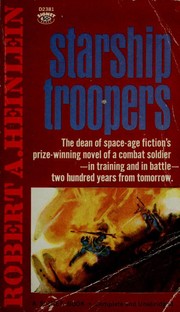
Technically the last juvenile (Scribner's rejected it), this is the bridge to his mature work: a coming-of-age story wrapped around a fierce philosophical argument about citizenship and civic virtue that will echo through everything that follows.
The Major Novels: The Classic Heinlein
IntermediateEngage with Heinlein's most celebrated and culturally influential novels, understanding his libertarian individualism, his experiments with narrative voice, and his ability to use science fiction as a vehicle for big social ideas.
▸ Study plan for this stage
Pace: 8–10 weeks total: ~3 weeks on "Stranger in a Strange Land" (~30 pages/day for its length), ~3 weeks on "The Moon Is a Harsh Mistress" (~25 pages/day), and ~2 weeks on "Double Star" (~35 pages/day, as it is the shortest). Allow buffer days between books for reflection and journaling.
- Libertarian individualism and self-ownership: how all three novels champion personal sovereignty, voluntary association, and skepticism of centralized authority
- Revolution and political philosophy: 'The Moon Is a Harsh Mistress' as a detailed case study in revolutionary strategy, taxation without representation, and the costs of freedom
- Narrative voice and unreliable/limited narrators: Mike the AI's logical innocence in 'The Moon Is a Harsh Mistress' vs. Lawrence Smith's self-serving theatrical persona in 'Double Star'
- The outsider as social critic: Valentine Michael Smith's Martian perspective in 'Stranger in a Strange Land' as a defamiliarization device to expose human taboos, religion, and sexuality
- Grokking and constructed religion: the Church of All Worlds in 'Stranger in a Strange Land' as Heinlein's thought experiment on spirituality, community, and free love
- Competence as virtue: Heinlein's recurring ideal of the capable, self-reliant individual, visible in Mannie's technical savvy, Mike's computational genius, and Lorenzo's professional mastery of identity
- Science fiction as social laboratory: using speculative settings (a Martian-raised human, a lunar colony, a future Earth political stage) to test ideas that would be too charged in realistic fiction
- Identity, performance, and transformation: 'Double Star's' exploration of how deeply an actor can inhabit a role until the role becomes the self
- How does Valentine Michael Smith's upbringing on Mars function as a rhetorical device in 'Stranger in a Strange Land'? What specific human institutions does his outsider gaze most sharply critique, and is Heinlein's critique ultimately constructive or nihilistic?
- In 'The Moon Is a Harsh Mistress,' Mike (HOLMES IV) is both a character and a narrative tool. How does his non-human perspective shape the reader's understanding of the revolution, and what are the limits of his reliability as a narrator/participant?
- Compare the political philosophies embedded in 'Stranger in a Strange Land' and 'The Moon Is a Harsh Mistress.' Where do they agree on individual freedom, and where do they diverge — particularly on community, obligation, and violence?
- In 'Double Star,' Lorenzo Smythe begins as a cynical, apolitical actor and ends as a committed statesman. What does this transformation argue about the relationship between performance, belief, and authentic identity?
- All three novels feature protagonists who are in some sense 'outsiders' to the societies they navigate. How does each outsider status — alien-raised human, lunar colonial, struggling actor — serve Heinlein's larger thematic purposes differently?
- How does Heinlein use the concept of 'TANSTAAFL' (There Ain't No Such Thing As A Free Lunch) in 'The Moon Is a Harsh Mistress' as both an economic principle and a moral philosophy, and do the events of the novel ultimately validate or complicate it?
- Comparative ideology map: After finishing all three books, draw a diagram charting where each novel's society sits on axes of individual freedom vs. collective obligation and order vs. chaos. Annotate with specific scenes or quotes that place each society on the map.
- Narrator reliability audit: For 'The Moon Is a Harsh Mistress,' keep a running log of at least 10 moments where Mannie's or Mike's account seems incomplete, biased, or self-justifying. Write a one-paragraph 'corrected' version of one key scene from an opposing character's point of view.
- TANSTAAFL stress test: Choose one policy or social arrangement from 'Stranger in a Strange Land' (e.g., the Church of All Worlds' communal living) and apply the TANSTAAFL principle rigorously. Write a 300-word analysis of what hidden costs Heinlein does or does not acknowledge.
- Character transformation timeline for 'Double Star': Create a scene-by-scene timeline tracking Lorenzo Smythe's stated beliefs about politics and identity at the start, middle, and end of the novel. Write a thesis sentence arguing whether his final transformation is earned or convenient.
- Socratic seminar prep: Write three open-ended discussion questions — one per book — that you could not answer with a simple yes/no or plot summary. Then write a half-page answer to each, citing specific textual evidence.
- Modern resonance essay: Choose one central idea from any of the three novels (e.g., lunar colonial independence, constructed religion, political performance) and write a 500-word essay connecting it to a real-world event or movement from the past 20 years, arguing whether Heinlein's treatment was prescient, naive, or somewhere in between.
Next up: Mastering these three novels — Heinlein's most socially ambitious work — gives the reader the ideological and stylistic vocabulary needed to tackle his more polemical, formally experimental, or controversial later writings, where his ideas grow more extreme and his narrative techniques more self-referential.

His most famous novel and a genuine cultural phenomenon of the 1960s. A human raised by Martians returns to Earth and upends every social convention — it is essential for understanding Heinlein's reach beyond genre readers.
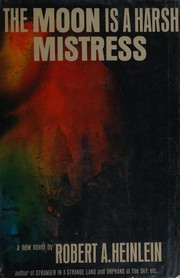
A lunar colony revolts against Earth in a story that is part thriller, part political philosophy. Heinlein's libertarian ideas are at their most rigorously argued here, and the unreliable narrator voice is his most technically accomplished.
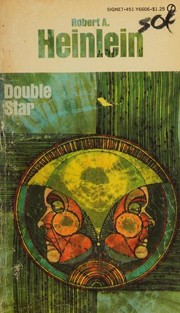
A Hugo Award winner and a tighter, more intimate novel than the others — a perfect palate cleanser that shows his range: political drama, identity, and performance, all in a compact and elegantly plotted story.
The Late Work: Contested Territory
ExpertConfront the long, self-indulgent, philosophically extreme novels of Heinlein's final decades — understanding why they delight some readers and alienate others, and what they reveal about the full arc of his worldview.
▸ Study plan for this stage
Pace: 10–13 weeks total: ~5 weeks for Time Enough for Love (~600 pages, ~20 pages/day with reflection pauses), ~3 weeks for The Number of the Beast (~500 pages, ~25 pages/day), ~3 weeks for To Sail Beyond the Sunset (~350 pages, ~18 pages/day). Budget extra days after each book for journaling and discussi
- The Lazarus Long mythology and Heinlein's construction of an immortal alter-ego as a vehicle for authorial philosophy
- Solipsism and the 'World as Myth' conceit — the idea that sufficiently imagined fictional universes become real, introduced in The Number of the Beast and deepened in To Sail Beyond the Sunset
- Heinlein's late-career libertarianism and its escalation: from rugged individualism to explicit anti-statism, free love, and incest as philosophical provocation
- Narrative self-indulgence as a deliberate aesthetic choice vs. structural failure — the tension between aphoristic wisdom and plotless digression
- Maureen Long/Johnson as Heinlein's female alter-ego and the question of whether she represents feminist empowerment or male fantasy projection
- Intertextuality and the 'Future History' as a closed, self-referential universe — how these novels cannibalize and comment on Heinlein's earlier work
- The role of the 'Heinlein lecture' — long didactic monologues — and how they function differently in late work than in earlier novels like Starship Troopers or Stranger in a Strange Land
- Reader alienation vs. reader delight: understanding the polarized critical reception as itself a meaningful data point about Heinlein's intentions and legacy
- How does Lazarus Long function as both a narrative device and a philosophical mouthpiece in Time Enough for Love, and where does that dual role create tension or contradiction?
- What is the 'World as Myth' theory as presented in The Number of the Beast, and how does Heinlein use it to justify the novel's metafictional structure and its parade of literary crossovers?
- In To Sail Beyond the Sunset, Maureen narrates her own life retrospectively — how does Heinlein use her voice to revisit and reframe the entire Future History, and what does this reveal about his view of women's agency?
- Across all three books, how does Heinlein's treatment of sexuality (free love, group marriage, incest) function — is it primarily philosophical argument, provocation, wish fulfillment, or something else?
- How do these three novels relate to each other structurally and thematically — do they form a coherent late-career statement, or are they better understood as separate experiments with overlapping obsessions?
- Why do these books divide readers so sharply, and what does that division reveal about the implicit contract between Heinlein and his audience that was established in his earlier work?
- Aphorism audit: Collect 10–15 of Lazarus Long's sayings from Time Enough for Love and subject each to a structured stress-test — identify the underlying assumption, construct the strongest counterargument, and decide whether the aphorism holds up as philosophy or collapses as rhetoric.
- Structural map: Chart the nested narrative frames of The Number of the Beast (who is narrating, from where, to whom) and diagram how the 'World as Myth' device is introduced, developed, and used to resolve plot problems — then write a one-page verdict on whether the structure earns its complexity.
- Character voice comparison: Select one 'Heinlein lecture' passage from each of the three books and rewrite each in the voice of a character who disagrees. Analyze what the exercise reveals about how much genuine dialogue exists in the original texts.
- Maureen's timeline reconstruction: Using To Sail Beyond the Sunset, reconstruct Maureen Long's chronological biography (separate from the novel's non-linear telling) and cross-reference at least three events against the Future History timeline established in earlier Heinlein works — note consistencies and contradictions.
- Polarized review synthesis: Find two published critical reviews of any one of these three books — one strongly positive, one strongly negative — and write a 500-word essay that steelmans both positions before staking your own claim.
- Personal reckoning essay: Write 600–800 words answering the question: 'Does Heinlein's late work deepen or betray the promise of his earlier career?' — requiring you to cite specific passages from at least two of the three books in this stage.
Next up: Grappling with the excesses and internal contradictions of Heinlein's late fiction equips the reader to step back and assess his total legacy with critical distance — making the next stage, a retrospective evaluation of his overall influence on science fiction and American culture, both more honest and more nuanced.
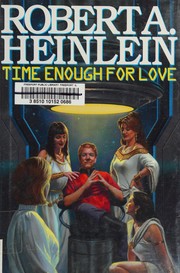
The first major late novel and the best entry point into this period: Lazarus Long's multi-millennium memoir is sprawling and digressive, but it is the clearest statement of Heinlein's mature philosophy of individualism, love, and longevity.
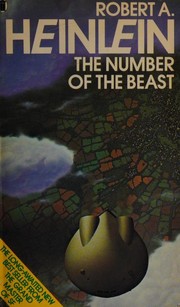
Polarizing and deliberately excessive, this novel-as-argument about fiction, reality, and authorship is where Heinlein's late style is most extreme — reading it here, after his philosophy is familiar, makes its ambitions legible rather than merely baffling.
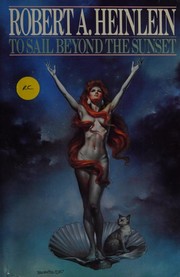
His final novel, narrated by Lazarus Long's mother Maureen, is a retrospective on everything Heinlein believed — a fitting capstone that rewards readers who have followed the full curriculum and can weigh his ideas with full context.
Discussion
Keep reading
Paths that share books, cover the same subject, or open a related topic.