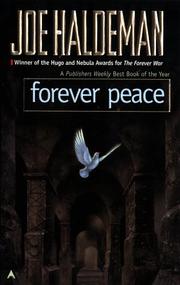
Start with The Forever War, which is the only sensible entry point and is complete in itself. A conscripted physics student is sent to fight an alien enemy across interstellar distances, and relativistic time dilation means that each tour costs him decades at home; he returns, over and over, to a human society he no longer recognises. The structure is the argument. The combat is almost incidental.
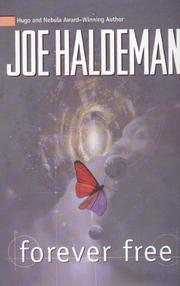
Then understand what the word trilogy is doing here, because it is doing very little. Forever Peace is not a sequel — different characters, different century, no continuity of any kind with the first book. Forever free is the actual sequel, published twenty-five years after the original. Read the novel, then Forever Peace, then Forever free, and the order does what the label promises even though the label is wrong.
The novel
Our record for The Forever War runs to 272 pages, and it is worth checking the edition you buy: early United States printings cut the middle section, and the restored full text is now the standard. Note also that the record behind our listing is a Spanish-language edition — the ISBN sits in the 978-84 range used by Spanish publishers — so the buy link may land on a translation rather than the English text.
The two follow-ups
Forever Peace (351 pages) won both the Hugo and the Nebula for re-asking the first book's question about mechanised war from inside the machine: soldiers operating remote combat platforms through a neural link that also connects them to each other. It shares a preoccupation with The Forever War and nothing else. Reading it second is a choice about theme, not continuity.
Forever free picks up Mandella and Marygay decades after the war ends, and divides readers sharply because of the turn it takes in its final third. Read it last of the three so that turn registers against the original rather than against Forever Peace. One caveat on our record: it carries a second name in the author field and comics subject headings, which suggests the edition behind it is an illustrated adaptation rather than the prose novel. Check what you are ordering.
The short fiction
A Separate War and Other Stories contains the title novella covering the years Marygay spends apart from Mandella — the gap the novel skips over entirely. That makes it a book to read after both novels rather than before. The rest of the collection is the best short-form sample of Haldeman's range.
Haldeman without the science fiction
War year is his first novel, from 1972: a plain realist account of a combat engineer's tour in Vietnam, written before he had a genre to work behind, and only 127 pages. Read it alongside The Forever War and the allegory becomes almost embarrassingly legible. He returned to the same year in a much stranger novel titled simply 1968, a fractured home-front-and-battlefield book that does what the first one could not; the twenty-two-year gap in handling is the point of reading them in that order.
All My Sins Remembered is a fix-up written in the immediate aftermath of The Forever War, about an agent whose identity is repeatedly overwritten, and it shares the original's exhaustion. Camouflage is the late Nebula winner and a good stopping point if you want more Haldeman and no more war — though our record for it is a Portuguese-language edition, so check the language before buying.
The argument the book is having
Haldeman has said directly that he was answering Starship Troopers, so read Heinlein after Haldeman rather than before; the rebuttal only registers as a rebuttal that way round. Armor is the third point of the triangle — powered armour and endless insectile war played for trauma rather than for civics. Old Man’s War is the modern descendant, openly indebted to both, and shows what the form looks like once the argument has been settled for thirty years. The Dispossessed was published in the same year as The Forever War and is the deliberate contrast: the same problem of time, distance and returning home changed, with no war in it at all.
The full sequence with stage notes is at the Forever War reading path.
Ready to learn something deeply?
Build a reading path — free