The First Law Reading Order: Where to Start
This curriculum guides you through Joe Abercrombie's entire First Law world in publication order, which is also the ideal reading order — it mirrors how the world's themes, characters, and dark subversions of fantasy tropes were designed to be discovered. You begin with the original trilogy to learn the world and its people, move through the standalone novels that deepen the lore from fresh angles, and finish with the Age of Madness trilogy, which pays off decades of setup with maximum impact.
The Original Trilogy — Foundations of the First Law World
BeginnerMeet the core cast — Logen Ninefingers, Jezal, Glokta, Bayaz — learn the geography and politics of the Union and the North, and experience Abercrombie's signature grimdark voice and brutal subversion of classic fantasy tropes.
▸ Study plan for this stage
Pace: 12–14 weeks total (~25–30 pages/day): roughly 4 weeks for The Blade Itself, 4–5 weeks for Before They Are Hanged, and 4–5 weeks for Last Argument of Kings. Set aside one extra "reflection day" at the end of each book before moving on.
- Grimdark subversion: how Abercrombie systematically dismantles classic fantasy archetypes — the noble hero (Jezal), the wise mentor (Bayaz), the fearless warrior (Logen) — by exposing their moral rot or hidden agendas
- Character as unreliable self-narrator: each POV character (Logen, Jezal, Glokta) rationalises their own cruelty or cowardice; the reader must read between the lines of their self-justifications
- The First Law as institution: the titular First Law ('no man shall touch the Other Side') is presented as sacred dogma, but its true purpose and origins are gradually revealed to be far more cynical and self-serving than advertised
- Geography and geopolitics of the Union: the tension between the decadent, bureaucratic Union (Adua, the Open Council, the Closed Council) and the tribal, brutal North (Logen's homeland, Bethod's kingdom) establishes the world's central political fault line
- The quest structure as false promise: Before They Are Hanged deliberately invokes the classic fantasy quest (find the magical MacGuffin, save the world) only to pull the rug out — the journey's outcome forces a re-evaluation of what the quest was really for
- Moral ambiguity without redemption arcs: unlike traditional fantasy, characters do not earn clean redemption; Glokta's torture, Logen's massacres, and Jezal's selfishness are not resolved — they are complicated
- Power, manipulation, and the Closed Council: Bayaz, Arch Lector Sult, and Lord Brock represent competing power structures; understanding who is manipulating whom is essential preparation for the trilogy's climax in Last Argument of Kings
- The cost of war: the Siege of Dagoska (Before They Are Hanged) and the climactic battles of Last Argument of Kings present war not as glorious but as grinding, attrition-based, and politically motivated — soldiers and civilians pay while elites manoeuvre
- By the end of The Blade Itself, what does each of the three main POV characters (Logen, Jezal, Glokta) want, and what does Abercrombie immediately do to undercut or complicate that desire?
- What is the stated goal of Bayaz's quest in Before They Are Hanged, and how does the ending of that book reframe everything the travelling party sacrificed to achieve it?
- How does Glokta's arc across all three books challenge the reader's sympathy — at what moments are you rooting for him, and why is that uncomfortable?
- In Last Argument of Kings, what is the true nature of Bayaz's power and his relationship to the First Law, and how does Abercrombie use this revelation to indict the reader's own trust in the 'wise mentor' trope?
- How does the North — its culture, its code of violence, and Logen's reputation as 'The Bloody Nine' — function as both a critique of and a dark mirror to the Union's supposedly civilised politics?
- Trace the arc of Jezal dan Luthar from The Blade Itself to Last Argument of Kings: in what ways does he change, and in what ways does Abercrombie argue that people fundamentally do not change?
- Character dossiers: after finishing each book, write a one-page profile for Logen, Jezal, and Glokta. Record what they claim to value, what their actions reveal they actually value, and how the gap between the two shifts book by book.
- Trope-tracking log: keep a running list of classic fantasy tropes as you spot them (the chosen hero, the wise wizard, the noble quest, the romantic subplot). Next to each entry, note exactly how Abercrombie fulfils, subverts, or weaponises it against the reader's expectations.
- Map the power web: draw a diagram of the Closed Council and the key political factions in Last Argument of Kings. Draw arrows showing who is manipulating whom, and annotate each arrow with the chapter or scene where the manipulation is revealed.
- The quest post-mortem: after finishing Before They Are Hanged, write a short (300–400 word) essay arguing either (a) the quest was worth it despite its outcome, or (b) it was always doomed to be meaningless — use specific evidence from the text.
- Glokta empathy audit: select three scenes across the trilogy where you felt genuine sympathy for Glokta. Write a paragraph for each explaining what technique Abercrombie uses (humour, physical suffering, moral clarity, etc.) to manufacture that sympathy, and reflect on what it says about the reader that it works.
- Ending analysis: Last Argument of Kings ends with several deliberately unsatisfying resolutions. Choose two character endings, summarise what a 'traditional' fantasy ending would have given them, and write a paragraph explaining what Abercrombie's actual ending argues about power, agency, and hope instead.
Next up: Completing the Original Trilogy gives the reader the full political, moral, and geographical canvas of the First Law world — the standalone novels and the Age of Madness trilogy build directly on the consequences of Last Argument of Kings' ending, so every unresolved thread and every surviving (or fallen) power structure encountered here will echo forward with new and darker significance.
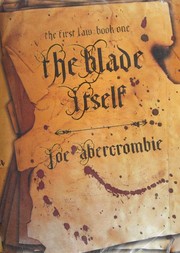
The entry point to the entire world. It introduces every major character and establishes the moral ambiguity, dark humor, and political intrigue that define the series — read this first, no exceptions.
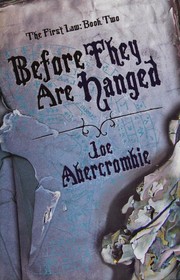
The trilogy's middle chapter splits the cast across three converging storylines, deepening your understanding of each character's psychology and raising the stakes established in book one.
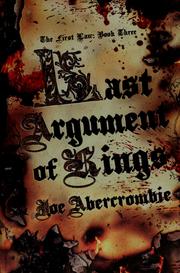
The trilogy's devastating conclusion pulls every thread together and delivers the genre-redefining twists that make the First Law world famous — essential before moving to the standalones.
The Standalone Novels — Expanding the World
IntermediateExplore the wider First Law world through new protagonists and new regions — the Styrian city-states, the Far Country frontier, and the war-torn North — while catching references and consequences that only make sense after the trilogy.
▸ Study plan for this stage
Pace: 9–11 weeks total: ~3–4 weeks per book at roughly 25–35 pages/day. Best Served Cold (~530 pp): weeks 1–3; The Heroes (~550 pp): weeks 4–6; Red Country (~470 pp): weeks 7–9. Allow a buffer week after each book for reflection exercises before moving on.
- Moral ambiguity and the revenge cycle — Monza Murcatto's vendetta in Best Served Cold illustrates how the pursuit of justice collapses into self-destruction, mirroring the trilogy's central theme that people don't really change
- New-protagonist perspective as world-building — each standalone uses a fresh POV character (Monza, Bremer dan Gorst, Shy South) to reveal corners of the world — Styria, the contested North, the Far Country — invisible in the trilogy
- The long shadow of the trilogy's survivors — Bayaz's economic manipulation surfaces in Styrian banking wars; Caul Shivers' arc from hopeful Northman to scarred killer is a direct sequel to his trilogy cameo; Cosca reappears as a darkly comic mercenary captain
- Battle as microcosm (The Heroes) — the three-day Battle of Osrung functions as a self-contained moral laboratory, showing war's futility, the randomness of heroism, and the gap between martial legend and bloody reality
- The 'hero' myth deconstructed — The Heroes systematically dismantles the idea of glorious combat through characters like Curnden Craw, Prince Calder, and Gorst, each of whom wants or performs heroism for hollow reasons
- Frontier capitalism and colonialism (Red Country) — the Far Country gold rush exposes how 'civilisation' is exported through violence, debt, and the erasure of indigenous peoples (the Ghosts), echoing real-world frontier mythology
- Recurring characters as thematic continuity — figures like Nicomo Cosca, Caul Shivers, and Temple reappear across multiple standalones, showing how the world's cynicism grinds people down or, rarely, allows small redemptions
- Genre subversion across the three books — Best Served Cold reworks the revenge thriller, The Heroes reworks the war epic, and Red Country reworks the Western/frontier novel, each using genre expectations to set up and undercut reader satisfaction
- In Best Served Cold, how does Monza's quest for revenge ultimately undermine her own stated goals, and which specific betrayals or deaths illustrate the cost of her vendetta most powerfully?
- Caul Shivers appears in both Best Served Cold and The Heroes — trace his transformation across these two books. What choices does he make, and what does his arc argue about the possibility of personal change in this world?
- The Heroes takes place over only three days. How does Abercrombie use this compressed timeline and the rotating cast of POV characters to show the same battle events from conflicting perspectives, and what effect does this have on the reader's sense of 'truth' in war?
- How does Red Country use the conventions of the Western genre — the frontier town, the reluctant gunslinger, the wagon train — and then subvert or darken them? What is Abercrombie saying about frontier mythology and civilisation?
- Nicomo Cosca appears in all three standalone novels. How does his character function differently in each book, and what does his trajectory suggest about the world's relationship with mercenary violence and moral compromise?
- Each standalone introduces a new geographic region. Compare Styria, the contested North of The Heroes, and the Far Country: what distinct social, economic, or political forces shape each region, and how do they reflect different facets of the First Law world's systemic corruption?
- Revenge ledger (Best Served Cold): Create a two-column chart listing each of Monza's seven targets — what she believes justifies their death vs. what the narrative actually reveals about them. Write a short paragraph on whether the revenge was 'earned' by the end.
- Battle map and POV log (The Heroes): Sketch a rough map of Osrung and its surroundings, then for each major battle sequence note which POV character narrates it. Identify at least two scenes where two characters experience the same moment differently — write a paragraph on what each version reveals that the other hides.
- Genre checklist (Red Country): List 10 classic Western tropes (e.g., the lone drifter with a dark past, the corrupt town boss, the lawless frontier, the showdown). Mark each as 'used straight,' 'subverted,' or 'absent' in Red Country, then write a brief analysis of what Abercrombie's choices reveal about his intentions.
- Character continuity timeline: Build a single timeline spanning all three standalones that tracks Caul Shivers and Nicomo Cosca — note every appearance, their stated goals, their actions, and how others perceive them. Use this to write a 300-word comparison of how each character is shaped (or broken) by the world around them.
- Thematic echo journal: After finishing each book, write a one-page journal entry identifying one moment that directly echoes or inverts a scene or theme from the original trilogy (e.g., a 'hero' moment that recalls Logen Ninefingers, a Bayaz reference, a Union political maneuver). Collect all three entries and identify the overarching pattern.
- Close-reading passage analysis: Select one battle scene from The Heroes and one confrontation scene from Best Served Cold. Annotate both for narrative voice, irony, and the gap between a character's self-perception and their actions. Present your annotations as a short written comparison (~400 words) of how Abercrombie uses prose style to enforce his themes.
Next up: By mastering how the standalones expand geography, deepen recurring characters, and layer in the long-term consequences of the trilogy's power structures, the reader is fully equipped to engage with the Age of Madness trilogy — where those same systemic forces (Bayaz's financial empire, the Union's political rot, the North's endless cycle of violence) finally erupt into open, world-altering crisis

A revenge thriller set in Styria, it's the most self-contained standalone and the best bridge from the trilogy — several familiar faces reappear in new, surprising roles that reward trilogy readers.

A single three-day battle told from multiple sides, this book is Abercrombie at his most literary — read after Best Served Cold so you already know the Northern characters who anchor the story.

A frontier Western set in the Far Country, it closes out the standalone era and features a major trilogy character whose reappearance lands far harder once you've read the previous five books.
The Age of Madness — The Next Generation
ExpertExperience the culmination of everything Abercrombie has built — a new generation of characters grappling with industrialization, revolution, and the long shadow of the people you've followed across six prior books, with payoffs that require the full preceding context to appreciate.
▸ Study plan for this stage
Pace: 9–11 weeks total (~3–4 weeks per book); aim for 25–35 pages per day. A Little Hatred is the most world-building-dense entry — slow down here to map new characters against familiar surnames. The Trouble with Peace accelerates political intrigue and rewards close reading of dialogue. The Wisdom of Cro
- The generational inheritance of trauma: how the sins and choices of Logen Ninefingers, Sand dan Glokta, Bayaz, and Jezal dan Luthar echo through their children and protégés in Savine dan Glokta, Leo dan Brock, and Rikke
- Industrialization as a new form of violence: the Great Change's mills, machinery, and capital accumulation in Valbeck mirror real-world Industrial Revolution dynamics, reframing the series' earlier 'low fantasy' brutality in socioeconomic terms
- Revolution and its betrayal: The Wisdom of Crowds dramatizes how popular uprisings are co-opted, how idealists become tyrants, and how the cycle of oppression restarts under new management — a direct thematic culmination of the First Law's core nihilism
- Savine dan Glokta as synthesis character: she embodies the series' central tension between pragmatic self-interest and moral awakening, carrying the ideological DNA of both her father (Glokta) and the system he served
- Rikke and the Long Eye: prophecy as burden rather than power, and how foreknowledge fails to prevent tragedy — a deliberate subversion of the 'chosen one' trope established in the original trilogy
- Leo dan Brock and the seduction of heroism: his arc deconstructs the romantic ideal of the warrior-noble that characters like Jezal once represented, showing how that fantasy curdles into fascism
- The Union's structural rot: the trilogy uses the Breakers and Burners movements to expose how the Union's institutions — established and 'reformed' across six prior books — were never capable of delivering justice
- Bayaz's long game: his unseen hand across all three books ties the Age of Madness back to the First Law's original revelation that all political change is managed from above, and that revolution is itself a tool of power
- By the end of A Little Hatred, how does Valbeck function as a microcosm for the entire trilogy's central conflict, and which characters' perspectives does Abercrombie use to ensure the reader sees it from both the exploiting and exploited class?
- How does Leo dan Brock's trajectory across all three books mirror and invert Jezal dan Luthar's arc in the original trilogy — and what does the difference in their endings say about Abercrombie's evolving worldview?
- In The Trouble with Peace, what specific political miscalculations by Orso and Savine allow Brock's rebellion to gain momentum, and how do those failures connect to the institutional failures Glokta warned about in earlier books?
- How does The Wisdom of Crowds use Broad, Liddy, and the Burner movement to argue that revolutionary violence inevitably reproduces the structures it seeks to destroy — and which specific scenes most forcefully make that argument?
- What is the significance of Rikke's Long Eye visions ultimately being unable to save the people she loves, and how does this complete Abercrombie's long-running critique of prophecy and fate that began with the Shanka in The Blade Itself?
- By the trilogy's conclusion, in what ways has Bayaz 'won' again — and what does that victory cost the reader emotionally given everything they have invested across all nine books of the world?
- Character lineage map: Draw a visual diagram connecting each Age of Madness protagonist to their First Law-era counterpart or parent. Annotate each connection with one inherited trait and one way the new character breaks the pattern — this forces you to articulate what is cyclical vs. what is genuinely new.
- Revolution timeline: Build a chapter-by-chapter timeline of the Breakers and Burners movement across all three books, noting who leads it, who co-opts it, and what its stated goals are at each stage. Compare your finished timeline to a real historical revolution (the French Revolution works especially well) and write a paragraph on the parallels Abercrombie is drawing.
- Savine close-reading journal: Select five scenes across the trilogy where Savine makes a morally compromised choice. For each, write 2–3 sentences on what she tells herself, what the reader can see that she cannot, and how her father Glokta would have handled the same situation.
- Reread the Valbeck chapters in A Little Hatred immediately after finishing The Wisdom of Crowds. Write a one-page reflection on what details you missed the first time and how the ending recontextualizes the uprising's beginning.
- Thematic debate exercise: Write a 300-word argument FOR the position that the Age of Madness trilogy is ultimately pessimistic and nihilistic, then write a 300-word argument AGAINST it. Use specific scenes from all three books as evidence. Conclude with your own verdict.
- Soundtrack or mood-board curation: For each of the three books, select 3–5 pieces of music, images, or real-world historical photographs that capture its dominant atmosphere (industrial grime for A Little Hatred, political conspiracy for The Trouble with Peace, revolutionary terror for The Wisdom of Crowds). Write one sentence per selection explaining the connection — this anchors the books' tonal
Next up: Completing the Age of Madness trilogy gives the reader the full emotional and thematic arc of Abercrombie's world, positioning them to engage with any supplementary essays, author interviews, or comparative literary analysis that situates the First Law alongside other works of grimdark and political fantasy — the natural next stage for a reader who now holds the entire nine-book architecture in mi

Set roughly thirty years after the original trilogy, this opener introduces the new cast while reuniting you with aged versions of beloved characters — the contrast only hits if you've read everything before it.

The middle volume escalates political and military conflict to trilogy-level stakes; read immediately after A Little Hatred as the story is one continuous arc across all three books.

The series' grand finale, delivering on promises made across all nine books — the most rewarding read in the world, but only if you've earned it by reading everything that came before.
Discussion
Keep reading
Paths that share books, cover the same subject, or open a related topic.