The Second Apocalypse Reading Order: Where to Start with R. Scott Bakker
R. Scott Bakker's Second Apocalypse is one long work published as two sub-series, and the single most common mistake is treating them as separate entry points. The Prince of Nothing — The Darkness That Comes Before, The Warrior Prophet, The Thousandfold Thought — comes first and is complete in itself. The Aspect-Emperor — The Judging Eye, The White-Luck Warrior, The Great Ordeal, The Unholy Consult — opens twenty years later and is written on the assumption that you have read the first three; it does not recap, it does not reintroduce, and its opening chapters are deliberately disorienting even for readers who have. Start at The Darkness That Comes Before, accept that its first hundred pages are the hardest in the series, and read the seven straight through. This path then supplies the two things that make the books legible: the actual First Crusade the plot is built on, and the philosophical fiction Bakker is working in the tradition of.
The Prince of Nothing
BeginnerRead the first trilogy in order and get through the opening barrier that stops most readers before the story starts
▸ Study plan for this stage
Pace: Ten to twelve weeks for 1,773 pages — The Darkness That Comes Before at 589, The Warrior Prophet at 624, The Thousandfold Thought at 560 — and the page counts badly understate the work. Budget the first three weeks for the first two hundred pages alone. Bakker opens with a monastic prologue and then
- The whole Second Apocalypse is one work in two sub-series. The Prince of Nothing — The Darkness That Comes Before, The Warrior Prophet, The Thousandfold Thought — comes first, and there is no legitimate alternative entry point into the sequence.
- The opening difficulty is deliberate and is the series in miniature. Bakker withholds glosses so you learn Eärwa the way you learn a real history, by accumulation. Readers who reach the assembly of the Holy War almost never stop after that.
- Anasûrimbor Kellhus is the central problem, not the hero. He is trained by the Dûnyain to read faces, predict behaviour and manipulate causally, and the trilogy's real question is what a person like that actually is — the book is not asking you to admire him.
- The Dûnyain doctrine of the Shortest Path is the philosophical engine: a conditioned mind moving toward the self-moving soul. Every one of Kellhus's kindnesses is worth reading twice against it.
- Drusas Achamian is the counterweight and the reader's proxy — a sorcerer of the Mandate who dreams another man's apocalypse every night, and the only major character whose feeling is not instrumentalised.
- Sorcery here has a cost and a tell: practitioners are marked, damnation is treated as a mechanical fact of the setting rather than a metaphor, and the schools are political institutions before they are magical ones.
- The Holy War is a close structural reproduction of the First Crusade, down to the sequence of sieges and the famine. Recognising that is what makes the deviations legible.
- The Thousandfold Thought is a genuine ending. If the second series does not appeal, stopping here is a defensible and complete reading experience.
- What does the Dûnyain conditioning actually train Kellhus to do, and where in the first novel do you first catch him doing it to a character you like?
- What is Achamian's function in the trilogy — witness, protagonist, or the only moral position the books take seriously?
- How closely does the Holy War track the historical First Crusade, and where does Bakker deviate? Name the single largest deviation.
- The narration frequently tells you what a character believes and then what is causing that belief. What effect does that double register have on your sympathy?
- Is The Thousandfold Thought a satisfying ending on its own terms? What does it resolve, and what does it deliberately leave standing?
- The series depicts atrocity at length. What is Bakker doing with it that a chronicle of the actual Crusade would not?
- Keep a running glossary of your own for the first 150 pages of The Darkness That Comes Before — names, nations, schools — rather than flipping to the back matter. Building it is what makes the second half readable.
- Pick one scene where Kellhus persuades someone and rewrite it as a flat report of what he did and why. The gap between that and how the scene feels is the trilogy's whole technique.
- Track Achamian's dreams across the three books and note what each one adds to the First Apocalypse backstory. Bakker is feeding you a second plot in fragments.
- After The Warrior Prophet, read a one-page summary of the siege of Antioch and compare the order of events. Do this before Asbridge, so you meet the history already knowing what to look for.
- Write one sentence at the end of the trilogy on what you think Kellhus is. Keep it; the second series is built to test it.
Next up: The Thousandfold Thought tells you what Kellhus is; The Aspect-Emperor jumps twenty years forward and shows you what he has done with it, on the assumption you still remember every name.
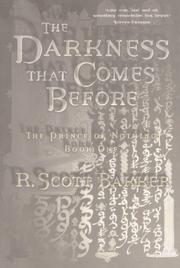
The only correct starting point, and the book that decides whether the series is for you. It opens with a prologue of monastic training and a hundred pages of unglossed vocabulary before the plot engages — that difficulty is the series in miniature, not an accident, and readers who push to the Holy War's assembly rarely stop.
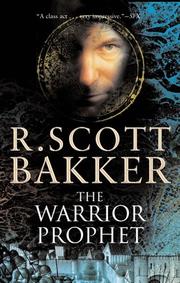
The march itself, and the volume where the First Crusade parallel becomes explicit and brutal. Read it immediately after the first; the two were written as one book and the split is arbitrary.
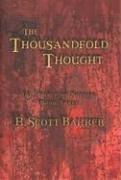
The end of the first movement, delivering the answer to what Kellhus actually is. It closes the trilogy properly, so it is a legitimate place to stop — but it also plants the premise the second series spends four books paying off.
The Aspect-Emperor
BeginnerRead the second series in order, and understand why it cannot be a starting point
▸ Study plan for this stage
Pace: Twelve to fourteen weeks. Three of the four have recorded lengths — The Judging Eye at 437, The White-Luck Warrior at 608, The Great Ordeal at 501, together 1,546 pages — and our catalogue holds no page count for The Unholy Consult, so budget for a full-length volume rather than a coda. Read The Jud
- The Aspect-Emperor opens twenty years after The Thousandfold Thought with the world already remade, and it never recapitulates how. Every changed institution is presented as ambient fact, which is exactly why it cannot function as an entry point.
- The Great Ordeal is the march north, and the series' central image: a vast holy army crossing a poisoned wilderness under a leader whose motives the reader has spent three books learning to distrust.
- Cil-Aujas, the descent in The Judging Eye, is the sequence most often cited as the best writing in the series. It lands only because you know who these people were, which is the whole argument against starting here.
- Two plot lines separate for good in The White-Luck Warrior — the Ordeal in the north and Esmenet holding the empire — and they answer different questions. The domestic line is not the B-plot.
- Mimara arrives as the new perspective and brings the Judging Eye itself: an ability to see damnation directly. It is the only instrument in the series that gives a straight moral answer, and Bakker uses it sparingly.
- The Great Ordeal and The Unholy Consult are one book. Knowing that in advance converts a novel that seems to end mid-motion into the halfway point it actually is.
- The Unholy Consult ends the Second Apocalypse as published, and a large share of readers dislike the ending. The intended third series has never appeared, so this is where the story currently stops rather than where it concludes.
- What has changed in the twenty years between the two series, and how does Bakker convey it without a recap?
- What does the Judging Eye let Mimara see, and why does the series need a character who can see it directly?
- The Ordeal's march north involves the army doing something to sustain itself. What is it, and what argument is Bakker making by putting it there?
- Esmenet's imperial plot and the Ordeal plot answer different questions about Kellhus. What is each one testing?
- Given how The Unholy Consult ends, is the Second Apocalypse a finished work? What would a third series have to do?
- Has your one-sentence answer about what Kellhus is survived four more books, and if not, what changed it?
- Before starting The Judging Eye, write out the state of every surviving major character at the end of The Thousandfold Thought. Bakker will not do it for you and the twenty-year gap is unforgiving.
- Read the Cil-Aujas descent twice — once for plot, once watching only how Bakker paces the dark. It is the best available lesson in his sentence-level control.
- Keep the two plot lines in separate notes from The White-Luck Warrior onward. They diverge in time as well as place, and readers routinely misdate events between them.
- Have The Unholy Consult physically to hand before you finish The Great Ordeal. This is a practical instruction, not a rhetorical one.
- After the ending, write down what you think it means before reading anyone else's argument about it. It is the most contested ending in modern fantasy and it is worth having your own reading first.
Next up: Having watched Bakker's Holy War end, the next stage puts the real one beside it and shows how much of the invention was reporting.

Twenty years on, with the world remade and no recapitulation of how. Its most famous sequence, the descent through Cil-Aujas, is the best single argument for the series — but it lands only if you already know what these characters were. This is where nobody should start.

The Great Ordeal marches north and the two plot lines separate for good. Read it directly after The Judging Eye; the pair function as one volume in the same way the first two Prince of Nothing books do.

Originally half of a longer manuscript split by the publisher, which is why it ends where it does. Read it knowing that it and The Unholy Consult are a single book; stopping between them is the worst place in the series to pause.

The end of the Second Apocalypse as published, and an ending that a large share of readers actively dislike. Read it last and read it immediately after The Great Ordeal — and know going in that the story is not tidily concluded, because a third series has never appeared.
The crusade the series rewrites
IntermediateRead the real First Crusade the Holy War is modelled on, and see how closely Bakker is tracking it
▸ Study plan for this stage
Pace: Eight to ten weeks for 1,471 pages, split very unevenly between two genuinely different books. Thomas Asbridge's The First Crusade: A New History is 448 pages of narrative history for a general reader — the preaching, the march, the famine at Antioch, the massacre at Jerusalem — and reads at 40 page
- Asbridge and Tyerman are not two versions of the same book. Asbridge narrates one campaign for a general audience; Tyerman analyses two centuries of a movement for readers who already accept that the campaign happened.
- The sequence Bakker tracks: the preaching and mass response, the march across Anatolia, the long siege of Antioch with the besiegers starving, the discovery of a relic that revives morale, and the taking of Jerusalem with a general massacre.
- The famine at Antioch and the reported cannibalism at Ma'arra are historical, not Bakker's invention. Knowing that changes how you read the Ordeal's march in the second series.
- The Holy Lance found at Antioch, and the disputes over whether it was genuine, is the historical hinge Bakker turns into a prophet. The real crusade also produced a charismatic visionary whose authority came from a discovery nobody could verify.
- Tyerman's central question is the one Asbridge raises and does not fully answer: why did any of this look reasonable to the people doing it? His answer is institutional and theological rather than psychological.
- Both historians work from chronicles written by participants and near-participants with strong interests. Reading them together is a lesson in how a history is built from partisan sources.
- The deviation Bakker introduces is the one thing to watch for: the historical crusade had no Kellhus. What the series adds is a man who can actually do what the chroniclers claim their leaders did.
- Lay the sequence of The Warrior Prophet against Asbridge's chronology. Where do they match event for event, and where does Bakker compress?
- What actually happened at Antioch, and how does Asbridge handle the Holy Lance and the doubts about it?
- What is Tyerman's answer to why crusading made sense to contemporaries, and where does it differ from Asbridge's framing?
- Where do the two historians disagree on the role of religious motivation versus material interest?
- The historical crusade produced no Kellhus. What does adding him let Bakker say about the real thing?
- What kind of sources are both books built from, and what are those sources bad at telling us?
- Make a two-column chronology — Asbridge's crusade and Bakker's Holy War — and mark every point of contact. The density of the correspondence surprises most readers.
- Read Asbridge's account of Ma'arra and then reread the Ordeal's supply problem in the second series. Bakker moved a documented event rather than inventing a shocking one.
- Use Tyerman's index to follow one theme — indulgences, or the financing of a crusade — across the whole book rather than reading straight through. At 1,023 pages this is the right way to use him.
- Find one place where Asbridge flags that a chronicler is unreliable and check what Tyerman does with the same source. It is the cleanest demonstration of the difference between a narrative and a scholarly history.
Next up: The history explains the war; the next two books explain the theory of mind the whole series is a demonstration of, stated by Bakker in plain contemporary prose.
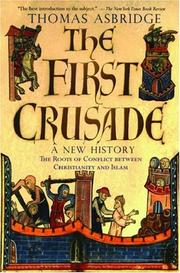
The most readable single-volume account of the campaign the Holy War reproduces — the preaching, the famine at Antioch, the massacre at Jerusalem. Read it after The Warrior Prophet, when you can watch Bakker follow the historical sequence event for event and then twist one thing.
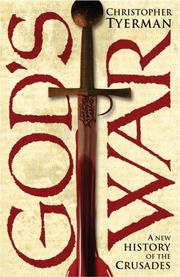
The long scholarly history of the whole crusading movement, and the corrective to reading the First Crusade as a one-off. Take it second: it is nine hundred pages and it answers the question Asbridge raises about why any of this seemed reasonable to the people doing it.
Bakker outside Eärwa
BeginnerRead the two contemporary thrillers where Bakker argues his position on consciousness in plain sight
▸ Study plan for this stage
Pace: Two to three weeks for 587 pages, and this is by far the lightest stage on the path — Neuropath at 318 and Disciple of the Dog at 269, both contemporary novels that read at thriller pace. Neuropath is best taken straight after The Thousandfold Thought, because it states in plain argument what the fa
- Neuropath is Bakker arguing his position outright: that the self is a post-hoc narrative the brain constructs, and that introspection is not evidence about how the brain works.
- That argument is the entire engine of the Dûnyain. Kellhus can manipulate people because Bakker thinks people are manipulable in roughly that way, and the thriller says so without the fantasy apparatus.
- The novel's premise weaponises the argument: an antagonist who edits experience directly rather than inflicting ordinary harm, which makes the philosophical claim into a plot.
- Disciple of the Dog narrates from a man with perfect recall, and therefore no access to the ordinary consolation of a quietly revised memory. It is the same thesis approached from comedy rather than horror.
- Both books are short, contemporary and plainly written, which is itself informative — the density of the Second Apocalypse is a choice about that material, not Bakker's only register.
- Reading these makes the fantasy less enjoyable in a specific way that is worth knowing about in advance: Kellhus's persuasions become mechanisms rather than magic.
- State Bakker's argument about the self in one sentence as Neuropath presents it. What would count as evidence against it?
- How does the premise of Neuropath convert a philosophical claim into a thriller plot, and does the conversion cost the argument anything?
- What does perfect recall do to the narrator of Disciple of the Dog, and what does that suggest about the function of ordinary forgetting?
- Having read these, does Kellhus read differently? Name a specific scene in the trilogy that changes.
- Bakker writes these in plain contemporary prose and Eärwa in dense archaic prose. What does the fantasy register buy him that the thriller register does not?
- Write down the argument of Neuropath as five numbered propositions, then find the scene in The Thousandfold Thought that dramatises each. Most of them have one.
- Reread one Kellhus persuasion immediately after finishing Neuropath. The scene does not change; your reading of it does, and noting how is the point of this stage.
- Read the two books in the same week and mark where Bakker repeats himself. The repetition is the thesis, and seeing it stated twice in different keys makes it much harder to mistake for atmosphere.
- Decide whether you want the fantasy demystified before you start Neuropath. Some readers prefer the second series with Kellhus still opaque, and that is a real choice with a real cost.
Next up: With Bakker's argument in the open, the last stage sets the series against the fantasy it inherited from and the fantasy it was published alongside.

A near-future thriller that states outright the neuroscience argument the fantasy dramatises: that the self is a post-hoc story the brain tells. Unpleasant by design and much shorter than anything in the main sequence — read it after The Thousandfold Thought and Kellhus stops being a fantasy conceit.

A detective novel narrated by a man with total recall who is therefore unable to comfort himself with a revised memory. The lightest thing Bakker has written and the clearest statement of the same idea; a good decompression book between the two series.
The tradition it is writing into
BeginnerPlace the Second Apocalypse among the fantasy it answers, and see what it took from each side
▸ Study plan for this stage
Pace: Five to six weeks for 1,059 pages, and the two halves of this stage read nothing alike. Gene Wolfe's Shadow and Claw is 528 pages and is the hardest reading on the whole path — harder, page for page, than Bakker — because the narrator is unreliable in ways the text never flags and the invented vocab
- Wolfe is the obvious ancestor: a first-person narrator who claims perfect memory and cannot be trusted, invented vocabulary drawn from real obsolete words, and a protagonist whose sanctity the text refuses to settle.
- Shadow and Claw is the first half of The Book of the New Sun, collected in one volume. Bakker's unglossed opening is a direct inheritance from it, and so is the refusal to confirm whether the central figure is holy or monstrous.
- The difference is where the withholding happens. Wolfe hides information inside a narrator; Bakker hides it inside a world, and tells you plainly what characters are thinking.
- The Blade Itself was published two years after The Darkness That Comes Before and represents the other pole of the same moment — the same disenchantment with heroic fantasy, played for comedy and momentum instead of philosophy.
- Abercrombie's characters are cynical; Bakker's world is. That distinction is what the stage exists to make visible, and it is why 'grimdark' as a single label flattens two very different projects.
- Reading both makes the singularity of Bakker's approach obvious: nobody else in this cluster is writing a thesis about consciousness with the fantasy as the demonstration.
- All three writers assume a competent reader and refuse to explain. The variable is what they refuse to explain and why.
- Where does Severian's narration in Shadow and Claw mislead you, and how would you know? Find one concrete example.
- Both Wolfe and Bakker withhold glosses. What is each withholding, and what does the reader gain by supplying it?
- Is Severian holy, monstrous, or something the text declines to decide? Compare with Kellhus.
- Abercrombie and Bakker were published two years apart into the same appetite. What is each reacting against, and are they reacting against the same thing?
- What can Abercrombie do that Bakker cannot, and what does Bakker get in exchange for giving it up?
- Having read all three, is 'grimdark' a useful description of any of them?
- Read the first chapter of Shadow and Claw twice before continuing. Wolfe plants information there that is only legible on a second pass, and doing it once teaches you how to read the rest.
- Keep a list of Wolfe's invented words and guess each meaning from context before looking any up. Nearly all are real obsolete English, which is the joke and the method.
- Take one page each of Wolfe, Bakker and Abercrombie and mark every sentence that tells you what a character is feeling. The counts differ enormously and explain most of the difference in reading experience.
- After The Blade Itself, write one paragraph on what the Second Apocalypse is doing that no other book on this stage attempts. That paragraph is the honest answer to whether the ten thousand pages were worth it.
Next up: That places the Second Apocalypse in its tradition and closes the path with the series' actual context rather than its reputation.
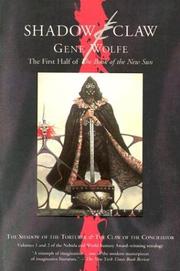
The first half of The Book of the New Sun, and the most obvious ancestor: an unreliable narrator, an invented vocabulary you are expected to absorb without a glossary, and a protagonist whose sanctity is left genuinely undecided. The record here collects the first two volumes as one book, which is how it is normally sold.
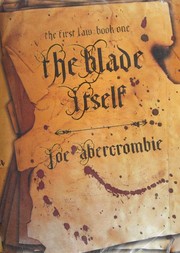
Published two years after The Darkness That Comes Before and the other pole of the same moment in fantasy — the same disenchantment played for comedy and momentum rather than philosophy. Read it last, as the cheerful counterweight, and as the book that shows how singular Bakker's approach actually is.
Discussion
Keep reading
Paths that share books, cover the same subject, or open a related topic.