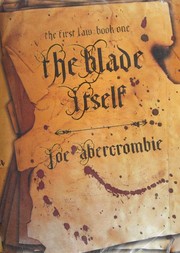
Start with The Blade Itself. It is book one and there is no argument to be had about it, but there is a warning to issue: it is almost entirely setup. Characters are introduced, moved into position, and given superb dialogue, and then the book stops. If you are the kind of reader who expects a first volume to resolve something, you will finish it wondering what the fuss is about. Treat the original trilogy as one long novel published in three parts and judge it at the end of Last Argument of Kings.
The reason to persist is the characters. Abercrombie writes the best point-of-view voices in modern fantasy — a crippled torturer, a barbarian trying to be a better man and failing, a vain fencer who is funnier than he knows — and the payoff of the trilogy is entirely a payoff of character. The plot exists to put them where they will do the most damage.
The order
The original trilogy, in publication order:
- The Blade Itself
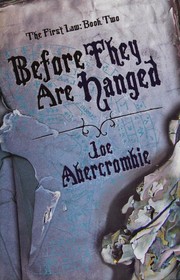
- Before they are hanged
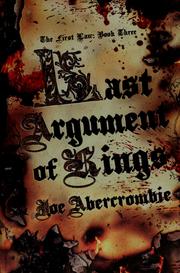
- Last Argument of Kings
Then the three standalones, also in publication order:
4. Best served cold — a revenge novel in the south, and the most tightly plotted book Abercrombie has written
5. The Heroes — three days, one battle, one valley. Many readers consider it his best single book
6. Red Country — a western, complete with a wagon train and a frontier town
Then the Age of Madness trilogy:
7. A Little Hatred
8. The Trouble with Peace
9. The Wisdom of Crowds
There is also a short-story collection, Sharp Ends, which sits alongside the standalones and is entirely optional. It is not in our catalogue.
Can you skip the standalones?
This is the one real order question in the series, and the answer is no. The Age of Madness is set roughly thirty years later and it assumes you know what happened in all three standalones. Best served cold determines the political situation of an entire nation in the later trilogy. Red Country resolves an arc for a character who returns. Skipping to A Little Hatred after the first trilogy is possible in the sense that you will follow the plot, but you will miss most of the reason particular scenes land.
The reverse question — can you read the standalones without the trilogy — has a friendlier answer. The Heroes in particular works almost completely on its own, and it is a reasonable sample if you want to test whether Abercrombie is for you before committing to nine books.
The honest warnings
The books are bleak and the humour is dark enough that some readers find it corrosive rather than funny. Violence is frequent and unromantic. The first trilogy in particular ends by systematically dismantling the fantasy conventions it spent three books setting up, which is thrilling if that is what you wanted and infuriating if you wanted the conventions honoured. Nobody is transformed by love. Read a few pages before you commit.
Before they are hanged is a middle book and reads like one — it is largely a quest that goes nowhere, deliberately. Some readers find that stretch slow. It also contains the series' best siege.
Where to stop
Last Argument of Kings is a complete, deliberate ending. If you read only the first trilogy you have read a finished story with a genuinely memorable final act, and a large number of readers stop there happily. The three standalones are then a menu rather than a sequence — pick The Heroes if you want one. Only commit to the Age of Madness if you want the whole world's history to keep moving, which is what it delivers. Browse Discover for adjacent series if you want a break between trilogies.
Follow the full ordered path here: The First Law Reading Order: Where to Start.
Ready to learn something deeply?
Build a reading path — free