The Raj Quartet Reading Order and Guide
This curriculum guides an intermediate reader through Paul Scott's complete Raj Quartet cycle — all four novels in sequence plus the coda Staying On — framed by essential historical context before and enriched by critical and comparative reading after. Each stage builds the political, cultural, and literary vocabulary needed to fully inhabit Scott's dense, multi-perspectival world.
Historical Foundations
IntermediateGain a vivid, readable grounding in the final decades of the British Raj — the political tensions, social hierarchies, and human costs of partition — so that Scott's fictional world feels immediate and legible from page one.
▸ Study plan for this stage
Pace: 8–10 weeks total: Weeks 1–6 for "India" by John Keay (~25–30 pages/day, focusing chapters on the Mughal decline through Independence); Weeks 7–10 for "Freedom at Midnight" by Lapierre (~40–45 pages/day, a faster narrative pace suits its cinematic prose). Allow one buffer day per week for note-taking
- The arc of British imperial consolidation in India — from the East India Company's trading footholds through Crown Rule after 1857 — as charted by Keay, so that the Raj's institutional machinery feels historically grounded rather than monolithic
- The layered social hierarchy of the Raj: the rigid separation between the British 'heaven-born' ICS officers and the Indian educated elite, and the further stratifications of caste, religion, and class that Scott will exploit dramatically
- The Congress–League divide: how Keay traces the diverging nationalisms of the Indian National Congress and the Muslim League, and why Jinnah's demand for Pakistan became non-negotiable by the 1940s
- The human geography of Partition — the Punjab and Bengal fault lines, the logic of drawing the Radcliffe Line, and the catastrophic population transfers — as rendered viscerally in 'Freedom at Midnight'
- Mountbatten's accelerated timetable: Lapierre's detailed account of why the transfer of power was moved from June 1948 to August 1947, and the cascading consequences of that decision
- The princely states problem: how hundreds of nominally sovereign rulers (Hyderabad, Kashmir, and others) had to be integrated or coerced into the new nations — a subplot Lapierre dramatizes and Keay contextualizes
- Gandhi's final months — his fasts, his role in Calcutta and Delhi, and his assassination — as the moral and emotional spine of 'Freedom at Midnight', offering a human-scale counterweight to geopolitical narrative
- The concept of 'transfer of power' versus genuine independence: the ambiguities of Dominion status, the retention of British officers, and the psychological residue of colonial authority that Scott's characters will embody
- After reading Keay, can you explain in your own words how the 1857 Uprising changed the relationship between Britain and India — in governance, in racial attitudes, and in Indian political consciousness — and why this matters for understanding the world Scott depicts a century later?
- How did the competing visions of Nehru, Jinnah, and Gandhi for post-British India make Partition, in Lapierre's telling, feel both inevitable and avoidable? What were the key moments where a different outcome seemed possible?
- What does Keay's account of the Indian Civil Service reveal about the social and psychological world of the British administrator in India — the sense of mission, the isolation, the paternalism — that Scott will place under a fictional microscope?
- Using 'Freedom at Midnight', describe the human experience of Partition in the Punjab: who moved, under what conditions, and with what violence? How does Lapierre make statistics feel personal?
- How did Mountbatten's personality and decisions, as portrayed by Lapierre, shape the specific form Independence and Partition took? What does this suggest about the role of individual agency versus structural forces in historical events?
- What social and racial codes governed interaction between the British and Indians in the final decades of the Raj, and how do both Keay and Lapierre show these codes beginning to crack under the pressure of the independence movement?
- Timeline construction: After finishing Keay, build a single-page annotated timeline from 1857 to 1947, marking at least 15 events. Then, after Lapierre, add a second color-coded layer covering August–December 1947. This dual timeline will become a reference tool throughout the entire curriculum.
- Character-mapping the power structure: Draw a hierarchy diagram of the British Raj's social world — Viceroy, ICS officers, Indian princes, Congress politicians, Muslim League leaders, ordinary Indians — annotating each tier with one vivid detail from either book. Pin it somewhere visible while reading Scott.
- Close-reading journal: Choose one scene from 'Freedom at Midnight' that depicts a direct encounter between a British figure and an Indian figure (e.g., Mountbatten meeting Gandhi, or a British officer at a refugee camp). Write a one-page analysis of the power dynamics, body language, and unspoken assumptions at play — practicing exactly the kind of reading Scott demands.
- Geography exercise: Using a blank map of the subcontinent, trace the Radcliffe Line and mark the major cities, princely states, and refugee corridors described by Lapierre. Note which regions Scott sets his novels in (Mayapore, loosely the Punjab/UP corridor) and consider what historical events would have been felt there.
- Comparative reflection essay (500 words): Keay writes history analytically; Lapierre writes it cinematically. Write a short essay comparing how each author handles the same event or period (e.g., the run-up to Partition). Which approach do you find more persuasive, and which better prepares you to read literary fiction? Why?
- Pre-reading Scott: Before opening 'The Jewel in the Crown', write down three questions you now have about what daily life, personal relationships, and moral compromises looked like for both British and Indian characters in 1942 India. Return to these questions after the first 50 pages of Scott to see which ones he answers — and which ones he complicates.
Next up: Having absorbed the political skeleton (Keay) and the emotional flesh (Lapierre) of the Raj's final decades, the reader is now equipped to enter Scott's fictional Mayapore not as a stranger but as an informed witness — ready to recognize the historical pressures bearing down on every character, every social ritual, and every act of violence or kindness on the page.

A single-volume narrative history that traces India from antiquity to independence; reading the final chapters first gives the 1942–1947 timeline that underpins every novel in the Quartet.
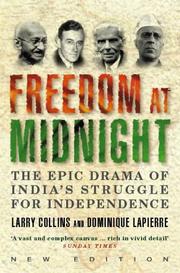
A gripping, journalist-paced account of the Mountbatten negotiations and Partition; it populates the historical backdrop with real personalities and atrocities that Scott fictionalises, making his allusions instantly recognisable.
The Raj Quartet — Novels I & II
IntermediateEnter Scott's fictional Mayapore and Pankot, master his layered retrospective narration, and follow the central trauma of the Bibighar Gardens through its immediate and widening consequences.
▸ Study plan for this stage
Pace: 8–10 weeks total: Weeks 1–4 for The Jewel in the Crown (~25–30 pages/day, allowing slower reading for the dense opening documentary sections), and Weeks 5–9 for The Day of the Scorpion (~25 pages/day, with a dedicated pause week between the two novels to consolidate notes and write a reflective resp
- Retrospective multi-perspectival narration: Scott withholds a single authoritative account, instead assembling the 'truth' of the Bibighar Gardens rape through contradictory testimonies, documents, interviews, and reports — readers must actively triangulate versions rather than passively receive fac
- The Bibighar Gardens as symbolic nexus: The assault on Daphne Manners and the arrest of Hari Kumar crystallize the entire pathology of the Raj — racial hierarchy, sexual anxiety, colonial law as instrument of power, and the impossibility of genuine cross-cultural intimacy under empire.
- Hari Kumar / Harry Coomer and the 'de-Indianized' Indian: Kumar's English public-school formation and subsequent rejection by both British and Indian society makes him the quartet's sharpest study in colonial identity destruction — he belongs nowhere, which is precisely what makes him dangerous to t
- The District of Mayapore as microcosm: Scott constructs Mayapore (and later Pankot) as self-contained social worlds whose club culture, cantonment geography, and rigid social stratification physically embody the ideological architecture of British India.
- Ronald Merrick as the Raj's dark id: Merrick's lower-middle-class origins, his manipulation of colonial authority, his repressed desires, and his deliberate persecution of Kumar expose the psychological violence beneath the Raj's civilizing self-image — he is not an aberration but a product.
- The 1942 Quit India crisis as historical pressure: Both novels are set against the backdrop of the August 1942 uprisings and the imprisonment of Congress leaders; Scott insists that the Bibighar trauma cannot be separated from this political convulsion — private and public catastrophe are inseparabl
- The transition from Mayapore to Pankot (The Day of the Scorpion): The shift of focus to the Layton family and the hill-station world of Pankot broadens the social canvas from a single traumatic incident to the generational and institutional consequences of empire — introducing Sarah and Susan Layton
- Documentary realism and the 'absent centre': Scott's use of fictional documents — interview transcripts, administrative reports, letters, diaries — creates the illusion of an archive while constantly reminding the reader that the centre of events (what actually happened in the Bibighar Gardens) is p
- What are the at least four distinct narrative 'voices' or documentary sources Scott uses in The Jewel in the Crown to reconstruct the Bibighar Gardens incident, and how does each source's social position shape what it can and cannot see?
- How does Hari Kumar's biography — his English education, his father's financial ruin, his return to India — make him both a victim of colonial racism and, in Merrick's eyes, a specific kind of threat? What does Merrick's obsession with Kumar reveal about Merrick himself?
- In what ways does the geography of Mayapore — the civil lines, the cantonment, the Bibighar Gardens, the Indian town — function as a spatial map of racial and social hierarchy? How does Daphne Manners's movement through these spaces signal her transgression of colonial norms?
- The Day of the Scorpion introduces the Layton family and the Pankot world. How does Sarah Layton's perspective differ from the documentary narration of The Jewel in the Crown, and what does her interiority add to Scott's critique of the Raj?
- How does Scott use the imprisonment of Colonel Layton as a prisoner of war alongside the imprisonment of Hari Kumar to create a structural parallel between British victimhood and Indian victimhood under different systems of confinement?
- By the end of The Day of the Scorpion, what has Susan Layton's marriage to Teddie Bingham and its violent conclusion revealed about the psychological cost of sustaining the Raj's social performances for the women who must enact them?
- Narration mapping: As you read The Jewel in the Crown, keep a running log of every distinct narrative source (the unnamed 'author-historian,' Sister Ludmila's testimony, the MacGregor House documents, Daphne's journal, etc.). For each, note: Who is speaking? When (relative to 1942)? What do they know, and what are they structurally prevented from knowing? At the end, write a one-page synthesis: wh
- Character dossier — Ronald Merrick: Compile a dossier on Merrick drawing only on evidence from these two novels. Include: his class background, his stated justifications for arresting Kumar, moments where his language betrays unconscious desire or envy, and his reappearance in The Day of the Scorpion. Write a 300-word psychological profile arguing whether he is best read as a villain, a symptom, o
- Spatial close-reading: Select one scene in The Jewel in the Crown in which a character crosses a social boundary (e.g., Daphne cycling into the Indian town, Kumar at the Gymkhana Club). Write a 400-word close reading showing how Scott uses physical space, other characters' reactions, and free indirect discourse to dramatize the transgression.
- Parallel timeline: Construct a dual timeline for The Day of the Scorpion — one track for the Layton family's private events (Colonel Layton's captivity, Susan's courtship and marriage, Sarah's growing disillusionment), and a parallel track for the historical/political events Scott references (the fall of Singapore, the 1942 crisis, the INA). Annotate three moments where the private and public time
- Comparative voice exercise: Find one event that is described or alluded to from at least two different perspectives across the two novels (e.g., the Bibighar incident itself, Merrick's conduct during the riots). Write a 500-word comparison of the two accounts, focusing on what each narrator's language — word choice, tone, what is omitted — reveals about their ideological position.
- Thematic journal — 'Belonging and Exclusion': After finishing each novel, write a one-page journal entry tracing how a single character (choose a different one for each novel) experiences the theme of belonging or exclusion. At the end of Stage I, write a third entry comparing the two, noting whether Scott's treatment of the theme shifts between Mayapore and Pankot.
Next up: By establishing the Bibighar trauma as an unresolved wound and leaving Merrick, Sarah Layton, and the imprisoned Kumar in states of suspension, these two novels create the moral and narrative debts that Novels III and IV — The Towers of Silence and A Division of the Spoils — will collect, demanding the reader track how empire's psychological damage compounds across time, class, and gender as indep
The first novel introduces the Quartet's central event — the assault on Daphne Manners — and establishes Scott's mosaic, multi-voice technique; reading it first is essential as every subsequent volume circles back to it.
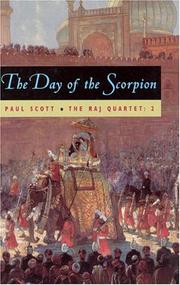
Shifts focus to the Layton family and the Indian National Army trials, deepening the political and military dimensions; it builds directly on characters and events introduced in the first novel.
The Raj Quartet — Novels III & IV
IntermediateFollow the Quartet to its shattering conclusion — tracing the moral collapse of empire through the Laytons, Merrick, and Hari Kumar — and experience Scott's full symphonic ambition.
▸ Study plan for this stage
Pace: 8–10 weeks total: ~4–5 weeks per novel at roughly 25–35 pages per day. The Towers of Silence (~340 pp.) is denser and more interior — allow slower, more reflective reading (4–5 weeks). A Division of the Spoils (~600 pp.) is expansive and multi-stranded — push to 35 pages/day over 5 weeks. Reserve th
- The moral archaeology of empire: Scott uses Barbie Batchelor's spiritual disintegration in The Towers of Silence as a microcosm of the entire colonial project's collapse — her fate literalises the abandonment of those who served the Raj most faithfully
- Mabel Layton as silent witness: Mabel's near-wordless presence and her bequest of Roses Cottage function as a structural and ethical counterweight to the social performances of the other characters — her silence is itself a judgment
- Ronald Merrick as the empire's shadow self: across both novels Merrick's sadism, his manipulation of Hari Kumar's fate, and his eventual disfigurement and death crystallise Scott's argument that the Raj's violence was not aberrant but systemic
- Hari Kumar and the 'in-between' identity: A Division of the Spoils revisits and resolves Hari's story, forcing the reader to reckon with how empire destroys those who try to inhabit two cultures simultaneously
- The symphonic structure of the Quartet: Scott's use of multiple narrators, retrospective testimony, and overlapping time-frames reaches its fullest expression in A Division of the Spoils — the reader must track how each voice colours the 'truth' of shared events
- Partition and the division of spoils: A Division of the Spoils is set against the actual Partition of 1947; the political catastrophe mirrors the personal and moral fractures that have been building since The Jewel in the Crown — history and private life become indistinguishable
- The role of women as moral registers: Barbie, Mabel, Sarah Layton, and Susan Layton each embody a different response to imperial decline — their choices and fates collectively constitute Scott's feminist critique of the Raj's social order
- Endings and irresolution: Scott deliberately refuses catharsis — Merrick's death is squalid, Hari's future is uncertain, Barbie dies unheard — teaching the reader that the Quartet's 'conclusion' is an ethical provocation, not a resolution
- In The Towers of Silence, how does Barbie Batchelor's obsession with Mabel Layton's silence and her eventual breakdown dramatise Scott's critique of the missionary and memsahib culture of the Raj?
- What does Mabel Layton's will — and the community's reaction to it — reveal about the social hierarchies and hypocrisies of Pankot society?
- How does A Division of the Spoils use the testimonies surrounding Hari Kumar's wartime imprisonment and Merrick's role in it to interrogate the reliability of official colonial narrative?
- In what ways does the backdrop of Partition in A Division of the Spoils function as both historical context and moral metaphor for everything that has preceded it in the Quartet?
- Trace Ronald Merrick's arc from The Towers of Silence through A Division of the Spoils: how does Scott ensure that his death neither redeems nor simply condemns him, but instead implicates the entire system that produced him?
- How do Sarah Layton's choices and perspective in both novels position her as the Quartet's most lucid moral consciousness, and what are the limits of that lucidity?
- Barbie's voice journal: After finishing The Towers of Silence, write a 500-word first-person monologue from Barbie's point of view at the moment she is forced out of Roses Cottage — then write a second monologue from the perspective of one of the Pankot women who displaces her. Compare the two to surface the power dynamics Scott embeds in the scene.
- Merrick timeline: Create a detailed chronological timeline of every confirmed action Merrick takes or is alleged to have taken across both novels (including events reported retrospectively). Annotate each entry with the source/narrator and assess their reliability. This exercise makes Scott's symphonic method of partial revelation viscerally clear.
- Partition mapping: As you read A Division of the Spoils, keep a running two-column log — one column for historical Partition events Scott references or implies, one column for the parallel personal 'divisions' (inheritances, relationships, identities) experienced by the characters. Write a one-page reflection on the patterns you find.
- Silence as technique: Identify five scenes across the two novels where a character's silence (Mabel's, Hari's under interrogation, Sarah's withheld judgments) carries more narrative weight than dialogue. For each, write two or three sentences explaining what Scott achieves by withholding speech that a spoken exchange could not.
- Comparative character essay: Write a 700–900 word comparative essay arguing which of the two novels — The Towers of Silence or A Division of the Spoils — more effectively indicts the British Raj, using specific scenes and characters from each to support your argument.
- Re-read the ending: After completing A Division of the Spoils, return to the final chapter and re-read it alongside the opening pages of The Jewel in the Crown (if available from a prior stage) or the opening of The Towers of Silence. Write a paragraph on what Scott's circular or unresolved structure demands of the reader ethically.
Next up: Completing these two novels leaves the reader with Scott's full moral and structural vision intact — the unresolved fates of Hari, Sarah, and the subcontinent itself make the Quartet an open wound rather than a closed case, perfectly priming the reader to engage with critical and historical scholarship on late-colonial fiction, or to move into companion works such as Scott's standalone Staying On,
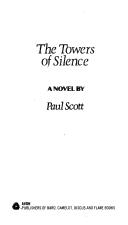
Centres on Barbie Bachelor and Mabel Layton, shifting the lens to the forgotten women of the Raj; having read the first two novels makes the quiet devastation here fully resonant.

The concluding novel brings all threads — political, personal, moral — to resolution against the chaos of Partition in 1947; it rewards the accumulated knowledge of the three preceding volumes.
The Coda
IntermediateExperience Scott's elegiac farewell to his fictional world — and to the British in India — through the intimate, darkly comic story of two survivors left behind after independence.
▸ Study plan for this stage
Pace: 2–3 weeks, ~25–30 pages/day — the novel is compact (~280 pages), so a relaxed but consistent pace allows space for savoring Scott's prose, re-reading key passages, and journaling between sessions
- Elegy and aftermath: 'Staying On' functions as a coda to the entire Raj Quartet, depicting the emotional and social wreckage left behind after independence and the British withdrawal from India
- Tusker and Lucy Smalley as 'leftovers': the Smalleys — minor characters from 'A Division of the Spoils' — are now the protagonists, embodying the pathos of those who chose India over England and find themselves stranded between two worlds
- Dark comedy as a mode of mourning: Scott uses irony, farce, and domestic bickering to approach grief, loss of purpose, and the indignity of aging and obsolescence without sentimentality
- The crumbling of the Anglo-Indian social world: the hotel setting (the Smith's Hotel / Pankot) literalizes decline — a once-grand institution now decayed, run by Indians who have inherited a world the British built but no longer belong to
- Narrative voice and epistolary intimacy: Scott employs letters, interior monologue, and shifting close-third-person perspectives to give both Tusker and Lucy fully realized, sometimes contradictory inner lives
- Post-colonial identity and belonging: the Smalleys are neither fully at home in India nor able to return to a Britain that has moved on without them, dramatizing the broader crisis of post-imperial British identity
- Gender, power, and the marriage dynamic: Lucy's long-suffering intelligence and Tusker's bluff emotional avoidance mirror and invert the colonial relationship — who truly 'rules' in this private empire?
- Death as the final departure: Tusker's death at the novel's close is the last in a long series of endings Scott has orchestrated across the Quartet, and Lucy's final monologue is one of the most celebrated passages in post-war British fiction
- How does 'Staying On' reframe or recontextualize the events of the Raj Quartet through the lens of two previously minor characters — what does choosing Tusker and Lucy as protagonists reveal about Scott's thematic priorities?
- In what ways does the Smith's Hotel function as a microcosm of post-independence India, and what does its physical and social decay symbolize about the legacy of the Raj?
- How does Scott balance comedy and tragedy in the novel — identify at least two scenes where humor and pathos are inseparable, and analyze how that tonal blend serves the novel's elegiac purpose?
- Lucy's final interior monologue is addressed directly to the dead Tusker. What does this formal choice reveal about the nature of their marriage, her grief, and the broader theme of voices that go unanswered?
- How does 'Staying On' engage with the question of post-imperial British identity — in what sense are Tusker and Lucy as 'colonized' by nostalgia and circumstance as they once were colonizers?
- Compare the treatment of Indian characters in 'Staying On' (e.g., Ibrahim, Mrs. Bhoolabhoy) with their counterparts in the Raj Quartet — does Scott's perspective on Indian agency and interiority shift in this final work?
- Close-reading journal: Select Lucy's final monologue and annotate it in detail — mark every shift in tone, every direct address to Tusker, and every echo of earlier scenes in the novel. Write a one-page reflection on how Scott makes grief both universal and specific.
- Character archaeology: Go back to 'A Division of the Spoils' (the final Quartet volume) and find the scenes featuring the Smalleys. Write a brief character sketch of who they were then, then write a second sketch of who they are in 'Staying On.' What has time done to them — and what has it revealed?
- Setting as symbol: Draw or diagram the layout of Smith's Hotel as you imagine it from Scott's descriptions. Annotate each space with the social or thematic meaning it carries (e.g., the dining room, Tusker's garden, the Smalleys' 'grace and favour' cottage). Write a paragraph on how the hotel's physical decline mirrors the characters' inner lives.
- Tonal analysis exercise: Identify three scenes you find darkly comic. For each, write two short paragraphs — one describing what is funny about the scene, one describing what is sad. Then write a third paragraph explaining why separating the two modes would diminish the scene's power.
- Comparative essay (500–700 words): 'Staying On' won the Booker Prize in 1977, while the Raj Quartet did not. Write an argument for or against the proposition that 'Staying On' is the most emotionally complete work Scott produced — use specific textual evidence from the novel.
- Reflection and synthesis: Write a personal response (one to two pages) to Lucy's question of why she and Tusker stayed on in India. Use the novel's evidence to construct the most honest answer you can — then reflect on what that answer says about the nature of belonging, habit, love, and self-deception.
Next up: By sitting with the emotional and thematic resolution Scott provides in 'Staying On,' the reader is now equipped to step back and engage with critical and historical scholarship on the Raj Quartet as a whole — examining how Scott's complete fictional project fits into post-colonial literature, British imperial history, and the legacy of the novel of empire.

Written after the Quartet and winner of the Booker Prize, this short novel follows minor Quartet characters Tusker and Lucy Smalley into post-independence India; it is best read last, as its pathos depends entirely on knowing the world they are outliving.
Critical and Comparative Depth
ExpertSituate Scott's achievement within the broader tradition of Anglo-Indian fiction and postcolonial criticism, and read the one novel most often paired with the Quartet for comparative insight.
▸ Study plan for this stage
Pace: 6–8 weeks total: Weeks 1–3 for "A Passage to India" (~25–30 pages/day, re-reading key chapters slowly); Weeks 4–6 for "Paul Scott" by Hilary Spurling (~20–25 pages/day, with note-taking on biographical-to-textual connections); Week 7–8 reserved for comparative synthesis, essay drafting, and revisiti
- The 'Anglo-Indian novel' as a genre: its conventions, limitations, and ideological freight from Forster to Scott
- Forster's 'undeveloped heart' thesis — the failure of liberal humanism to bridge the colonial divide — and how Scott both inherits and critiques it
- The Marabar Caves as a structuring symbol of colonial unknowability, compared with Scott's use of the Bibighar Gardens as a site of violated encounter
- Narrative voice and ironic distance: Forster's free indirect discourse versus Scott's multi-perspectival, documentary realism
- Postcolonial criticism as a reading lens: orientalism, mimicry, and the 'third space' (Bhabha), applied to both texts
- Spurling's biographical method: how she traces the real-world sources — Scott's wartime India, his alcoholism, his outsider status in the literary establishment — that shaped the Quartet's moral vision
- The question of 'who has the right to tell this story': authorial positioning in a Forster who never truly lived among Indians versus a Scott who served in the Indian Army
- Literary reputation and reception history: why the Quartet was initially undervalued and how Spurling's critical biography rehabilitated Scott's standing
- In what specific ways does Scott's treatment of the British-Indian encounter in the Quartet revise, deepen, or reject Forster's vision in 'A Passage to India' — and what does Spurling's biography reveal about Scott's own conscious relationship to Forster's legacy?
- How does Forster's structural use of the Marabar Caves episode compare to Scott's use of the Bibighar rape as a founding trauma — what does each 'unknowable event' do for its novel's moral and political argument?
- What does Spurling identify as the key biographical pressures — war service, personal relationships, class, sexuality — that gave Scott both the authority and the compulsion to write the Quartet, and how are these pressures visible in the text?
- How do the narrative techniques of the two authors — Forster's ironic omniscience versus Scott's layered, multi-voiced reconstruction — reflect different assumptions about whether colonial experience can be represented at all?
- Applying postcolonial critical frameworks, where do both Forster and Scott fall short of fully decolonizing their narratives, and where do they succeed in exposing rather than reproducing imperial ideology?
- How does Spurling's biography change or complicate your reading of specific characters or scenes in the Quartet that you encountered in earlier stages of this curriculum?
- Comparative close-reading: Select one scene of cross-racial encounter from 'A Passage to India' (e.g., the Fielding–Aziz friendship) and one from the Quartet (e.g., Hari Kumar and the English characters). Write a 600-word comparison of how each author constructs empathy, distance, and power through sentence-level choices.
- Spurling as annotator: After finishing 'Paul Scott,' return to two or three passages in the Quartet (from earlier stages) that Spurling discusses directly. Annotate those passages with Spurling's biographical and critical context, then write a paragraph on whether the biographical knowledge enriches or constrains your literary reading.
- Postcolonial lens exercise: Choose one secondary concept from postcolonial theory (orientalism, mimicry, hybridity, or the subaltern) and write a 500-word application of it to a specific chapter in 'A Passage to India,' then a parallel 500-word application to a scene from the Quartet — concluding with a sentence on which text the concept illuminates more powerfully and why.
- Reception history timeline: Using Spurling's account of Scott's critical neglect and eventual recognition, construct a brief annotated timeline of the Quartet's reception from first publication through the Granada TV adaptation. Note which external events (decolonization, the Booker Prize culture, postcolonial studies' rise) correlate with shifts in how Scott was read.
- Debate preparation: Formulate the strongest possible argument that Forster's 'A Passage to India' is a more politically radical text than the Quartet — then formulate the strongest counter-argument using Spurling's evidence. Write one paragraph for each side, then a concluding sentence stating your own adjudicated position.
- Synthesis essay: Write a 1,000-word essay answering the question: 'Does Paul Scott's Raj Quartet supersede A Passage to India as the defining literary account of British India, or do the two works perform fundamentally different and complementary tasks?' Draw on both books read in this stage as your primary evidence.
Next up: Having now situated the Quartet within the Anglo-Indian literary tradition and grounded it in Scott's biography and critical reception, the reader is equipped to move into the final stage — engaging directly with postcolonial theory and scholarly essay collections — where the analytical vocabulary and comparative frameworks built here can be applied with full critical rigor.

The canonical predecessor to Scott's project — also centred on a contested assault and the unbridgeable gulf between coloniser and colonised; reading it after the Quartet reveals exactly what Scott was revising and deepening.
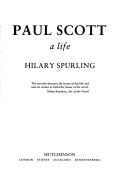
The authoritative biography illuminates how Scott's own wartime service in India, his struggles with alcoholism, and his literary ambitions shaped every corner of the Quartet; it transforms a second reading of the novels.
Discussion
Keep reading
Paths that share books, cover the same subject, or open a related topic.