A small Protestant republic with no royal court, no altarpiece commissions and barely a century of independence produced more paintings per head of population than anywhere else in Europe. That fact is the subject. If you go straight to Rembrandt and Vermeer monographs you get two geniuses floating free of the conditions that made them possible, and the more interesting question — who bought all these pictures, and why did they want landscapes and taverns instead of saints — never gets asked.
So the useful order is survey, then market, then the two masters, then the genres, then the arguments art historians are still having about what the pictures were for. Skipping the middle is what leaves readers thinking Dutch art is just very well-painted rooms.
Get the shape of it first
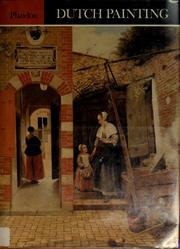
Dutch painting is Christopher Brown's short illustrated introduction and the right first book: it names the genres, the cities and the roughly forty painters worth knowing, in an afternoon.
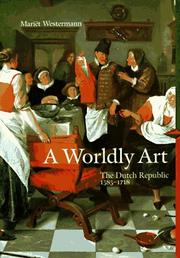
A worldly art is the standard survey and the one to actually study. Mariët Westermann organises the period thematically rather than by master, which is precisely the corrective a newcomer needs.
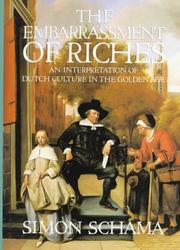
The Embarrassment of Riches is not an art history at all. Simon Schama is reconstructing the mental world of the Dutch — their unease about wealth, cleanliness, drink, children, water — and it makes the paintings legible as moral arguments rather than decor. It is long and digressive and worth every page.
The market that made it
Art and commerce in the Dutch Golden Age is the economic account: Michael North on prices, guilds, dealers, and the ordinary households that owned pictures. It explains the specialisation — why one man painted nothing but church interiors for forty years.
Vermeer's hat is the outward-facing companion. Timothy Brook takes objects out of Vermeer's paintings — a beaver-felt hat, a Chinese porcelain dish — and follows each into the global trade networks that put it in a Delft room. It is a book about the seventeenth-century world more than about painting, which is why it sits here rather than with the Vermeer titles.
Rembrandt, and then Vermeer
Three Rembrandt books, and you do not need all three. Rembrandt's eyes is Schama again, enormous and part-novelistic, structured around the rivalry with Rubens; readers either love it or find the speculation intrusive. The Rembrandt Book is Gary Schwartz's sober, superbly illustrated one-volume alternative — the better reference, the lesser read. If you want one, that choice is really a choice between those two.
Rembrandt's enterprise is different in kind and should not be skipped: Svetlana Alpers argues that Rembrandt ran a studio as a business and built a market for his own manner, which reframes the workshop pictures and the authenticity disputes entirely.
For Vermeer, Vermeer and his milieu is the foundation — John Michael Montias went into the Delft notarial archives and reconstructed the man's family, debts and patrons, and almost everything reliable we know starts there. Vermeer by Arthur K. Wheelock Jr. is the painting-by-painting complement.
The genres and the arguments
Dutch Seventeenth-Century Genre Painting is Wayne Franits on the tavern, the brothel, the courtyard and the doctor's visit, and on how their meanings shifted across the century. The amusements of Jan Steen is Westermann on the funniest and most misread painter of the period.
Two theoretical books close the path. The art of describing is Alpers's argument that Dutch painting is fundamentally descriptive rather than narrative — closer to mapping and lens-making than to Italian storytelling. It was contested when it appeared and it still is; read it as a position, not a verdict. Looking at the Overlooked is Norman Bryson on still life, and it will change how you see a table of oysters.
Work through the full path hub for the paths and guides that branch off this one.
Follow the full ordered path here: How to Learn the Dutch Golden Age of Painting from Books, in Order.