Neil Gaiman Reading Order: Where to Start
This curriculum guides you through Neil Gaiman's work from his most accessible and beloved entry points, through his landmark comic masterpiece, and finally into his richer, stranger, and more demanding fiction. Each stage builds familiarity with Gaiman's recurring themes — mythology, dreams, storytelling itself, and the thin membrane between the mundane and the magical — so that by the end, even his most layered work feels earned and resonant.
First Steps: The Gateway Gaiman
BeginnerGet hooked on Gaiman's voice, his fairy-tale logic, and his gift for making the uncanny feel intimate and warm. These are short, fast reads that establish his core sensibility.
▸ Study plan for this stage
Pace: 4–5 weeks total; roughly 20–25 pages per sitting, 4–5 sittings per week. Week 1: Coraline (~165 pages — finish in 3–4 sittings). Week 2: The Graveyard Book (~310 pages — 5–6 sittings, treating each chapter like a short story). Weeks 3–4: Stardust (~250 pages — 4–5 sittings). Week 5: review, journali
- The 'thin places' principle — Gaiman consistently places ordinary protagonists (Coraline, Bod, Tristran) at the membrane between the mundane world and a hidden magical one, and the drama lives in crossing that membrane
- Fairy-tale logic over realistic logic — rules in Gaiman's worlds are consistent but strange (the Other Mother's buttons, the graveyard's Freedoms, Faerie's binding bargains); understanding why characters can and cannot do things requires accepting the internal grammar of each world
- The uncanny made intimate — horror and wonder are delivered in a calm, almost domestic narrative voice; Coraline's terror, Bod's loneliness, and Stardust's enchantments all feel personal rather than epic
- Coming-of-age as the true engine — each book is fundamentally about a young person learning courage, identity, and the cost of belonging; the fantasy scaffolding serves this emotional core
- The importance of names and true names — identity is tied to naming in all three books (the Other Mother's namelessness, Bod's shortened name, Yvaine's star-nature revealed through her name)
- Death as a neighbor, not a monster — The Graveyard Book normalizes mortality as community; Coraline flirts with a kind of soul-death; Stardust literalizes a dying star; Gaiman consistently domesticates death
- Gaiman's narrative voice — first- or close-third-person prose that is spare, rhythmic, and faintly archaic; sentences that feel like spoken storytelling around a fire
- Intertextual inheritance — each book openly borrows from and remixes prior traditions (Alice in Wonderland/Gothic horror in Coraline, The Jungle Book in The Graveyard Book, classic fairy-tale quest romance in Stardust) while remaining distinctly Gaiman
- In Coraline, how does the Other World initially seem more appealing than the real world, and what specific details signal that it is actually a trap? What does this tension reveal about Gaiman's view of wish-fulfillment?
- The Graveyard Book is structured as linked episodes rather than a single continuous plot. How does this episodic structure reinforce the book's themes of memory, community, and the passage of time in Bod's life?
- Stardust operates on explicit fairy-tale rules — bargains must be kept, stars have physical form, the land of Faerie has its own sovereignty. Choose two moments where a character's fate is determined entirely by these rules, and explain what would have happened if the rules were broken.
- All three protagonists — Coraline, Bod, and Tristran — undergo a transformation by the end of their stories. Compare what each one loses and what each one gains. Is the trade-off presented as worth it?
- Gaiman's narrative voice has been described as 'a bedtime story told by someone who knows the dark is real.' Find one passage from each book that best exemplifies this quality and explain your choices.
- How does each book handle the moment when the protagonist must act with genuine courage rather than simply stumble into bravery? What does Gaiman seem to be saying about where courage actually comes from?
- Voice imitation exercise: After finishing each book, write one page of original prose — a new scene featuring a minor character from that book — imitating Gaiman's sentence rhythm, vocabulary level, and narrative tone. Compare all three pages at the end of the stage to see how your ear for his voice develops.
- Threshold mapping: Draw a simple diagram for each book showing the boundary between the 'real' world and the magical world. Mark every moment a character crosses it, note whether the crossing was chosen or forced, and annotate what the character knew (or didn't know) at each crossing. Look for patterns across all three books.
- Rule-book exercise: As you read Stardust, keep a running list of every magical rule or constraint that is stated or implied. After finishing, go back and verify: does Gaiman ever break his own rules, or does every plot turn follow from them? Do the same retrospectively for the Other Mother's rules in Coraline.
- Comparative death inventory: Make a two-column list for The Graveyard Book — deaths that are treated as sad or frightening versus deaths that are treated as natural or even comic. Then find at least one example of each in Coraline and Stardust. Write a short paragraph on what this pattern suggests about Gaiman's philosophy.
- Reread the opening paragraph of all three books back-to-back. Write a one-page analysis of what each opening promises the reader about tone, danger level, and the kind of story to follow. Did each book deliver on its opening promise?
- Personal response journal: At the end of each book, free-write for 15 minutes answering: 'What did this book make me afraid of, and what did it make me love?' Save these entries — you will use them as a baseline when the reading curriculum moves into Gaiman's more complex and darker work.
Next up: Mastering Gaiman's foundational voice, fairy-tale grammar, and emotional warmth in these three accessible novels prepares the reader to encounter his longer, structurally bolder, and tonally darker work — where the same sensibility is pushed into more ambiguous moral territory and richer mythological depth.
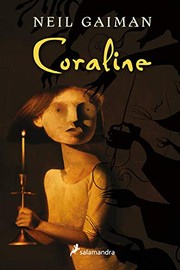
A slim, perfectly constructed dark fairy tale that introduces Gaiman's signature move: a mundane world with a sinister mirror beneath it. Its brevity and clarity make it the ideal first Gaiman experience.
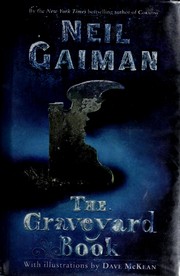
A chapter-by-chapter coming-of-age story set in a graveyard, it deepens the fairy-tale mode with more emotional weight and a longer arc — a natural second step after Coraline.
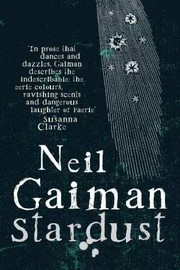
A loving homage to classic fantasy and fairy tale that introduces Gaiman's playful relationship with myth and genre, preparing you for the more complex mythological work ahead.
Short Fiction: The Shape of His Imagination
BeginnerUnderstand the full range of Gaiman's themes and tones — horror, comedy, myth, fable — through his short fiction, which acts as a map of everything his longer work explores.
▸ Study plan for this stage
Pace: 6–8 weeks total: Weeks 1–3 for "Smoke and Mirrors" (~15–20 stories, read 4–5 stories per sitting, 3 sittings/week); Weeks 4–7 for "Fragile Things" (~25 stories/poems, same cadence); Week 8 as a synthesis week to revisit favorites, compare the two collections, and complete exercises. Aim for ~30–45 m
- Genre as a costume, not a cage: Gaiman moves fluidly between horror ('Troll Bridge'), fable ('The Goldfish Pool and Other Stories'), comedy ('We Can Get Them for You Wholesale'), and myth ('Chivalry') within a single collection — recognizing how he shifts register is the central skill of this stage.
- The fairy-tale grammar: both collections reuse the structural logic of folk and fairy tales (a bargain, a journey, a transformation, a price paid) even when the surface setting is modern or mundane.
- Intertextuality as creative engine: stories like 'A Study in Emerald' (Fragile Things) and 'Snow, Glass, Apples' (Smoke and Mirrors) are built entirely on the reader's relationship with a prior text — understanding how Gaiman 'remixes' source material is foundational to all his longer work.
- The unreliable or complicit narrator: Gaiman frequently places the reader inside the perspective of a morally compromised or self-deceived character, making the reader an accomplice before the twist lands.
- Tone as meaning: the same theme (death, desire, loneliness) is treated as comedy in one story and as dread in the next — tracking tonal choice reveals what Gaiman actually thinks about a subject.
- The author's introduction as a paratextual key: both collections open with Gaiman's own notes on each story's origin; reading these alongside the stories teaches how craft decisions are made and why.
- Compression and the short-story contract: short fiction must establish world, character, and stakes in very few pages — identifying the single image or sentence that 'unlocks' each story builds close-reading muscles.
- Myth and the contemporary world in collision: stories like 'The Daughter of Owls' and 'October in the Chair' (Fragile Things) show how ancient mythic patterns erupt into recognizable modern or domestic settings, a technique that defines Gaiman's entire body of work.
- After reading both collections, can you name at least one story from each that exemplifies horror, comedy, fable, and myth — and explain in a sentence what makes each fit that genre?
- How does Gaiman use his author's introductions in 'Smoke and Mirrors' and 'Fragile Things' to frame the reader's experience, and does knowing a story's origin change how you read it?
- 'Snow, Glass, Apples' and 'A Study in Emerald' both retell familiar stories from an inverted perspective. What is the effect of that inversion, and what does it reveal about the original source material?
- Choose any two stories from different collections that share a theme (e.g., bargains, childhood, death). How does the tone differ between them, and what does that tonal difference communicate?
- Gaiman's short fiction frequently ends on ambiguity or unease rather than resolution. Pick two examples and explain what narrative or emotional work that open ending performs.
- By the end of both collections, what would you say is the single most recurring preoccupation in Gaiman's imagination — and which three stories best support your answer?
- The Genre Passport: Create a two-column table — one column for every story title, one for its primary genre label (horror, comedy, myth, fable, SF, etc.). After finishing each collection, look for patterns: which genres dominate? Which stories resist a single label? Write a short paragraph on what the pattern reveals about Gaiman's range.
- The Remix Dissection: Choose 'Snow, Glass, Apples' (Smoke and Mirrors) OR 'A Study in Emerald' (Fragile Things). Read or recall the source text it remixes (Snow White / Sherlock Holmes + Lovecraft). Write a one-page comparison: what does Gaiman keep, what does he invert, and what new meaning does the inversion create?
- Tone Tracking Journal: For every sitting, pick one story and write three sentences — one describing its tone, one identifying the single craft choice most responsible for that tone (word choice, narrator, structure, imagery), and one noting how the tone shapes the story's meaning.
- The First-Sentence Audit: Go back through both collections and copy out only the opening sentence of each story into a single document. Read them as a list. Which ones immediately establish voice? Which establish setting or mystery? Write a brief analysis of what Gaiman's openings have in common and how they 'hook' differently across genres.
- Comparative Story Map: Select one story from 'Smoke and Mirrors' and one from 'Fragile Things' that feel thematically linked. Draw or write a simple story map for each (setup → complication → turn → ending). Then write a paragraph on how the structural similarities or differences serve each story's unique tone.
- Write Your Own Gaiman-Style Fable: Using the fairy-tale grammar identified in the key concepts (a bargain, a journey, a transformation, a price paid), write a 300–500 word original short story set in a mundane modern context. Share it with a reading partner or re-read it yourself a week later and annotate where Gaiman's influence is visible.
Next up: Mastering Gaiman's short fiction gives the reader a thematic and tonal vocabulary — horror, myth, fable, intertextuality, the fairy-tale bargain — that acts as a decoder ring for the longer, more architecturally complex novels and graphic novels that follow, where these same ideas are developed across hundreds of pages rather than a handful.
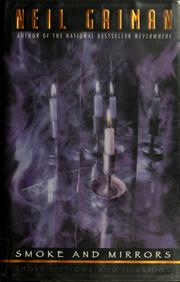
His first major short story collection, it showcases the astonishing variety of his voice — from fairy-tale retellings to horror to quiet tragedy — and is the best single-volume introduction to his range.
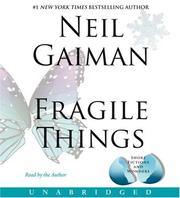
A richer, more confident second collection that includes the novella 'A Study in Emerald' and stories that directly connect to American Gods, making it essential reading before the novels.
The Novels: Myth at Full Scale
IntermediateExperience Gaiman working at novel length with grand mythological architecture. You'll see how the themes seeded in the short fiction expand into sustained, immersive narratives.
▸ Study plan for this stage
Pace: 10–12 weeks total: Good Omens (weeks 1–3, ~25–30 pages/day), American Gods (weeks 4–8, ~25–30 pages/day), Anansi Boys (weeks 9–11, ~20–25 pages/day), with week 12 reserved for review, comparison, and completing exercises.
- Mythological architecture at novel scale: how Gaiman (and Pratchett) construct entire cosmologies — divine hierarchies, prophecy, and apocalypse — and sustain them across hundreds of pages without losing intimacy
- The immigrant god as metaphor: in American Gods, the idea that gods are powered by belief and brought to new lands by the people who carry them, then forgotten and diminished as culture shifts — a meditation on identity, displacement, and the American experience
- The comedy of the sacred: Good Omens uses farce, satire, and warmth to interrogate free will, destiny, and the nature of good and evil, showing that myth can be a vehicle for humor without losing its weight
- Ordinary protagonists in mythological worlds: Shadow (American Gods) and Fat Charlie (Anansi Boys) are deliberately 'everyman' figures whose passivity and confusion mirror the reader's own disorientation when myth erupts into mundane life
- Story as living force: Anansi Boys foregrounds the idea that stories are not merely told but are active, shaping reality, identity, and power — a direct evolution of the spider-god mythology seeded in American Gods
- Dualities and doubles: all three novels are structured around paired opposites — Aziraphale/Crowley, Shadow/Mr. Wednesday, Charlie/Spider — and use these doubles to explore complementary aspects of a single theme
- Sacred geography and the American landscape: American Gods treats the United States itself as a mythological terrain, with roadside attractions, small towns, and forgotten places serving as nodes of divine power and cultural memory
- Inheritance and self-making: a thread across all three novels is the question of what we inherit from our parents (divine or otherwise) and whether we can author our own identity beyond that inheritance
- In Good Omens, how do Aziraphale and Crowley's relationship and shared investment in Earth undermine the binary logic of Heaven vs. Hell, and what does this say about free will versus divine destiny?
- American Gods presents belief as the literal life-force of gods — how does Gaiman use Shadow's journey across America to map the rise, neglect, and potential resurrection of that belief, and which specific gods or scenes most powerfully illustrate this?
- How does the tone of Anansi Boys differ from American Gods despite sharing the same mythological universe, and what does that tonal shift reveal about the difference between Anansi's domain (story, trickery) versus Odin's (war, sacrifice)?
- All three novels feature an 'ordinary man' at their center who is swept into a mythological conflict he didn't choose. Compare Shadow, Fat Charlie, and Adam Young — how does each protagonist's relationship to his own power or destiny evolve by the end?
- How does each novel use a specific sense of place — England on the eve of Armageddon, the American heartland, and the London/Caribbean diaspora — to ground its mythological themes in cultural and historical reality?
- Across all three books, how is the theme of 'hidden identity' (gods in disguise, secret parentage, unrecognized power) used as both a plot engine and a thematic statement about self-knowledge?
- Mythology mapping: After finishing each novel, draw a diagram of its mythological architecture — list every divine/supernatural figure, their origin mythology, their current diminished or active state, and their relationship to the human protagonist. Compare all three diagrams side by side at the end.
- The belief economy essay: Write 400–600 words arguing for or against this claim: 'In American Gods, America itself is the true antagonist.' Use at least three specific scenes or characters from the novel as evidence.
- Tonal rewrite: Take a single serious mythological scene from American Gods (e.g., Anansi's speech on the slave ship, or Mr. Wednesday's recruitment of Shadow) and rewrite it in the comic register of Good Omens. Then reverse the exercise: take a comedic scene from Good Omens and rewrite it in Gaiman's graver American Gods voice. Reflect on what each version gains and loses.
- Character doubles analysis: Create a side-by-side character study of one pair of doubles from each book (Aziraphale & Crowley / Shadow & Mr. Wednesday / Fat Charlie & Spider). For each pair, identify: what they share, what they oppose, and what they together represent thematically.
- Sacred geography journal: As you read American Gods, keep a running log of every real or fictional American location mentioned. After finishing, research two or three of the real locations and write a short paragraph on how Gaiman's portrayal interacts with their actual history or cultural significance.
- Story-as-power creative piece: Inspired by Anansi Boys' premise that stories have tangible power, write a short scene (500–800 words) in which a character gains or loses something real — courage, a relationship, a memory — purely through the act of telling or hearing a story. Reflect afterward on how Gaiman's technique influenced your choices.
Next up: Having experienced Gaiman building full mythological worlds across novel length, the reader is now primed to explore how he adapts and reimagines specific mythological traditions with even greater fidelity and depth — moving from original mythological architectures into his direct retellings and genre work.
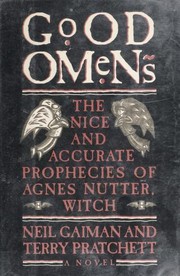
Co-written with Terry Pratchett, this comedic apocalypse novel is warm and witty — a perfect bridge from the lighter early work into longer, more plot-driven storytelling.
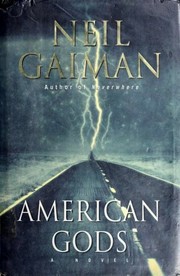
Gaiman's magnum opus in prose fiction, weaving Norse, Egyptian, and dozens of other mythologies into a road-trip novel about belief and America. The short fiction has fully prepared you for its scope and density.

A companion novel to American Gods focusing on the trickster god Anansi's sons — funnier and more grounded, it rewards readers who already know the world and deepens its mythology.
The Sandman: The Dream King's Library
IntermediateRead the comic series that made Gaiman's reputation and remains one of the greatest achievements in the medium — a 75-issue epic about Dream, one of the seven Endless, and the stories he touches.
▸ Study plan for this stage
Pace: 4–5 weeks total: Week 1–2 — Read The Doll's House (~20–25 pages per sitting, 3–4 sittings per week); Week 3–4 — Read Season of Mists at the same pace; Week 5 — Review, re-read key issues, and complete exercises. Aim for slow, deliberate reading — pause at chapter breaks to absorb the artwork and lay
- Dream (Morpheus) as a mythic archetype — lord of stories, not merely of sleep, whose realm reflects his personality and emotional rigidity
- The Endless as personifications rather than gods — abstract forces that predate and will outlast human civilization, with Dream occupying a unique tension between duty and feeling
- The Doll's House's exploration of identity and belonging — Rose Walker's role as a 'dream vortex' and what it reveals about the fragility of the boundary between dreaming and waking
- Serial narrative structure in comics — how Gaiman uses individual issues as short stories that accumulate into a novelistic arc, with each chapter functioning almost as an anthology piece
- Season of Mists and the problem of power and responsibility — Dream's return to Hell to free Nada forces him to confront his own pride and the political consequences of his authority
- Lucifer's abdication as a philosophical statement — the idea that surrendering power can itself be an act of supreme will, and what Hell's vacancy means for cosmic order
- Gaiman's use of mythology as living tissue — Norse, Japanese, Egyptian, and Christian cosmologies coexist and negotiate in Season of Mists without any single tradition 'winning'
- The visual-verbal contract of comics — how artists Dave McKean (covers), Mike Dringenberg, and Malcolm Jones III shape tone, and how Gaiman scripts for the page rather than despite it
- In The Doll's House, what is a dream vortex and why does Dream's duty require him to destroy Rose Walker — and what does his ultimate choice reveal about his character?
- How does the serial structure of The Doll's House — with its detours into the serial killer convention and the TV-watching housemates — serve the central theme of stories within stories?
- In Season of Mists, why does Dream return to Hell to free Nada, and how does his pride function as both his defining trait and his greatest flaw throughout this arc?
- What does Lucifer's decision to close Hell and hand Dream the key satirize or comment on about the nature of power, freedom, and responsibility?
- How do the various mythological delegations (Norse gods, Japanese demons, Egyptian deities, angels) in Season of Mists reflect Gaiman's view of mythology as pluralistic and politically contingent rather than absolute?
- Across both volumes, how does Gaiman use supporting and minor characters — Hob Gadling, the Corinthian, Matthew the Raven — to illuminate Dream's character indirectly?
- Issue mapping: After finishing each collected arc, draw a simple diagram showing how each chapter/issue connects — note which issues are 'detours' and write one sentence explaining how each detour thematically feeds the main plot.
- Character journal: Keep a running log for Dream/Morpheus across both volumes. After each major scene involving him, write 2–3 sentences describing what emotion he seems to be suppressing and what his dialogue or body language (as drawn) reveals that his words do not.
- Mythology audit for Season of Mists: List every mythological tradition or deity that appears and research one unfamiliar figure. Write a short paragraph on how Gaiman adapts or subverts their traditional attributes.
- Visual analysis exercise: Choose one full page from The Doll's House and one from Season of Mists. Write a close reading of the page layout — panel size, color palette, lettering style — and argue how the visual choices reinforce or complicate the written narrative.
- Comparative essay (500–700 words): Compare Lucifer's abdication in Season of Mists with Rose Walker's situation in The Doll's House. Both characters are offered or forced into a kind of release — what does Gaiman seem to be saying about freedom and its costs?
- Re-read the framing sequences: Go back and re-read only the opening and closing pages of each collected volume. Write a reflection on how your understanding of those pages changed after reading the full arc.
Next up: Mastering Dream's mythology, the Endless family dynamics, and Gaiman's layered storytelling architecture in these two volumes gives the reader the emotional and structural fluency needed to engage with the more ambitious, mortality-focused arcs that follow — where the consequences of Dream's pride and rigidity begin their long, irreversible unraveling.

The first fully realized Sandman arc, introducing the series' blend of mythology, literary allusion, and human drama that defines its mature voice.
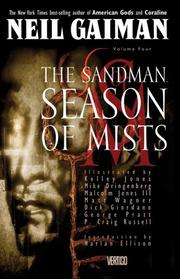
Widely considered the series' first masterpiece arc, in which Dream reclaims Hell — a turning point that makes the full emotional and mythological ambition of Sandman unmistakably clear.
The Deep End: Sandman's Culmination & Late Masterwork
ExpertArrive at the emotional and artistic peak of Gaiman's career — the conclusion of Sandman and his most formally ambitious prose novel — with all the context needed to feel their full impact.
▸ Study plan for this stage
Pace: 2–3 weeks, ~20–25 pages/day — Norse Mythology is episodic and richly dense, so a leisurely pace allows each myth to breathe and rewards re-reading individual tales before moving on
- Gaiman's narrative voice as mythographer: how he balances fidelity to source material (Prose Edda, Poetic Edda) with his own literary personality, humor, and emotional warmth
- The cosmological architecture of Norse myth — Yggdrasil, the Nine Worlds, and the inevitability of Ragnarök — as a structural metaphor for stories that must end
- Character as archetype vs. character as individual: how Odin, Loki, Thor, and others are simultaneously universal mythic forces and psychologically specific personalities
- The oral tradition aesthetic: Gaiman's deliberate use of repetition, episodic structure, and bardic cadence to simulate the feel of spoken, inherited storytelling
- Mortality, fate, and the acceptance of endings — the Norse worldview that heroes and gods alike march knowingly toward destruction, and why that is not tragedy but dignity
- Loki as the engine of narrative: the trickster's dual role as creator of conflict and catalyst of story, a figure Gaiman has returned to throughout his career (echoing characters across his other works)
- Retelling as authorship: the ethics and artistry of reinterpreting canonical myth — what Gaiman adds, omits, and invents, and what those choices reveal about his thematic obsessions
- The function of myth in human life: stories as containers for cultural memory, mortality anxiety, and the need to impose meaning on chaos — the philosophical underpinning of Gaiman's entire career
- How does Gaiman's prose style in Norse Mythology differ from a straight scholarly retelling, and what specific techniques (tone, diction, pacing, interjection) mark it as distinctly his own voice?
- Ragnarök is foretold from the book's opening pages — how does Gaiman use this dramatic irony throughout the individual tales, and what emotional effect does the inevitability of the ending produce in the reader?
- Loki is portrayed with genuine complexity — charming, destructive, pitiable, and monstrous by turns. How does Gaiman construct this ambiguity, and why is the trickster archetype so central to his storytelling philosophy?
- In what ways does the episodic, self-contained structure of the myths mirror the oral tradition they descend from, and how does Gaiman signal the shift from one 'telling' to the next?
- What does Norse Mythology reveal about Gaiman's view of what stories are *for* — their social, psychological, and spiritual function — and how is that view expressed through the framing and selection of tales he includes?
- How does the theme of 'knowing the end and continuing anyway' in Norse myth (particularly in the gods' awareness of Ragnarök) connect to broader ideas about narrative, mortality, and meaning that run through Gaiman's body of work?
- **Comparative Voice Analysis:** Choose one myth Gaiman retells (e.g., 'The Treasures of the Gods' or 'The Children of Loki') and find the closest equivalent passage in a scholarly translation of the Prose Edda (freely available online). Write a one-page comparison: what did Gaiman add, cut, or reframe — and what do those choices tell you about his priorities as a storyteller?
- **Ragnarök Reading Journal:** As you read, keep a running log of every moment a character references or alludes to the coming end. At the book's conclusion, review the log and write a short essay on how Gaiman builds dread and acceptance simultaneously across the whole arc.
- **Trickster Character Map:** Draw or diagram Loki's role in at least five separate tales — noting whether he initiates the problem, solves it, both, or neither. Annotate each node with the emotional register (comic, sinister, sympathetic). Reflect in writing on what pattern emerges.
- **Oral Retelling Exercise:** Select one shorter myth from the book and retell it aloud — without notes — to a friend, family member, or recorded voice memo. Afterward, note which details you naturally preserved, which you dropped, and which you embellished. Reflect on what this reveals about the oral tradition Gaiman is imitating.
- **Thematic Bridge Essay:** Write 400–600 words arguing how the Norse mythological framework — particularly the cosmology of Yggdrasil and the certainty of Ragnarök — could serve as a structural and thematic lens for understanding a long, self-consciously 'ending' narrative. (This primes your thinking for the culminating works ahead in the curriculum without requiring you to have read them yet.)
- **Gaiman's Mythographer Manifesto:** Based solely on the Introduction and your reading of Norse Mythology, draft a bullet-point 'manifesto' of Gaiman's apparent beliefs about what a reteller of myth owes to the source, owes to the audience, and owes to the story itself. Keep it to 10 bullets maximum.
Next up: By internalizing Gaiman's cosmological thinking, his comfort with fated endings, and his mastery of the trickster archetype through Norse Mythology, the reader arrives at the culminating works of his career — the conclusion of Sandman and his most formally ambitious prose — already fluent in the mythic grammar and thematic obsessions that make those works resonate at their deepest level.
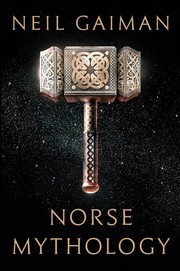
A perfect final read: Gaiman retells the Norse myths in his own voice, and after the full journey through his work, you can see exactly how deeply these stories live in everything he has ever written.
Discussion
Keep reading
Paths that share books, cover the same subject, or open a related topic.