Start with City of Stairs. It is book one, it is the only sensible entry point, and it is also the book that sells the premise: a colonised city whose gods were killed, in which the buildings the gods built are still half-present and the occupying power now runs the place. A spy arrives to investigate a murder. The mystery structure carries the worldbuilding, which is why this is an easy first book despite a dense setting.
The thing worth knowing before you begin is that the trilogy is not a continuous story with one hero. Each volume jumps forward several years and hands the point of view to a different character from the previous book. That structure is the reason some readers stall at book two, and it is also the reason the trilogy is better than a conventional series. Go in expecting three linked novels rather than one long one.
The sequence
- City of Stairs — Shara Thivani, a spy pretending to be a junior diplomat, investigates a killing in Bulikov. This is the book that explains the world.
- City of blades — six years later, in a different city, with Turyin Mulaghesh, the blunt one-armed general from book one, dragged out of retirement. It is about war, the afterlife, and what soldiers owe.
- City of miracles — years later again, following Sigrud, and it is the most straightforwardly propulsive of the three.
Read them in that order. There is no publication-versus-chronological argument to have: publication order is chronological order, and each book opens with a loss that only lands if you read the previous one.
The honest warning
Book two is where the trilogy loses people, and for a reason that has nothing to do with quality. Readers finish City of Stairs attached to Shara and then find themselves in a coastal garrison town with a supporting character. Push through the first fifty pages. Many readers end up regarding City of blades as the best of the three — its treatment of a soldier confronting what she did during a war is the most serious thing Bennett has written. That is a judgement, but it is a widely shared one.
The other honest note: the first book front-loads a lot of invented history, divine names and political factions. Bennett is good about reintroducing what matters, so resist the urge to take notes. If a name has gone, it will come back attached to a scene.
What our catalogue actually holds
Our shelves for this path lean heavily on read-alikes rather than more Bennett, so treat the rest of the list as an after-you-finish shelf rather than part of the trilogy. The Fifth Season by N. K. Jemisin is the closest match in ambition — another world with a buried catastrophe at its centre and a similarly hard structural trick. American Gods shares the premise of gods living inside a modern political order. Piranesi is the shortest and the strangest, and if what you loved in City of Stairs was the sensation of walking through a building that should not exist, it is the obvious next read.
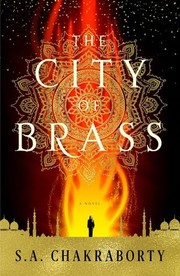
The City of Brass by Shannon A. Chakraborty is here for the city-fantasy-with-real-politics reason, and The Name of the Wind mostly because search engines put it next to everything; it is a very different, far more traditional kind of fantasy and it will not scratch the same itch.
Where to stop
Nowhere. Three books, all short by the standards of the genre, with an ending that closes the story properly rather than leaving a hook for a fourth. Bennett has written other series since, but none of them continue this one. Finish the trilogy, then browse Discover for something with a comparable structure.
Follow the full ordered path here: The Divine Cities Reading Order and Guide.
Ready to learn something deeply?
Build a reading path — free