The Daevabad Trilogy Reading Order: Where to Start
S. A. Chakraborty's Daevabad books are a straightforward three-volume arc — a Cairo con artist accidentally summons a djinn warrior and ends up inside the politics of a hidden brass city — and the order is publication order with no complications. The two things a new reader actually needs are placement for the extras and some sense of what the trilogy is drawing on: The River of Silver is a collection of deleted and companion scenes that belongs after the trilogy and nowhere else, and The Adventures of Amina al-Sirafi is set in the same world but centuries earlier and reads perfectly well cold. This path reads the three novels, places both, and closes with two books on the tradition Chakraborty is working inside, since the trilogy assumes a reader who knows that djinn are a theology and not a lamp gag.
The trilogy
BeginnerRead the three-book arc in order and follow Nahri, Ali and Dara through the fall and remaking of Daevabad.
▸ Study plan for this stage
Pace: Six to eight weeks for 1,968 pages, and the books get steadily longer: The City of Brass is 544 pages, The Kingdom of Copper 640 and The Empire of Gold 784. Budget accordingly — two weeks for the first, two to three for the second and three for the finale — and read them consecutively. The Kingdom o
- Nahri as a Cairo con artist whose fakery turns out to be real, and a protagonist who enters the fantasy world as an outsider with a grifter's eye
- Daevabad's six tribes and the daeva-and-djinn split, which is a political and religious division rather than a species one
- The shafit — those of mixed human and djinn descent — as the trilogy's central injustice and its engine
- Dara's history, and a character the reader is asked to love and then to judge on the evidence
- Ali's position as a devout son of the ruling family, and faith treated as a real motive rather than a costume
- The court and its factions in The Kingdom of Copper: the trilogy at its most political and least adventurous
- A conclusion that pays off the djinn-and-daeva history the first two books argue about rather than resolving it by force
- What does Nahri's background as a con artist let her see about Daevabad that a native could not?
- The shafit question is the trilogy's moral centre. State each faction's position in one sentence, fairly.
- At what point did you stop trusting Dara, and did the book intend that point?
- The Kingdom of Copper is markedly more political than The City of Brass. What does the trilogy gain, and what does it give up?
- Does The Empire of Gold resolve the injustice or only the plot? The two are not the same, and the distinction is the trilogy's real test.
- Keep a tribes-and-factions sheet from early in The City of Brass — name, tribe, allegiance, grievance. The second book assumes it and the third rewards it.
- Track every account of Daevabad's founding and of the war that shaped it. Different characters give incompatible versions and none of them is neutral; listing them is how the trilogy's history is meant to be read.
- After The City of Brass, write one line on who you think is in the right. Read it again after The Empire of Gold.
- Do not leave a long gap before The Kingdom of Copper. If you must pause, note the state of every major character first — the second book opens well after the first ends and supplies little recap.
Next up: The arc is complete and its reveals are behind you, which is the only condition under which the companion collection can be read at all.
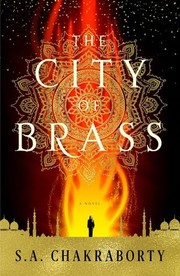
The starting point: eighteenth-century Cairo, a fake healer whose fakery turns out to be real, and a journey to a city she has no idea she belongs to. Catalogue records file the author under Shannon A. Chakraborty, which is the same writer.

A five-year jump and a much more political book, with Nahri inside the court and Ali in exile. Read it second; the trilogy's central betrayal only works if book one's ending is fresh.

The conclusion, which pays off the whole djinn-and-daeva history the first two books have been arguing about. It is long and it resolves the arc properly — this is a finished trilogy, not an open-ended series.
The extras, and the same world elsewhere
BeginnerPlace the companion collection and the later standalone correctly relative to the trilogy.
▸ Study plan for this stage
Pace: Three to four weeks, and the two books here are entirely different propositions. The River of Silver is a collection of deleted scenes, side stories and one substantial epilogue; no reliable length is recorded for it, and several of its pieces spoil the trilogy outright, so read it fourth and never
- Deleted scenes and companion pieces as a supplement, not a sequel — what a collection like this can and cannot add
- The substantial epilogue in The River of Silver, and why its placement after the trilogy is non-negotiable
- The same world at a different depth in time: a medieval Indian Ocean rather than eighteenth-century Cairo
- A middle-aged mother as an adventure protagonist, and what that changes about the shape of a quest
- Seafaring, trade and the Indian Ocean world as a setting with its own historical texture
- Reading cold versus reading in sequence: how to tell which category a companion book falls into
- Which pieces in The River of Silver genuinely add something, and which are offcuts that were rightly cut?
- Does the epilogue change your reading of The Empire of Gold's ending, or only extend it?
- Amina al-Sirafi shares a world with Daevabad. What in it depends on that shared world, and what would work in any setting?
- How does a protagonist with a family and a past change the standard shape of a quest novel?
- Would you recommend Amina al-Sirafi to someone who had not read the trilogy? On what grounds?
- Read The River of Silver only after finishing the trilogy, and read the epilogue last of all within it. This is the one sequencing rule in the whole path that cannot be broken without cost.
- Note which characters the collection chooses to revisit and which it leaves alone. An author's offcuts are a good guide to who they found hardest to let go.
- While reading Amina al-Sirafi, mark every connection to Daevabad's world you can find. The list is short, which is the evidence that it genuinely reads cold.
Next up: You have the fiction complete, which leaves the one thing the trilogy assumes but never explains — the tradition its djinn and its theology come from.

Deleted scenes, side stories and one substantial epilogue, several of which spoil the trilogy outright. It has value only for a reader who has finished The Empire of Gold, so read it fourth and never earlier. Some records display it without the leading article.

A retired twelfth-century pirate captain pulled back for one last job, set in the same world centuries before Daevabad. It can be read entirely cold, so treat it as the natural next book rather than a required fifth volume.
The tradition behind it
IntermediateRead the source material and the scholarship the trilogy assumes, so the world stops reading as invented decoration.
▸ Study plan for this stage
Pace: Six to eight weeks, and the two books here read at very different speeds. Hanan al-Shaykh's One Thousand and One Nights is 288 pages, a retelling of nineteen of the tales written for the stage, and it goes quickly — it is far closer to the tales' actual register than the Victorian versions most Engl
- The jinn as a third order of creation in Islamic cosmology — beings with free will, faith and law, not folklore or lamp gags
- Why that theology makes Daevabad's politics legible: a hidden city of beings who are morally accountable
- The Nights as a living, layered storytelling tradition rather than a fixed book, and the difference between a retelling and a translation
- Al-Shaykh's selection and stagecraft as an authorial act — this is an adaptation with a point of view
- The gap between the Victorian Orientalist Nights most readers have met and the register of the tales themselves
- Scholarship versus popular retelling: two books that cannot be read at the same speed or for the same kind of claim
- What the trilogy assumes its reader knows, and what changes on a reread once you do
- What are the jinn actually held to be, and which of the trilogy's plot points depend on that being true rather than metaphorical?
- How does al-Shaykh's register differ from the Nights you had previously encountered, and what was added in the versions you knew?
- El-Zein is writing scholarship. Where does she distinguish what the tradition holds from what she is arguing about it?
- Which single element of Daevabad reads completely differently now, and why did it not read that way before?
- Is Chakraborty writing inside this tradition or about it? Defend the answer with a specific scene.
- Pick one tale from al-Shaykh's selection and find a Victorian English version of the same story. Reading them side by side is the quickest demonstration of what the tradition lost in translation.
- As you read El-Zein, list the points of jinn cosmology the trilogy uses directly. Then reread the passage of The City of Brass where Nahri first learns what she is.
- Pace El-Zein deliberately — a chapter a sitting, with notes. Readers who take an academic book at novel speed abandon it, and this one is the payoff of the stage.
- Write one paragraph on what the trilogy assumes about its reader. Being able to state that is the point of reading the source and the scholarship after the fiction rather than before it.
Next up: This is the end of the path: the trilogy is read in order, its companion volumes are placed, and the tradition it draws on has been read closely enough that the world stops looking invented.

Hanan al-Shaykh's retelling of nineteen of the Nights, written for the stage and much closer to the tales' actual register than the Victorian versions most readers meet. It is the fastest way into the storytelling tradition Chakraborty is answering.

A scholarly account of the jinn as a genuine third order of creation in Islamic cosmology, not folklore. Read it last: it is the single book that most changes how the trilogy's theology and its politics look on a reread.