The Best Books for 11-Year-Olds: What to Read Before Teen Fiction
Eleven is the last year of children's books, and the useful thing to know is that it is not simply ten with bigger words. Ten is the year of the long fantasy and the big emotional novel; eleven is the year a reader starts noticing how a book is written, will accept an ending that offers no comfort at all, and is one step from the young adult shelf — where the content jumps faster than the reading level does. This ladder therefore goes adventure with real prose, then books that unsettle on purpose, then grief and war, and ends with non-fiction and poetry that are not written for children. Interest age is now doing most of the work: a confident eleven-year-old can read almost anything on a technical level, which makes what is inside the book the only question worth asking.
Adventure with real prose
BeginnerRead for the sentences as well as the story — adventure novels good enough that the writing is noticeable.
▸ Study plan for this stage
Pace: Six to eight weeks across four books, with no need to hurry between them — Rooftoppers is 288 pages, Journey to the River Sea 298, The Girl of Ink and Stars 240 and Millions 249. Content notes for the adult: Journey to the River Sea is set in 1910 Amazonia and the Europeans in it hold the attitudes
- These four are chosen for their sentences as much as their plots. If a reader here starts quoting lines or rereading paragraphs, that is what the stage is for, and it is worth noticing out loud without turning it into a lesson.
- Rundell's Rooftoppers is the easiest of the four to love — a girl found in a cello case after a shipwreck, an eccentric guardian, and a search across the roofs of Paris — and it ends happily, which makes it a safe opener before the stage gets stranger.
- The Girl of Ink and Stars folds its mythology into the story rather than explaining it, so the island's legend and its geography arrive together. A reader who wants everything spelled out may need the first forty pages before it clicks.
- Journey to the River Sea is deliberately old-fashioned: an orphan sent to grasping relatives, a magnificent river, a cast of villains drawn broadly. It is the most straightforwardly enjoyable book in the stage and is useful for keeping momentum after a slower one.
- Millions runs comedy and grief in the same paragraph — a boy who converses with saints, a bag of money, a deadline before the currency changes. The mixture is the interesting thing about it, and it is worth being ready to talk about rather than steering away from.
- All four have a child solving something without an adult rescuing them, which is a convention of the age band rather than a coincidence. Naming that once can make a reader notice structure in everything they read afterwards.
- What does Rundell's prose do that a plainer telling of the same story would not? Find a sentence together and say why it works.
- In The Girl of Ink and Stars, when does the island's legend stop being background and start being the plot?
- Journey to the River Sea sets the relatives against the river. What is the book actually arguing about where a person belongs?
- Millions is funny about something sad. Where does the book let the grief show, and where does it deliberately look away?
- Across all four, an adult is absent, useless or hostile. Why do books written for this age keep doing that?
- Read the first chapter of Rooftoppers yourself before handing it over, so you can point at one sentence rather than recommending the book in general. It takes ten minutes and it is the difference between a suggestion and an invitation.
- Read Millions ahead of the child, or at least the chapter where the mother is discussed. Knowing where it lands means you are not caught out by a question at bedtime.
- Leave a week between The Girl of Ink and Stars and Journey to the River Sea rather than running them together. Two island-and-jungle books back to back blur into each other.
- Keep the four books visible on a shelf in this order rather than putting them away as they are finished. A ladder that can be seen gets climbed more often than one that is described.
Next up: Four books read for pleasure and for their writing make a solid footing for the next stage, where the books are designed to be uncomfortable and the reader needs to have chosen them rather than been handed them.

A girl found in a cello case searches Parisian rooftops for her mother, and Rundell writes better line by line than almost anyone else working in this age band. Start here: it is an adventure with a happy ending and prose that quietly raises expectations.

A cartographer's daughter maps a forbidden part of her island; the mythology is folded in rather than explained. Read it after Rooftoppers, when an eleven-year-old is willing to work slightly harder for atmosphere.
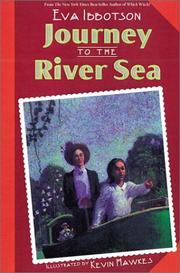
An orphan is sent to relatives on the Amazon in 1910 and finds them appalling and the river magnificent. It is the most old-fashioned book on this stage and the most purely pleasurable, so use it to keep the momentum up.
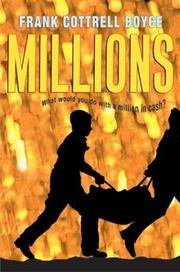
Two brothers find a bag of money weeks before the pound is abolished, and the younger one wants to give it to the poor because he talks to saints. Funny throughout and grieving underneath — the tonal mixture is the new skill this stage is teaching.
Books that unsettle on purpose
IntermediateRead fiction designed to be uncomfortable, where the strangeness is the point rather than an obstacle.
▸ Study plan for this stage
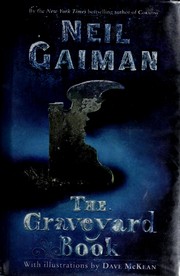
Pace: Six weeks and no obligation to finish. Coraline is 176 pages, Skellig 186, The Giver 200 — all short, all slow going for different reasons. Content notes for the adult, and these matter: Coraline is genuinely frightening, with a substitute mother who has buttons sewn where her eyes should be, and so
- The unsettling quality in all three is the point, not a side effect. These are books that use dread and ambiguity as their subject, and reading them is a different activity from reading an adventure.
- Coraline is the least demanding way in: short chapters, a clear quest, and a monster whose rules are stated. The fear is intense but it is bounded, and the ending is a proper victory.
- Skellig never tells you what the creature in the garage is. Almond withholds it deliberately, and a reader who has been trained to expect explanations may find the book broken rather than mysterious. Saying in advance that it is not going to explain itself takes the frustration out without spoiling
- The illness in Skellig is running underneath the whole book, and the strangeness in the garage and the fear about the baby are the same feeling in two forms. That is the design.
- The Giver reveals its horrors one at a time, each disguised as a piece of ordinary community procedure. The technique — a comfortable surface peeled back slowly — is what a reader is really learning here.
- The Giver's ending refuses to resolve, and readers argue about it, which is a feature. There are sequels, and it is worth knowing that they exist and that the argument is better had before reaching for them.
- Any of these three can be abandoned without it meaning anything. A book put down at eleven and picked up at thirteen is a normal outcome, not a failure of nerve.
- What are the rules of the other mother's world in Coraline, and why does having rules make the book more frightening rather than less?
- What do you think Skellig is? Make the case, then find the passage that undermines it.
- In Skellig, what is happening at home while the garage story unfolds, and how do the two halves affect each other?
- At what point in The Giver did the community stop seeming pleasant? Name the specific detail.
- How do you read the ending of The Giver, and what in the text supports your reading against the other one?
- All three books withhold something. What is being withheld in each, and what does the reader do with the gap?
- Read the chapter where the other mother is first described yourself, before the book is handed over. That single scene tells you whether this is the right week for Coraline.
- Read Skellig alongside rather than ahead, a few chapters behind, so the ambiguity is something you are both holding rather than something you already know the answer to.
- Before The Giver, decide what you will say if asked whether the ending is a rescue or not. Having no answer is a fine answer, but decide to give it rather than improvising.
- Leave a clear gap after Coraline before starting Skellig. Two ambiguous books in consecutive weeks is a lot, and there is nothing to be gained from consecutive.
- If a book is abandoned, put it back on the shelf rather than away in a box. Say nothing about it.
Next up: A reader who has sat with three books that refuse to reassure is ready for the two that mark the boundary of the children's shelf, where the subject is loss and the outcome is known from the start.
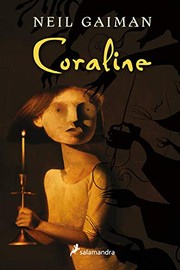
A girl finds a door to a copy of her home where her other mother has buttons for eyes. It is short and properly frightening, and it is the least demanding way into a book whose purpose is dread.
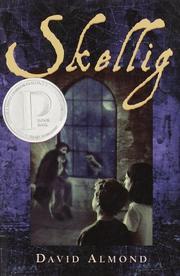
A boy finds a filthy, arthritic creature in his garage while his baby sister is dying in hospital, and the book never says what the creature is. Sparse, strange writing — read it after Coraline, when ambiguity has stopped feeling like a mistake.
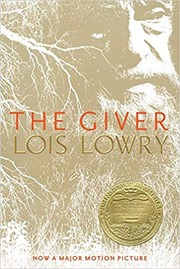
A perfectly ordered community that has abolished pain, colour and choice, revealed one horror at a time. The first dystopia most readers meet, and the ending is deliberately unresolved — which is exactly the argument to have with an eleven-year-old.
Grief, war, and the edge of young adult
IntermediateRead the two books that mark the boundary of children's fiction, and understand why the shelf changes after them.
▸ Study plan for this stage
Pace: Four weeks for two short books, and give them room. Private Peaceful is 197 pages and A Monster Calls 224, most of it illustrated. Content notes for the adult, both substantial: Private Peaceful is narrated through one night by a soldier in the First World War waiting for dawn, and it ends with a mi
- Both books tell you the ending in advance and then make you go through it anyway. That is the technique they share and the reason they sit at the top of this ladder.
- Private Peaceful's countdown structure — hours marked off through the night — means every remembered childhood scene is read against what is coming. Nothing in the memories is neutral because of the frame.
- The historical fact underneath Private Peaceful is real: British soldiers were executed for cowardice and desertion during the war, many of them very young, and Morpurgo wrote the book as an argument about it. Knowing the campaign for their pardon exists gives the ending somewhere to go.
- A Monster Calls is built on four stories: three the monster tells, each with a moral that refuses to be the expected one, and a fourth the boy has to tell himself.
- The book's actual subject is not grief but the guilt of wanting an unbearable situation to end, which is a specific and unusual thing for a children's book to name out loud.
- Jim Kay's illustrations are not decoration; the black ink floods pages and the physical book is part of the effect. An edition without them is a different experience, which is worth checking before buying.
- These two are the top of the children's ladder rather than a gateway to something harder. What is on the young adult shelf next is different in content, not more advanced in difficulty, and the jump is worth making deliberately.
- Private Peaceful tells you in the first pages how the night ends. What does knowing do to every chapter that follows?
- Who is responsible for what happens to Tommo's brother — a person, an institution, or a rule? The book has a position; where does it state it?
- The monster's three stories each end wrongly on purpose. What is each one refusing to say, and what is it saying instead?
- What is the fourth story, and why is telling it the hardest thing in the book?
- Both books have an ending that cannot be avoided. What is the difference between a sad ending and an inevitable one?
- Read both books yourself first. These are the two on this ladder where reading afterwards is too late to be useful.
- Look up what happened to soldiers executed in the First World War and what was done about it in 2006 before the last chapters, so the fact is available if it is asked for.
- Check which edition of A Monster Calls is in the house. If it is one without Jim Kay's illustrations, find the illustrated one.
- Leave at least two weeks between these two books. There is no version of this stage that should be read in a fortnight.
- Be in the house on the evening the last chapters are read, and do not ask about them.
Next up: After two books that take everything seriously, the last stage widens out to a true account and a book of poems, both of which were written for anyone and neither of which was simplified.

A soldier counts down the hours to dawn in the First World War, remembering his childhood. The frame makes the ending inevitable from page one, and knowing what is coming is the whole experience of reading it.
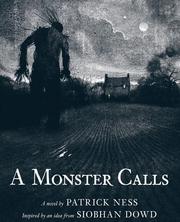
A boy whose mother is dying is visited by a yew tree that tells him three stories and demands a fourth. Written from an outline by Siobhan Dowd, who died before she could write it herself. This is the top of the children's ladder — there is nothing gentler on the other side of it, only different.
Non-fiction and poetry that hold their own
IntermediateRead a true account and a book of poems that were not simplified for a young reader.
▸ Study plan for this stage
Pace: Four to six weeks, and neither book needs to be read straight through. I Am Malala is 336 pages and works well a chapter at a time; The Lost Words is 121 oversized pages and is meant to be opened at random. Content notes for the adult: I Am Malala describes the Taliban taking control of the Swat Val
- I Am Malala is a first-hand account rather than a book about a subject, and the difference shows on every page: a named valley, a named school, a father with a specific argument he keeps making.
- The political background — who the Taliban were in Swat, what the Pakistani state did and did not do — is genuinely complicated, and the young readers' edition handles it more briefly. A reader who asks questions will get further with the full version.
- Her age is what makes the book land at this stage. She is close to the reader's own age for most of it, doing homework and arguing with her brothers, and the danger arrives into an ordinary life rather than replacing it.
- The Lost Words was made in response to nature words being dropped from a children's dictionary, and each poem is an acrostic — a spell, in Macfarlane's framing — for one of them: acorn, bramble, otter, kingfisher, willow.
- Jackie Morris's paintings run at full-page scale and the book is enormous on purpose. Its physical size is an argument: this is not a small book for small readers.
- The poems are written to be read out loud and lose most of their effect silently. The rhythm and the letter pattern only work in the mouth.
- Including a beautiful illustrated book at this point is deliberate. Leaving picture books behind was never the objective, and a reader who thinks illustration is something to grow out of has learned the wrong lesson somewhere.
- What does Malala's father believe, and what does it cost the family? Point at where the book says so.
- What is the difference between reading this as current affairs and reading it as one person's account? Which is the book doing?
- Which of The Lost Words spells works best read aloud, and can you hear why?
- Find the hidden word down the first letters of a poem you have not read yet. Does knowing it change how the poem sounds?
- One of these books is true and the other is made of spells. What do they have in common that puts them in the same stage?
- Check which edition of I Am Malala you have before it is opened, and read the first two chapters yourself so you can answer a question about Swat without reaching for a phone.
- Read one Lost Words spell aloud yourself, badly, and hand the book over. Being read to and then reading back is how these poems are meant to circulate.
- Leave The Lost Words out on a table rather than shelving it. It is the wrong shape for a shelf and the right shape for being picked up.
- Find the Swat Valley on a map together before starting, and mark the school. Ten minutes of geography carries the whole first half of the book.
Next up: This is the end of the children's ladder: adventure read for its prose, fiction that unsettles deliberately, two books about loss, and a true account and a book of poems that were written for everybody. What follows is the young adult shelf, which is a change of content rather than a step up in difficulty.
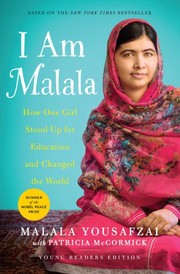
A first-hand account of the Taliban closing girls' schools in the Swat Valley, and of being shot for going anyway. Eleven-year-olds read it as a book about someone their own age rather than as current affairs, which is why it lands.
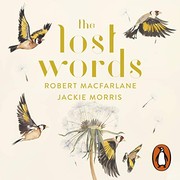
Acrostic 'spells' for nature words dropped from a children's dictionary, in an enormous illustrated format that looks like a picture book and is not one. Include it deliberately: an eleven-year-old reading a book this beautiful learns that leaving picture books behind was never the goal.
Discussion
Keep reading
Paths that share books, cover the same subject, or open a related topic.