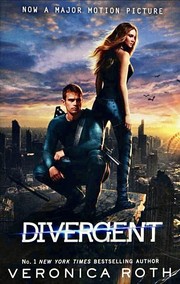
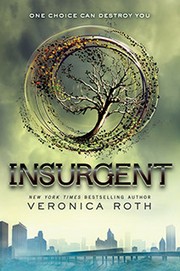
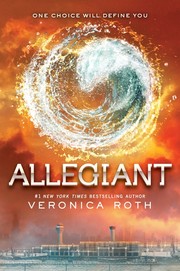
Start with Divergent. Publication order and chronological order are the same thing for the three main novels, they were written as one continuous story narrated by Tris, and each opens where the last one closed. There is nothing to argue about there.
The one genuine ordering question is Four, which collects four prequel stories told from Tobias's point of view. Three are set before Divergent begins and the fourth overlaps its opening, which makes it look like a place to start. It is not. Every one of those stories is written for a reader who already knows who Four turns out to be and what he is concealing; read cold, the reveals land as flat exposition. Read it after Divergent — or after the whole trilogy, which also works.
The three novels
Divergent is the setup: Beatrice Prior chooses a faction at sixteen and enters Dauntless initiation. The five factions, the aptitude test and the meaning of being Divergent are all established here, and the initiation structure is what the book is actually about.
Insurgent picks up immediately, with the faction system collapsing. It does the political work of the trilogy and ends on the reveal the third book is built on. Allegiant splits the narration between Tris and Tobias for the first time, which is the technical experiment of the series and also the thing readers most often say does not quite work, since the two voices are hard to tell apart. Its ending is the most argued-about in young-adult dystopia. Read it rather than reading summaries of it — the argument is worth having first-hand, and the book is short.
The companion volumes
Four goes second, as above. The World of Veronica Roth's Divergent Series is a short faction-by-faction companion, originally released free, covering the aptitude test, the serums and the city. It is reference material, not a story. Slot it in wherever you want a refresher; nothing in it is load-bearing.
Roth after the trilogy
Carve the Mark is a science-fantasy set on a planet where everyone develops a currentgift, and it is considerably more ambitious in worldbuilding than Divergent. It also drew substantial published criticism on release over its handling of race and of chronic pain — reviewers and other authors argued the book's dark-skinned society was written as a violent culture and that the protagonist's constant pain functioned as a superpower; Roth and other readers disputed both readings. That argument is part of the book's reception and worth knowing about before you pick it up; this guide does not settle it. Read it after the trilogy if you want to see what Roth does without a proven formula.
The shelf Divergent sits in
The reading path closes with the books around it, ordered from ancestor to contemporary. The Giver is where the shape comes from: a community that has removed choice, pain and colour, and assigns each child a role for their own good. The Hunger Games created the market Divergent was published into, and comparing the two first-person teenage narrators is the single most useful exercise on this list. Matched (Matched Trilogy, Book 1) is the closest structural sibling — a society that assigns your partner, your work and your death date, plus a romance that breaks the assignment. Legend runs the dual-narrator experiment Allegiant attempts, but does it from its first page. The Selection (The Selection #1) is furthest toward romance and away from politics, and marks the outer edge of the category.
Where to stop
Allegiant is the end of the story. Everything else is optional, and Four is the only optional volume that adds anything to the trilogy itself.
Ready to learn something deeply?
Build a reading path — free