The Deptford Trilogy Reading Order and Guide
This curriculum guides an intermediate reader through a deep engagement with Robertson Davies's Deptford Trilogy — reading the three novels in sequence, then enriching that experience with contextual and thematic companions. The path moves from the novels themselves, through their mythological and Jungian underpinnings, to broader Davies scholarship, ensuring each stage unlocks new layers of meaning in what came before.
The Trilogy Itself — Read in Order
IntermediateExperience the full arc of the Deptford Trilogy as Davies intended, following the interlocking lives of Dunstan Ramsay, Magnus Eisengrim, and David Staunton across all three novels.
▸ Study plan for this stage
Pace: 10–12 weeks total: ~3–4 weeks per novel. Fifth Business (~270 pp): ~20 pages/day; The Manticore (~270 pp): ~20 pages/day; World of Wonders (~310 pp): ~22 pages/day. Allow 2–3 buffer days between novels for reflection journaling before moving on.
- The Snowball Incident as Originating Myth: The single moment in Deptford that sets all three novels in motion — Dunstan's sidestep, Percy Boy Staunton's throw, Mary Dempster's premature labor — and how each narrator filters and refracts that event through his own guilt, memory, and self-interest.
- Unreliable & Partial Narration: Each novel is told from a single, deeply subjective perspective (Dunstan's memoir in Fifth Business, David's Jungian analysis transcripts in The Manticore, Magnus's oral autobiography in World of Wonders), demanding the reader triangulate between them to approach 'tru
- Jungian Psychology as Structural Framework: The concepts of the Shadow, the Persona, Individuation, the Anima/Animus, and the Self are not mere decoration — they organize character arcs in all three books, most explicitly in The Manticore's therapeutic sessions with Dr. von Haller.
- The Figure of the Saint and the Fool: Mary Dempster in Fifth Business embodies Davies's exploration of holy foolishness and unofficial sainthood; her legacy haunts all three novels as a test of each narrator's capacity for moral imagination.
- Myth, Legend, and the 'Fifth Business' Role: Dunstan's concept of the Fifth Business — the indispensable but uncelebrated character who sets fate in motion — reframes how readers understand all three protagonists and their relationships to the 'heroes' and 'villains' around them.
- The Carnival, the Illusion, and the Self: Magnus Eisengrim's world of magic and performance in World of Wonders raises questions about identity, exploitation, and the relationship between the mask one wears and the self beneath it, tying back to Dunstan's hagiography and David's psychological excava
- Guilt, Responsibility, and the Stone in the Snowball: The literal pebble Boy Staunton hid in the snowball — and which turns up in his mouth at death — becomes the trilogy's central symbol of repressed guilt, connecting Boy's arc (seen through others' eyes) across all three books.
- The Interlocking Mosaic Structure: Davies deliberately withholds and then reveals information across novels; what Dunstan omits, David partially uncovers, and Magnus finally discloses. Recognizing this architecture is essential to reading the trilogy as a unified whole rather than three separate boo
- After reading all three novels, how does the account of the snowball incident change — in detail, emphasis, and moral weight — depending on whose perspective is narrating? What does each narrator's version reveal about his own psychology?
- Dunstan Ramsay defines 'Fifth Business' early in the first novel. By the end of World of Wonders, which characters most convincingly occupy that role, and has the definition itself been complicated or enriched by the trilogy's end?
- Dr. von Haller guides David Staunton through Jungian individuation in The Manticore. Which specific Jungian concepts (Shadow, Anima, Persona, Self) can you map onto David's psychological journey, and how do those same concepts apply — even without explicit labeling — to Dunstan and Magnus?
- Mary Dempster is called a saint by Dunstan, is largely absent from The Manticore, and is discussed as a formative trauma in World of Wonders. How does each novel's treatment of her reflect the narrator's limitations, and what composite picture of her emerges across the trilogy?
- Magnus Eisengrim's account in World of Wonders fills in gaps deliberately left by the previous two novels. Identify at least two major revelations in World of Wonders that recontextualize or contradict something presented as fact in Fifth Business or The Manticore.
- Davies uses the theatrical and magical arts — hagiography, stage magic, Jungian analysis — as parallel forms of storytelling and self-construction. How does each novel's chosen 'form' (memoir, therapy transcript, oral autobiography) shape what its narrator can and cannot admit about himself?
- Snowball Incident Comparison Chart: After finishing each novel, write a one-page summary of the Deptford snowball incident strictly from that narrator's point of view. After World of Wonders, place the three summaries side by side and annotate the contradictions, omissions, and emotional colorings. Write a short synthesis paragraph: what 'actually' happened, and why certainty remains elusive.
- Jungian Character Map: While reading The Manticore, build a running glossary of Jungian terms as Dr. von Haller introduces them. Then, in a two-column table, apply each term to a specific moment or character in Fifth Business and World of Wonders — grounding abstract psychology in concrete scenes from the trilogy.
- Fifth Business Role Tracker: Create a cast list of major characters (Dunstan, Boy Staunton, David, Magnus, Mary Dempster, Liesl, Paul Dempster). For each novel, assign each character a theatrical role (Hero, Heroine, Villain, Fifth Business, etc.) and write two sentences justifying your assignment. Note how roles shift across the three books.
- Narrator Reliability Audit: Choose one scene or 'fact' that appears in more than one novel (e.g., Boy Staunton's death, Paul Dempster's childhood, Dunstan's war wound). Write a one-page close reading that tracks the specific language each narrator uses and argues for what the discrepancies tell us about that narrator's blind spots or desires.
- Personal Reflection — The Stone You Carry: Davies uses the stone in the snowball as a symbol of unacknowledged guilt. In a private journal entry (1–2 pages), reflect on what the symbol meant to you personally by the trilogy's end, and identify one moment in each novel where a character had the opportunity to acknowledge their 'stone' and chose not to.
- Culminating Essay — The Mosaic Whole: Write a 600–900 word essay arguing that the Deptford Trilogy must be read as a single unified work rather than three standalone novels. Use specific textual evidence from all three books — Fifth Business, The Manticore, and World of Wonders — to support your argument, focusing on at least two threads (thematic, symbolic, or narrative) that only fully resolve i
Next up: Completing the trilogy gives the reader an intimate, experiential understanding of Davies's themes and techniques, making the next stage — contextual and critical reading (Davies's biography, Jungian sources, literary criticism of the trilogy) — feel like illuminating a map of territory already traveled rather than studying an abstraction.
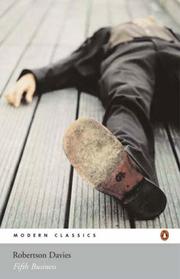
The first and most celebrated novel of the trilogy, introducing the snowball incident and Dunstan Ramsay's lifelong obsession with sainthood and guilt. Read first to establish the moral and mythological framework the other two novels build upon.
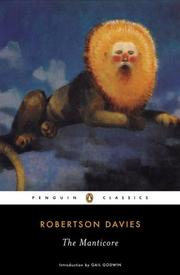
Shifts perspective to David Staunton undergoing Jungian analysis in Zurich, refracting the events of Fifth Business through a psychological lens. Reading it second reveals how the same story looks entirely different from another consciousness.
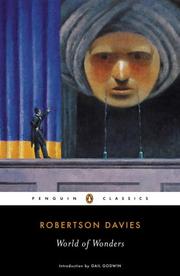
Magnus Eisengrim finally tells his own story, completing the trilogy's triptych of perspectives. Reading it last delivers the full revelation of what the snowball set in motion and brings the trilogy's themes of illusion and identity to a close.
The Jungian Foundation — Understanding the Psychology
IntermediateGrasp the Jungian concepts — Shadow, Anima, individuation, archetypes — that Davies weaves into every page of the trilogy, so that a re-read or reflection reveals the full depth of his intentions.
▸ Study plan for this stage
Pace: 8–10 weeks total: Weeks 1–5 cover "Man and His Symbols" (~20–25 pages/day, reading each of the five illustrated sections slowly and annotating symbols as you go); Weeks 6–10 cover "Memories, Dreams, Reflections" (~15–20 pages/day, journaling responses to each chapter since the memoir's density rewar
- The Shadow: the unconscious repository of repressed traits, moral failures, and unlived life — the engine behind Magnus Eisengrim's and Dunstan Ramsay's darkest impulses
- The Anima/Animus: the contrasexual inner figure that projects onto real people, explaining the trilogy's obsessive, fateful relationships with women like Mary Dempster
- Archetypes and the Collective Unconscious: universal, inherited psychic patterns (the Wise Old Man, the Trickster, the Great Mother) that Davies literalizes as characters and roles
- Individuation: the lifelong process of integrating unconscious contents into a whole Self — the trilogy's true plot beneath its plot
- Symbols and Dreams as the language of the unconscious: how Jung (in 'Man and His Symbols') argues that images, myths, and art carry meaning the rational mind cannot access directly
- The Self vs. the Ego: the distinction between the small, social persona and the larger, transpersonal Self toward which individuation aims
- Synchronicity and Meaningful Coincidence: Jung's concept (elaborated in 'Memories, Dreams, Reflections') that psychically significant events cluster in ways that feel fated — directly mirroring Davies's plot architecture
- Jung's own individuation journey as a case study: 'Memories, Dreams, Reflections' is itself a lived demonstration of every concept in 'Man and His Symbols', making it the indispensable companion text
- After reading 'Man and His Symbols', can you define the Shadow in your own words and give two examples of Shadow projection — one from the book's illustrations and one you invent from everyday life?
- How does Jung distinguish the personal unconscious from the collective unconscious in 'Man and His Symbols', and why does that distinction matter for understanding archetypal characters in fiction?
- In 'Memories, Dreams, Reflections', Jung describes his confrontation with the unconscious (the 'Nekyia' period). What techniques did he use, and what does this reveal about how individuation actually feels from the inside?
- How does Jung's account of his own Anima figures in 'Memories, Dreams, Reflections' complicate the idea that the Anima is simply a 'feminine ideal'? What shadow qualities does she carry?
- Both books treat dreams as primary data. What is Jung's method for interpreting a dream, as described in 'Man and His Symbols', and how does it differ from free association?
- 'Memories, Dreams, Reflections' ends with Jung's late reflections on death, meaning, and the Self. How do these meditations reframe individuation as something that is never fully completed — and what does that imply for reading a trilogy about three men's whole lifetimes?
- Symbol Hunting in 'Man and His Symbols': Keep a dedicated notebook. Each time Jung or his collaborators analyze a symbol (the mandala, the snake, the wise old man), write a one-paragraph speculation about which character or scene in the Deptford Trilogy it might illuminate — even before you re-read Davies. This primes your pattern-recognition.
- Dream Journal: For the duration of reading 'Memories, Dreams, Reflections', record your own dreams each morning in a few sentences. At week's end, apply Jung's amplification method (ask 'what does this image remind me of across myth, fairy tale, and personal memory?') to one dream. This makes his method visceral rather than theoretical.
- Archetype Casting Exercise: Draw a simple table with columns for each major Jungian archetype covered in 'Man and His Symbols' (Shadow, Anima, Wise Old Man, Trickster, Self). From memory, cast the three protagonists of the Deptford Trilogy — Dunstan, Boy, and Magnus — into roles in each column, and write a sentence justifying each casting. Revisit and revise the table after finishing 'Memories, Dr
- Parallel Passage Mapping: Select three passages from 'Memories, Dreams, Reflections' where Jung describes a personal crisis or vision, then find the corresponding theoretical concept in 'Man and His Symbols'. Write a short paragraph (150–200 words) for each pair showing how the memoir fleshes out the theory. This trains the close-reading skill Davies demands.
- Individuation Timeline: After finishing both books, create a visual timeline of Jung's own psychological development as reconstructed from 'Memories, Dreams, Reflections'. Mark the key crises, integrations, and turning points. Then, on the same timeline template, sketch what such a timeline might look like for Dunstan Ramsay based on your memory of 'Fifth Business'. Note where the shapes rhyme.
- Reflective Essay (500 words): Write a personal response to the question 'Which Jungian concept from these two books do I find most difficult to accept, and why?' Arguing against an idea is one of the best ways to understand it deeply, and Davies himself populates the trilogy with characters who resist self-knowledge.
Next up: Having internalized Jung's framework through his own theoretical and autobiographical writing, the reader is now equipped to encounter the Deptford Trilogy itself as a fully conscious Jungian allegory — recognizing individuation not as a scholarly overlay but as the living skeleton of Davies's narrative design.
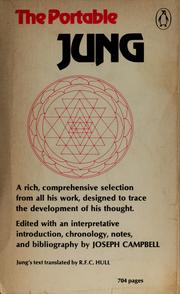
Jung's own accessible introduction to his symbolic and archetypal psychology, written for a general audience. Davies drew directly on these ideas; reading this makes The Manticore's analytical sessions and the trilogy's character archetypes immediately legible.

Jung's autobiography illuminates the personal and spiritual dimensions of his thought. Davies admired this book deeply, and its themes of self-discovery mirror Dunstan Ramsay's own life-review in Fifth Business.
Saints, Myth & Magic — The Hagiographic and Folkloric World
IntermediateUnderstand the tradition of saints' lives and the mythology of magic and illusion that Davies draws on, enriching the reader's grasp of Dunstan's hagiography obsession and Magnus's world of conjuring.
▸ Study plan for this stage
Pace: 6–8 weeks total: Weeks 1–3 on The Golden Legend (~25–30 pages/day, selecting key saint lives including St. Nicholas, St. George, St. Mary Magdalene, St. Thomas, and the Virgin Mary entries); Weeks 4–6 on The Hero with a Thousand Faces (~20–25 pages/day, reading straight through); Week 7–8 for overla
- The hagiographic formula: how saints' lives in The Golden Legend follow a recurring arc of miraculous birth/calling, trials, wonders, martyrdom, and posthumous miracles — the same scaffold Dunstan Ramsay uses to evaluate 'sainthood' in the Trilogy
- The moral and symbolic function of miracles: in de Voragine, miracles are not mere spectacle but proofs of divine order — understanding this clarifies why Dunstan obsesses over Mrs. Dempster's 'miracles' as theologically meaningful acts
- Hagiography as narrative construction: saints' lives are literary artifacts shaped by community need and theological argument, not straightforward biography — Davies exploits this gap between legend and fact
- Campbell's monomyth (the Hero's Journey): Separation → Initiation → Return as a universal deep structure that maps onto Magnus Eisengrim's life as conjurer-hero and Dunstan's own spiritual quest
- The figure of the Trickster and the Magician in Campbell: the conjurer/illusionist as a liminal mythic archetype who mediates between the ordinary world and hidden reality — directly illuminating Magnus's identity
- The role of the 'Goddess' and the transformative feminine in Campbell: how female figures (the Terrible Mother, the Goddess of Destiny) parallel Mrs. Dempster's mythic resonance in the Trilogy
- Sacred vs. profane wonder: both books distinguish between miracles that reveal transcendent truth and mere tricks — a tension Davies places at the heart of Magnus's magic shows and Dunstan's hagiographic investigations
- Myth as living psychology: Campbell's Jungian framework treats myth not as dead folklore but as the symbolic language of the unconscious, giving the reader tools to read Davies's characters as mythic as well as realistic figures
- After reading The Golden Legend, can you identify the standard structural elements of a saint's life (vita) and explain how de Voragine uses miraculous episodes to argue for a saint's holiness — and how Davies parodies or earnestly applies this structure to Mrs. Dempster?
- Which specific saints in The Golden Legend display attributes — wonder-working, social marginality, association with illusion or transformation — that most closely prefigure characters or episodes in the Deptford Trilogy, and why?
- How does Campbell's monomyth of Separation → Initiation → Return map onto the life arc of Magnus Eisengrim as you understand it from the Trilogy, and where does his journey deviate from or subvert the heroic pattern?
- Both de Voragine and Campbell treat extraordinary deeds (miracles / heroic feats) as windows into a deeper reality. How do the two authors differ in their underlying frameworks (theological vs. psychological/mythological), and how does Davies play these frameworks against each other?
- Campbell describes the Trickster-Magician as a liminal figure who unsettles ordinary categories of reality. How does this archetype illuminate Magnus Eisengrim's role as a stage conjurer, and what does it suggest about the moral ambiguity Davies builds around him?
- What does Campbell mean by the 'return' phase of the hero's journey, and how might this concept apply to Dunstan Ramsay's role as the narrator-hagiographer who 'returns' with knowledge to share with his community?
- Saint-life anatomy exercise: Choose three saint entries from The Golden Legend (recommended: St. Nicholas, St. Mary Magdalene, St. George) and diagram each one using a simple template — Call, Trials, Miracles, Death/Glorification. Then write a one-paragraph 'vita' of Mrs. Dempster using the same template, noting where her story fits and where it breaks the mold.
- Miracle taxonomy: As you read The Golden Legend, keep a running log of miracle types (healing, resurrection, punishment of enemies, bilocation, etc.). After finishing, categorize them and write a short reflection on which categories appear in the Deptford Trilogy and what Davies seems to be saying by including or omitting certain types.
- Monomyth mapping: Draw a circular 'Hero's Journey' diagram (using Campbell's stages) and plot the key life events of Magnus Eisengrim on it. Annotate each stage with the corresponding Campbell concept (e.g., 'Road of Trials,' 'Atonement with the Father'). Note any stages that seem absent or distorted.
- Comparative close-reading: Select one passage from The Golden Legend describing a miraculous act and one passage from The Hero with a Thousand Faces describing a mythic transformation. Write a 400–600 word comparison arguing how Davies could have drawn on both simultaneously in a single scene from the Trilogy.
- Trickster profile: Using Campbell's description of the Trickster/Magician archetype, write a one-page character profile of Magnus Eisengrim as if he were a mythological figure rather than a novel character. What is his 'boon'? Who is his threshold guardian? What world does he return from?
- Reflective journal — sacred vs. profane wonder: After completing both books, write a journal entry (300–400 words) exploring the question: 'Is Magnus Eisengrim's stage magic closer to de Voragine's miracles or to Campbell's heroic deeds — or is it deliberately neither?' Use specific evidence from both books.
Next up: By internalizing the hagiographic structures of The Golden Legend and the mythic archetypes of The Hero with a Thousand Faces, the reader is now equipped to recognize Davies's deliberate layering of these frameworks onto his characters — preparing them to engage with the psychological and Jungian dimensions of the Trilogy's inner lives in the next stage.
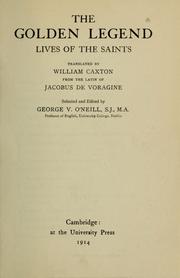
The medieval collection of saints' lives that Dunstan Ramsay studies obsessively. Dipping into this classic text reveals exactly what Davies is invoking — and gently satirizing — in his portrait of Ramsay as a modern hagiographer.

Campbell's mapping of the universal hero myth illuminates the trilogy's structure: each protagonist undergoes a distinct heroic journey. Reading this alongside the novels reveals Davies's deliberate mythic scaffolding.
Davies in Depth — His World and His Other Work
ExpertPlace the Deptford Trilogy within the full arc of Davies's career and intellectual world, and gain critical tools for understanding his unique blend of Canadian identity, erudition, and storytelling.
▸ Study plan for this stage
Pace: 6–7 weeks total: Weeks 1–4 for *The Rebel Angels* (~25–30 pages/day, allowing time for re-reading dense passages); Weeks 5–7 for *The Enthusiasms of Robertson Davies* (~15–20 pages/day, reading essays thematically in clusters rather than straight through)
- The Cornish Trilogy as a new phase in Davies's career — *The Rebel Angels* introduces the university as a microcosm of civilization, expanding the small-town Ontario world of earlier work into a cosmopolitan, erudite setting
- Rabelaisian abundance and the carnivalesque — Davies consciously invokes Rabelais as both a character obsession and a structural principle, blending high scholarship with bodily comedy, excess, and vitality
- Jungian psychology as narrative architecture — the Shadow, the Anima, and the process of individuation are not merely themes but shape character arcs and plot structure throughout *The Rebel Angels*
- The 'New Grub Street' of academe — Davies satirizes university politics, credentialism, and the gap between genuine learning and institutional knowledge, asking what a true education looks like
- Davies's critical and essayistic voice — *The Enthusiasms* reveals the man behind the novels: his passions for theatre, magic, Dickens, Canadian culture, and the life of the mind, showing how autobiography and intellect feed his fiction
- Canadian identity and the colonial cringe — across both books Davies wrestles with what it means to be a serious artist and intellectual in Canada, resisting both provincial self-deprecation and uncritical nationalism
- The role of the eccentric and the outsider — from Parlabane to the Gypsy scholar figures, Davies consistently champions those who exist outside respectable society as carriers of genuine wisdom
- Synthesis of the sacred and the profane — Davies refuses to separate spiritual seeking from earthly appetite, a tension visible in both the novel's plot and the essays' celebration of pleasure and high culture
- How does *The Rebel Angels* use the University of Toronto (thinly veiled as the College of St. John and the Holy Ghost) to extend and complicate the themes of community, hypocrisy, and hidden life that run through the Deptford Trilogy?
- What specific role does Rabelais play in *The Rebel Angels* — both as a text the characters study and as a model for Davies's own narrative method — and how does this connect to ideas Davies expresses about vitality and learning in *The Enthusiasms*?
- Based on *The Enthusiasms of Robertson Davies*, what are the three or four intellectual passions that most consistently shaped Davies's fiction, and can you trace at least two of them directly into *The Rebel Angels*?
- How does Davies's treatment of Canadian identity in the essays of *The Enthusiasms* reframe or deepen your reading of the cultural anxieties present in *The Rebel Angels*?
- What does Davies mean by a 'life fully lived' as an intellectual and artistic ideal, and how do characters in *The Rebel Angels* succeed or fail by that standard?
- How does the dual-narrator structure of *The Rebel Angels* (Maria Theotoky and Simon Darcourt) reflect Davies's Jungian interest in complementary perspectives, and what does each narrator's blind spot reveal?
- **Marginalia mapping:** While reading *The Rebel Angels*, keep a running log of every allusion — to Rabelais, Jung, alchemy, music, art, or history. After finishing, cross-reference your log with the essays in *The Enthusiasms* to identify which allusions connect to Davies's declared personal passions. Write a one-page reflection on what this reveals about how he builds fictional worlds.
- **Essay-to-novel bridge:** Choose any two essays from *The Enthusiasms of Robertson Davies* (ideally one on theatre/performance and one on Canadian culture). Write 300–400 words for each showing precisely where the argument or sensibility of that essay surfaces in *The Rebel Angels* — cite specific scenes or passages.
- **Character Jungian audit:** Select three characters from *The Rebel Angels* (e.g., Parlabane, Maria, Hollier) and write a brief psychological profile of each using Jungian concepts (Shadow, Anima/Animus, Persona, individuation). Then argue in a paragraph whether Davies uses Jung schematically or with genuine complexity.
- **Davies's critical voice:** *The Enthusiasms* shows Davies as a critic and public intellectual. Draft a 400-word review of *The Rebel Angels* written in Davies's own essayistic style — opinionated, erudite, lightly ironic — as if he were reviewing someone else's novel. This forces close attention to his rhetorical voice.
- **The 'Canadian cringe' debate:** Using evidence from both books, prepare a structured argument (bullet points or short paragraphs) for the following proposition: *'Davies ultimately transcends the colonial cringe he diagnoses, but does not fully escape it.'* Argue both for and against, then reach your own verdict.
- **Commonplace book:** Keep a dedicated notebook of striking passages, aphorisms, and ideas from both books. At the end of the stage, select your ten most important entries and write one sentence for each explaining why it is a key to understanding Davies's entire imaginative project.
Next up: By grounding the reader in Davies's full intellectual personality — his Jungian framework, his Rabelaisian exuberance, his Canadian preoccupations, and his essayistic critical voice — this stage equips them to return to the Deptford Trilogy itself with the analytical vocabulary and biographical context needed for a truly deep, synthesizing re-reading.
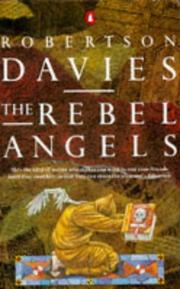
The first novel of Davies's subsequent Cornish Trilogy, set at a fictional University of Toronto college. Reading it after Deptford shows how Davies evolved his themes of scholarship, magic, and the examined life into an even richer canvas.
A collection of Davies's essays, reviews, and lectures that reveals the man behind the novels — his passions for Jung, theatre, religion, and Canadian culture. Essential for understanding the ideas that animate every page of the trilogy.
Discussion
Keep reading
Paths that share books, cover the same subject, or open a related topic.