Shadow work explained: the best books to explore your unconscious self
This curriculum guides a beginner from accessible, story-driven introductions to shadow work, through core Jungian theory, into structured self-inquiry practices, and finally into deeper integrative work. Each stage builds the vocabulary and emotional readiness needed for the next, so that by the end the reader has both conceptual grounding and practical tools for ongoing inner work.
First Encounters: What Is the Shadow?
BeginnerUnderstand what the shadow is, where it comes from, and why exploring it matters — without yet needing deep psychological theory.
▸ Study plan for this stage
Pace: 4–5 weeks, ~25–30 pages/day. Start with Bly's concise essay (60–80 pages, 2–3 days), then move to Johnson's fuller exploration (150–180 pages, 2–3 weeks), with 1–2 weeks for reflection and exercises.
- The shadow is the disowned part of ourselves—what we reject, deny, or hide from consciousness due to family, culture, and personal shame
- We develop the shadow in childhood through selective approval: we keep what earns love and bury what brings rejection or punishment
- The shadow is not inherently evil or pathological; it contains both negative traits and positive potential we've learned to suppress
- Projection: we unconsciously see our own shadow traits in others, especially people we strongly dislike or judge
- Encountering the shadow requires honest self-observation and compassion, not judgment or forced integration
- Shadow work is foundational to psychological maturity and authentic relationships—without it, we remain controlled by unconscious forces
- Bly's poetic approach emphasizes the shadow's role in creativity and wholeness; Johnson's clinical approach shows how shadow dynamics play out in daily life
- What is the shadow, and how does it form during childhood and adolescence?
- Why do we develop a shadow, and what role do family and cultural values play in its creation?
- What is projection, and how does it reveal our shadow in our reactions to other people?
- Can the shadow contain positive qualities? Give examples from the books.
- What are the consequences of ignoring or denying your shadow in relationships and personal life?
- What is the first step toward shadow work, according to Bly and Johnson?
- Identify three people you strongly dislike or judge harshly. For each, write down the specific traits that bother you. Then honestly ask: do I see any of these traits in myself? This reveals projection.
- List 10 qualities your family or culture taught you were 'bad' or 'unacceptable' (anger, selfishness, laziness, sexuality, etc.). Reflect on which ones you've buried and why.
- Write a brief character sketch of your 'ideal self'—the person you try to be. Then write a sketch of your opposite: what traits does your ideal self reject? This opposite is part of your shadow.
- Choose one shadow trait you've identified. Write a short scene or dialogue where this trait appears in your life (a moment you felt it, suppressed it, or saw it in someone else). Observe without judgment.
- Create a 'shadow inventory': list behaviors, emotions, or desires you feel ashamed of or hide from others. Don't censor—just observe and name them.
- Reflect on a recent conflict or strong emotional reaction to someone. Using Johnson's framework, trace the reaction back to a possible shadow projection. What might this person be mirroring in you?
Next up: This stage establishes the shadow as a real, universal psychological phenomenon and prepares you to actively engage with it—the next stage will teach specific techniques for dialogue, integration, and working with shadow material in relationships and personal growth.

A poet's warm, story-rich introduction to the shadow concept that makes it immediately felt and relatable — the perfect first door in, requiring no prior knowledge of psychology.

Short and accessible, Johnson translates Jungian shadow ideas into plain language and everyday examples, building on Bly's poetic framing with a bit more structure.
Jungian Foundations: The Theory Behind the Shadow
BeginnerGrasp the core Jungian framework — the unconscious, archetypes, the Self, and how the shadow fits into the whole psyche — so later practical work has a solid conceptual anchor.
▸ Study plan for this stage
Pace: 8–10 weeks, ~25–30 pages/day (with reflection breaks). Start with "Man and His Symbols" (weeks 1–6, approximately 400 pages), then move to "Meeting the Shadow" (weeks 7–10, approximately 200 pages). Allocate 2–3 days per week for exercises and journaling.
- The unconscious as a dynamic, autonomous force containing repressed material, instincts, and creative potential—not merely a repository of forgotten memories
- Archetypes as universal, inherited patterns of human experience (the Hero, the Shadow, the Wise Old Man, the Anima/Animus) that structure both individual and collective psychology
- The shadow as the repository of disowned, rejected, or repressed aspects of the personality—both negative traits and positive potentials we fail to recognize in ourselves
- The Self as the organizing center and goal of the psyche, encompassing both conscious and unconscious elements and representing wholeness and individuation
- Complexes as emotionally charged clusters of ideas and images that operate semi-autonomously within the psyche, often rooted in archetypal patterns
- The process of individuation as the lifelong psychological development toward becoming one's authentic, integrated self by acknowledging and integrating shadow material
- Symbols and dreams as the primary language of the unconscious, offering direct access to archetypal and shadow content that rational consciousness cannot easily grasp
- The personal shadow versus the collective shadow—how individual repression intersects with cultural and societal disowning of certain human qualities
- What is the shadow in Jungian psychology, and why does Jung argue that acknowledging it is essential to psychological maturity and individuation?
- How do archetypes differ from personal complexes, and what role do they play in shaping both the shadow and the Self?
- Explain the relationship between the unconscious, the ego, and the Self. How does the shadow fit into this triadic structure?
- What is individuation, and how does shadow work contribute to this process of becoming whole?
- How do symbols and dreams serve as bridges between the conscious and unconscious mind, and why are they particularly useful for accessing shadow material?
- What is the difference between the personal shadow and the collective shadow, and how do cultural narratives shape what gets repressed into the shadow?
- After reading Jung's essay on 'The Shadow' in 'Man and His Symbols,' write a 2–3 page reflection identifying three traits or behaviors you strongly dislike in others. For each, journal honestly about whether you recognize any version of that trait in yourself—this surfaces personal shadow projections.
- Create an 'archetype inventory' by reading Jung's descriptions of major archetypes (Shadow, Anima/Animus, Self, Wise Old Man, etc.) and identifying which ones feel most active or dormant in your own psyche. Note specific life examples where each archetype has influenced your choices or relationships.
- Collect and analyze 3–5 of your own recent dreams (or use examples from the book). For each dream, identify: (a) archetypal figures or symbols present, (b) shadow elements (repressed desires, fears, disowned traits), and (c) what the unconscious may be communicating to your conscious mind.
- Read the chapters on shadow in 'Meeting the Shadow' and select one essay that resonates deeply. Write a dialogue between your conscious ego and your shadow, allowing the shadow voice to express what it has been denied or rejected.
- Identify a recurring conflict in your life (with a partner, family member, or colleague). Using Jung's concept of projection, explore what shadow material you might be projecting onto the other person. Write about what disowned aspect of yourself this conflict might be revealing.
- Create a visual representation (collage, drawing, or mind map) of your personal shadow, including: repressed emotions, denied desires, feared traits, and hidden strengths. Refer to Zweig's framework in 'Meeting the Shadow' for categories of shadow content.
Next up: This stage anchors you in the theoretical architecture of Jungian psychology—the unconscious, archetypes, and the shadow's role in the psyche—so that the next stage can move into practical shadow integration techniques, active imagination, and real-world applications for healing and personal transformation.

Jung's own accessible overview of his ideas, written deliberately for a general audience; it introduces archetypes and the unconscious with rich imagery before tackling shadow specifically.

An anthology of short essays by leading Jungian thinkers that maps the many faces of the shadow — personal, relational, cultural — consolidating the theory from multiple angles.
Self-Inquiry: Turning Inward with Honesty
IntermediateDevelop the self-reflective skills and emotional vocabulary needed to actually look at hidden parts of yourself — moving from theory into genuine inner inquiry.
▸ Study plan for this stage
Pace: 8–10 weeks, ~25–30 pages/day (alternating between both books to allow integration time between reading sessions)
- The disowned self: recognizing the shadow as the repository of rejected, denied, or repressed aspects of your personality
- The projection mechanism: understanding how you unconsciously project disowned qualities onto others as a way to avoid seeing them in yourself
- Emotional granularity: developing precise language for feelings beyond basic labels (anger, sadness, fear) to access deeper emotional truths
- The witness consciousness: cultivating a compassionate, non-judgmental internal observer that can hold difficult emotions without reactivity
- RAIN practice (Recognize, Allow, Investigate, Non-identification): a concrete technique for meeting difficult emotions with acceptance rather than resistance
- The paradox of acceptance: how genuinely accepting what is (rather than fighting it) creates the conditions for authentic change
- Discomfort as information: learning to read emotional resistance and physical tension as signals pointing toward shadow material
- What is your personal shadow, and what specific qualities or emotions have you most actively rejected or denied in yourself?
- Can you identify a recent situation where you strongly judged or criticized someone? What disowned quality of your own were you likely projecting onto them?
- How does your body respond when you encounter your own shame, anger, or fear? What physical sensations or impulses arise?
- What is the difference between suppressing an emotion and accepting it? How does acceptance create space for change?
- What does it mean to 'witness' your own experience without trying to fix, judge, or escape it? How is this different from your habitual response?
- How can you use emotional granularity (precise naming of feelings) to access deeper self-knowledge rather than staying at surface-level labels?
- Shadow inventory: List 8–10 qualities you strongly dislike in others (arrogant, selfish, weak, needy, etc.). For each, write honestly about where you express that quality in your own life, even in small ways. Notice resistance and shame that arise.
- Projection journaling: Identify one person who triggers strong negative reactions in you. Write freely about what bothers you most about them, then reframe each criticism as a potential disowned part of yourself. Explore how you might actually embody that quality.
- RAIN practice daily: Choose one recurring difficult emotion (anxiety, shame, irritation). Spend 10–15 minutes daily using the RAIN framework: Recognize it's present, Allow it without fighting, Investigate where you feel it in your body and what it needs, and Non-identify (it's not who you are, just what's present now).
- Emotional vocabulary expansion: Create a feelings chart that goes beyond basic emotions. For anger, list: frustrated, betrayed, powerless, disrespected, violated. For sadness: disappointed, lonely, grieving, empty, resigned. Use this chart to journal with greater precision about your inner states.
- Body scan with curiosity: Spend 15 minutes in a quiet space scanning your body from head to toe. When you notice tension, numbness, or sensation, pause and ask: 'What emotion or memory lives here? What is this trying to tell me?' Write what emerges without censoring.
- Acceptance experiment: Choose one emotion or thought pattern you typically resist (e.g., 'I'm not good enough'). For one week, when it arises, practice saying 'Yes, this is here right now' instead of fighting it. Notice what shifts when you stop the internal battle.
Next up: This stage equips you with the reflective capacity and emotional honesty to recognize your shadow material, preparing you to move into the next stage where you'll learn specific practices for integrating these disowned parts and transforming them into sources of wholeness and authentic power.
A practical, exercise-driven guide that translates shadow theory into concrete journaling prompts and self-inquiry tools, bridging the gap between reading about the shadow and actually working with it.

Introduces mindful self-compassion as the emotional foundation required for honest shadow work; without this, self-inquiry can tip into self-judgment rather than integration.
Deeper Integration: Living with the Whole Self
IntermediateUnderstand how unintegrated shadow material drives patterns in relationships and life choices, and begin the longer work of consciously integrating what has been uncovered.
▸ Study plan for this stage
Pace: 8–10 weeks, ~25–30 pages/day. Start with "Inner Work" (4–5 weeks), then move to "The Shadow Effect" (4–5 weeks). Allow 1–2 weeks for integration exercises and reflection.
- Active imagination as a bridge between conscious and unconscious: Johnson's method for dialoguing with shadow figures to access their wisdom and integrate their energy
- Shadow material as the source of compulsive patterns: understanding how disowned aspects of self drive repetitive relationship dynamics, career choices, and life decisions
- The shadow in relationships: recognizing projection, attraction to complementary shadows, and how unintegrated material creates conflict and attraction cycles
- Conscious integration vs. repression: the difference between acknowledging shadow material and being controlled by it, and why awareness transforms its power
- The collective shadow: Chopra's framework for understanding how cultural, familial, and societal conditioning creates shared blind spots that affect entire systems
- Shadow as creative potential: reframing disowned traits not as pathology but as untapped energy and capability waiting to be reclaimed
- The integration process as ongoing: recognizing that shadow work is not a destination but a continuous practice of bringing unconscious material into awareness
- How does Johnson's active imagination technique work, and what is the purpose of dialoguing with shadow figures rather than simply analyzing them intellectually?
- Describe a specific pattern in your own relationships or life choices. What shadow material (disowned traits, denied desires, rejected aspects) might be driving this pattern?
- What is the difference between being aware of your shadow and being controlled by it? How does conscious integration change the way shadow material operates in your life?
- How does Chopra's concept of the collective shadow expand your understanding of personal shadow work? What cultural or familial conditioning have you inherited?
- Why does the shadow often attract us to certain people or situations? Can you identify a projection or complementary shadow dynamic in a current or past relationship?
- What disowned traits or capacities might actually contain creative potential or hidden strengths if integrated rather than repressed?
- Active imagination dialogue (Johnson): Choose a shadow figure that has appeared in your dreams, fantasies, or emotional reactions. Spend 20–30 minutes in a quiet space writing a dialogue between your conscious self and this figure. Ask it what it wants, why it appears, what gift or message it carries. Do this 2–3 times during the stage.
- Pattern mapping: Identify one recurring relationship or life pattern (e.g., choosing unavailable partners, self-sabotage in success, chronic conflict with authority). Write out the pattern in detail, then work backward to identify the shadow material (disowned desire, fear, or trait) that might be driving it.
- Projection inventory: List 3–5 people who trigger strong reactions in you (positive or negative). For each, write down the specific qualities that bother or attract you. Then ask: What disowned part of myself might this person be mirroring?
- Shadow trait reclamation: Choose one trait you've rejected or judged in yourself (aggression, neediness, ambition, selfishness, etc.). Research and write about how this trait, in its healthy form, could serve you. Practice expressing it in small, safe ways.
- Collective shadow reflection: Identify one piece of cultural, familial, or societal conditioning that has shaped your blind spots. How has this collective shadow limited your choices or relationships? What would change if you questioned this conditioning?
- Integration journaling: After completing both books, spend 15–20 minutes weekly writing about moments when you notice shadow material arising in real time. What triggered it? What did you learn? How did you respond differently than before?
Next up: This stage equips you with both the theoretical framework and practical tools to recognize shadow patterns and begin integrating them, preparing you to move into deeper work on embodying the whole self and translating shadow integration into sustained behavioral and relational change.
Johnson's step-by-step guide to working with dreams and active imagination gives the reader reliable, repeatable methods for ongoing dialogue with the unconscious — the core skill of sustained shadow work.
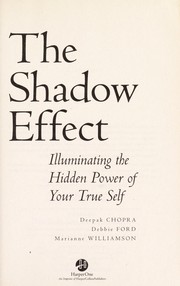
Brings together multiple perspectives — psychological, spiritual, and practical — on how shadow integration transforms daily life, serving as a synthesizing capstone that connects all previous stages.
Discussion
Keep reading
Paths that share books, cover the same subject, or open a related topic.