How to learn Storytelling
This curriculum builds storytelling mastery from the ground up — starting with the instinctive, almost conversational craft of narrative, then moving through structural frameworks, character and scene work, and finally the deeper artistic and psychological dimensions that separate competent writers from compelling ones. Each stage assumes the vocabulary and intuitions built in the one before it, creating a true spiral of deepening understanding.
Foundations: What Stories Are and Why They Work
BeginnerUnderstand what a story fundamentally is, why humans are wired for narrative, and develop an instinct for what makes a story feel alive versus flat.
▸ Study plan for this stage
Pace: 8–10 weeks total: ~3 weeks on "Story" by McKee (~25–30 pages/day, it's dense — read with a notebook); ~2 weeks on "The Storytelling Animal" (~40 pages/day, more accessible); ~2–3 weeks on "Bird by Bird" (~25 pages/day, read slowly and reflectively). Allow buffer days between books to review notes an
- The gap between expectation and result — McKee's core engine of story: a character wants something, takes action, and the world responds unexpectedly, creating the gap that drives narrative forward.
- Story vs. plot: McKee's distinction that plot is the surface sequence of events, while story is the deeper system of values, conflict, and change — understanding this prevents confusing 'what happens' with 'what it means'.
- Humans as storytelling animals: Gottschall's argument (drawing on evolutionary psychology, neuroscience, and anthropology) that narrative is not a cultural luxury but a biological necessity — the brain simulates reality through story.
- The story-proof of universality: Gottschall demonstrates that core story grammar (protagonist + problem + attempted solution + change) appears across all known human cultures, suggesting story structure is hardwired, not invented.
- The MICE quotient and story's problem-solving function: Gottschall's insight that stories are a 'flight simulator' for social and moral dilemmas, letting humans rehearse difficult situations safely.
- Shitty first drafts and the permission to begin: Lamott's foundational creative principle that all good writing starts with terrible, uninhibited first attempts — perfectionism is the enemy of story discovery.
- The one-inch picture frame: Lamott's technique of narrowing focus to a tiny, specific scene or moment rather than trying to capture everything at once — specificity is the doorway into a living story.
- Voice, character, and emotional truth: Lamott's argument that authentic stories emerge not from grand plots but from honest observation of real people, real feelings, and real detail — aliveness in story comes from truth, not cleverness.
- According to McKee, what is 'the gap' and why is it the fundamental unit of story energy — can you describe it in your own words and identify it in a film or book you know well?
- Gottschall argues that storytelling is a biological adaptation, not merely a cultural one. What evidence does he offer, and do you find it convincing? How does this change the way you think about your own urge to tell stories?
- What is the difference, as McKee defines it, between a story's 'structure' and its 'plot'? Why does McKee insist that structure is not a constraint on creativity but its precondition?
- Lamott introduces the idea of 'shitty first drafts' as a professional practice, not just a beginner's crutch. How does this principle connect to Gottschall's claim that story is a simulation — what are both authors really saying about the relationship between mess and meaning?
- After reading all three books, how would you define a 'living' story versus a 'flat' one? Draw on at least two of the three authors in your answer.
- Lamott repeatedly emphasizes specificity, small frames, and honest character observation. How does this ground-level, writerly advice connect to McKee's large-scale structural principles? Are they in tension or in harmony?
- The Gap Journal (McKee): For one week, watch one TV episode or film per day and pause it at a moment of conflict. Write 3–5 sentences identifying: What did the character expect? What actually happened? What value (love/hate, freedom/imprisonment, life/death) shifted? This trains your eye for McKee's core engine.
- Story Universality Hunt (Gottschall): Choose three wildly different stories — a fairy tale, a news article, and a scene from a novel you love. Map each onto Gottschall's basic story grammar: protagonist + problem + attempted solution + outcome + change. Note what is universal and what differs. Write a one-paragraph reflection on what this reveals.
- The Shitty First Draft Sprint (Lamott): Set a 20-minute timer. Write the opening of a story you've been afraid to start — with explicit permission to be terrible. Do not edit. Do not re-read until the timer ends. Afterward, highlight one sentence that surprises you. Repeat this exercise three times across the stage.
- The One-Inch Frame (Lamott): Take a large, intimidating story idea you have. Using Lamott's 'one-inch picture frame' technique, write a single scene no longer than 300 words that captures just one small, specific moment within it. Focus on sensory detail and a single emotional truth.
- The Flat vs. Alive Rewrite (all three books): Find a paragraph of flat, lifeless writing — from your own drafts, a bad book, or a deliberately dull summary you write yourself. Rewrite it twice: once applying McKee's structural gap principle (add want, obstacle, and unexpected result), and once applying Lamott's specificity principle (add concrete detail and honest emotion). Compare the two version
- Synthesis Essay (all three books): After finishing all three books, write a 400–600 word personal manifesto titled 'What I Now Believe a Story Is.' It must reference at least one idea from each of the three books and must include one concrete example from your own life or a story you love. This is your anchor document for the entire curriculum.
Next up: This stage gives you the 'why' and 'what' of story at the most fundamental level — the biological drive, the structural skeleton, and the writer's permission to begin — so that the next stage can move confidently into the 'how': the craft techniques of building scenes, developing characters, and sustaining narrative momentum across a longer work.
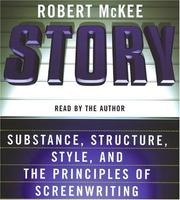
The single most comprehensive introduction to story structure, substance, and style. Starting here gives you a shared vocabulary — premise, inciting incident, climax, value charge — that every subsequent book assumes you know.
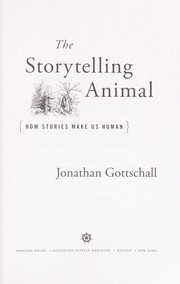
Grounds storytelling in biology and psychology, explaining WHY humans tell and crave stories. Reading this second turns McKee's craft rules from arbitrary conventions into deeply motivated principles.
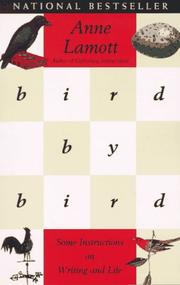
A warm, practical antidote to intimidation — teaches the beginner to sit down and actually write messy first drafts without fear, bridging theory into daily practice.
Structure: The Architecture of Narrative
BeginnerInternalize proven structural frameworks — the hero's journey, three-act structure, and scene-level mechanics — so you can consciously architect a story from beginning to end.
▸ Study plan for this stage
Pace: 6–8 weeks total: Weeks 1–4 for "The Hero with a Thousand Faces" (~20–25 pages/day, reading slowly and reflectively given its dense mythological language); Weeks 5–7 for "Save the Cat!" (~40–50 pages/day, a much faster read designed for practitioners); Week 8 reserved for review, synthesis, and compl
- The Monomyth: Campbell's universal story pattern — Separation, Initiation, and Return — that underlies myths across all cultures
- The Hero's Journey 17 stages: from the Call to Adventure through Trials, the Ordeal, the Road Back, and the Return with the Elixir
- The archetypal Hero: the idea that the protagonist represents a universal human psyche undergoing transformation, not merely a plot agent
- The Threshold and the Threshold Guardian: the structural moment of no-return that separates the Ordinary World from the Special World
- Blake Snyder's Beat Sheet (BS2): 15 precise, named beats — Opening Image through Final Image — that map a screenplay's (and any story's) emotional and structural turning points
- The Three-Act Structure as scaffolding: Act One (setup), Act Two (confrontation and midpoint reversal), Act Three (resolution) and how Snyder's beats slot into each act
- The 'Save the Cat' moment: an early scene that makes the audience root for the hero — the principle that likability and empathy must be engineered deliberately
- Scene-level mechanics from Snyder: the concept of 'Pope in the Pool' (delivering exposition through action), and the discipline of making every scene both advance plot AND reveal character
- Can you sketch all 17 stages of Campbell's Hero's Journey from memory and name a scene from a film or novel that corresponds to at least 8 of them?
- What is the structural and thematic difference between the 'Ordinary World' and the 'Special World,' and why does Campbell argue crossing that threshold is psychologically necessary for the hero?
- What are Snyder's 15 beats, and at roughly what page (out of a 110-page screenplay) does each beat occur? Why does Snyder treat these page counts as non-negotiable?
- How does the 'Save the Cat' beat function differently from a general character-introduction scene, and what happens to audience engagement when it is missing?
- Where do Campbell's mythological archetypes (Herald, Shapeshifter, Shadow, Mentor, Trickster) map onto Snyder's beat sheet? Which beats tend to introduce which archetypes?
- What is the 'All Is Lost' beat, and how does it mirror the darkest moment of Campbell's Ordeal? What must emotionally change in the hero between that beat and the Final Image?
- Hero's Journey Audit: Choose one film you know well (e.g., The Matrix, The Lion King). Map every scene onto Campbell's 17 stages in a two-column table. Note any stages that are compressed, skipped, or reordered — then ask yourself why the storyteller made that choice.
- Beat Sheet Reverse-Engineering: Using Snyder's BS2, watch a feature film and pause at each of the 15 beats. Write one sentence describing what happens at each beat and confirm it lands near Snyder's prescribed page/minute mark. Repeat with a second film to test whether the pattern holds.
- Ordinary World vs. Special World Design: For an original story idea (or a favorite existing story), write two paragraphs — one describing the hero's Ordinary World (rules, relationships, flaw) and one describing the Special World (inverted rules, new demands). Make the contrast as sharp as possible.
- Write the 'Save the Cat' Moment: Draft a single scene (300–500 words) whose only job is to make a reader instantly root for your protagonist. The scene must show action, not tell us the character is good. Revise it once after asking: 'Would a stranger care about this person after only this scene?'
- Campbell-to-Snyder Translation Map: Draw a side-by-side diagram placing Campbell's 17 stages on the left and Snyder's 15 beats on the right. Draw lines connecting stages that serve the same structural or emotional function. Write a one-sentence note wherever the two frameworks disagree or leave a gap.
- One-Page Story Skeleton: Using both frameworks together, outline a brand-new story idea on a single page — hitting every major Snyder beat while also labeling the Campbell stage each beat represents. This skeleton becomes your personal template for the rest of the curriculum.
Next up: Mastering these macro-level frameworks gives you the skeleton of a story; the next stage will add flesh to those bones by exploring how voice, character interiority, and scene-by-scene prose craft transform a structural outline into a living, breathing narrative.

The foundational text on the monomyth — the deep structural pattern underlying myths and stories across all cultures. Reading McKee first makes Campbell's abstract archetypes immediately recognizable as story mechanics.
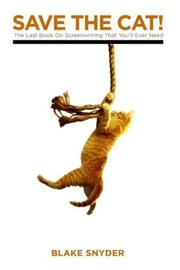
Translates Campbell and McKee into a concrete, beat-by-beat structural blueprint. Its simplicity makes it the perfect hands-on companion for plotting your own stories at this stage.
Character & Scene: The Living Tissue of Story
IntermediateMove beyond skeleton structure to master the craft of creating unforgettable characters, writing scenes with tension and subtext, and making readers feel rather than just follow.
▸ Study plan for this stage
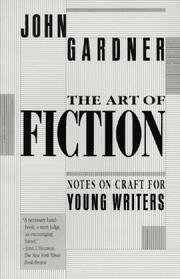
Pace: 8–10 weeks total: Weeks 1–4 cover "The Art of Fiction" by John Gardner (~20–25 pages/day, reading slowly and re-reading dense passages on fictional dream and psychic distance); Weeks 5–9 cover "Writing Fiction" by Janet Burroway (~25–30 pages/day, pausing after each chapter to attempt the embedded e
- The Vivid and Continuous Dream (Gardner): fiction works by sustaining an unbroken imaginative experience in the reader's mind — every word choice either maintains or shatters that dream
- Psychic Distance (Gardner): the six-level spectrum from remote authorial summary down to raw interior thought, and the craft of deliberately sliding between levels to control emotional intimacy
- Character as Revealed Action (Gardner & Burroway): character is not described but demonstrated — desire, contradiction, and choice under pressure are what make fictional people feel alive
- The Scene as the Basic Unit of Fiction (Burroway): every scene must have a dramatic question, rising tension, and a turn — scenes that merely report or illustrate are inert
- Subtext and the Principle of 'Said Bookisms' (Burroway): what characters do NOT say, and how dialogue sits on top of a hidden emotional current, carries more weight than explicit statement
- Showing vs. Telling as a Spectrum, Not a Rule (Burroway): summary, scene, and free indirect discourse each serve different narrative purposes — mastery is knowing when to use which
- Concrete, Specific Detail (both authors): abstraction distances; the precisely observed sensory detail — the brand of cigarette, the exact gesture — is what triggers the reader's felt experience
- Fictional Tension and the Concept of 'Trouble' (Burroway): story is the record of how trouble is encountered — without genuine stakes and resistance in every scene, narrative momentum dies
- After reading Gardner, can you identify and name the psychic distance level of any given paragraph — and explain what effect shifting one level up or down would have on the reader's emotional experience?
- How does Gardner's concept of the 'vivid and continuous dream' change the way you evaluate your own prose at the sentence level — what specific kinds of writing 'wake the reader up'?
- Using Burroway's framework, can you diagnose a scene you've written or read and identify: the dramatic question, the moment of turn, and whether subtext is doing work in the dialogue?
- What is the difference between a character revealed through Burroway's 'desire + obstacle' engine versus a character revealed through backstory summary — and when is each appropriate?
- How do Gardner and Burroway together define the relationship between concrete detail and emotional resonance — and can you point to a passage in each book that proves their case?
- Can you articulate, in your own words, why 'showing' is not always superior to 'telling,' using specific examples of when summary or psychic distance serves the story better than a fully rendered scene?
- Psychic Distance Ladder Drill (Gardner): Take one neutral event — a character receives bad news by phone. Write six versions of the same moment, one at each of Gardner's six psychic distance levels. Then read them aloud and note where you feel the emotional shift. Identify which level you default to in your own writing.
- Dream-Breaker Audit (Gardner): Take 2–3 pages of your own prose or a draft you admire. Highlight every word, phrase, or construction that could 'break the fictional dream' — clichés, abstract nouns, anachronisms, authorial intrusion, vague gestures. Rewrite each flagged moment with a concrete, specific replacement.
- Scene Anatomy Dissection (Burroway): Choose any scene from a novel you love. Map it using Burroway's framework: What is the dramatic question? Where does tension rise? Where is the turn? What is the subtext in the dialogue? Write a one-paragraph diagnosis, then attempt to write a new scene of your own using the same structural skeleton.
- Subtext Dialogue Exercise (Burroway): Write a 1–2 page scene in which two characters want opposite things from the same conversation — but neither character says what they actually want. The entire emotional conflict must live in action, gesture, word choice, and silence. No character may name their own feeling.
- Character Contradiction Portrait (both books): Write a 500-word character sketch in which a person's stated belief and their behavior in a moment of low-stakes pressure directly contradict each other. The reader should understand the character's inner truth without the narrator ever explaining it.
- Revision Pass — Tell It, Then Show It (Burroway): Find a paragraph in your own work that summarizes a character's emotional state (pure telling). First, defend the telling — is it earning its place? Then rewrite the same moment as a fully dramatized scene. Finally, choose which version belongs in the manuscript and write one sentence justifying your choice.
Next up: Mastering character interiority and scene-level tension through Gardner and Burroway gives the reader the living tissue of story; the next stage can now zoom out to examine how scenes are sequenced, how narrative structure sustains momentum across an entire work, and how plot architecture transforms individual charged moments into a meaningful whole.
A rigorous, literary examination of how fiction creates a 'vivid and continuous dream' in the reader's mind — essential for understanding character interiority, scene construction, and prose rhythm at a deeper level.
The most widely used university-level craft textbook, covering character, dialogue, point of view, and scene with precision. It builds directly on Gardner's philosophy with practical exercises and examples.
Mastery: The Deeper Art
ExpertDevelop a personal artistic philosophy of storytelling — understanding theme, meaning, voice, and the relationship between story and truth at the highest level of craft.
▸ Study plan for this stage
Pace: 6–8 weeks total: Weeks 1–3 cover "On Writing" (~20–25 pages/day, including the memoir sections and the craft toolkit); Weeks 4–6 cover "Art of the Novel" (~10–15 pages/day — dense, essayistic prose that rewards slow, annotated reading); Week 7–8 is dedicated to synthesis, re-reading marked passages
- Voice as identity: King's argument in 'On Writing' that style cannot be artificially constructed — it emerges from who you are, what you read, and how honestly you observe life
- The toolbox hierarchy: King's layered model of craft (vocabulary, grammar, style, elements of story) and the discipline of knowing which tool to reach for and when
- Writing as telepathy: King's central metaphor that fiction is the transfer of a vivid mental image from writer to reader across time and space — and what that demands of clarity and specificity
- The autobiographical root of fiction: King's memoir-within-a-craft-book structure as a demonstration that a writer's life and a writer's work are inseparable
- The novel as a form that knows things the author doesn't: Kundera's thesis in 'Art of the Novel' that the great European novel is a mode of inquiry — it discovers truths that no other discipline (philosophy, psychology, sociology) can reach
- Polyphony and the equality of characters: Kundera's concept, drawn from Broch and Musil, that in the highest novelistic art no single character's perspective is privileged — the author orchestrates voices without judging them
- The weight of lightness — existential theme as structural principle: Kundera's analysis of how a novel's deepest meaning is carried not by plot but by recurring motifs, variations, and the 'musical' architecture of the whole
- The threatened novel and the crisis of the modern world: Kundera's warning that the novel's spirit — complexity, ambiguity, the refusal of a single truth — is perpetually under siege by ideology, media, and the demand for simplicity
- According to King in 'On Writing,' why is reading widely and voraciously a non-negotiable prerequisite for writing well — and how does this connect to his concept of the writer's 'toolbox'?
- King structures 'On Writing' as part memoir, part craft manual. What argument does this hybrid form itself make about the relationship between a writer's lived experience and their fiction?
- Kundera claims in 'Art of the Novel' that Cervantes founded the novel as Europe's great inquiry into the ambiguity of the world. What does he mean by 'ambiguity,' and why does he believe the novel — and not philosophy or science — is uniquely equipped to explore it?
- How does Kundera's concept of polyphony challenge the conventional advice (echoed in King) to give your protagonist a strong, consistent point of view? Are these positions reconcilable?
- Both King and Kundera insist that theme must not be imposed on a story from the outside. How does each author describe the organic emergence of meaning — and where do their accounts differ most sharply?
- After reading both books, how would you articulate your own working definition of 'truth' in fiction — and which specific passages or arguments from King and Kundera most shaped that definition?
- Voice autopsy: Write three pages of a scene in your natural, unguarded voice. Then re-read King's 'toolbox' chapters and annotate your own draft — identify where your instincts are already strong and where you are reaching for a tool you don't yet own. Revise one paragraph to sharpen its telepathic clarity.
- Memoir-to-fiction pipeline (King-inspired): Following King's example of mining autobiography, write a 500-word true account of a formative or uncomfortable personal experience. Then transform it into a 500-word piece of fiction — change names, compress time, invent consequences. Write a short reflection on what the transformation revealed about the difference between fact and fictional truth.
- Motif mapping (Kundera-inspired): Choose any novel you have read recently (or a work-in-progress of your own). Identify two or three recurring images, words, or situations. Chart them across the text as Kundera charts motifs in his analyses. Write a one-page essay arguing what these motifs, taken together, reveal as the novel's deepest theme — something that could not be stated in a plot summary.
- Polyphony exercise: Write a single scene (600–800 words) from three different characters' perspectives in sequence — but without any authorial commentary or judgment between them. Let the contradiction stand. Then write a paragraph reflecting on what Kundera would say the reader gains from that unresolved tension.
- Personal artistic philosophy statement: Draft a 1–2 page credo — your own 'Art of the Novel' — that synthesizes King's pragmatic, voice-driven craft ethics with Kundera's philosophical vision of what fiction is for. Use direct quotations from both books as springboards, then push beyond them into your own convictions.
- Dialogue between masters: Write a fictional 2-page conversation between Stephen King and Milan Kundera in which they debate the question: 'Is the primary duty of the novelist to entertain or to inquire?' Ground each character's arguments in the actual positions of their respective books, but let the dialogue go somewhere neither book explicitly goes.
Next up: Internalizing King's hard-won craft discipline and Kundera's philosophical vision of the novel as inquiry gives the reader a complete artistic foundation — a personal philosophy of what stories are for and how they work — which is the essential prerequisite for any advanced stage focused on producing, revising, and sustaining a long-form work of original fiction.
A master storyteller's memoir and manifesto rolled into one — at this advanced stage, King's hard-won instincts about voice, honesty, and obsessive reading resonate far more deeply than they would at the start.

A profound meditation on what the novel as a form uniquely reveals about human existence — pushes the advanced storyteller to think about WHY they are telling a story, not just how, and what only narrative can say.
Discussion
Keep reading
Paths that share books, cover the same subject, or open a related topic.