The Dark Is Rising Reading Order and Guide
This is the rare series where the recommended order genuinely is not the published order. Over Sea, Under Stone came out in 1965 as a standalone children's holiday adventure with no magic system and no Old Ones; Susan Cooper only turned it into the first book of a sequence eight years later, when she wrote The Dark Is Rising — a different, far stranger and far better book. Start with The Dark Is Rising, then go back and pick up Over Sea, Under Stone before Greenwitch, which is where the two casts meet. Reading in strict publication order is not wrong, but it front-loads the weakest volume and misrepresents what the sequence is.
Start With Book Two
BeginnerBegin with the volume that defines the sequence — midwinter, an eleventh birthday, and an English landscape that turns out to be a battlefield.
▸ Study plan for this stage
Pace: One to two weeks for 256 pages. It is a children's novel and an adult can read it in two evenings, but this is the one book in the sequence worth slowing down for. If you can, read it in late December — the story runs across the twelve days from Midwinter Day to Twelfth Night, and reading it in seas
- This path starts at the second published book on purpose, and it will look like an error on the shelf, so here is why. Over Sea, Under Stone came out in 1965 as a standalone children's holiday adventure with no magic system, no Old Ones and no Light and Dark. Susan Cooper only decided it was the fir
- Reading in strict publication order is not wrong and thousands of people have done it happily. It simply means your first impression of a sequence about deep mythic time is a competent Cornish treasure hunt
- The dark is rising is where everything that defines the sequence is established: Will Stanton wakes on his eleventh birthday as the last of the Old Ones, and an ordinary Buckinghamshire village turns into a battlefield between the Light and the Dark
- The book's real subject is landscape. Cooper writes English snow, chalk downland and the Thames valley with an almost documentary attention, and the mythic material rises out of the geography rather than being imposed on it
- The Light is not comfortable. Cooper's Old Ones are ruthless, they use people, and Will is repeatedly told that individual human feeling does not weigh against the work. This is one of the few children's books where the good side is genuinely cold
- Merriman Lyon appears here as Will's master. If you have not read the 1965 book you will not know he has already appeared as Great-Uncle Merry, which is fine — the reveal works better in the direction this path takes
- It was a Newbery Honor book and is the volume that made the sequence's reputation. The rest of the path is calibrated against it
- What does the book do in its first thirty pages to make an ordinary village feel unsafe, before anything supernatural happens?
- Will is told his human family cannot be his first loyalty. How does the book handle that, and does it let him off?
- What are the Signs, and why does Cooper structure a quest around collecting objects that have no individual power?
- The Dark is barely characterised — the Rider, the cold, the snow. Is that a weakness or the reason it works?
- Where does the writing stop being a children's book and start being something else? Point at a specific passage
- Read it in December if you possibly can, a few chapters a night across the twelve days it describes
- Mark every passage of pure landscape description. There are more than you expect and they carry the dread
- Note the moment Will stops being a child in the narration. It happens early and abruptly
- Write down what you think the Light actually wants. The book is deliberately unclear and the unclarity is worth sitting with
Next up: Now that you know what the sequence is, the 1965 novel reads as the charming prequel it effectively became rather than as a misleading first impression.

Will Stanton wakes on his eleventh birthday to find the rooks behaving strangely and the snow not stopping. This is the book people mean when they name the series: dense, ritualistic, genuinely frightening, and utterly self-contained. Start here even though it is the second published — nothing in it requires book one.
Then Go Back
BeginnerPick up the Drew children's Cornish holiday adventure now that you know what the sequence is, then read the volume where the two halves join.
▸ Study plan for this stage
Pace: One to two weeks for 400 pages. Over Sea, Under Stone in three or four sittings — it is a brisk children's adventure. Greenwitch is only 148 pages and reads in a single afternoon. Read them in this order and read them close together, because Greenwitch is the joining book and needs both casts fresh.
- Over Sea, Under Stone is a 1965 holiday adventure: three children, Simon, Jane and Barney Drew, staying in Cornwall, find an old manuscript and are pursued by unpleasant adults. There is no magic system and almost no explicit magic at all
- Read after The dark is rising, its one genuinely mythic element becomes visible — Great-Uncle Merry is Merriman Lyon, and you already know what that means. In publication order that reveal lands much later and much flatter
- The book's pleasures are real but modest: Cornish coast, a treasure hunt, a threatening vicar, tide tables. Judge it as a good children's adventure of its decade rather than as volume one of an epic
- The Drew children are ordinary in a way Will is not, and the sequence needs them for exactly that reason. They are the human scale against which the Old Ones are measured
- Greenwitch is the shortest book in the sequence and the one where the two halves join. Will and the Drews meet, and Jane's small act of ordinary sympathy toward a made thing turns out to matter more than any of the Old Ones' manoeuvring
- Greenwitch also introduces the Wild Magic, which belongs to neither side. This is the sequence's best idea and Cooper does not overuse it
- You must have read both of the earlier books before Greenwitch. It is a joining volume and it assumes both casts, which is the practical reason this path does not simply skip Over Sea, Under Stone entirely
- What does Over Sea, Under Stone gain by being read third rather than first?
- The Drews have no powers. What do they contribute that Will cannot?
- In Greenwitch, Jane makes a wish. Why is that the pivot of the book, and what does it say about how Cooper ranks kindness against strategy?
- The Wild Magic answers to neither Light nor Dark. What does introducing a third force do to the moral shape of the sequence?
- Compare the villains of the two books. What has changed about how Cooper writes menace?
- Read Over Sea, Under Stone specifically watching Great-Uncle Merry. Every scene he is in reads differently now
- Time yourself on Greenwitch and read it in one sitting. It is built as a single movement
- List what each of the three Drews is for. Cooper gives them distinct functions and Jane's is the one people undervalue
- Write two sentences on what would be lost if you skipped Over Sea, Under Stone altogether. Some readers do, and the answer is a real trade-off rather than nothing
Next up: Both casts are now in play and the Wild Magic is on the board, which is exactly the configuration the final two Welsh volumes need.
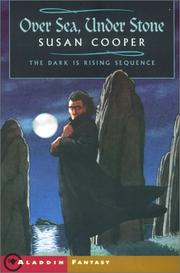
A treasure hunt in a Cornish village with a great-uncle who knows more than he says. Written as a standalone and it shows: lighter, more Blyton-ish, no Old Ones. Read it second and it works as a charming prologue rather than a misleading introduction.
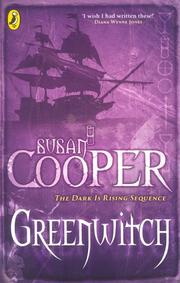
The shortest book in the sequence and the hinge — the Drew children from book one meet Will from book two, and the Cornish setting is repaid. It only functions if you have read both preceding volumes, which is exactly why they come first.
The Sequence Finishes
BeginnerRead the two Welsh-set volumes that close the arc, including the one that won the Newbery.
▸ Study plan for this stage
Pace: 2 to 3 weeks for 490 pages. The Grey King over a week — it is the strongest-written book in the sequence and rewards a slower pace. Silver on the Tree over one to two weeks. Read them consecutively; Silver on the Tree opens assuming you remember the closing pages of The Grey King exactly.
- The Grey King won the Newbery Medal in 1976 and is, for many readers, the best book Cooper wrote. It moves to Wales, gives Will a genuine human counterpart in Bran, and slows down enough to let the landscape do the work
- Bran Davies is the sequence's best character: an albino boy in a Welsh farming valley with an obscured parentage and a real temper. His relationship with Will is the only equal friendship in the books
- Welsh names and places arrive thickly here — Cadfan, Cader Idris, Cafall, the Brenin Llwyd. Look up the pronunciation once at the start rather than mentally skipping them for two hundred pages
- The Grey King contains the sequence's cruellest scene, involving Bran's dog. It is not gratuitous and it is the moment the books stop protecting their readers
- Silver on the Tree gathers every character and every thread from all five books and is the most divisive volume. Some readers find it a magnificent culmination; many find it rushed, crowded and abstract in its final third
- The ending makes a choice about memory that a lot of readers find genuinely upsetting, and it is the single most argued-about thing in the sequence. Go in knowing there is a choice being made rather than a mistake
- Cooper is not tidying up. Several threads close abruptly and one major question is answered in a single line, which is either a flaw or a refusal to over-explain depending on your temperament
- What does moving the story to Wales give Cooper that the English settings did not?
- Bran is the only character who is genuinely Will's equal. What does the sequence do with that, and does it use him fully?
- The Grey King's central cruelty is directed at an animal. Why does the book place it there rather than at a person?
- Silver on the Tree ends by making a decision about who gets to remember. What is the argument for that ending, and what is the argument against?
- Which threads does the final book resolve properly and which does it wave away?
- Having finished, is the sequence about the battle between Light and Dark, or about landscape and memory with a battle in it?
- Spend five minutes on Welsh pronunciation before starting The Grey King. It changes how the whole book sounds in your head
- Read the last three chapters of Silver on the Tree twice, a day apart, before deciding what you think of the ending
- List every character from all five books who appears in the finale, then mark which ones actually needed to be there
- Write half a page arguing for the ending and half a page arguing against it. Both are available and that is the interesting part
Next up: The sequence is closed; what remains is Cooper's later work and the one contemporary who was working the same seam of English and Welsh myth pushing up through ordinary life.
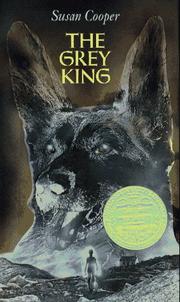
Will convalescing in Wales, a boy with strange eyes and a dog that can see the wind. The best-written book of the five and the Newbery winner. Read it fourth — it assumes Will's whole apprenticeship.
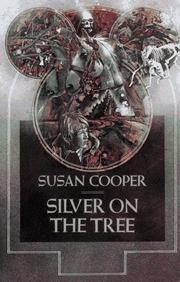
Every character and every object from the previous four books converges. Divisive — some readers find the ending abrupt and morally cold — but it is the ending, and it has to be read last.
Beyond the Sequence
IntermediateFollow Cooper into her later standalones, and across to the other great British writer working the same seam of myth pushing up through modern landscape.
▸ Study plan for this stage
Pace: 3 to 4 weeks for around 730 pages. Seaward, The Boggart and King of Shadows are each two or three sittings. Save The owl service for last and give it a full week, alone, with nothing else in progress — it is short, hard, and demands attention the others do not.
- Seaward is Cooper's strangest book: two children crossing an allegorical landscape toward the sea, with no explanation offered for most of it. Readers either find it her most beautiful work or a dreamlike misfire, and there is not much middle ground
- The Boggart is much lighter — a Scottish house spirit accidentally shipped to Toronto — and it is genuinely funny. It is also a book about the early computer age that has aged into being about something else
- King of Shadows sends a modern boy back to the original Globe theatre to act opposite Shakespeare. It is the most conventional of the three and the most immediately satisfying
- None of these are in the Dark Is Rising continuity. Read them as a novelist's later career, not as extra volumes
- The owl service by Alan Garner is not by Cooper and is the most important book in this stage. It takes one story from the Welsh Mabinogion — the woman made of flowers — and lets it repeat itself in three modern teenagers in a Welsh valley
- Garner is doing the same thing as Cooper and doing it harder. Almost everything is dialogue, nothing is explained, the class antagonism between the English family and the Welsh boy is the actual engine, and the supernatural is never separated from the ordinary cruelty
- It won the Carnegie Medal in 1967 and is famously difficult on a first reading. Expect to be lost, and expect to want to reread it immediately — that is the standard experience, not a failure of attention
- Seaward explains almost nothing. Does the allegory hold together, or is the atmosphere doing all the work?
- What does The Boggart's comedy allow Cooper to say that the sequence's seriousness did not?
- King of Shadows uses time travel to write about acting. What is it actually interested in?
- The owl service withholds explanation completely. What does Garner assume you will assemble, and did you?
- Cooper's myth rises out of landscape; Garner's erupts out of class and sex. Which is more frightening, and why?
- Having read both writers, what does English children's fantasy of this period keep insisting on?
- Read The owl service twice. The second reading is where the plot becomes visible, and everyone needs it
- In The owl service, track who is speaking without dialogue tags. Garner drops them constantly and the difficulty is deliberate
- Look up the Blodeuwedd story from the Mabinogion after finishing Garner, not before
- Rank all five Cooper books plus these three and defend the top two out loud
- Write a paragraph on what The dark is rising and The owl service share, given that they were published five years apart and are almost opposite in temperament
Next up: That covers Cooper's sequence, its outliers and its sharpest contemporary, and the natural next stops are more Alan Garner, or Lloyd Alexander's Prydain for the same Welsh material handled far more warmly.
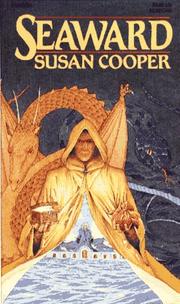
A stranger, dreamier allegory about two children crossing a symbolic country toward the sea. The natural next Cooper for anyone who loved the Grey King's atmosphere more than its plot.
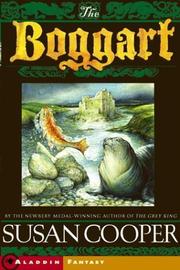
A Scottish house spirit accidentally shipped to Toronto inside a rolltop desk. Much funnier and lighter than the sequence, and proof she could write comedy.
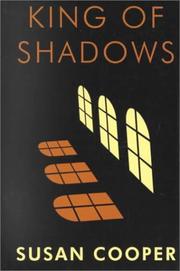
A boy actor slips from the modern Globe to the Elizabethan one. Her best late novel, and the closest she came to the sequence's sense of time as a thin membrane.
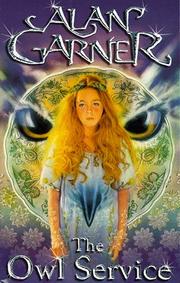
Garner's Welsh myth erupting into a nasty modern class triangle, published five years before The Dark Is Rising. Read it last: it is the book Cooper's sequence is in permanent conversation with, and the harder, colder version of the same idea.
Discussion
Keep reading
Paths that share books, cover the same subject, or open a related topic.