His Dark Materials Reading Order: Where to Start
This curriculum guides you through Philip Pullman's entire His Dark Materials universe in publication and narrative order, starting with the original trilogy before expanding into the prequel series The Book of Dust and the companion novellas. Each stage builds familiarity with Pullman's world, themes, and characters so that later works feel richly rewarding rather than confusing.
The Original Trilogy
BeginnerExperience the core story of Lyra Belacqua, understand the world of dæmons, Dust, and the Magisterium, and absorb the foundational mythology that every later work expands upon.
▸ Study plan for this stage
Pace: 10–12 weeks total (~25–30 pages/day): spend 3–4 weeks on Northern Lights, 3 weeks on The Subtle Knife, and 4–5 weeks on The Amber Spyglass, which is the longest and densest of the three.
- Dæmons as externalised souls: understand how a person's dæmon reflects their inner nature, why dæmons settle at puberty, and what intercision (severing) means psychologically and spiritually in Northern Lights
- Dust and Original Sin: trace Pullman's reframing of Dust — from the Magisterium's 'sin-particle' to a conscious, meaning-giving substance — across all three books, culminating in The Amber Spyglass's revelation that Dust is Shadows/dark matter/consciousness itself
- The Magisterium and institutional power: analyse how the Church-like Magisterium in Northern Lights and The Subtle Knife functions as an allegory for dogma, censorship, and the suppression of knowledge
- Multiple worlds and the multiverse: follow the logic of parallel universes from Lyra's Oxford in Northern Lights, through Will's contemporary Oxford and Cittàgazze in The Subtle Knife, to the Land of the Dead and the Mulefa's world in The Amber Spyglass
- The subtle knife (Æsahættr): understand the knife's dual power — to cut windows between worlds and to destroy the Subtle Knife's own bearer — and its role as both gift and curse for Will Parry
- The Authority and the Republic of Heaven: engage with Pullman's central theological argument, introduced gradually across the trilogy, that a tyrannical 'God' (the Authority) must be opposed and that heaven must be built in this world, not the next
- Lyra's arc from innocence to experience: map Lyra's journey using the Blakean framework Pullman embeds — from the carefree trickster of Jordan College to the girl who must make a conscious, costly choice in The Amber Spyglass
- The alethiometer as a symbol of intuitive truth: explore how Lyra reads the truth-telling compass through grace and instinct in Northern Lights, loses that gift, and must relearn it through hard study — mirroring the trilogy's theme of earned wisdom
- In Northern Lights, why does the Magisterium fund the Gobblers' intercision experiments, and what does this reveal about the institution's relationship to childhood, innocence, and Dust?
- How does Will Parry's introduction in The Subtle Knife expand the trilogy's thematic scope — what does his 'ordinary' world without visible dæmons force the reader to reconsider about Lyra's world?
- What is the significance of Lyra's 'lie' in The Amber Spyglass — the story she tells in the Land of the Dead — and how does it differ morally from her earlier habitual deception in Northern Lights?
- Across all three books, how does Pullman use the concept of Dust to argue against the idea that knowledge and sexuality are inherently sinful?
- By the end of The Amber Spyglass, what does 'the Republic of Heaven' mean, and why must Lyra and Will build it in their own separate worlds rather than together?
- How do the deaths of Lee Scoresby and John Parry (Stanislaus Grumman) in The Subtle Knife and The Amber Spyglass function thematically — what do these sacrifices say about the trilogy's view of loyalty and mortality?
- World-building map: After finishing Northern Lights, draw or diagram Lyra's world — label Jordan College, Bolvangar, Svalbard, and key institutions. After The Subtle Knife add Will's Oxford and Cittàgazze, and after The Amber Spyglass add the Land of the Dead and the Mulefa's world. Use this living map to visualise how the multiverse expands book by book.
- Dæmon journal: Choose three to five major characters (e.g. Lyra/Pantalaimon, Mrs Coulter, Lord Asriel, Will, Serafina Pekkala) and write a short paragraph for each explaining what their dæmon's form or behaviour reveals about their soul. For Will, who has no visible dæmon, speculate on what form his dæmon would take and justify your answer with textual evidence.
- Dust tracker: Keep a running log as you read — every time Dust, Shadows, or dark matter is mentioned, note the page, who is speaking, and what attitude they take toward it (fearful, reverent, curious, hostile). At the end of The Amber Spyglass, write a one-page summary of how the trilogy's definition of Dust evolved.
- Thematic debate prep: Write a one-page argument FOR the Magisterium's position (using only evidence from Northern Lights) and then a one-page rebuttal using evidence from The Amber Spyglass. This exercise forces close reading of Pullman's theological argument from both sides.
- Chapter-end reflection prompts: At the end of each of the three books, write 200–300 words answering: 'What did Lyra lose in this book, and what did she gain?' Track how your answers change across the trilogy to chart her movement from innocence to experience.
- Comparative close reading: Select the opening chapter of Northern Lights and the final chapter of The Amber Spyglass. Write a side-by-side comparison (one page) of Lyra's voice, her relationship with Pantalaimon, and her understanding of the world. Use specific quotes from each passage to anchor your analysis.
Next up: Completing the original trilogy gives you full command of the foundational mythology — dæmons, Dust, the Magisterium, and the multiverse — so that any companion works or sequel volumes can be read as deliberate expansions of, or counterpoints to, the world Pullman built here.
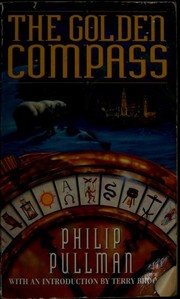
The first book in the trilogy (published as The Golden Compass in North America), it introduces Lyra, her dæmon Pantalaimon, the alethiometer, and the parallel world that anchors the entire series. Everything else builds from here.
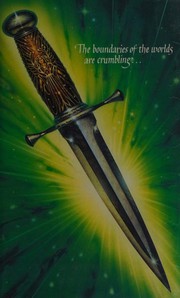
Introduces Will Parry and the titular knife that cuts between worlds, dramatically expanding the multiverse. Reading it second allows the stakes established in Northern Lights to pay off immediately.
The trilogy's epic conclusion, resolving every major thread about Dust, the Authority, and Lyra and Will's journey. It must be read last in this stage as it depends on full knowledge of both previous books.
The Companion Novellas
BeginnerDeepen your understanding of the world's lore and side characters through shorter, focused stories that reward readers who already know the trilogy well.
▸ Study plan for this stage
Pace: 2 weeks total — Week 1: Read "Lyra's Oxford" (~90 pages, read in 1–2 sittings) plus 2–3 days of reflection and note-taking; Week 2: Read "Once Upon a Time in the North" (~100 pages, read in 1–2 sittings) plus 2–3 days of reflection and comparison work. Aim for relaxed, attentive reading rather than
- The novella as a lore-delivery format: how Pullman uses short, focused narratives to expand the world without retelling the main trilogy
- Lyra's post-trilogy life and psychological state in 'Lyra's Oxford' — her grief, her restlessness, and her evolving relationship with Pantalaimon
- The Oxford of Lyra's world as a living, mappable place — the included map and ephemera in 'Lyra's Oxford' as paratextual world-building tools
- The theme of trust and deception in 'Lyra's Oxford': how Lyra, now older, navigates a trick played on her and what it reveals about her growth
- The origin story of Lee Scoresby and Iorek Byrnison's friendship in 'Once Upon a Time in the North' — loyalty, pragmatism, and unlikely alliances
- The political and social world of the North: class tension, corporate power (the oil company), and the vulnerability of outsiders in 'Once Upon a Time in the North'
- Dæmons as mirrors of character: how the dæmons of Lee (Hester) and Iorek's absence of a dæmon together illuminate themes of independence and self-sufficiency
- The role of ephemera and bonus materials (maps, letters, a board game) included in both novellas as extensions of the narrative world
- In 'Lyra's Oxford,' what is the nature of the trick played on Lyra, who is behind it, and what does her response reveal about how she has changed since the events of the trilogy?
- What do the paratextual materials (the map of Oxford, the postcards, the travel advertisement) included in 'Lyra's Oxford' suggest about the nature of Lyra's world, and how do they function as storytelling devices beyond the prose itself?
- In 'Once Upon a Time in the North,' what circumstances bring Lee Scoresby and Iorek Byrnison together, and what does each character stand to gain — or risk — by helping the other?
- How does 'Once Upon a Time in the North' portray institutional and corporate power, and in what ways does this foreshadow the larger antagonists of the main trilogy?
- Both novellas feature Lyra's Oxford and the wider North as settings already familiar from the trilogy. How does revisiting these settings in a smaller-scale story change or deepen your understanding of them?
- Hester, Lee's dæmon, plays a significant role in 'Once Upon a Time in the North.' What does her personality and her interactions with Lee reveal about his character that the trilogy only hints at?
- Paratextual Analysis: Spend 20–30 minutes closely examining the maps, postcards, and ephemera included in 'Lyra's Oxford.' Write a short paragraph (150–200 words) explaining what each item adds to the story that the prose alone does not — treat them as primary texts, not decoration.
- Character Comparison Journal: After finishing both novellas, write a side-by-side character sketch of Lyra (from 'Lyra's Oxford') and Lee Scoresby (from 'Once Upon a Time in the North'). Focus specifically on how each character handles being deceived or outmaneuvered, and what that reveals about their respective worldviews.
- Dæmon Reflection Exercise: Choose any three characters across both novellas and write 2–3 sentences for each explaining how their dæmon (or, in Iorek's case, the absence of one) functions as a symbolic extension of their inner life. Then reflect: does Pullman use dæmons differently in the novellas than in the trilogy?
- Setting Sketch: Using the map included in 'Lyra's Oxford' as a reference, sketch or annotate your own version of Lyra's Oxford, marking locations mentioned in the novella. Then write a brief note on how the physical geography of the city shapes the plot of the story.
- Thematic Bridge Essay: Write a short essay (300–400 words) arguing how 'Once Upon a Time in the North' functions as a prequel that enriches — rather than merely explains — Lee and Iorek's relationship in the main trilogy. Use at least two specific scenes from the novella as evidence.
- Prediction & Reflection Log: Before reading each novella, write down three questions you hope it will answer about the world or characters. After reading, return to your questions — which were answered, which were not, and did the novella raise new questions you hadn't thought to ask?
Next up: Mastering the lore, tone, and world-building depth of these companion novellas equips the reader with a richer contextual foundation — particularly around Lyra's matured perspective and the political textures of the North — that will make engaging with Pullman's full return to the world in "The Book of Dust" trilogy a more layered and rewarding experience.
A slim novella set two years after The Amber Spyglass, it revisits Lyra in her familiar Oxford and introduces new mysteries. Its brevity and familiar setting make it a perfect, gentle re-entry into the world.
A prequel novella telling the story of how Lee Scoresby and Iorek Byrnison first met. Reading it after Lyra's Oxford lets you appreciate these beloved characters with full trilogy context.
The Book of Dust
IntermediateFollow the expanded story of Lyra across a prequel and a sequel to the original trilogy, understanding how Pullman deepens his themes of consciousness, free will, and the nature of Dust with a more mature narrative voice.
▸ Study plan for this stage
Pace: 6–8 weeks total: Weeks 1–3 for "La Belle Sauvage" (~25–30 pages/day), Weeks 4–8 for "The Secret Commonwealth" (~30–35 pages/day, allowing extra time for its greater length and thematic density). Reserve the final 2–3 days of each book for reflection and journaling before moving on.
- Dust as a living, conscious force — La Belle Sauvage reframes Dust not merely as a theological threat but as something protective and generative, seen in the flood's surreal, mythic quality
- The innocent vs. experienced self — Malcolm's coming-of-age journey in La Belle Sauvage contrasts sharply with Lyra's adult disillusionment in The Secret Commonwealth, tracing a full arc of lost and contested innocence
- The Secret Commonwealth as inner landscape — Pullman introduces the idea of an internal imaginative world that can be damaged or abandoned, directly tied to Lyra's estrangement from Pantalaimon
- Dæmon as psychological wholeness — the rift between Lyra and Pan in The Secret Commonwealth externalizes a crisis of self, rationalism vs. imagination, and the cost of suppressing one's inner life
- Mature narrative voice and genre shift — both books employ a darker, more novelistic tone than the original trilogy, with La Belle Sauvage drawing on fairy tale and flood myth, and The Secret Commonwealth on spy thriller and philosophical realism
- Free will and institutional power — the Magisterium's evolving tactics across both books show how authoritarian structures adapt to suppress consciousness and autonomy at different historical moments
- The nature of story and imagination — The Secret Commonwealth explicitly debates whether fiction and myth are necessary for human flourishing, positioning storytelling itself as a form of resistance
- Lyra as an evolving protagonist — tracking her from helpless infant in La Belle Sauvage to a doubting, searching young adult in The Secret Commonwealth reveals Pullman's argument about identity, growth, and the ongoing work of selfhood
- How does the great flood in La Belle Sauvage function as more than a plot device — what does it suggest about the nature of Dust and the mythic forces protecting Lyra?
- In what ways does Malcolm's perspective as a child observer in La Belle Sauvage offer a different lens on the Magisterium and on Lyra's significance compared to Lyra's own narration in the original trilogy?
- What has caused the rift between Lyra and Pantalaimon at the opening of The Secret Commonwealth, and what does Pullman suggest this estrangement costs Lyra as a person?
- How do the rationalist books Lyra reads in The Secret Commonwealth (by fictional authors Gottfried Brande and Simon Talbot) challenge her relationship with imagination, and why does Pullman frame their philosophy as dangerous?
- Both books feature journeys — Malcolm's canoe voyage and Lyra's overland trek to the East. How do these physical journeys mirror the internal, psychological journeys each character undergoes?
- How does Pullman's treatment of free will and consciousness deepen or complicate what was established in the original His Dark Materials trilogy, based specifically on the events and ideas in these two books?
- Dual character journal: After finishing each book, write a first-person journal entry — one as Malcolm at the end of La Belle Sauvage, one as Lyra mid-journey in The Secret Commonwealth — articulating what each character now understands about Dust, dæmons, and themselves that they didn't at the start.
- Thematic timeline: Create a visual timeline that places key events from both books in relation to the original trilogy. Annotate each entry with the dominant theme it illustrates (e.g., 'innocence,' 'institutional control,' 'Dust'), revealing how Pullman's expanded universe builds thematic continuity.
- The rationalism debate: Re-read the passages in The Secret Commonwealth where Lyra engages with the ideas of Brande and Talbot, then write a short (1–2 page) rebuttal from Lyra's earlier, pre-rift self — the Lyra of the original trilogy — arguing for the necessity of imagination and story.
- Flood myth comparison: Research one real-world flood myth (e.g., the Epic of Gilgamesh, Noah's Ark, or Deucalion) and write a one-page comparison to the flood sequence in La Belle Sauvage, identifying which symbolic elements Pullman borrows, subverts, or invents.
- Dæmon psychology mapping: Draw or diagram the emotional/psychological state of Lyra and Pantalaimon at three key moments in The Secret Commonwealth (beginning, midpoint, end). Use the diagram to articulate in writing what Pan represents as an externalized psyche and what his separation reveals about Lyra's inner conflict.
- Narrative voice analysis: Select one passage of roughly one page from La Belle Sauvage and one from The Secret Commonwealth. Write a close-reading comparison (1–2 pages) focused on sentence rhythm, tone, and narrative distance, arguing how Pullman's prose style itself enacts the thematic shift from innocence to experience.
Next up: Mastering how Pullman expands and complicates his universe across La Belle Sauvage and The Secret Commonwealth — particularly his deepening philosophy of consciousness, imagination, and Dust — equips the reader to engage critically with the broader literary, philosophical, and cultural conversations his work participates in, setting the stage for comparative and analytical study in the next level

The first Book of Dust volume is a prequel set when Lyra is a baby, following young Malcolm Polstead. Reading it after the trilogy means you already understand who Lyra becomes, making her infant presence profoundly moving.
Set twenty years after Northern Lights, this second volume follows an adult Lyra and is notably darker and more complex. It rewards readers who have completed the trilogy and La Belle Sauvage with rich payoffs and new mysteries.
Discussion
Keep reading
Paths that share books, cover the same subject, or open a related topic.