Red Rising Reading Order and Reading Guide
Red Rising is read in publication order, full stop — there is no chronological alternative and no side entrance. The first three books form a self-contained trilogy with a real ending, so the honest advice is to read those and decide. The second sequence jumps forward a decade, widens from one narrator to several, and is a different and more demanding kind of book, which is why it belongs in its own stage rather than being treated as more of the same.
Start Here
BeginnerRead the first book and find out whether the series' particular mix of brutality and momentum is for you.
▸ Study plan for this stage
Pace: 1-2 weeks for 442 pages. The first hundred pages are slow, claustrophobic and deliberately grim; the middle section, once Darrow reaches the Institute, accelerates hard and most readers finish the back half in two or three sittings. Read this one book and stop before deciding anything about the seri
- The colour caste system: Reds mine, Golds rule, and every colour in between has an engineered role, which is the world's entire social physics
- Darrow is a Helldiver on Mars who believes he is terraforming a planet for humanity, and the discovery that this is a lie is the book's first turn
- Carving: Darrow is surgically remade into a Gold, so the novel is an infiltration story before it is a war story
- The Institute is a survival trial in which the ruling caste's children are set against each other, and it is where the book's real argument lives
- Brown's first-person present tense keeps you inside Darrow's judgement, including when it is bad, and the series never gives you a neutral narrator
- Eo's demand that Darrow live for more than himself is the moral instruction the whole series measures him against
- The Roman naming, house structure and vocabulary are load-bearing rather than decorative - the ruling class built itself out of a myth on purpose
- What does Darrow believe about his own work in the first fifty pages, and what does the lie tell you about how this society maintains itself?
- The book shifts from underground dystopia to an academy bloodbath about a third of the way in. Does the tonal swerve work, and what is it for?
- What does the Institute test that a conventional military academy would not?
- Where does Darrow start behaving like the Golds he is impersonating, and does the book notice?
- Having finished it, is the violence doing argumentative work or is it doing entertainment work? Your answer determines whether you should continue.
- Write out the colour hierarchy from memory after the first hundred pages. Every later book assumes you carry it without prompting.
- Mark the exact page where you stopped resisting the academy section, or the page where you decided you were not going to. That page is your answer about whether to continue.
- Note who Darrow trusts at the Institute and what each of them wants. The alliances formed here run for six more books.
- Avoid all discussion threads, wikis and reviews. This is the one series where spoiler exposure is close to fatal, and the next book's ending is the most spoiled thing in modern science fiction.
Next up: The first book ends with Darrow's position established but the scope still small, and the next two books are where Brown blows the frame open to a whole solar system.
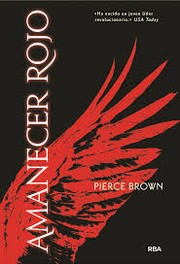
Darrow, a miner on Mars, is remade to infiltrate the ruling caste. The opening act is grim and the middle turns into an academy bloodbath; if the tonal swerve works for you, the rest of the series will.
Finish The Original Trilogy
BeginnerComplete the story Brown originally set out to tell, which resolves cleanly enough to stop at.
▸ Study plan for this stage
Pace: 3-4 weeks for about 1,140 pages (Golden Son 464, Morning Star 672). Golden Son is the fastest-reading book in the series and most people take it in three or four sittings; the plotting is much tighter than the first novel's. Morning Star is 200 pages longer and more diffuse in its middle third, so b
- The scope jumps from one school to a solar system: fleets, houses, planetary politics, and a war rather than a trial
- Brown's plotting becomes far more confident here, and betrayal is the structural unit - most chapters exist to reposition someone's loyalty
- Darrow's problem changes from surviving the Golds to deciding what he will become in order to beat them, which is the trilogy's actual subject
- The supporting cast carries much more weight from Golden Son on, and several of them are better company than the narrator
- Golden Son's ending is the most notorious in the series and is aggressively spoiled online; going in clean is worth real effort
- Morning Star pays off every thread from the first two books and is a genuine ending, not a cliffhanger
- Stopping here is a completely reasonable choice - a large share of readers do, and the trilogy is designed to permit it
- What has changed about how Darrow makes decisions between the Institute and the fleet actions of Golden Son?
- Which betrayals in Golden Son are prepared for and which are sprung? Does the difference matter to how they land?
- Morning Star has to resolve a revolution. What does it choose to leave unresolved, and is that a flaw or a setup?
- Which supporting character has the most convincing arc across these two books, and why is it usually not Darrow?
- Having finished Morning Star, what would a sequel series have to do to justify itself? Hold your answer and check it against the next stage.
- Keep a loyalty chart across Golden Son: names down one side, allegiances updated as they shift. The book has more reversals than any other in the series and the chart is genuinely useful.
- After Golden Son's final chapter, put the book down for an hour before starting Morning Star. It is engineered to hurt and it works better if you let it.
- Write down what the revolution has actually built by the last page of Morning Star. The next stage opens by interrogating exactly that, and having your own answer first makes it land much harder.
- Decide explicitly whether you are stopping here. The second sequence is a different kind of book and drifting into it without a decision is how readers end up frustrated.
Next up: Morning Star ends with victory declared, and the second sequence exists to ask what the victory was actually worth.
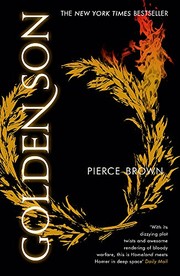
The book that converts most readers: the scope jumps from one school to a solar system and the plotting gets far more confident. Its ending is the series' most notorious, so avoid discussion threads.
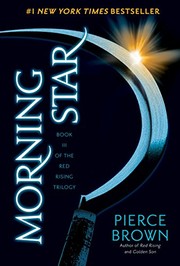
The finale of the original trilogy, paying off every thread from the first two. It is a genuine stopping point, and a good number of readers do stop here happily.
The Second Sequence
IntermediateMove into the longer, darker follow-up series, which changes form and asks for more patience.
▸ Study plan for this stage
Pace: 8-10 weeks for about 2,150 pages (Iron Gold 672, Dark Age 800, Light Bringer 682). This is a serious commitment and the pacing is uneven by design. Iron Gold has a slow first two hundred pages while four new viewpoint characters are established; push through, because the structural change is the who
- Ten years have passed and the revolution now has to govern, which turns a war story into a book about occupation, insurgency and legitimacy
- Four viewpoint characters replace Darrow's single first-person narration, and the multiplication of perspective is the sequence's central formal move
- Darrow is now an unreliable hero rather than an underdog, and the new narrators exist partly to look at him from outside
- Dark Age is deliberately brutal even by this series' standards, and the escalation includes atrocities committed by characters you have followed for four books
- The second sequence is less interested in whether Darrow wins and more interested in what winning costs people with no vote in it
- Light Bringer returns Darrow to the centre and is widely read as a recovery of Golden Son's momentum, which it earns off Dark Age's damage
- The sequence is unfinished, so the emotional shape of the whole thing is not yet available - go in knowing you are stopping mid-story
- What has the revolution actually produced by the start of Iron Gold, and how does each of the four narrators judge it differently?
- Why does Brown take the story away from Darrow for long stretches, and which of the new narrators justifies the choice best?
- Dark Age asks you to keep reading through sustained cruelty. What is it buying with that, and does it pay?
- How does Light Bringer restore momentum without undoing Dark Age's consequences?
- Is the second sequence a continuation or a critique of the first trilogy? The books support both readings and choosing one changes how you read Darrow.
- Before starting Iron Gold, write a paragraph on where each surviving character stood at the end of Morning Star. Ten in-world years have passed and the book does not recap.
- Keep a list of the four narrators and one line on what each of them wants. If you can do this from memory by page 300, Iron Gold's slow opening has done its job.
- Take a deliberate break of a few days in the middle of Dark Age. Reading it straight through is the most common reason people stall permanently in this series.
- After Light Bringer, note the open threads. This is the current end of the published sequence, and having your own list is better than reading a speculation thread while you wait.
- Go back and reread the first chapter of Red Rising. Seven books later it reads as a different book, which is the strongest argument the sequence makes for itself.
Next up: This is as far as the published series goes; from here the path leaves you caught up, with the next volume still to come.

Ten years on, with four viewpoint characters instead of one and a hard look at what the revolution actually built. Expect a slower start; the structural change is the point.
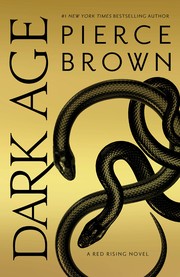
The longest and by consensus the most punishing book in the series. It only works because Iron Gold spent a whole novel making you care about the new narrators.

The book that pulls the second sequence back together and returns Darrow to the centre. Widely read as a return to the momentum of Golden Son, and it depends completely on Dark Age's damage.
Discussion
Keep reading
Paths that share books, cover the same subject, or open a related topic.