The Dark Tower Reading Order and Reading Guide
This curriculum guides you through Stephen King's Dark Tower universe in a carefully sequenced order — starting with the two most accessible connected novels to build world intuition, then moving through all eight core Dark Tower books in publication order, and finally exploring the deepest connected King novels that reward a reader who already knows the Tower's mythology. Each stage builds the vocabulary, tone, and lore needed for the next, turning what can feel like an overwhelming multiverse into a satisfying, coherent journey.
Gateway Novels — Enter King's Universe
BeginnerAcclimate to Stephen King's prose style and encounter key Dark Tower concepts (the Crimson King, Breakers, and the thinning of worlds) in standalone, approachable stories before the series proper begins.
▸ Study plan for this stage
Pace: 8–10 weeks total: spend roughly 5–6 weeks on The Stand (~30–35 pages/day for the uncut edition, or ~20–25 pages/day if reading the original), then 3–4 weeks on Insomnia (~25–30 pages/day). Read in order — The Stand first, Insomnia second — as King's cosmology deepens meaningfully across that sequenc
- Stephen King's prose rhythm and vernacular storytelling: colloquial voice, pop-culture grounding, and slow-burn character immersion that define his style across the Dark Tower universe
- The Crimson King as a cosmic antagonist: first encountered obliquely in The Stand as the satanic figure Randall Flagg (Walter o'Dim), whose evil is ancient, shapeshifting, and tied to a force beyond ordinary human understanding
- The concept of 'the thinning' — the idea that the walls between worlds and realities are weakening, allowing supernatural forces to bleed through, seeded in The Stand's post-plague America and made explicit in Insomnia's Derry
- Breakers and psychic/supernatural gifts: The Stand's Stu, Nick, and especially Mother Abagail and Flagg demonstrate that certain individuals carry extraordinary inner power that larger cosmic forces seek to use or destroy
- The Random vs. the Purpose (the Can-toi and Crimson King's agents vs. the White): Insomnia introduces this metaphysical framework directly, showing that every life and death is contested between opposing cosmic forces
- The Purpose and the White — King's moral architecture of good as an active, organized force (embodied by the White) that stands against the Crimson King's chaos, previewing the central ethical stakes of the Dark Tower series
- Derry, Maine as a nexus point: Insomnia establishes that certain places sit closer to the Tower's axis, making them hotbeds of supernatural activity and thinning — a geography lesson for the series ahead
- Roland's world bleeding into ours: though Roland does not appear in these books, the mechanics of his quest — a universe held together by a Tower that is under assault — are the invisible architecture behind both novels' conflicts
- By the end of The Stand, who is Randall Flagg, and what textual clues suggest he is something older and more cosmically significant than a mere human villain — and how does Insomnia's naming of the Crimson King recontextualize him?
- How does The Stand use the superflu's devastation to illustrate the concept of 'the thinning' — the breakdown of the normal world's order — and where do you see that same thinning at work in Insomnia's Derry?
- Insomnia introduces Ralph Roberts to the 'little bald doctors' and the Random vs. the Purpose. What is at stake in that cosmic conflict, and how does it connect to the threat the Crimson King poses to something larger than Derry?
- Both novels feature ordinary people chosen or touched by a supernatural force greater than themselves. Compare Mother Abagail in The Stand with Ralph Roberts in Insomnia: what does King suggest about why 'normal' people are recruited into cosmic battles?
- What specific details in Insomnia explicitly tie its events to the Dark Tower and the Crimson King, and why does King place these revelations in a story set in a small Maine city rather than a fantasy landscape?
- How does King's prose style — his use of brand names, regional dialect, interior monologue, and slow character build — function as a kind of 'acclimation chamber' that makes enormous metaphysical ideas feel grounded and emotionally real?
- **Flagg-to-Crimson-King character map:** As you read The Stand, keep a running index card or document entry every time Flagg does something that feels superhuman, ancient, or inexplicable. After finishing Insomnia, revisit those notes and annotate each entry with how it maps onto what Insomnia reveals about the Crimson King's nature and agenda.
- **Thinning journal:** Each time either novel depicts reality becoming unstable — plagues, visions, auras, impossible events, breaches of the ordinary — write a one-sentence log entry: what happened, where, and what 'rule' of the normal world was broken. By the end of Insomnia you should have a clear picture of how King builds a cosmology through accumulation.
- **Prose style imitation exercise:** Choose one passage of 1–2 pages from The Stand and one from Insomnia where King grounds a supernatural moment in mundane detail (a brand name, a TV show, a local landmark). Write a 200–300 word scene of your own in King's style: pick a real, ordinary setting and let something cosmically wrong intrude on it.
- **The Purpose vs. the Random debate:** After finishing Insomnia, write a one-page informal argument either defending or challenging this claim: 'The Stand's conflict between Abagail's camp and Flagg's Vegas is really the same war as the Purpose vs. the Random in Insomnia — King is telling one story twice.' Use specific scenes from both books as evidence.
- **Geography of the uncanny:** Draw or describe a simple annotated map of the two primary settings — Boulder/Las Vegas in The Stand and Derry in Insomnia. Mark locations where supernatural events cluster. Then write two or three sentences speculating on why King returns to specific kinds of places (small cities, open plains, community gathering points) as sites where the Tower's influence is felt.
- **Pre-series glossary:** Compile a personal glossary of 10–15 terms and proper nouns introduced across both books (e.g., the Crimson King, the White, the Random, the Purpose, Breakers, the Tower itself if mentioned). Write your own plain-language definition for each, then flag which ones you expect to encounter again in the Dark Tower series proper — this document will become a living reference as
Next up: Having absorbed King's prose rhythms and encountered the Crimson King's shadow and the Tower's cosmic stakes through familiar, realistic settings, the reader is now primed to follow Roland Deschain into the explicitly fantastical landscape of The Gunslinger, where those same forces are no longer background architecture but the driving engine of every page.
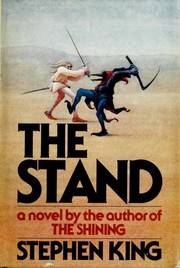
King's epic post-apocalyptic novel introduces the battle between ultimate good and evil — a thematic backbone of the Dark Tower — and features characters and the Crimson King mythos that echo throughout the series. Reading it first gives you the moral and cosmological vocabulary the Tower demands.
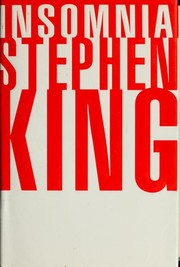
Directly bridges the standalone King universe and the Dark Tower, introducing the Crimson King as a major villain and the concept of 'levels of the Tower.' It is the single best warm-up novel before opening The Gunslinger.
The Dark Tower — Books 1–4 (The Quest Begins)
BeginnerFollow Roland Deschain from his lone pursuit of the Man in Black through the formation of his ka-tet, mastering the series' unique language (Mid-World slang, 'ka,' 'todash'), tone, and mythology across the first half of the saga.
▸ Study plan for this stage
Pace: 10–12 weeks total: Week 1–2 — The Gunslinger (~230 pages, ~20 pages/day, savoring the sparse, mythic prose); Week 3–5 — The Drawing of the Three (~400 pages, ~25 pages/day, tracking character introductions carefully); Week 6–7 — The Waste Lands (~512 pages, ~35 pages/day, noting the world-building a
- Roland Deschain as the archetypal Gunslinger — his Clint Eastwood/Arthurian hybrid identity, his ruthless devotion to the Tower above all else, and the moral cost of that obsession (e.g., the sacrifice at Golgotha in The Gunslinger)
- Ka and Ka-tet — the series' central metaphysical engine: ka as fate/destiny that cannot be denied, and ka-tet as the soul-bond that forms Roland's group (Eddie Dean, Susannah Holmes/Detta Walker, Jake Chambers, Oy) across The Drawing of the Three and The Waste Lands
- Mid-World language and mythology — mastering the series' invented vocabulary (dinh, sai, thankee-sai, todash, khef, the Beams, the Tower itself) as a living, breathing world-building system rather than mere decoration
- The Man in Black (Walter/Marten/Flagg) — understanding him as the shape-shifting antagonist whose identity threads through all four books, and what his tarot reading for Roland in The Gunslinger reveals about the saga's larger arc
- The Drawing of the Three's door mechanic — how Roland literally enters the minds of Eddie, Odetta/Detta, and the Pusher (Jack Mort), and what this says about King's theme of broken people made whole through shared purpose
- The Waste Lands' dual crisis — Roland's paradox (Jake both died and didn't die), Jake's haunting in New York, and Blaine the Mono as a villain who embodies the world's 'moving on' (decay of magic and reason together)
- Wizard and Glass as origin story — the extended flashback to Mejis, Susan Delgado, and the Wizard's Rainbow (the Grapefruit/Maerlyn's Orb) reveals how Roland became who he is, and why loss and guilt are the true fuel of his quest
- The theme of 'the world has moved on' — King's post-apocalyptic, temporally unstable Mid-World as a metaphor for entropy, nostalgia, and the cost of progress, woven through all four books
- By the end of The Gunslinger, what has Roland sacrificed to keep pursuing the Man in Black, and what does Walter's tarot reading (specifically the cards of The Hanged Man, Death, and The Tower) foreshadow about Roland's journey?
- How does the 'Drawing' mechanic in The Drawing of the Three work, and what does King reveal about each door's 'guardian' (The Prisoner, The Lady of Shadows, The Death) that mirrors the character Roland pulls through?
- What is the paradox that splits Roland's mind in The Waste Lands, how is it resolved, and what does Jake's return say about the nature of ka?
- Who is Susan Delgado, what is her role in Wizard and Glass, and how does her fate in Mejis explain Roland's emotional coldness and single-minded obsession in the 'present-day' narrative?
- Define at least six Mid-World terms (e.g., ka, ka-tet, dinh, todash, khef, sai) and explain how each one functions in the story — not just what it means, but when and why King deploys it.
- How does Blaine the Mono in The Waste Lands embody the theme of 'the world has moved on,' and what is the significance of the riddle contest as the method of defeating him?
- Build a Mid-World Glossary: As you read each book, keep a running document of every invented term, name, and phrase. After finishing all four books, write a one-sentence definition AND a one-sentence example of how it was used in context. Aim for at least 25 entries.
- Ka-tet Character Profiles: After finishing The Drawing of the Three, write a one-page profile for Eddie, Odetta/Detta/Susannah, and Jake. Include: their world of origin, their wound or flaw, what Roland 'draws' them from, and what they contribute to the ka-tet. Revisit and update each profile after Wizard and Glass.
- Tarot Reading Analysis: Re-read Walter's tarot reading for Roland in The Gunslinger (the final campfire scene). Map each card he names to events that have already occurred in Books 1–4. Write a short paragraph predicting what the unresolved cards might mean for the rest of the series.
- Timeline & World Map Sketch: Draw a rough hand-drawn map of Mid-World as described across the four books (the Mohaine Desert, the Western Sea, Lud, Topeka, Mejis/the Barony of Mejis). Alongside it, create a two-column timeline: 'Roland's Past (Mejis flashback)' vs. 'Roland's Present (the quest).' This makes the non-linear structure of Wizard and Glass concrete.
- Thematic Essay (500–700 words): Write a short essay answering: 'Is Roland Deschain a hero or a monster?' Use at least one specific scene from each of the four books as evidence, engaging directly with the tension between his humanity (his love for his ka-tet, his grief over Susan) and his ruthlessness (Golgotha, his manipulation of Eddie and Jake).
- Tone & Voice Imitation: Choose one page of King's Mid-World prose from any of the four books. Then write one original paragraph (150–200 words) set in Mid-World using at least four authentic vocabulary terms, imitating King's cadence — the mix of archaic formality and Western vernacular. This forces active engagement with the series' unique voice.
Next up: Completing Books 1–4 establishes Roland's fully formed ka-tet, the rules of Mid-World, and the emotional backstory that gives the quest its stakes — all of which are the essential foundation for the darker, more complex moral and structural challenges the group faces in Books 5–7, where the Tower's pull intensifies and the cost of ka becomes devastating.

Book 1 — the essential starting point. Sparse, mythic, and Western in feel, it introduces Roland and the central quest. It is deliberately short and atmospheric, easing you into Mid-World before the story expands dramatically.
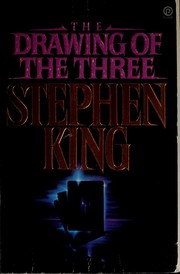
Book 2 — Roland pulls companions from our world into his, and the pace and action surge. This is where most readers become fully hooked; it builds directly on the cliffhanger mythology of Book 1.

Book 3 — the ka-tet is complete and the journey toward the Tower truly begins. Introduces the city of Lud and the unforgettable Blaine the Mono, raising the stakes and world-building to a new level.

Book 4 — a massive flashback to Roland's youth that is the emotional heart of the entire series. Understanding Roland's tragedy here is essential before the darker, more complex back half of the saga.
The Dark Tower — Books 5–8 (The Tower Reached)
IntermediateComplete Roland's quest through its most complex, meta-fictional, and emotionally devastating chapters, understanding how King weaves his entire body of work into a single mythological conclusion.
▸ Study plan for this stage
Pace: 12–14 weeks total (~25–30 pages/day, 5 days/week): Wolves of the Calla (weeks 1–4, ~500 pages), Song of Susannah (weeks 5–7, ~430 pages), The Dark Tower (weeks 8–11, ~850 pages), The Wind Through the Keyhole (weeks 12–14, ~320 pages — read last as a reflective coda).
- Ka and Ka-tet dissolution: how Roland's fellowship is systematically broken apart across these four books, and what each loss costs Roland emotionally and mythologically
- Meta-fiction and authorial intrusion: Stephen King's literal appearance as a character in Song of Susannah and The Dark Tower, collapsing the boundary between creator and creation, and what this means for the nature of storytelling itself
- The Crimson King and the nature of evil: understanding the Tower's ultimate antagonist not as a conventional villain but as an embodiment of entropy and the desire to unmake all existence
- Todash space and the multiverse: the concept of the void between worlds, its dangers, and how it ties together the cosmology built across all eight books
- The Dogan, Mia, and the Chap: the subplot of Susannah's pregnancy and Mordred's birth as a dark mirror of creation — life weaponized against the ka-tet
- Calla Bryn Sturgis and the 'Magnificent Seven' archetype: how Wolves of the Calla deliberately invokes the Western/samurai genre to frame Roland's role as a protector-knight for the last time before the quest turns inward
- The Tower itself — its meaning as both literal destination and symbol: the revelation that the Tower is not a reward but a recursive, purgatorial truth about Roland's eternal nature
- The Wind Through the Keyhole as thematic epilogue: how the nested story-within-a-story structure (Roland's frame tale, the Starkblast, and the fairy tale of Tim Stoutheart) recontextualizes Roland's entire journey as an act of storytelling and survival
- In Wolves of the Calla, how does the reveal of the Wolves' true nature (repurposed robots using sneetches and lightsabers) reflect King's broader theme that evil is often banal, mechanical, and borrowed rather than original?
- Song of Susannah introduces Stephen King as a terrified, fallible character who does not fully understand his own creation. What does this authorial self-insertion argue about the relationship between an artist and the mythology they build — and does it strengthen or undermine the story's emotional stakes?
- The Dark Tower's ending reveals that Roland has climbed the Tower and faced its truth before, and will do so again — but this time he carries the Horn of Eld. What does this cyclical structure say about the nature of quests, obsession, and the possibility of redemption?
- How does Mordred function as a thematic foil to Roland across Song of Susannah and The Dark Tower — and in what ways does his anticlimactic death reflect King's argument about the hollowness of purely destructive purpose?
- The Wind Through the Keyhole is set chronologically between Wizard and Glass and Wolves of the Calla, yet King published it last. How does reading it after the Tower has been reached change the emotional resonance of the fairy tale of Tim Stoutheart and Roland's frame narrative?
- Across all four books, each member of the ka-tet meets a different fate. Map those fates and argue: does King treat Roland's companions as fully realized characters with their own arcs, or ultimately as sacrificial instruments of Roland's singular myth?
- Ka-tet fate tracker: Create a timeline document for each ka-tet member (Roland, Susannah, Eddie, Jake, Oy) across all four books. For each, note the chapter of their final fate, the narrative circumstances, and one paragraph on what their arc contributed to the series' central themes. Compare: whose ending felt earned, and whose felt abrupt?
- Meta-fiction annotation sprint: While reading Song of Susannah and the relevant chapters of The Dark Tower, flag every moment where the boundary between King-the-author and King-the-character blurs. Write a one-page reflection: does meta-fiction here feel like a bold artistic choice or an escape hatch from narrative responsibility? Support your view with specific passages.
- Tower symbolism journal: Before reading the final chapters of The Dark Tower, write a one-page prediction of what you believe Roland will find at the top. After finishing, write a second page responding to the actual revelation. Analyze the gap between expectation and reality — what does that gap tell you about how King has conditioned the reader across eight books?
- Wolves of the Calla genre map: List every Western, samurai, and horror-film reference you can identify in Wolves of the Calla (characters, plot beats, props, dialogue). Then write a short essay arguing how this genre collage either enriches or dilutes the book's emotional core as the 'last stand before the endgame.'
- The Wind Through the Keyhole nested reading: Draw the three narrative frames of the novel (Roland's present frame → young Roland's story → Tim Stoutheart's fairy tale). For each frame, identify its central fear and its central act of courage. Write a paragraph on how the innermost fairy tale illuminates something true about the outermost frame — Roland sitting with his ka-tet in a storm.
- Multiverse connection web: Choose any three non-Dark-Tower Stephen King works referenced or connected within these four books (e.g., Father Callahan from Salem's Lot in Wolves of the Calla, the Overlook Hotel, Insomnia characters). Research the original appearance of each, then write a paragraph per connection explaining how King retrofits them into the Tower's mythology — and whether the connecti
Next up: Completing Roland's full arc — including the recursive, hope-inflected ending and the retrospective calm of The Wind Through the Keyhole — equips the reader to step back from the story entirely and engage with it critically and comparatively, making this the ideal launching point for a stage focused on King's broader mythology, literary criticism of the series, or comparative epic fantasy study.

Book 5 — a thrilling, Magnificent Seven-style adventure that re-energizes the quest and deepens the multiverse connections. It is the best entry point into the saga's final act and directly references Father Callahan from 'Salem's Lot.

Book 6 — the ka-tet fractures across worlds and King himself becomes a character in his own story. A shorter, urgent bridge novel that sets up the finale and rewards readers who have followed every thread.

Book 7 — the climax of the entire saga. Emotionally brutal and mythologically rich, it pays off every thread from all previous books. Read only after completing Books 1–6 for full impact.

Book 8 (a mid-series interlude set between Books 4 and 5 chronologically, but published last). Best read after Book 7 as a gentle, fairy-tale-toned coda that lets you linger in Mid-World one final time.
The Connected Universe — Deepest Ties
ExpertExplore the three Stephen King novels most deeply woven into the Dark Tower's fabric, now fully appreciable with complete knowledge of the Tower's mythology, characters, and cosmology.
▸ Study plan for this stage
Pace: 8–10 weeks total; ~25–35 pages/day. Week 1–3: 'Salem's Lot (read slowly, annotating every Tower/Beam/Crimson King reference). Weeks 4–7: The Talisman then Black House back-to-back (treat as a diptych; ~30 pages/day, pausing between books for a reflection journal entry). Weeks 8–10: Hearts in Atlanti
- The Lot as a nexus of Thin Places: how 'Salem's Lot demonstrates that evil seeping into a small Maine town is a direct symptom of the Tower's weakening — Barlow as an agent of the Outer Dark operating in Roland's world-adjacent reality
- The Territories and All-World as parallel expressions of Mid-World: how The Talisman establishes the Twinner concept and the Territories as a proto-Mid-World, making Jack Sawyer the first fully realized 'Gunslinger surrogate' in King's connected universe
- Black House as a direct Dark Tower novel in disguise: the Crimson King's explicit presence, the Breakers, Thunderclap, and how Jack Sawyer's adult journey is inseparable from Roland's quest — the novel as a bridge between the Tower series and King's wider canon
- The Beam and the Bends o' the Rainbow: recognizing how psychic/telekinetic gifts in Hearts in Atlantis (especially Ted Brautigan's Low Men pursuers) are reframed as Breaker-related abilities conscripted by the Crimson King to destroy the Beams
- The Low Men as agents of the Crimson King: their role in Hearts in Atlantis vs. their role in the broader Tower cosmology — connecting Bobby Garfield's childhood terror to the existential threat against the Tower
- Convergence of innocence and corruption: all three books use childhood or a lost golden age (the Lot's community, Jack's boyhood flip, the 1960s of Hearts in Atlantis) as a metaphor for the world 'moving on'
- The Crimson King's reach across King's entire bibliography: how these three books, read with full Tower knowledge, reveal a single antagonistic intelligence operating across genres, decades, and fictional worlds
- Metafictional resonance: King's authorial self-awareness in these books (especially Black House and Hearts in Atlantis) as a preview of the Tower series' own metafictional endgame — the author as a character in his own mythology
- How does 'Salem's Lot function as both a standalone horror novel and a node in the Tower's cosmology — what specific textual evidence (characters, imagery, geography) ties it to the Tower's mythology, and how does your prior Tower knowledge recolor the horror?
- The Talisman introduces the Territories and the concept of Twinners: how do these ideas map onto Mid-World, All-World, and the Beams as established in the Tower series, and in what ways does Jack Sawyer's quest mirror and diverge from Roland's?
- Black House makes the Dark Tower connection explicit: trace the chain of evidence linking the Crimson King, the Breakers, and Thunderclap in that novel to their roles in the Tower series — how does King use Jack's story to expand the Tower's mythology rather than merely reference it?
- Ted Brautigan in Hearts in Atlantis is revealed to be a Breaker held by the Low Men: how does this reframe the entire emotional arc of 'Low Men in Yellow Coats,' and what does it suggest about the relationship between ordinary human suffering and the cosmic stakes of the Tower?
- Across all three books, King uses a specific era or community on the cusp of loss — how does the theme of 'the world moving on' operate differently in 'Salem's Lot, the Talisman/Black House diptych, and Hearts in Atlantis, and what does each book's version of that loss say about the Tower's deterioration?
- Having read the full Tower series before this stage: which moments in these three books hit with the greatest dramatic irony — where your Tower knowledge makes a scene, character, or symbol carry weight the original reader could not have felt?
- Annotation map — as you read each book, maintain a running two-column log: LEFT column records the surface-genre event (horror beat, road-trip moment, coming-of-age scene); RIGHT column records the Tower-cosmology implication. At the end of each book, count the entries and write a one-paragraph thesis on how deeply each book is 'embedded' in the Tower versus standing alone.
- The Crimson King's dossier — after finishing Black House, write a one-to-two page intelligence briefing as if you are a Gunslinger reporting to Roland: summarize every confirmed action, agent, and objective of the Crimson King visible across all three books in this stage, citing specific scenes.
- Twinner/parallel-world diagram — draw a visual map connecting the Territories (Talisman), Mid-World/All-World (Tower series), and the geography of 'Salem's Lot and Castle Rock. Use arrows to show directional influence, Thinny locations, and known crossing points. Annotate with character names who traverse or are affected by each boundary.
- Dramatic irony journal — after completing Hearts in Atlantis, go back to the first chapter of 'Low Men in Yellow Coats' and re-read the opening 20 pages. Write a journal entry from the perspective of a reader who has just finished the entire Dark Tower series: what do you now see that Bobby Garfield cannot? What is unbearable, and why?
- Thematic essay: 'The World Has Moved On' — write a 600–900 word comparative essay arguing which of the three books in this stage most powerfully embodies the Tower's central theme of entropy and loss, using at least two specific scenes from each book as evidence.
- Character lineage chart — map the 'Gunslinger surrogate' archetype across this stage: Jack Sawyer (Talisman → Black House), Father Callahan ('Salem's Lot → Wind Through the Keyhole → Dark Tower), and Ted Brautigan (Hearts in Atlantis). For each, identify the call to quest, the sacrifice, and the ultimate fate, then write three sentences on what each adds to your understanding of Roland himself.
Next up: By fully internalizing how 'Salem's Lot, the Talisman/Black House diptych, and Hearts in Atlantis function as deep structural pillars of the Tower's mythology, the reader is now equipped to approach the final stage of the curriculum — a holistic, synthesis-level re-examination of the Tower series itself — with the complete connective tissue of King's universe in place, ready to read Roland's story
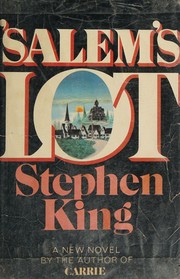
Father Callahan's entire arc in Wolves of the Calla and beyond is a direct sequel to this vampire novel. Reading it now recontextualizes his Dark Tower role and reveals how King planned the connection decades in advance.
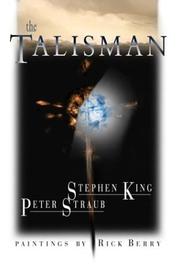
Co-written with Peter Straub, this direct sequel to The Talisman is explicitly set in the Dark Tower multiverse and features Breakers, the Crimson King's agents, and the Beams. It rewards readers who now understand exactly what those elements mean.

Features Ted Brautigan, a pivotal Breaker whose backstory enriches the Tower's lore enormously. Reading it last, with full knowledge of the Tower, transforms this quiet literary novel into a devastating piece of the larger puzzle.
Discussion
Keep reading
Paths that share books, cover the same subject, or open a related topic.