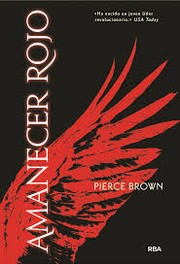
Start with Red Rising, and read that one book before deciding anything about the series. Publication order is the only order — there is no prequel, no companion novel and no chronological alternative, so the sequence is simply the order the books came out in.
Before anything else, the warning, because it is the most useful thing an order guide can give you here. The opening act turns on a public execution the reader is made to watch, and the academy section that follows contains murder and sexual violence among the students. The brutality is front-loaded and it is deliberate — the book is arguing that the ruling caste's games are not games — but if it is not for you, that will be obvious inside two hundred pages, and stopping there is a legitimate outcome rather than a failure of nerve.
The first book, on its own
Red Rising is 442 pages and its shape is unusual: the first hundred pages are slow, claustrophobic and grim, and the middle section accelerates so hard that most readers take the back half in two or three sittings. Darrow is a miner on Mars who believes he is terraforming a planet for humanity; discovering that this is a lie is the book's first turn, and it converts the novel from a labour story into an infiltration story.
The colour caste system is the world's entire social physics, and the Roman naming and house structure are load-bearing rather than decorative — the ruling class built itself out of a myth on purpose.
Finish the original trilogy
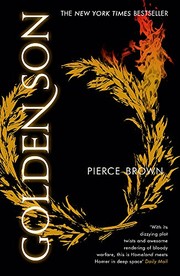
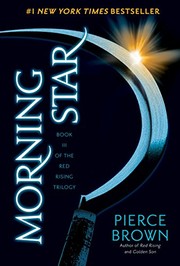
Golden Son, then Morning Star, back to back with no gap. Golden Son ends mid-catastrophe and reading anything else in between wastes the momentum it hands you.
The scope jumps from one school to a solar system, and Pierce Brown's plotting becomes far more confident: betrayal is the structural unit, and most chapters exist to reposition someone's loyalty. Darrow's problem changes from surviving the Golds to deciding what he is willing to become in order to beat them, which is the trilogy's actual subject.
Two practical notes. Golden Son has the most notorious ending in the series and it is aggressively spoiled online, so going in clean is worth real effort. And Morning Star is a genuine ending rather than a cliffhanger — it pays off every thread from the first two books.
Where a lot of readers stop, reasonably
After Morning Star. A large share of readers do exactly this, and the trilogy is designed to permit it. If you want a complete story with a real resolution and no open commitment, three books is the answer and you have lost nothing.
The second sequence
Iron Gold, Dark Age, Light Bringer — roughly 2,150 pages, and the pacing is uneven by design.
Ten years have passed and the revolution now has to govern, which turns a war story into a book about occupation, insurgency and legitimacy. The formal change is the big one: four viewpoint characters replace Darrow's single first-person narration, partly so the series can look at him from outside. He is an unreliable hero here rather than an underdog.
Honest warnings for this stretch. Iron Gold has a slow first two hundred pages while the new narrators are established; push through, because the structural change is the whole point. Dark Age is the longest book in the series and by consensus the most punishing — the escalation includes atrocities committed by characters you have followed for four books, and many readers need a break partway. Taking one is sensible. Light Bringer reads much faster and pulls the sequence back together.
Where the path stops
At Light Bringer, which is where a current reader catches up and waits. The second sequence is unfinished, so its emotional shape is not yet available. Go in knowing you are stopping mid-story — that is the honest state of the series rather than a gap in this list.
More science fiction and fantasy paths are on Discover.
Follow the full ordered path here: Red Rising Reading Order and Reading Guide.