The Columbian Exchange: books to read, in order
Alfred Crosby coined the phrase in 1972 for something historians had somehow not made central: that the most consequential thing to cross the Atlantic after 1492 was biological. Maize, potatoes and cassava went east and eventually fed a doubling of the Old World's population; wheat, cattle, pigs and sugar came west; and smallpox, measles and typhus came with them into populations with no acquired immunity. This path starts with the two books that make the story readable, then goes to Crosby himself, then to the hardest part — the demographic collapse, where the estimates range from about eight million pre-contact inhabitants to over a hundred million and the disagreement is genuine rather than political posturing. It ends with the crops and the ecology, which is where the exchange is still visible on every dinner table.
The two books that make it a story
BeginnerGet the whole subject in narrative form — what the Americas were like before 1492 and what the world looked like once the exchange was running — and come out with a working sense of scale before meeting the scholarship.
▸ Study plan for this stage
Pace: Five to six weeks for 1,192 pages, and both books are journalism about scholarship rather than scholarship, which makes them the fastest 1,192 pages on this path. Mann's 1491 is 632 pages, the longer of the two, and covers what the Americas were before contact — larger populations than were taught f
- The central claim of the whole subject: the most consequential thing to cross the Atlantic after 1492 was biological — crops, animals, weeds and pathogens — and the political and military history rides on top of it.
- What the Americas were before contact, as Mann summarises the current scholarship: substantially larger populations than the mid-twentieth-century textbooks allowed, extensive landscape management, and urban centres in places later described as wilderness.
- The pristine-wilderness idea as a historical artefact: much of what Europeans described as untouched nature was land that had recently lost the people managing it.
- The eastward flow: maize, potatoes, cassava, tomatoes, chillies, tobacco and cacao, and the calorie increase that eventually underwrote a doubling of Old World populations.
- The westward flow: wheat, sugar, cattle, pigs, horses, and the weeds and grasses that travelled with them and often arrived first.
- The pathogens: smallpox, measles, typhus and influenza entering populations with no acquired immunity, and the compounding effect of several epidemics arriving in sequence.
- The global reach that 1493 insists on — silver moving to China, guano to European fields, malaria determining which labour force could be used where — so that the exchange is a world story and not an Atlantic one.
- Where the disagreements are, which Mann flags honestly: population size, the mechanism of collapse, and how much landscape modification the archaeology actually supports. Note them now; stage three is about the first two.
- State the Columbian Exchange in one paragraph, as a claim rather than as a list.
- What did the Americas look like in 1491, on the scholarship Mann summarises? Which parts of that picture does he mark as contested?
- Give three American crops and the Old World societies each transformed, with the mechanism in each case.
- Why does 1493 spend so much time on China and the Philippines? What is Mann arguing by going there?
- Where does Mann tell you the experts disagree? Make the list — it is the agenda for the rest of the path.
- Build a two-column ledger of the exchange: everything that went east, everything that went west, with a note on what each did. Keep it; every later stage adds to it.
- Take one of Mann's contested claims and write down what evidence would settle it. You will meet the specialists arguing about exactly that in stage three.
- Trace the silver route from Potosi to China from 1493, and write a paragraph on why a biological history contains a monetary chapter.
- Write half a page on the pristine-wilderness idea: where it came from, what it obscured, and where you have encountered it yourself.
Next up: Mann is summarising a field, and the next stage is the man who named it, arguing it for the first time.

Mann's survey of what the Americas actually were before contact: larger populations than were taught for most of the twentieth century, engineered landscapes in Amazonia, cities in the Mississippi valley. It is journalism about scholarship rather than scholarship, and it is scrupulous about telling you where the experts disagree — which makes it the ideal first book here.
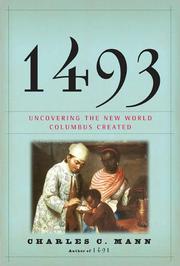
The sequel, and the one directly about the exchange: silver to China, the potato and guano in Europe, malaria and yellow fever shaping who could work where, the earthworms that changed North American forests. Read it second — it is Crosby's argument told at book length with thirty years of subsequent research attached.
Crosby, who named the thing
BeginnerRead the originating argument in its own words, and understand the stronger claim Crosby went on to make: that European expansion succeeded where it did because the biota travelled well, not because of any advantage in arms or organisation.
▸ Study plan for this stage
Pace: Three to four weeks for 667 pages. The Columbian Exchange is 283 pages, short and readable, and is where the field begins — a week, and read it after Mann so you can recognise how much of the popular story comes straight from here. Ecological Imperialism is 384 pages and is the bigger and more conte
- Crosby's originating move: treating the biological consequences of 1492 as the main event of the encounter rather than as its context, which is a reorganisation of the subject rather than a new fact within it.
- The specific mechanisms he sets out: virgin-soil epidemics, the transfer of domesticated animals, the exchange of staple crops, and the movement of weeds and pests as an unmanaged accompaniment to the managed transfers.
- The stronger thesis in Ecological Imperialism: European expansion succeeded permanently only where the whole European biota could establish itself, so the neo-Europes — North America, Argentina, Australia, New Zealand — are temperate zones and the failures are tropical.
- The portmanteau biota as the unit of analysis: not settlers alone but settlers with their crops, livestock, weeds, vermin and diseases, arriving as a package that either takes or does not.
- The determinism objection, which is the standard criticism: the thesis explains outcomes by biology and leaves little room for policy, resistance, technology or contingency. Crosby's defenders reply that he is explaining permanence of settlement, not conquest.
- What the thesis predicts, which is the fair way to test it: settlement should have failed where the biota could not establish, and the tropical colonial record is the evidence to check it against.
- The relation to the numbers: Crosby's account gives disease a leading causal role, which is exactly the claim the next stage subjects to serious pressure.
- Reading a founding text after its summaries — you now know the argument, so read for the evidence, the hedges and the places where the case is thinner than its reputation.
- What did Crosby reorganise, and why was that harder to publish than a new fact would have been?
- Define a virgin-soil epidemic and say what the concept assumes about immunity, exposure and population structure.
- State the Ecological Imperialism thesis and name the neo-Europes. What does the thesis predict about the tropics?
- What is the determinism objection, and what is the strongest reply available to Crosby?
- Where is Crosby's evidence thinnest? Point to a specific claim you would want checked.
- Take the neo-Europes thesis and test it against two cases Crosby does not discuss at length. Does it fit, and if not, what is doing the work instead?
- List every mechanism Crosby proposes and mark each as well evidenced, plausible, or asserted. Then compare your marks with how confidently he states each.
- Return to your exchange ledger and annotate each entry with the mechanism Crosby would assign it. The entries that do not fit are the interesting ones.
- Write half a page on the difference between explaining conquest and explaining permanent settlement. Getting this distinction right is what makes the determinism argument tractable.
Next up: Crosby gives disease the leading role in the American collapse, and the next stage is where that claim is tested hardest.
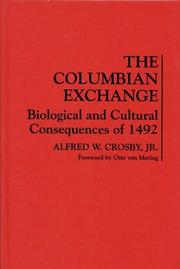
The 1972 book that named the field, and still short and readable. Crosby could not get it published by a major press at the time; it is now the standard reference. Read it after Mann and you will recognise how much of the popular story comes straight from here.
The bigger and more contentious follow-up: that Europeans succeeded permanently only in the temperate 'neo-Europes' — North America, Argentina, Australia, New Zealand — where their crops, weeds, livestock and diseases could establish, and failed to settle the tropics for the same biological reasons. A strong thesis, criticised for determinism, and worth testing against everything that follows.
The demographic collapse, and the argument about its size
IntermediateUnderstand how pre-contact population estimates are actually produced, why the range is so wide, and why the claim that disease alone emptied the Americas is now seriously contested — the numbers here are genuinely disputed and the stage is built so you can see the dispute rather than pick a figure.
▸ Study plan for this stage
Pace: Eight to nine weeks for five books and 1,774 pages — the longest stage on the path, and the one that has to be read in the order given, because it is built as a sequence rather than as a set. Cook's Born to Die is 248 pages and comes first: the epidemic-by-epidemic account, showing which outbreaks a
- How pre-contact population estimates are actually produced: a documented later figure, a depopulation ratio, and a multiplier applied backwards — so the estimate is a product of assumptions at least as much as of evidence.
- Why the range is so wide. Estimates run from roughly eight million to over a hundred million for the hemisphere, and the spread comes from the choice of ratio and the thinness of the base figures, not from anyone's politics.
- Cook's contribution as the evidential floor: an epidemic-by-epidemic reconstruction that is explicit about which outbreaks are documented in the Spanish records, which are inferred from indirect evidence, and how quickly the record thins away from Spanish America.
- McNeill's framework: disease as a first-order variable in world history, with the American collapse as one instance of a general pattern of populations meeting unfamiliar pathogen pools.
- Denevan's method, laid bare by the collection's structure: specialists producing regional estimates by different means, then summed — which makes the hemispheric figure a sum of heterogeneous methods rather than one measurement.
- Henige's charge: the high-count methodology is close to unfalsifiable, because a depopulation ratio applied to a thin source produces a number that no evidence could contradict. His target is method, not sympathy.
- The reason the order matters. Read Henige before Denevan and he sounds like a contrarian; read him immediately after seeing the estimates constructed and the objection is specific and answerable. Read Cook before McNeill and the framework arrives with evidence attached rather than as a premise.
- Kelton's reframing, and why it ends the stage: in the Southeast, smallpox became catastrophic only once the commercial Indian slave trade had concentrated, displaced and starved populations — so the collapse was a product of colonial violence acting through disease, not of microbes acting alone.
- Describe the depopulation-ratio method step by step. Where does each number come from, and which step carries the most weight?
- What does Cook actually document, as against infer? Take one epidemic and classify the evidence for it.
- State McNeill's virgin-soil concept precisely. What does it assume, and which of those assumptions does Kelton contest?
- How is Denevan's hemispheric figure assembled? What would change it most — a better base figure, or a different ratio?
- State Henige's objection in its strongest form. Is he claiming the high estimates are wrong, or that they are unsupported? The difference matters.
- Set out Kelton's argument and its evidence. What does it imply about the phrase virgin-soil epidemic as an explanation?
- Work one regional estimate from the Denevan collection all the way through: the base figure, its source, the ratio, the justification for the ratio, and the result. Doing this once makes the whole dispute legible.
- Take three of Henige's specific criticisms and check each against the chapter it targets. Note where he lands and where he is scoring points.
- Draw two causal diagrams of the collapse — one with pathogens as the driver, one with Kelton's slave trade and displacement as the driver acting through pathogens — and mark what evidence would distinguish them.
- Write out the range of estimates as a number line with the major figures marked and the method behind each named. Then write one honest sentence about what can be said about the hemispheric total.
- Return to Crosby's mechanisms from the previous stage and mark which of them Kelton's argument leaves intact.
Next up: Having handled the hardest and least settled part of the subject, the next stage moves to the half of the exchange that can be traced item by item.
The standard account of disease in the Americas from 1492 to 1650, epidemic by epidemic and region by region. Cook argues for very heavy mortality and — unlike more popular treatments — shows his working: which outbreaks are documented, which are inferred, and how thin the evidence gets away from the Spanish records.

The 1976 book that made disease a first-order variable in world history, of which the American collapse is one chapter. It supplies the concept of the virgin-soil epidemic that everything in this stage argues about. Read it for the framework; its specific numbers have not aged as well as its idea.
The essential reference on the estimates themselves: a collection in which specialists work through the evidence region by region, with Denevan's own synthesis of roughly fifty-four million. This is where you see how a hemispheric number is actually built, and how much of it rests on multipliers and assumptions.
The SCEPTICAL case, and the necessary counterweight to Denevan. Henige argues that the high-counter methodology is largely unfalsifiable — that a depopulation ratio applied to a thin source produces a number with no real evidential basis. Cranky in tone and methodologically serious; read it directly after Denevan. David Stannard's American Holocaust argues the opposite extreme if you want the far end of the range.

The most important recent revision, and the reason the stage ends here rather than with the numbers. Kelton's study of the Southeast argues that smallpox did not become catastrophic until the commercial Indian slave trade concentrated, displaced and starved populations — so the collapse was a product of colonialism's specific violence and not of microbes acting alone. It reframes the whole subject.
The crops, and what they did to four continents
BeginnerFollow individual American crops through their adoption elsewhere, and be able to explain the mechanism by which a new staple changes a society's population, labour and politics — rather than just asserting that the potato mattered.
▸ Study plan for this stage
Pace: Four weeks for 860 pages, and the stage is a relief after the last one — three narrative books of similar length. Coe's America's First Cuisines is 276 pages, reconstructing what Aztec, Maya and Inca people actually ate from archaeology and the early Spanish accounts, and it goes first: you cannot j
- What Mesoamerican and Andean cuisines actually were: maize with nixtamalisation, beans, squash, chillies, cacao, potatoes at altitude, and the processing knowledge that made each nutritionally viable.
- Nixtamalisation as the key case — treating maize with alkali releases niacin, and maize adopted without that knowledge produced pellagra in Europe and the American South. The crop travelled and the technique did not.
- The commodity-history method the Coes model: follow one substance through ritual use, elite luxury, colonial production and industrial commodity, and the social history falls out of the sequence.
- Cacao's specific arc — a Mesoamerican ritual and elite beverage, a European aristocratic drink, then a mass industrial product dependent on plantation labour — and the changes in preparation at each step.
- The mechanism by which a staple changes a society, which Zuckerman actually demonstrates rather than asserting: more calories per acre, on land unsuited to grain, harvestable by household labour, storable in the ground, and therefore population growth, changed land tenure and changed labour patterns
- The adoption sequence for the potato: suspicion, official promotion, uneven uptake by region and class, then dependence — and the fact that resistance to a new food is about culture and risk, not stupidity.
- Monoculture and vulnerability as the other side of the calorie gain, with the Irish famine as the demonstration and the political and landholding context as an essential part of the causation.
- Why a single-crop history is the right unit here: the hemispheric arguments in the previous stages are hard to evidence, and a crop can be traced with documents, prices, acreages and recipes.
- Describe an Aztec or Inca diet in detail. Which components were processed, and what did the processing accomplish?
- Explain nixtamalisation and its consequences for maize adoption in Europe. What does the case show about how knowledge travels compared with how seeds do?
- Trace cacao through four stages of use, naming what changed in the preparation and who was drinking it at each.
- Give the mechanism by which the potato increased population, step by step, with the agronomy included.
- Why was the potato initially resisted? Give the reasons that were rational at the time.
- How much of the Irish famine is explained by the crop, and how much by landholding and policy? Answer from Zuckerman rather than from general knowledge.
- Take your exchange ledger and add, for each American crop, the region it transformed and the mechanism. The entries where you cannot state a mechanism are the ones where the claim is weaker than it sounds.
- Write the commodity history of a fourth item — tomato, chilli, tobacco, maize — in one page, following the Coes' method. You will find where the evidence is easy and where it is not.
- Reconstruct the potato's caloric advantage numerically: yield per acre against grain, and what that means for how many people an acre supports. Zuckerman gives you enough to do the arithmetic.
- Write half a page on what would have happened to European population without American crops, and mark every sentence that is a counterfactual rather than a finding.
Next up: The crops show the exchange working through calories; the last stage shows it working through land, livestock and law in a single place.
What Aztec, Maya and Inca people actually ate, reconstructed from archaeology and the early Spanish accounts. Read it first in this stage: you cannot judge what the exchange gave the Old World without knowing what it was taken from, and this is the only accessible book that supplies that half.
Cacao from Mesoamerican ritual beverage to European luxury to industrial commodity, by Sophie Coe and completed by her husband Michael. A model single-commodity history and much the most enjoyable book in this stage.
The best case study of an American crop remaking Old World societies: initial suspicion, then adoption in Ireland, England, France and Germany, then dependence and the famine. It is the concrete demonstration of the abstract claim about calories and population that Crosby and Mann make in passing.
Ecology, and the exchange in one place
IntermediateSee the exchange working at the scale of a single region — soil, livestock, property, forest — and understand why environmental historians now treat the biological and the political as inseparable.
▸ Study plan for this stage
Pace: Three weeks for 633 pages, the shortest stage on the path and the right place to end. Cronon's Changes in the Land is 249 pages, short, beautifully argued and the founding text of American environmental history — read it first, over a week, and slowly enough to follow the argument about property, wh
- Cronon's argument that the decisive import was not a species but a legal concept: property in land, which converted a landscape of use rights and seasonal mobility into one of fixed boundaries and alienable title.
- The concrete ecology that followed — fences, livestock grazing, timber cutting, soil exhaustion — and the way each colonial practice made the next one necessary.
- The comparison Cronon draws between indigenous and colonial land use as two systems with different logics, both of them managing the landscape rather than one managing and one not.
- Why a regional study is the right scale for this subject: at the scale of New England the mechanisms are visible and documentable, where hemispheric claims have to be inferred.
- Fenn's finding: a single smallpox epidemic moved across the whole continent during the revolutionary years, reaching populations who had no contact with the war, and killed a multiple of its battle dead.
- Her method, which is the reason the book is on this path: reconstructing an epidemic's route from scattered, incomplete and unconnected sources — traders' journals, mission records, oral traditions, military correspondence — and showing what the reconstruction can and cannot establish.
- That the exchange was still operating catastrophically three centuries after Columbus, which disposes of any reading of it as a single event at contact.
- How Fenn's careful source work relates to the disputes in stage three: she is doing at continental scale, for one epidemic, the kind of evidential work Henige demanded and Cook modelled.
- What does Cronon argue was the most consequential import, and how does he support a claim about a concept rather than an organism?
- Describe the sequence from fences to soil exhaustion. What made each step follow from the last?
- Compare indigenous and colonial land use as Cronon presents them. What is he careful not to claim?
- How did Fenn reconstruct the epidemic's route? Name the source types and the inference each supports.
- What does it mean that this epidemic happened three centuries after contact? Which arguments from earlier stages does that complicate?
- Across the whole path, what is the Columbian Exchange best understood as — an event, a process, or a frame? Defend the answer with specific books.
- Map Cronon's New England twice, before and after: vegetation, animals, boundaries, and who has what rights. The two maps are his argument.
- Reconstruct one leg of Fenn's epidemic route from her evidence and write out the inference chain. Then mark the weakest link.
- Apply Cronon's method to a region you know: what changed in the land, and what legal or economic change drove it?
- Return to your exchange ledger, now complete, and write a final page answering what the Columbian Exchange actually was — with each claim sourced to a book on this path, the demographic numbers stated as a range with its method attached, and the parts that remain genuinely disputed marked as disputed.
Next up: The path ends with the exchange still running long after contact, which is the honest closing statement about a process rather than an event.
New England's ecology transformed by colonisation: fences, livestock, timber, and above all the imposition of property in land on a system that had not had it. Short, beautifully argued and the founding text of American environmental history — the exchange examined at a scale where the mechanisms are visible.
The smallpox epidemic of 1775-82, which spread across the whole continent during the American Revolution and killed far more people than the war. Fenn's detective work reconstructing its path is the finest piece of research on this list, and it ends the path by showing the exchange still operating catastrophically three centuries after Columbus.
Discussion
Keep reading
Paths that share books, cover the same subject, or open a related topic.