Jared Diamond Reading Order: Where to Begin, and What the Critics Say
Guns, Germs, and Steel is where almost everyone starts, and it is also the book that professional historians, archaeologists and anthropologists argue with hardest — which is worth knowing before rather than after. This path opens with the shorter book that sets up his method, works through the four big argument books in the order the argument develops, and then devotes a full stage to the scholars who dispute him and to the earlier historians whose work his rests on, so you finish able to say what is actually contested and why.
The method, before the famous book
BeginnerSee how Diamond reasons — long timescales, comparative cases, environment as the driver — on a subject with lower stakes than world history.
▸ Study plan for this stage
Pace: Two to three weeks for around 400 pages. The Third Chimpanzee moves through genetics, language, art, agriculture and extinction in short self-contained chapters, so it reads well at a chapter a sitting. Read it with a pen: several arguments here are the seeds of entire later books, and marking them
- The comparative method that runs through everything Diamond writes: line up many cases across long timescales, look for what varies with what, and reason from the pattern rather than from any single history
- Environment and biology as the preferred explanatory level, with culture treated as downstream — this is the commitment the later arguments and the later objections both turn on
- How small the genetic distance between humans and chimpanzees is, and what Diamond thinks does and does not follow from that
- Agriculture presented as a mixed inheritance rather than as straightforward progress, an argument that reappears at book length in later work and that other writers on this path attack directly
- The prehistoric extinctions argument — that human arrival correlates with the disappearance of large animals — which is a live scientific dispute rather than a settled finding
- Diamond's habit of reasoning from New Guinea. His decades of fieldwork there supply examples throughout, and it is worth noticing early how much explanatory weight one region carries
- Popular science with a thesis. The register is confident and the structure is argumentative, which is a genre with real strengths and specific vulnerabilities
- What exactly is the comparative method as Diamond practises it, and what kind of claim can it support?
- Where in this book does he treat culture as an effect rather than a cause? Find two instances.
- What is his case that agriculture was not straightforwardly an improvement, and how strong do you find it?
- Which arguments here are presented as established and which as his own proposals? Diamond is usually explicit — check whether you noticed.
- How much of the evidence comes from New Guinea, and does the reliance concern you?
- Write a one-page summary of Diamond's method — not of his conclusions — in your own words. You will test everything in the next two stages against this page.
- List the four or five arguments here that you can already see becoming later books. Check the list at the end of stage three.
- Pick the chapter you found least convincing and write 200 words on precisely what would have persuaded you. Naming the missing evidence is a skill this whole path depends on.
- For any one comparative claim in the book, write down what a counter-example would have to look like. Do this before you read the critics.
Next up: You now know how Diamond reasons on a subject with relatively low stakes, which is the only fair basis for judging the same reasoning applied to the whole of human history.
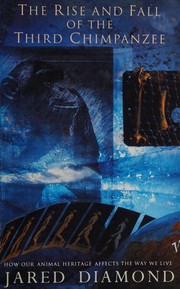
His first popular book, on what makes humans different from other apes, and the place several arguments later expanded into whole books first appear in miniature. Starting here means you meet the comparative method before you meet its most contested application.
The big thesis
IntermediateRead the argument that geography and biogeography, not culture or race, explain why some societies conquered others — and be able to state it precisely enough to test it.
▸ Study plan for this stage
Pace: Four to five weeks for roughly 450 pages. It is written to be readable and the middle chapters on domestication and disease are the intellectual core — slow down there. Read it in one continuous stretch rather than dipping, because the argument is cumulative and its force depends on the accumulation
- The question the book sets itself, framed by Yali's question in the prologue: why did some peoples end up with so much more material power than others?
- The proposed answer in one line — the accident of which continents had domesticable plants and large domesticable animals, compounded by Eurasia's east-west axis, which let crops and techniques spread along a single band of latitude
- Germs as the sharpest part of the argument: dense agriculture plus herd animals produces epidemic disease, and immunity acquired over millennia becomes a weapon nobody chose
- The explicit rejection of racial and cultural-superiority explanations, which is the book's stated motivation and a large part of why it was received as it was
- Proximate versus ultimate causes — guns, steel and writing are proximate; the book claims the ultimate cause sits far further back, in biogeography
- Single-cause explanation as a deliberate choice. Diamond argues one factor hard and says so, which is both the source of the book's power and the target of most of the objections
- Where the argument gets thinner. The last third, applying the scheme to more recent history, is noticeably more speculative than the chapters on domestication
- State the thesis in three sentences without using the word geography. Being forced to unpack it shows how much work the word is doing.
- What is the axis argument, and what would count as evidence against it?
- Diamond rejects cultural explanations. What does his scheme therefore have to say about why the Industrial Revolution happened where it did?
- Which chapter did you find most convincing and which least? Be specific about what made the difference.
- The book argues that a single class of cause explains the broad pattern. What kinds of historical question is such an explanation good at, and what is it structurally unable to answer?
- Yali's question is about material power. Does the book answer the question that was asked, or a related one?
- Draw the causal chain from continental biogeography to European conquest as a diagram, with each link labelled. The weak links become obvious the moment you have to draw them.
- Write 300 words applying the thesis to a region the book handles briefly — sub-Saharan Africa or Australia — and note where you had to guess.
- Before you meet any critic, write down the three strongest objections you can construct yourself. Keep the page; you will compare it to the professionals in stage four.
- Take the domestication chapters and list the animals Diamond says could not be domesticated, with his stated reason for each. This is the empirical base of the whole argument and it deserves to be examined directly.
Next up: With the central thesis in your head and your own objections written down, you can follow the argument outward into the three books that extend it — and watch how it behaves on subjects where the evidence is closer to hand.
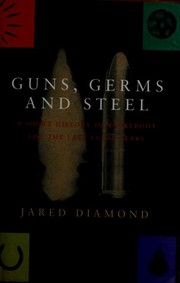
The Pulitzer winner and the book everything else on this path responds to: the claim that the continental distribution of domesticable plants and animals, plus the east-west axis of Eurasia, determined the shape of the modern world. Read it as a bold single-cause hypothesis, which is how it is written and how its critics take it.
The sequels
IntermediateFollow the argument outward from why societies rise to why they fall, what small-scale societies do differently, and whether nations can be said to have crises.
▸ Study plan for this stage
Pace: Twelve to fourteen weeks for four substantial books. Collapse is around 550 pages and worth the time; The world until yesterday is a similar length; Upheaval is shorter; Why Is Sex Fun? is under 200 pages and can be read in a weekend at any point as a break. Read Collapse first and Upheaval last. If
- Collapse's five-point framework — environmental damage, climate change, hostile neighbours, loss of friendly trade partners, and a society's response — presented as a checklist for why societies fail
- Easter Island and Norse Greenland as the framework's showcase cases, and also the two that specialists in those regions dispute most directly, which the final stage takes up
- Contemporary cases sitting beside archaeological ones. Rwanda and Montana are handled with the same apparatus as medieval Greenland, and whether that is illuminating or a category error is a fair question to hold open
- The world until yesterday's claim that small-scale societies handle children, elders, danger and disputes in ways worth learning from, drawn from decades of New Guinea fieldwork
- The contested framing of that book. Anthropologists have objected both to treating living peoples as a window onto the human past and to specific ethnographic claims; Diamond's response is that he is reporting what he observed. Both positions are in print and the disagreement is unresolved
- Upheaval's method — a personal-crisis-therapy framework applied to seven national histories — which received the weakest reception of the four, with reviewers across the political spectrum finding the analogy strained
- The recurring shape of the objection across all three: the framework arrives first and the cases are fitted to it, which is a criticism of method rather than of any single fact
- Why Is Sex Fun? as evolutionary reasoning with none of the world-historical stakes — concealed ovulation, menopause, non-reproductive sex — and a useful reminder of what Diamond is like when nothing political is riding on the answer
- Apply the five-point framework to a society you know something about that is not in the book. Where does it fit and where do you have to force it?
- Collapse treats a modern American state and a medieval Norse settlement with the same apparatus. What does the comparison illuminate, and what does it flatten?
- In The world until yesterday, which claims rest on Diamond's own observation and which on other people's ethnography? The distinction matters to how the objections apply.
- The disagreement about whether living societies can stand as a window onto the human past is genuine and unsettled. Set out the strongest version of each side before deciding what you think.
- What does the therapy analogy in Upheaval actually add to the national histories? Point to a case where it does work and one where it does not.
- Across all four books, does the framework ever fail to fit a case? If not, is that a strength or a warning?
- Take the Easter Island chapter of Collapse and write down every empirical claim it depends on. Keep the list for stage four — you will meet the archaeologists who dispute several of them.
- Write 300 words on one recommendation from The world until yesterday that you find genuinely persuasive, and 300 on one you do not, saying in each case what evidence moved you.
- For Upheaval, pick one of the seven countries and read a short standard history of it alongside. Then write a paragraph on what Diamond's account left out.
- Return to the page of self-generated objections you wrote in stage two and mark which ones the sequels answered, which they aggravated, and which they never touched.
Next up: You have taken the whole argument seriously across five books, which is the only position from which the specialist objections and the older scholarship can be judged rather than merely absorbed.
The environmental-failure companion, running from Easter Island and the Norse Greenlanders to Rwanda and Montana. The Easter Island and Greenland chapters in particular are directly disputed by the specialists in those regions, which is the subject of the final stage here.
Drawing on his decades of fieldwork in New Guinea, on what traditional societies do about children, elders, danger and disputes. Anthropologists have objected both to the framing of living peoples as a window onto the human past and to some of the ethnographic claims; Diamond's defence is that he is reporting what he observed.
The weakest-received of the four, applying a personal-crisis-therapy framework to seven nations. Read it last among his own books and read it critically — reviewers across the political spectrum found the analogy strained and the country histories thin.
A short, genuinely enjoyable book on the evolution of human sexuality — concealed ovulation, menopause, why humans have sex when conception is impossible. Optional and lighter than the rest; included because it shows the same evolutionary reasoning with none of the world-historical baggage.
The argument against, and the sources underneath
IntermediateRead the specialists who dispute Diamond and the earlier historians he builds on, and be able to distinguish what is genuinely contested from what is merely unfashionable.
▸ Study plan for this stage
Pace: Ten to twelve weeks. Questioning collapse is an edited volume — read it as separate case-study chapters, ideally each one directly against the corresponding chapter of Collapse. The Dawn of Everything is long, around 700 pages, and argumentative; give it a month. Ecological Imperialism and Plagues a
- The central archaeological objection in Questioning collapse: that several of the societies Diamond describes as collapsing did not collapse, and that where populations did fall, colonialism, disease introduced by outsiders and slaving do more explanatory work than ecological self-destruction
- Descendants still present. A recurring point in that volume is that peoples described as having vanished have living descendants who dispute the account, which is an argument about evidence and not only about tone
- Diamond has replied in print and did not concede the main points. The exchange is live and a reader is entitled to weigh it rather than to be handed a verdict
- The Dawn of Everything's rival frame: that agriculture, scale and geography did not force particular social outcomes, and that prehistoric societies experimented with political arrangements far more freely than determinist accounts allow
- That book has drawn substantial criticism of its own from archaeologists, including charges of selective evidence — so it is best read as the strongest rival story rather than as a refutation that settles anything
- Ecological Imperialism made the biological-expansion argument in 1986, a decade before Guns, Germs, and Steel, and is the work most often cited when critics say Diamond under-credits his predecessors
- Plagues and Peoples, published in 1976, first placed epidemic disease at the centre of world history — the other major precursor, and the source of much of the germs argument's foundation
- Distinguishing contested from unfashionable. Some objections are empirical and specific; some are about which questions historians currently think worth asking. Keeping the two apart is the skill this stage exists to build
- Take Easter Island: set out the strongest version of Diamond's account and the strongest version of the archaeologists' account, with the evidence each rests on, before saying what you think.
- Which of the objections in Questioning collapse are about facts, and which are about how the framework selects and frames cases? They call for different responses.
- The Dawn of Everything and Guns, Germs, and Steel disagree about whether material conditions force social outcomes. What evidence would actually distinguish the two positions?
- Compare Crosby's handling of biological expansion with Diamond's. What does a historian do differently with the same evidence, and what does the popular register gain and lose?
- How much of Guns, Germs, and Steel's germ argument was already established in Plagues and Peoples, and how much is Diamond's own synthesis?
- After all four stages: which parts of Diamond's work do you now regard as robust, which as genuinely disputed, and which as unresolved? Be able to say what would change your mind on each.
- Read the Easter Island and Norse Greenland chapters of Questioning collapse directly against the corresponding chapters of Collapse, and produce a two-column table of claim and counter-claim.
- Retrieve the list of empirical claims you made in stage three and mark each one contested, supported, or untouched by the critics. This is the single most useful artefact this path produces.
- Write 500 words explaining the disagreement between Diamond and his archaeological critics to someone who has read neither, without indicating which side you favour. Neutral exposition is much harder than argument and it is the test of whether you understand both.
- Read one chapter of Ecological Imperialism beside the corresponding argument in Guns, Germs, and Steel and note what the earlier book establishes that the later one assumes.
- Return to the self-generated objections from stage two one final time. Write a paragraph on which of your instincts the specialists confirmed and which they did not — this tells you something about your own reading.
Next up: This is the end of the path: five books of the argument and four of the response, which leaves you able to state precisely what is contested and why — and the natural next step is a regional history of any one place these books treat in a chapter, read to see what a specialist does with the space a synthesist cannot spare.

An edited volume of archaeologists and historians responding directly to Collapse case by case, arguing that the societies Diamond describes as collapsing largely did not, and that colonialism does more explanatory work than ecology. The most concentrated scholarly rebuttal in print; Diamond has replied in print and did not concede.
Graeber and Wengrow attack the whole determinist frame — the claim that agriculture, scale and geography forced particular social outcomes — and argue prehistoric societies experimented far more freely than any of these accounts allow. It has drawn its own criticism from archaeologists for selective evidence. Read it as the strongest rival story, not as a refutation.
Crosby made the biological-expansion argument in 1986, a decade before Guns, Germs, and Steel, and is the scholar most often named when critics say Diamond under-credits his predecessors. Read it to see how a historian handles the same evidence.

The 1976 book that first put disease at the centre of world history and is the other major precursor. Between McNeill and Crosby you can see exactly which parts of Diamond's synthesis are his own and which were established scholarship he popularised.
Discussion
Keep reading
Paths that share books, cover the same subject, or open a related topic.