The Cicero Trilogy Reading Order and Guide
Robert Harris's Cicero novels are three books narrated by Tiro, Cicero's secretary and the inventor of shorthand, covering the lawyer's rise, his consulship and his destruction. They run in strict chronological and publication order and there is nothing to argue about — read them one, two, three, and be aware that the second book was published as Lustrum in Britain and Conspirata in America. This path takes the trilogy first, then the Roman history behind it, then the rest of Harris, because readers who finish Dictator almost always want another of his political thrillers immediately.
The Trilogy, in Order
IntermediateFollow Cicero from provincial outsider to consul to exile, narrated throughout by the slave who took down every word.
▸ Study plan for this stage
Pace: 6 to 7 weeks for about 1,225 pages. Imperium over two weeks, Lustrum over two to three, Dictator over two. These read like political thrillers and go faster than the page counts suggest, but do not gap them — the second and third books assume you remember the names of about thirty senators.
- The order is strict and uncontested: Imperium, Lustrum, Dictator. Chronology and publication order agree completely
- One buying trap to know about: the second book was published as Lustrum in Britain and as Conspirata in the United States. Same novel, two titles. Readers regularly buy both by accident
- Tiro narrates all three. He was a real person — Cicero's slave and then freedman, his secretary, and the inventor of a shorthand system still called Tironian notes. He genuinely wrote a biography of Cicero, and that biography is genuinely lost. Harris's whole premise is to supply it
- Imperium covers the rise: the prosecution of Verres, the climb through the offices, and the consular election. It is the most straightforwardly enjoyable of the three and functions as a courtroom novel
- Lustrum is the consulship and its aftermath — the Catiline conspiracy, the execution of the conspirators without trial, Clodius, and Cicero's exile. It is the darkest volume and the one where Cicero's own choices become hardest to defend
- Dictator covers the fall: Caesar, the civil war, the dictatorship, the Ides of March, and Cicero's death in the proscriptions of 43 BC. The ending is fixed by history and Harris does not soften it
- Tiro's position is the trilogy's best device. He is present at everything, permitted to record everything, and legally owned by the man he is writing about. His judgements are affectionate and quietly damning at once
- Cicero as Harris writes him is vain, brave, self-serving, physically timid and genuinely principled, often in the same scene. Do not expect the novels to resolve him
- What does the Verres prosecution in Imperium establish about how Roman politics actually worked, and how much of it is procedure rather than principle?
- In Lustrum, Cicero executes citizens without trial. What does he tell himself, what does Tiro record, and what does the novel let you conclude?
- Tiro is a slave for much of the trilogy and a freedman afterward. Where does his legal status shape what he can say?
- Harris is writing about the collapse of a republic. Which of his emphases feel chosen for a modern reader, and does that weaken the history?
- Cicero's death is known in advance. How does Harris generate suspense in Dictator anyway?
- By the end, is Cicero a defender of the republic or one of the people who broke it?
- Keep a one-line note per named senator as they appear. By Lustrum there are too many to hold and the political manoeuvring becomes opaque without it
- Check which edition of book two you own — Lustrum or Conspirata — before buying anything else
- After each novel, write the year range it covered. The trilogy spans about thirty-six years and readers routinely compress it
- Mark three moments where Tiro reports Cicero's words without comment. The silences are where the characterisation is
- Read the last twenty pages of Dictator in one sitting
Next up: Having taken the late republic entirely on Harris's terms, the next stage separates what he found in the sources from what he built, which is the only way to know how good the novels actually are.

Opens with the prosecution of Verres — a courtroom novel that is really about how an outsider with no army buys power with words. Start here; Tiro's voice is established in the first ten pages and carries all three books.
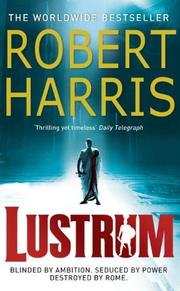
The consulship, Catiline and the executions that Cicero never lived down. Published in the United States as Conspirata, which is the same novel — do not buy both. The best of the three and unreadable without book one.

Exile, Caesar, the Ides and the aftermath, compressed across fifteen years. Read last: its power comes entirely from having watched the man build the thing that is now being dismantled.
The Rome Behind the Novels
IntermediateSeparate what Harris invented from what he found in the sources, and get the late Republic as historians tell it.
▸ Study plan for this stage
Pace: 6 to 8 weeks for about 1,360 pages. Pompeii in a week — it is a fast thriller. SPQR at 644 pages is real history and needs three to four weeks at thirty pages a sitting. Everitt's Cicero over two weeks, and read it last so you can check it against the novels chapter by chapter.
- Pompeii is not about Cicero. It is Harris's other Roman novel, set in AD 79, more than a century after Dictator, and it follows an aqueduct engineer in the days before Vesuvius erupts. It is here because it shows Harris's method on non-political material: a competent technician, a documented system,
- Mary Beard's SPQR is the general history that puts the trilogy in its setting, and it is deliberately sceptical about the kind of narrative Harris relies on. Beard is interested in what we actually know and how we know it
- Beard is particularly good on the Catiline conspiracy, and she treats Cicero's own account of it as the self-serving political document it was. Reading her directly after Lustrum is genuinely destabilising
- SPQR is arranged thematically rather than as a chronicle, so do not expect it to march year by year alongside the novels. Use the index
- Anthony Everitt's Cicero is a full narrative biography and the closest thing to a prose version of the trilogy's plot. It is the fastest way to see which scenes Harris invented and which he lifted almost intact
- Almost everything in the novels has a documentary basis, because Cicero is the best-documented person in the ancient world — hundreds of his letters and speeches survive, many of them to Atticus, and Harris works from them directly
- The thing Harris invents most freely is interiority. The events are largely on the record; what people felt while doing them is not
- Where does Beard's account of the Catiline conspiracy diverge from Harris's, and which sources does each rely on?
- Everitt and Harris cover the same life. Name three scenes that appear in both and say what the novel added
- Beard keeps asking what the evidence actually is. Which parts of the trilogy would survive that question, and which are novelistic filling?
- Pompeii has no politics and the same machinery. What does that tell you about what Harris is really interested in?
- Cicero's surviving letters are the trilogy's foundation. What kind of bias does a corpus of one man's correspondence build into every account of the period?
- Having read the history, does the trilogy hold up as history, as fiction, or only as fiction?
- Read Beard's chapter on Cicero and Catiline immediately after finishing Lustrum, with the novel still fresh
- Pick one scene from Imperium and find the corresponding passage in Everitt. Mark exactly what Harris added
- Look up one of Cicero's actual letters to Atticus and read it beside a scene it clearly fed
- Keep a short list of things the novels assert that the history says we cannot know
- Write a paragraph on what a novel can do with this material that a history cannot, and be specific rather than sentimental
Next up: You now know what Harris does with a documented institution and a doomed insider, which is precisely the machinery he reuses in every one of his other novels.
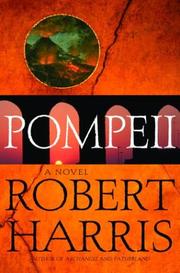
Harris's other Roman novel, written before the trilogy, following an aqueduct engineer in the days before the eruption. Read it here for the same trick in miniature: infrastructure and competence as the engine of suspense.
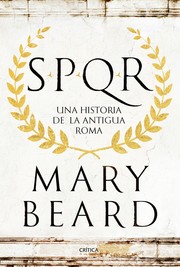
The standard single-volume history of Rome, and unusually good on exactly the period the trilogy covers. Read it after the fiction so you can see which of Harris's scenes are lifted straight from the record.
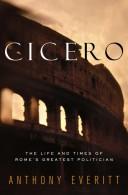
The accessible modern biography, and the closest non-fiction companion to the trilogy's shape. Placed last in this stage because it works best as a fact-check on a story you already know.
The Rest of Robert Harris
IntermediateRead the other Harris novels that use the same machinery — a competent insider, a documented institution, and a conspiracy that turns out to be procedure.
▸ Study plan for this stage
Pace: 6 to 7 weeks for around 1,310 pages across four novels. Each is a week to ten days — these are the fastest books in the path. Order matters less here than in the trilogy, but the sequence listed runs roughly from his most famous to his most recent and works well read straight through.
- The Harris formula is now visible: take a documented institution, put a competent insider inside it, and let the conspiracy turn out to be ordinary procedure followed by people protecting themselves. The trilogy is that formula applied to the Roman senate
- Fatherland, his first novel, is an alternate history in which Germany won the war, structured as a police procedural. The detective work is the vehicle; the subject is a state that has successfully buried a crime
- An officer and a spy is the Dreyfus affair told by Georges Picquart, the intelligence officer who discovered the evidence had been fabricated and was destroyed for saying so. It is the purest expression of the formula and probably his best book
- Conclave is a papal election, and it is the most enclosed of the four — one building, one procedure, a few days. It demonstrates how much tension Harris can generate from rules alone
- Munich covers four days in 1938 around the Chamberlain-Hitler agreement, with two junior officials on either side. It is his most argumentative novel and takes a revisionist position on appeasement that historians dispute
- In all four, the protagonist is a functionary rather than a hero, and the drama is procedural: what a document says, who is allowed to see it, and what happens when the paperwork is correct and the outcome is monstrous
- Note that our catalogue's page counts for some of these come from odd editions. Judge length by the book in your hands rather than the number on the card
- Identify the competent insider in each of the four novels. What institution does each one serve, and at what point does serving it become the problem?
- An officer and a spy and Dictator both end with a man destroyed by the institution he defended. Which handles it better?
- Conclave is almost entirely procedure. How does Harris make rules suspenseful, and could the same technique work on the Roman senate?
- Munich takes a contested historical position. Where does the novel argue and where does it simply arrange events to argue for it?
- Fatherland is his first book. What is already fully formed, and what did he get better at?
- Is the Harris formula a limitation or a genuine method? Defend your answer with two examples
- Before starting each novel, write down what institution you think the plot will indict. Check afterward
- Read the last chapter of An officer and a spy directly after the last chapter of Dictator
- Track how much of each book is somebody reading a document. The proportion is remarkable and is the signature of the whole career
- Pick the novel you liked least and write two sentences on what the formula failed to supply there
- Rank all seven Harris novels in this path and defend the top two
Next up: That is the working Robert Harris shelf, and the natural next steps are more late-republic history through Beard's other books, or another documentary-minded historical novelist such as Hilary Mantel.
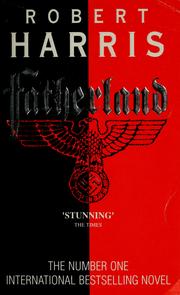
The 1992 debut: a detective novel set in a Third Reich that won the war. The book that made his name and still the purest demonstration of his method.
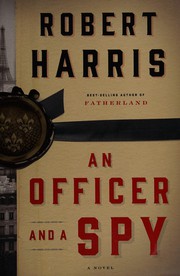
The Dreyfus affair from inside French military intelligence. The closest sibling to the Cicero books — a decent man discovering that the institution he serves is the crime.

A papal election as a procedural thriller, and the tightest thing he has written. Read it when you want the Cicero political machinery in two hundred fewer pages.

Four days of the 1938 crisis from two junior civil servants' desks. The right place to stop: it is Harris at his most restrained, and it makes the argument the whole trilogy makes about who is actually in the room.
Discussion
Keep reading
Paths that share books, cover the same subject, or open a related topic.