Mary Beard Reading Order: Where to Start
Beard writes in three registers — the big popular history, the polemic, and the technical classical scholarship — and reading her in publication order mixes them together confusingly. The better order is by ambition: start with the one-volume history of Rome, narrow to individual places and institutions, then read the essays and arguments, and finish with the academic monographs that the popular books are built on. Nothing here requires Latin or prior study.
Start Here: The Whole of Rome
BeginnerGet a thousand years of Roman history in one volume, and learn Beard's habit of asking what we actually know rather than retelling the legend.
▸ Study plan for this stage
Pace: 3 to 4 weeks. SPQR is 644 pages and covers roughly a thousand years, so 25 to 30 pages a day is honest pacing. Do not try to hold every name — the book is not organised as a chronicle and rewards reading for argument rather than for sequence. If you have never read Roman history before, expect the f
- SPQR runs from the legends of Rome's founding to the edict of AD 212 that made almost every free inhabitant of the empire a Roman citizen — and Beard stops there rather than at the fall, because citizenship is the story she thinks matters
- The recurring move, and the reason to read her at all, is that she interrupts the narrative to ask how we know: which source says this, when was it written, how long after the event, and what did the writer want
- Beard is a Cambridge classicist writing for general readers, and this is popular NON-FICTION with real scholarship under it — she names her disagreements with other historians rather than presenting a settled consensus
- She is consistently sceptical of the good stories. Romulus and Remus, the rape of Lucretia, Cicero's heroism and Nero's fiddling all get taken apart, and the taking apart is the content
- The Roman republic occupies far more of the book than the emperors do, which reverses the usual popular emphasis and is a considered judgement about where the interesting history is
- She keeps returning to ordinary people — what a Roman ate, what slavery actually involved day to day, who could vote and how little that meant — using scraps of evidence rather than the literary sources
- SPQR is the framework for everything else in this path: Pompeii applies its method to one town, Emperor of Rome picks up where it stops, and the monographs at the end are where the technical work behind it is on show
- No Latin and no prior study are required at any point in this path, including the final stage
- What does Beard think the founding myths of Rome tell us, given she does not think they tell us what happened? Be able to state her actual position, not just her scepticism.
- Why does the book end at AD 212 rather than at any of the conventional endings? What claim about Rome does that choice make?
- Take one famous episode Beard reinterprets — Catiline, the Gracchi, Boudicca, the death of Caesar — and reconstruct her reasoning from the evidence she cites.
- How much of what we know about the republic comes from writers living centuries later? What does Beard say follows from that gap?
- What was it actually like to be an ordinary inhabitant of the Roman world, on her account, and which kinds of evidence let her say so?
- Keep a running list of the sources Beard names — Livy, Cicero, Tacitus, Suetonius, inscriptions, graffiti — with a note on when each was written relative to the events described. By the end you will have built the source landscape she assumes for the rest of the path.
- After each chapter, write one sentence on what she says we do NOT know. Doing this is a fast way to internalise the method that makes the later books work.
- Draw a rough timeline once, early on, and keep it beside you. The book moves thematically and a reader without a spine of dates gets lost around the late republic.
- Pick one figure you thought you knew — Caesar, Nero, Cleopatra — and write down what you believed before reading and what survived contact with the book.
Next up: With the whole span and the method in place, the next two books zoom in and show what that same scepticism yields when it is applied to a single town and a single job.
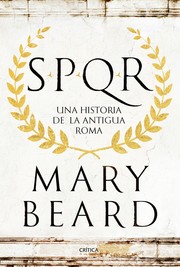
Her bestseller and the only sensible first Beard: Rome from the founding myths to the citizenship edict of AD 212, constantly stopping to ask how the evidence was made. It supplies the framework every other book on this list slots into.
Rome Up Close
BeginnerZoom from the empire to a single town and a single job, and see how much ordinary Roman life can be reconstructed.
▸ Study plan for this stage
Pace: 5 weeks. Pompeii is 364 pages and Emperor of Rome 493, both at a comfortable 25 pages a day — two weeks for the first, three for the second. Read Pompeii with a map or a plan of the town open, since it is organised geographically and the argument depends on where things are in relation to each other
- ⚠️ Pompeii is published in the United States as The Fires of Vesuvius. Same book, different cover, and readers regularly buy both — check before ordering the second one
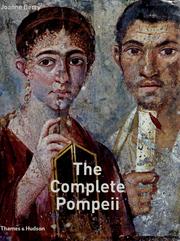
- Pompeii is a whole town read street by street: bars, bakeries, brothels, election notices painted on walls, water supply, graffiti. It is the SPQR method at ground level, on a place where the evidence is unusually rich
- Its running argument is that a great deal of the familiar Pompeii story is nineteenth-century invention — the frozen bodies, the town caught mid-meal, the confident identification of which building was what. Beard shows how those readings were made and why several do not hold
- The most useful single lesson in the book is how few Pompeii buildings can be confidently identified by function, and how much guidebook certainty rests on early excavators' assumptions
- Emperor of Rome (2023) is her most recent major book and is deliberately not a sequence of biographies. It asks what an emperor actually did all day — dined, travelled, answered petitions, was looked at — and treats the individual personalities as almost beside the point
- That structural choice is the argument: if the job is the same regardless of occupant, then the good-emperor and bad-emperor stories we inherit are a literary tradition rather than a historical finding
- It picks up chronologically where SPQR stops, so the two together cover the imperial period without repeating each other
- Both books rely on non-literary evidence — inscriptions, wall paintings, physical remains, administrative documents — far more than the narrative histories most readers arrive from
- Which parts of the standard Pompeii story does Beard say are nineteenth-century invention, and what would you need in order to establish what a given building was actually for?
- What did the graffiti and painted election notices tell Beard about Pompeian public life that no literary source does?
- On Beard's account, what did being emperor consist of? List the recurring duties and ask which of them any of the famous emperors could have avoided.
- If the job explains the behaviour, what happens to the reputations of Nero, Caligula and Commodus? Is Beard rehabilitating them or changing the subject?
- Compare how the two books handle the absence of evidence. Where does Beard say 'we cannot know' and where does she commit to a reconstruction anyway?
- Read Pompeii with a town plan beside you and mark the buildings she discusses. Its geography is the organising principle and following it on a page makes the book far more concrete.
- Copy out five pieces of Pompeian graffiti she quotes. They do more to establish that these were real people than any amount of narrative, which is exactly her point.
- For Emperor of Rome, write out the emperor's working day as Beard reconstructs it, hour by hour. Once it exists as a list the argument becomes hard to unsee.
- Find a Pompeii guidebook or museum caption online and check three of its confident claims against Beard. Catching one in the act is the fastest way to grasp what she is objecting to.
Next up: Having watched her handle a town and an institution, the shorter books show the same reader of evidence turning to argue directly about the present.

One town, street by street — bars, brothels, elections, plumbing — with a running warning about how much of the standard Pompeii story is nineteenth-century invention. Read it second: it is SPQR's method applied at ground level.

Not a sequence of biographies but a study of what an emperor actually did all day, from dining to answering petitions. Her most recent major book, and it deliberately picks up where SPQR stopped.
Beard Arguing
IntermediateRead the shorter, sharper books where she uses the ancient world to make a case about the modern one.
▸ Study plan for this stage
Pace: 4 weeks. Women and Power is 115 pages of two lectures and can be read in a single evening — do that first. Confronting the Classics (310 pages) is a collection of review essays and should be rationed to two or three a sitting rather than read through. Twelve Caesars is 384 heavily illustrated pages
- These three are the shorter, sharper Beard — a polemic, a collection of reviews and an art-history book — and none of them is a narrative history. Adjust expectations before starting
- Women and Power runs a single line from Telemachus in the Odyssey telling his mother Penelope to be quiet, through Roman rules about women speaking in public, to the abuse directed at women in public life today. Two lectures, one argument
- Its sharpest claim is structural rather than about attitudes: Western templates of public authority were built to fit men, so a woman occupying them is read as an anomaly no matter how she behaves
- Beard writes as someone who has received a great deal of online abuse herself and says so in the book; the personal material is evidence in the argument rather than an aside
- Confronting the Classics collects review essays — on Sappho, Thucydides, Asterix, other scholars' books — and each is a small demolition conducted courteously. Read here for the pleasure of watching a specialist mark other specialists' work
- The reviews are also where her judgements about what good classical scholarship looks like are stated most plainly, because the form obliges her to say what a book should have done
- Twelve Caesars asks what happened to the FACES of the emperors — how busts were copied, faked, misidentified, restored with the wrong heads, and used by later rulers who wanted to look imperial
- It pairs naturally with Emperor of Rome: that book asked what an emperor did, this one asks what we have needed them to look like for two thousand years
- State Beard's argument in Women and Power in two sentences. Where does she claim the template of public authority came from, and what does she say follows for anyone who does not fit it?
- The book moves from Homer to Twitter in about a hundred pages. Where is that leap most vulnerable, and how does Beard try to secure it?
- Pick three essays from Confronting the Classics and identify the fault she finds in each book under review. Do the criticisms share a shape?
- In Twelve Caesars, how many of the famous imperial portraits are securely identified? What does the answer do to the illustrations in every popular Roman history you have seen?
- Across all three books she is using the ancient world to say something about the present. Where do you think that is most convincing, and where does it strain?
- Read Women and Power in one sitting, then find a piece of contemporary commentary about a woman in public office and test her template against it. The book is designed to be used this way.
- For three essays in Confronting the Classics, write the one-line verdict Beard is delivering. Compressing a review to its judgement is a good exercise in reading criticism.
- In Twelve Caesars, cover the captions and try to identify a few portraits before reading her account of them. Getting it wrong is the intended experience.
- Note every place across the three books where Beard disagrees with a named scholar. She does this constantly and it is a useful map of where classics is currently contested.
Next up: The arguing books show her conclusions; the monographs show the evidence handled at full technical strength, which is where the confidence in all the earlier books comes from.

Two lectures tracing the silencing of women from Telemachus telling Penelope to shut up to online abuse of public women today. Very short, and the best single demonstration of why she thinks classics still matters.
Collected review essays on everything from Sappho to Asterix, each one a small demolition of somebody else's book. Read it here for the pleasure of watching her mark other scholars' work.

How images of Roman emperors have been copied, faked and misidentified for two thousand years. It sits naturally beside Emperor of Rome and turns the question from what emperors were to what we needed them to look like.
The Scholar Underneath
BeginnerRead the academic monographs the popular books draw on, and see the evidence handled at full technical strength.
▸ Study plan for this stage
Pace: 8 weeks, and expect to slow down. These are academic monographs — The Roman Triumph 448 pages, Laughter in Ancient Rome 319, The Parthenon 209 — with dense footnoting and sustained engagement with other scholarship. Fifteen to twenty pages a day is realistic. Read The Roman Triumph first (three week
- This stage is the scholarship the popular books are built on. Same author, same method, no simplification — and still no Latin required, though she quotes it with translation
- The Roman Triumph dismantles the single most familiar Roman ceremony: the general in his chariot, the slave whispering that he is mortal, the captives paraded through the streets. Beard shows how little of that composite picture survives contact with the actual sources
- Her structural point is that most descriptions of a triumph come from writers who never saw one, describing an ideal, and that individual accounts contradict each other on nearly every detail
- It is the best demonstration in her whole body of work of what she means by asking how we know, because here she does it slowly and at book length rather than in a paragraph
- Laughter in Ancient Rome asks what the Romans found funny and whether we can ever recover it. It is her most methodologically interesting book and much harder than its subject sounds
- The problem it confronts is that a joke is the least portable thing across two thousand years: you can translate the words and lose the entire point, and Beard is honest that some of it is simply unrecoverable
- The Parthenon is her one major Greek book — the building's whole career from temple to church to mosque to ruin to the contested marbles in London. Short, argumentative, and a good closing demonstration that the method is not Rome-specific
- Reading these last rather than first is the whole design of this path: the arguments are far easier to follow once you already know the outline they are complicating
- Which elements of the standard triumph does Beard say we cannot support from the evidence? Take the slave in the chariot in particular and trace where that image actually comes from.
- If almost no surviving account of a triumph is eyewitness, what kind of thing is a Roman triumph as historians describe it? Beard has an answer — be able to state it.
- What are the specific obstacles to knowing what made a Roman laugh, and which of them does Beard think can be got around?
- Where in Laughter in Ancient Rome does she decline to reach a conclusion, and does that read as rigour or as the book falling short of its own question?
- The Parthenon has been a temple, a church, a mosque and a ruin. What does Beard argue that history should do to the argument about the marbles?
- Having read the monographs, go back to a chapter of SPQR on the same material. What was compressed out, and was anything lost that matters?
- Read the footnotes in The Roman Triumph for one full chapter rather than skipping them. This is where the disagreement with other scholars actually happens and it is the difference between the popular and academic registers.
- Write out the composite triumph as you believed it before reading, then annotate each element with what Beard establishes about it. The annotated version is the book.
- Pick one Roman joke Beard analyses and try to explain to someone else why it was funny. Failing at this is the argument of Laughter in Ancient Rome made experimentally.
- Sketch the Parthenon's timeline of uses on one page. The building's later career takes up more of the book than its Greek origins and readers arriving expecting fifth-century Athens should know that going in.
- Choose one claim in SPQR and find where it is argued at length in one of these three. Seeing a popular sentence expand into forty scholarly pages is the point of ending here.
Next up: That is Beard across all three of her registers, and from here you can read any popular history of the ancient world and immediately tell whether its author has asked how they know.

A book-length dismantling of the most familiar Roman ceremony, showing how little of the standard picture survives contact with the sources. Denser than SPQR and much more rewarding once you know the outline.
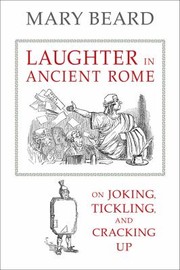
What the Romans found funny, and whether we can ever know. A genuinely difficult book about an apparently light subject, and her most methodologically interesting.
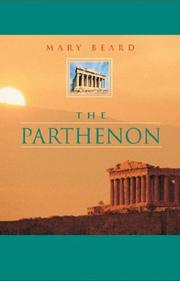
Her one major Greek book: the building's whole career from temple to church to mosque to contested marbles. A short, argumentative finish that shows the same method working outside Rome.
Discussion
Keep reading
Paths that share books, cover the same subject, or open a related topic.