Best Books on Pompeii and Mount Vesuvius, in Reading Order
Pompeii is valuable as evidence long before it is interesting as a catastrophe, so this path treats the eruption as the middle of the story rather than the start. You begin with the town as an ordinary Roman place, then take the mountain and the only eyewitness account that survives, then move into the houses and bodies that make the site an archaeological argument, and finish with two and a half centuries of excavation and the wider Roman world the town belonged to. By the end the famous plaster casts read as interpreted evidence rather than as photographs.
The town before the mountain
BeginnerKnow how a middling Roman town actually worked — its politics, bars, brothels, graffiti and water supply — so the eruption interrupts something you can picture.
▸ Study plan for this stage
Pace: 4 weeks for 620 pages at ~25 pages/day. Read Beard cover to cover; keep The Complete Pompeii open beside it and look up every building and street she names rather than reading Berry separately. No prerequisites — Beard explains all the Roman background she uses.
- Pompeii as a middling provincial town, not a special place — which is precisely why it is valuable evidence about ordinary Roman life
- Beard's methodological discipline: distinguishing what the evidence shows, what is a reasonable inference, and what is nineteenth-century invention repeated ever since
- The street plan and its zoning problem — shops, bars, workshops and grand houses interleaved rather than segregated, which contradicts the modern assumption of separated quarters
- Local politics: the electoral notices painted on street walls, the ordo and the duoviri, and what a campaign for a small-town magistracy involved
- Graffiti as evidence: thousands of scratched inscriptions in a range of hands, and what they show about literacy, humour, prices and insult
- Bars, food and the thermopolium: how much cooking was done outside the home, and Beard's caution about the standard 'nobody had a kitchen' claim
- The famous brothel and the sexual imagery all over the town, and the interpretive trap of reading every phallus as pornography rather than as apotropaic decoration
- Water: the aqueduct, the castellum aquae, the street fountains and the lead piping, which is the infrastructure Robert Harris later builds a novel on
- What does the mixing of grand houses, workshops and bars on the same street imply about Roman social organisation, and how does it differ from a modern town?
- How did local elections work in Pompeii, and what is the evidence? What can the painted notices not tell us?
- Give three examples of a standard claim about Pompeii that Beard shows to be shaky, and say what the evidence actually supports.
- What does the graffiti tell us about literacy in the town, and what are the objections to reading it that way?
- How does Beard handle the brothel and the sexual imagery, and what changes when you stop assuming a modern category of pornography?
- Describe the town's water supply from the aqueduct to a street fountain. Who could afford a private connection?
- Using Berry's plans, draw the street grid of Pompeii from memory with the forum, the two theatres, the amphitheatre, the Stabian baths and the main gates marked. Redraw it until it is right — every later stage assumes this map.
- Pick one house covered in both books and write a one-page description of it: plan, decoration, likely occupants and what is actually known about them versus assumed.
- Collect twenty pieces of graffiti quoted by Beard and sort them by type — election notice, insult, price, love, boast, obscenity. Write a paragraph on what the distribution suggests about who was writing.
- Take one confident statement about Pompeii from a museum caption, documentary or website, and trace whether Beard supports it. Write out the evidence chain, or note where it breaks.
- Draw the water system as a schematic from the aqueduct through the castellum to the fountains and private connections, marking what would fail first in a supply interruption.
Next up: With the town in your head as a working place, the next stage brings the mountain — and the very thin body of ancient evidence for what it did.

Beard reconstructs daily life from the evidence and is scrupulous about how much of the standard picture is guesswork. The best single book on the subject and the obvious first read.
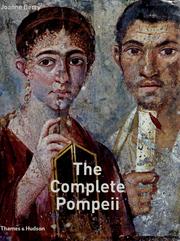
A heavily illustrated site-by-site survey that gives you the physical layout Beard assumes you can visualise. Keep it open alongside everything that follows.
The eruption
BeginnerUnderstand what Vesuvius did in 79 AD and how we know, including the limits of the single surviving eyewitness account.
▸ Study plan for this stage
Pace: 5–6 weeks for 983 pages. Pliny's letters are short and should be read in full over a week — the two Vesuvius letters take an hour and the rest is the point of reading the whole collection. Scarth at ~20 pages/day; Harris's novel in a weekend. Read them in this order: the source, then the geology, th
- That two letters from Pliny the Younger to Tacitus, written some twenty-five years after the event, are the entire ancient literary record of the eruption — everything else is archaeology or inference
- The problems with Pliny as a source: written from memory decades later, from Misenum across the bay rather than from Pompeii, and shaped as a literary tribute to his uncle
- The disputed date: the traditional 24 August against the autumn dating supported by a charcoal inscription found in 2018, seasonal fruits and heavy clothing on the bodies
- The Plinian eruption column named after this account: a sustained vertical column of gas and pumice, its collapse, and why the column phase and the collapse phase kill differently
- Pyroclastic density currents and surges — hot gas and ash moving at ground level at high speed — and why these, not lava and not the pumice fall, killed most of the victims
- The eruption timeline as reconstructed from stratigraphy: the pumice fall burying Pompeii to roof height first, then the surges, with Herculaneum receiving the opposite sequence
- Vesuvius across two thousand years, in Scarth's account: 1631, 1906, 1944, and the fact that the modern exclusion zone contains hundreds of thousands of people
- Harris's novel as reconstruction rather than evidence: it is built on the real aqueduct system and the accepted eruption sequence, and it is included to make the geography physical
- What exactly do Pliny's two letters say happened, hour by hour, and what do they conspicuously not describe?
- List every reason to be cautious about Pliny as a source. Which is the most serious?
- What is the evidence for redating the eruption to the autumn, and how strong do you find it?
- Explain the difference between the pumice fall phase and the pyroclastic surge phase in terms of what each did to buildings and to people.
- Why did Herculaneum and Pompeii receive different deposits, and what does that do to the preservation at each site?
- What does Scarth's long history of Vesuvius imply about present-day risk around the Bay of Naples?
- Read both Vesuvius letters and construct an hour-by-hour timeline from them alone, marking every time reference Pliny gives. Then annotate it with what Scarth's stratigraphy adds and where the two disagree.
- Draw a cross-section of the deposits at Pompeii and at Herculaneum, layer by layer, labelling each with the eruption phase that produced it.
- Write 300 words distinguishing, in Pliny's account, direct observation from hearsay from literary construction. Underline any sentence you would not use as evidence.
- Take Harris's reconstruction of the aqueduct failure and check it against Beard's and Berry's account of the real water system. Note where the novelist has invented and where he has followed the archaeology.
- Sketch the Bay of Naples with Vesuvius, Pompeii, Herculaneum, Misenum and Stabiae marked, and plot the distances. Pliny's uncle's voyage only makes sense once these are to scale.
Next up: Knowing what the mountain did, the next stage reads what it buried the way archaeologists actually do — including the human remains, where the popular account is weakest.
Two letters written decades later contain everything any ancient source says about the eruption, and one records the death of his uncle in it. Read the whole collection — the rest tells you what Roman elite life looked like.
The volcano itself across two thousand years of eruptions, written by a geographer. It explains what a pyroclastic surge is and why it killed the way it did.
A novel, and openly so, but built on the archaeology of the aqueduct system and the best available reconstruction of the eruption's timeline. Included because it makes the physical geography stick.
The buried cities as evidence
IntermediateRead the houses, the social structure and the human remains the way archaeologists do, and see where popular accounts overreach.
▸ Study plan for this stage
Pace: 3 months for 1,026 pages. Butterworth at ~25 pages/day as narrative; Wallace-Hadrill much slower at ~10 pages/day, since it is an academic monograph with quantitative analysis of house plans; Lazer at ~15. Prerequisite: stage one — Wallace-Hadrill assumes you can visualise the standard Roman house p
- The last decades of the town: the earthquake of 62 AD, the ongoing rebuilding, the amphitheatre riot of 59 and the ten-year ban that followed — Pompeii in 79 was a town already damaged
- Butterworth's method of reconstructing named residents from inscriptions, wax tablets and property records, and its necessary speculation
- Wallace-Hadrill's central finding: Roman houses were graded spaces controlling access, with a gradient from public to private and from grand to servile, readable directly from the plan
- The absence of a modern public–private division: the atrium house is a place of business and clientage, and the morning salutatio is architecture as much as ritual
- Wallace-Hadrill's quantitative approach — sampling houses across size bands and coding decoration and access — which is why the book changed the field rather than adding another description
- Why Herculaneum belongs in the argument: better organic preservation, upper storeys standing, and a different social profile from Pompeii
- Lazer's corrective on the human remains: the skeletal sample is not a random cross-section of the population, and long-standing claims about who died — the weak, the poor, the left-behind — do not survive analysis
- The plaster casts as interpreted artefacts: Fiorelli's technique, what the plaster actually records, and the reconstruction and display decisions built into every famous image
- What condition was Pompeii in by 79 AD, and how does the 62 earthquake change how you read the standing remains?
- Explain Wallace-Hadrill's access-gradient argument. Walk through a standard atrium house from street to peristyle, naming who could go how far.
- What did Wallace-Hadrill do methodologically that previous studies of Roman houses had not, and why did it matter?
- Why is the skeletal sample from Pompeii not representative, and which popular claims about the victims does Lazer show to be unsupported?
- How were the plaster casts made, what do they physically preserve, and what decisions did the excavators make that are now invisible in the images?
- Compare the preservation at Herculaneum with Pompeii and say what each site can show that the other cannot.
- Take a house plan from Berry and analyse it using Wallace-Hadrill's framework: mark the access gradient from the street inward, note where decoration is most elaborate, and write a paragraph on who the space was performing for.
- Code five house plans by size, number of rooms and decorative quality, and see whether the pattern Wallace-Hadrill reports appears in your small sample. Then write a paragraph on why five is not enough — which is his point about method.
- Write 300 words on one famous plaster cast, distinguishing what the plaster records from what the pose has been taken to mean.
- List every claim about the Pompeii victims you believed before reading Lazer, and mark each supported, unsupported or unknowable.
- Pick one named resident from Butterworth and write out the evidence for their existence and their story, marking each element as documented or inferred.
- Compare a Pompeian and a Herculanean house of similar size and write half a page on how the different burial conditions change what survives.
Next up: The site is an argument made of evidence; the last stage covers how that evidence was dug up, damaged and displayed, and puts the town back into Roman history.

Reconstructs the last decades of the town through named residents and the political and seismic upheavals they lived through. The bridge from survey to specialist work.
The landmark study of what domestic architecture reveals about Roman social relations, and the reason Herculaneum belongs in this path at all. Academic, and the most influential book here.
What the skeletal remains actually show, and how badly earlier assumptions about who died and why have held up. The sharpest corrective on this path.
Excavation, afterlife and the wider Roman world
IntermediateFollow the site from 1748 to the present as an object of tourism, looting and conservation politics, and place it back in Roman history as a whole.
▸ Study plan for this stage
Pace: 3 months for 1,187 pages. Amery and Wilkinson are illustrated and reference-shaped and can be read in a few weeks; SPQR's 644 pages then take ~25 pages/day over six or seven weeks. If a visit to the site is possible at any point, read Wilkinson immediately before it and carry it.
- The excavation history from 1748: Bourbon treasure-hunting, the shift to systematic method under Fiorelli in the 1860s, and the twentieth-century clearance that exposed more than could be maintained
- Fiorelli's contributions beyond the casts — the regio and insula numbering system still used, and the principle of excavating from the top down
- What has been lost since excavation: fresco fading, the Second World War bombing, the collapse of the Schola Armaturarum in 2010, and the general truth that unexcavated Pompeii is better preserved than excavated Pompeii
- The conservation politics of a site with millions of annual visitors, chronic underfunding and a history of scandal, and the case for leaving ground unexcavated
- Wilkinson's working structure by region and insula, which turns the previous stages into an itinerary through standing remains
- The imperial context in SPQR: Pompeii in 79 AD sits under the Flavians, in a Roman Italy whose citizenship, army, slavery and provincial administration the town's evidence only glimpses
- Beard's arguments in SPQR about Roman citizenship and its extension, about slavery as the economy's foundation, and about how thin the evidence is for ordinary life almost everywhere except here
- Why Pompeii is exceptional as evidence and unexceptional as a place, and what it can and cannot be made to represent about the Roman world as a whole
- Describe how excavation methods at Pompeii changed between 1748 and 1900, and what each phase destroyed.
- What is the regio-insula-doorway numbering system, and why does it matter that it was imposed rather than ancient?
- Make the case for leaving the remaining third of Pompeii unexcavated. What is the counterargument?
- Using SPQR, describe what was happening in the Roman empire in 79 AD, and how Pompeii's evidence fits or fails to fit that picture.
- Beard argues in SPQR that evidence for ordinary Roman life is extraordinarily scarce. Which of your beliefs about Roman daily life actually rest on Pompeii alone?
- Having finished the path, what would you now say the site can legitimately be used to prove about the Roman world, and what it cannot?
- Build a timeline of the excavation from 1748 to the present, marking each phase, its method, and one thing it destroyed or lost.
- Take one building documented photographically in Amery and compare its state at successive dates. Write a paragraph on the rate of loss.
- Plan a full-day itinerary through the site using Wilkinson, with the specific houses and buildings you would visit and why, drawing on stages one to three. Do this whether or not you can go.
- Write 500 words placing Pompeii in the narrative of SPQR: what the town confirms about Beard's account of Roman society, and where it is the only evidence there is.
- Return to the map you drew in stage one and annotate it with everything you have since learned — the eruption deposits, the houses you analysed, the excavation phases. The annotated map is the deliverable of the whole path.
- Write a final page on the plaster casts, answering the question the path was built around: what are they evidence of, and what have they been made to mean?
Next up: This closes the path: the eruption sits in the middle of a longer story about a town, its evidence, and two and a half centuries of people deciding what it means.

The excavation history and the site's precarious conservation, told with the photographs to show what has already been lost.

A working guide to the standing remains, useful whether or not you visit — it turns the previous three stages into something you can walk through.

Beard's history of Rome itself, which supplies the imperial context a single provincial town cannot. The right ending, because Pompeii only matters as a window onto this.