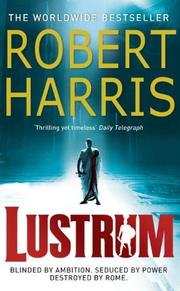
Start with Imperium, then Lustrum, then Dictator. The order is strict and uncontested: chronology and publication order agree completely, and there is nothing to argue about.
There is one buying trap, though, and it catches people constantly. The second book was published as Lustrum in Britain and as Conspirata in the United States. Same novel, two titles. Readers regularly buy both by accident, so check which edition you own before ordering anything else.
Tiro narrates all three. He was a real person — Cicero's slave and then freedman, his secretary, and the inventor of a shorthand system still called Tironian notes. He genuinely wrote a biography of Cicero, and that biography is genuinely lost. Harris's whole premise is to supply it, and Tiro's position is the trilogy's best device: present at everything, permitted to record everything, and legally owned by the man he is writing about. His judgements are affectionate and quietly damning at once.
The trilogy, in order
Imperium covers the rise — the prosecution of Verres, the climb through the offices, and the consular election. It is the most straightforwardly enjoyable of the three and functions as a courtroom novel, which is why it is the right entry point rather than starting with the more famous events of the later books.
Lustrum is the consulship and its aftermath: the Catiline conspiracy, the execution of the conspirators without trial, Clodius, and Cicero's exile. It is the darkest volume and the one where Cicero's own choices become hardest to defend.
Dictator covers the fall — Caesar, the civil war, the dictatorship, the Ides of March, and Cicero's death in the proscriptions of 43 BC. The ending is fixed by history and Harris does not soften it.
Do not leave long gaps between them. Books two and three assume you remember the names of about thirty senators, and the political manoeuvring becomes opaque without them. Keep a one-line note per named senator as they appear.
Cicero as Harris writes him is vain, brave, self-serving, physically timid and genuinely principled, often in the same scene. Do not expect the novels to resolve him.
The Rome behind the novels
Pompeii is not about Cicero at all. It is Harris's other Roman novel, set in AD 79, following an aqueduct engineer in the days before Vesuvius erupts. It is here because it shows the method on non-political material: a competent technician, a documented system, and a catastrophe that is really an infrastructure failure.
Mary Beard's SPQR is the general history that puts the trilogy in its setting, and it is deliberately sceptical about exactly the kind of narrative Harris relies on. She is particularly good on the Catiline conspiracy, treating Cicero's own account of it as the self-serving political document it was, and reading her directly after Lustrum is genuinely destabilising. Note that it is arranged thematically rather than as a chronicle, so use the index rather than expecting it to march year by year alongside the novels.
Anthony Everitt's Cicero is a full narrative biography and the closest thing to a prose version of the trilogy's plot. It is the fastest way to see which scenes Harris invented and which he lifted almost intact. Almost everything in the novels has a documentary basis, because Cicero is the best-documented person in the ancient world; what Harris invents most freely is interiority.
The rest of Robert Harris
By now the formula is visible: take a documented institution, put a competent insider inside it, and let the conspiracy turn out to be ordinary procedure followed by people protecting themselves.
Fatherland, his first novel, is an alternate history in which Germany won the war, structured as a police procedural. An officer and a spy is the Dreyfus affair told by the intelligence officer who discovered the evidence had been fabricated and was destroyed for saying so; it is the purest expression of the formula and probably his best book. Conclave is a papal election, the most enclosed of the four, and demonstrates how much tension he can generate from rules alone. Munich covers four days in 1938 around the Chamberlain-Hitler agreement, and takes a revisionist position on appeasement that historians dispute.
Order matters much less here. These four are alternatives rather than a sequence, and each is a week's reading.
Browse more historical fiction reading paths on Discover.
Follow the full ordered path here: The Cicero Trilogy Reading Order and Guide.