The Roman Republic: the best books to read, in order
Rome spent roughly five centuries governing itself without a monarch, then destroyed that system in two generations of civil war. This path starts with the two best popular narratives, follows the collapse decade by decade, then hands you the Romans themselves — Plutarch's biographies and Sallust's furious contemporary account. It ends with the scholarly argument that has run since 1939 over whether the Republic was doomed by its own structure or killed by particular men, where three of the four books actively disagree with each other.
Two ways in
BeginnerGet the institutions, the geography and the thousand-year arc straight, and understand what 'the Republic' actually meant as a machine for distributing power.
▸ Study plan for this stage
Pace: Six to seven weeks. SPQR runs past 500 pages and should be given four at 25 pages a day — it is not a fast book because it keeps stopping to interrogate its own evidence. Rubicon is shorter and much faster; two to three weeks. Read them in this order and do not swap them.
- The magistracies and the cursus honorum — quaestor, aedile, praetor, consul — plus the tribunes of the plebs, and the annual collegiate principle that was supposed to prevent any one man accumulating power
- The Senate as an advisory body of ex-magistrates with no formal legislative power, and the assemblies that actually voted, which is the distinction most popular accounts blur
- Beard's sustained scepticism about the early centuries: the foundation stories are later constructions, and she shows you why the evidence cannot bear the weight usually put on it
- The question Beard keeps returning to — who is missing from the record: slaves, women, the urban poor, the provinces — and what that absence does to any account of Roman politics
- Rome's expansion as the thing the constitution was not designed for: a city-state's machinery administering the Mediterranean
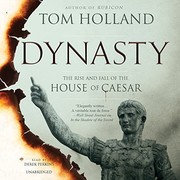
- Holland's narrative arc from Sulla to Actium, and his method of writing the collapse through personalities, which is enjoyable and is a choice with consequences
- The difference in register between the two books, which is the point of reading both: Beard qualifies where Holland propels
- Sketch the constitution from memory: which offices, held for how long, with what powers, and who elected them. If you cannot, reread Beard's chapters on it before continuing.
- Where does Beard say the evidence runs out, and what does she do differently after that point?
- Rome conquered the Mediterranean with a city-state's institutions. Name three specific strains that created.
- Holland tells the story through individuals. What does that gain in readability and what does it obscure about structural causes?
- Take one episode that appears in both books and compare the treatments. What has Holland asserted that Beard hedges?
- Draw the cursus honorum as a diagram with minimum ages and terms. You will consult it for the rest of the path.
- Make a one-page timeline from the traditional foundation to Actium with fifteen entries. Fifteen is deliberately few — choosing them is the exercise.
- For any three of Beard's source-scepticism passages, write one line on what she is doubting and why. This habit is what makes the ancient sources readable later.
- After Rubicon, write 300 words on whether the Republic's fall reads to you as a story about men or about institutions. Date it; you will revise it in the last stage.
Next up: With the machine understood and its collapse narrated once at speed, you can slow down and follow the specific decade-by-decade mechanism of the breakdown.
A history of Rome to AD 212 that is unusually honest about how thin the evidence is for the early centuries, and that keeps asking who was left out of the story. Popular history written by a leading scholar — the right first book because it teaches source-scepticism alongside the narrative.
A propulsive narrative of the Republic's last century, from Sulla to Actium. Read it second: it is the most enjoyable account of the collapse, and Beard has already given you the framework it moves through at speed.
How it came apart
BeginnerTrace the specific mechanism of the breakdown — the Gracchi, land reform, Marius's army recruitment, Sulla's march on Rome — and be able to say when the norms actually failed rather than when the fighting started.
▸ Study plan for this stage
Pace: Eight to nine weeks. Duncan's The Storm Before the Storm covers 146-78 BC and takes two to three weeks. Watts's Mortal Republic is shorter and denser — two weeks. Everitt's Cicero is a full biography and needs three. Read them in the given order; Duncan supplies the events Watts then reinterprets.
- The Gracchi and land reform: Tiberius's deposition of a fellow tribune and his killing, which broke a norm before it broke a law
- Marius's recruitment of soldiers without property qualification, and the consequence that armies came to depend on their general for land after service
- Sulla's march on Rome — the first time a Roman army was turned on the city — and the proscriptions that followed
- The distinction Watts insists on between norms and rules: nothing in the constitution forbade most of what destroyed it, which is why the collapse is so hard to date
- The generation between 146 and 78 BC that popular accounts skip, and why Caesar's career is unintelligible without it
- Duncan's open use of modern political parallels, which is a choice worth noticing rather than accepting or dismissing
- Cicero's letters as the only real-time interior view of the crisis, written by a participant who was frequently wrong about what was happening
- Cicero's career as the connecting thread — Verres, Catiline, the exile, the civil war, the Philippics — running through every crisis in the two books before
- When did the Republic actually fail? Name a date and defend it against two other candidates.
- What exactly did Tiberius Gracchus do that was unprecedented, and was it illegal? The distinction is the whole argument of this stage.
- Trace the chain from Marius's recruitment reform to Sulla's march. Which link is the weakest in that causal story?
- Watts argues from the erosion of norms. Where does he differ from Duncan in emphasis rather than in fact?
- Cicero was often mistaken about events he was inside. Give an instance from Everitt, and say what it teaches about contemporary testimony.
- Build a norms-broken table: date, actor, norm violated, whether it was illegal. Twelve entries from 133 BC onward is enough and it is the clearest possible statement of this stage's argument.
- Write 300 words on the Gracchi as reformers and 300 words on the Gracchi as demagogues, using the same events for both. Do not conclude in writing.
- Note every parallel Duncan draws with modern politics and write one line each on whether the analogy earns its place. Some will and some will not.
- From Everitt, pick three moments where Cicero misjudged the situation and write one sentence each on what he did not know at the time.
Next up: Having watched modern historians assemble the collapse from the sources, you are ready to read the sources themselves and see how much of the modern account is inherited whole.

Covers 146-78 BC, the generation before Caesar that most popular accounts skip, and is the clearest treatment of the Gracchi and Sulla for a general reader. Written by a podcaster rather than an academic, and it wears the modern political parallels openly.

A scholar's answer to the same question, arguing that the Republic died from the slow abandonment of political norms rather than any single coup. Read directly after Duncan to see a professional historian make a structurally similar argument with more restraint.
A popular biography of the one figure whose letters let us watch the collapse from inside, day by day. Placed here because Cicero's career is the through-line connecting every crisis in the previous two books.
The Romans in their own words
IntermediateRead the ancient accounts directly and start noticing where a source is building a moral case rather than reporting events.
▸ Study plan for this stage
Pace: Six to seven weeks. The Plutarch volume collects six substantial lives; one life per four or five days is a comfortable pace, so allow four weeks. Sallust is short — both monographs plus the surviving fragments of the Histories can be read in two weeks, and the Catiline should be read twice.
- Plutarch's stated purpose: he is writing lives to display character, not history to establish events, and he says so explicitly at the opening of one of them
- The six lives as the quarry from which every modern narrative draws its anecdotes — Marius, Sulla, Crassus, Pompey, Caesar and Cicero
- That Plutarch wrote long after the events and from sources now lost, so his authority varies enormously and never announces itself
- The anecdote as a unit of moral argument: a story is included because it demonstrates a trait, which is a different selection principle from evidential value
- Sallust as a contemporary who served under Caesar, writing about a crisis he lived through and had a stake in
- Sallust's thesis that Rome declined through greed and the loss of a rival to fear it — the earliest surviving attempt to explain the crisis from inside it
- The invented speeches in both authors, which are a recognised classical convention and not deception, and how to read them as characterisation rather than transcript
- The general skill this stage builds: noticing where a source is building a moral case rather than reporting
- Find Plutarch's own statement of what he is doing, and say how it should change your use of him as evidence.
- Take one anecdote you first met in Holland or Duncan and locate it in Plutarch. What has the modern retelling added or dropped?
- Sallust blames moral decline. What is his causal mechanism, and does he give evidence for it or assert it?
- Compare Plutarch's Sulla with Sallust's account of the same period. Where do they differ, and can you tell which is closer to the events?
- Both authors put speeches in their subjects' mouths. What can you legitimately conclude from an invented speech?
- Read the Life of Caesar and mark every anecdote you already knew. The proportion is the point of the stage.
- Take one paired episode — Sallust's Catiline and Plutarch's Cicero on the same conspiracy — and write 300 words on the two accounts side by side.
- For any one Plutarch life, write down which claims you would accept, which you would flag, and which you would not use without corroboration. Three columns, twenty entries.
- Read Sallust's Catiline twice in one week and write 200 words on how his diagnosis of Rome would need to be modified to fit Watts's norms argument.
Next up: With both the modern narratives and their ancient sources in hand, you can enter the scholarly dispute knowing what evidence each side is actually working from.

Six lives — Marius, Sulla, Crassus, Pompey, Caesar, Cicero — that supply most of the anecdotes every modern narrative recycles. Plutarch is writing moral biography, not history, and reading him after the modern accounts makes that obvious rather than confusing.

A contemporary who served under Caesar and blamed Rome's decline on greed and moral collapse. Short, sharp, and the earliest surviving Roman attempt to explain the crisis from inside it — the counterpoint to Plutarch's later detachment.
The argument historians are still having
BeginnerTake a position on whether the Republic was structurally doomed, and know which scholarly camp you are standing in when you do.
▸ Study plan for this stage
Pace: Fourteen to sixteen weeks, and the only stage that genuinely requires the previous three. Syme's The Roman Revolution is dense prosopography and needs four to five weeks read slowly. Gruen is long and closely argued — four weeks. Flower is short and conceptual, two. Cornell is a full scholarly accou
- Syme's reframing: the fall as the replacement of one oligarchy by another, with the Augustan settlement as a change of personnel rather than of principle
- Prosopography as Syme's method — tracing families, marriages and factional networks — and what that method makes visible and what it cannot see
- The 1939 context, with Syme writing under the shadow of contemporary European dictatorships, which is legible in the book and worth reading with rather than against
- Gruen's counter-case: the institutions were functioning, the crisis was contingent, and the civil war was caused rather than awaited
- That Syme and Gruen cannot both be right about the same decades, which is precisely why they are read consecutively — the reader has to adjudicate
- Flower's dissolution of the question: not one Republic but a sequence of distinct constitutional regimes, so asking when the Republic fell may be asking about the wrong object
- Cornell's careful separation of archaeology from the literary tradition for the early period, which supplies the origins the whole path has been assuming
- The general lesson: a historiographical dispute is not settled by picking the most recent book, and holding three incompatible accounts is a legitimate resting position
- State Syme's thesis in two sentences. What would count as evidence against it, on his own terms?
- Where exactly does Gruen contradict Syme — on the facts, on the interpretation, or on which decades matter? Find a specific case where they treat the same evidence.
- Flower argues there was no single Republic. If she is right, what happens to the Syme-Gruen dispute — is it resolved, or reframed?
- From Cornell, what can actually be established about the early Republic's institutions, and what is later reconstruction? Compare with what Beard told you in the first stage.
- Revisit the 300 words you wrote at the end of stage one on men versus institutions. What would you change now, and which of these four authors moved you?
- Write a 500-word statement of the Syme-Gruen disagreement in neutral terms, giving each its strongest form. Then, separately, state which you find more persuasive and on what evidence.
- Read Syme with the Plutarch lives to hand. His prosopography assumes you know the families cold, and the previous stage is what makes that possible.
- Apply Flower's periodisation to your norms-broken table from stage two. Do the breaks fall at her regime boundaries, and what follows if they do not?
- After Cornell, write 300 words on where the Republic's institutions came from, distinguishing archaeological evidence from the literary tradition at every point.
- Finish by writing one page on why the Republic fell, citing at least one book from each of the four stages. Compare it with what you wrote after Rubicon; the difference is what the path bought you.
Next up: This is the end of the path. The natural next step is the Principate itself — Augustus's settlement and how a system nobody would call a monarchy governed for two centuries — which is the question Syme's last chapters open and do not close.
The 1939 book that reframed the fall as the replacement of one oligarchy by another, written under the shadow of contemporary European dictatorships. Dense, prosopographical and assumes you know the events cold — but every later argument is a response to it.
The major counter-case: Gruen argues the Republic was not in terminal decline and that the civil war was contingent, not inevitable. Read straight after Syme; the two cannot both be right and the reader has to adjudicate.
Argues there was never one Republic but a sequence of distinct constitutional regimes, which dissolves part of the Syme-Gruen dispute rather than settling it. Short, and the most conceptually interesting book on the list.
The standard scholarly account of Rome from the Bronze Age to the Punic Wars, working carefully through archaeology where the literary tradition is legend. Last because it answers the question the rest of the path assumes: where the Republic's institutions came from at all.
Discussion
Keep reading
Paths that share books, cover the same subject, or open a related topic.