The Mars Trilogy Reading Order and Guide
The Mars Trilogy is straightforward in one sense — three novels, publication order, no chronological trap — and demanding in another, because Red Mars front-loads geology, politics and a large cast before the story pays any of it back. This path reads the three in order, then adds the companion collection and the earlier Mars novel that shows where the ideas came from, and closes with the later Robinson novels that carry the same project forward.
Start Here: Red Mars
IntermediateGet through the hardest entry point in the trilogy and understand the terraforming-versus-preservation argument that drives all three books.
▸ Study plan for this stage
Pace: 4–5 weeks for 592 pages, and budget the first week for the first hundred pages alone. This is the honest warning the trilogy needs: Red Mars is dense with real planetary science — areology, regolith chemistry, aerobraking, atmospheric partial pressures — and it introduces a hundred colonists, half a
- The Reds and the Greens: whether Mars should be transformed for human life or preserved as it is, argued through Ann Clayborne and Sax Russell, is the trilogy's spine and every plot turn is a move in it
- Robinson rotates point of view between characters section by section, and each section is written in that character's intellectual idiom — Sax's chapters think like a physicist, Michel's like a psychoanalyst
- The First Hundred are scientists, not soldiers or pioneers, and the book takes seriously that a colony founded by researchers becomes a political community whether or not anyone intended it
- Transnational corporations and Earth's overpopulation are present from page one; Mars is never independent of terrestrial capital, which is what makes the revolutions inevitable
- The areophany — Hiroko's emerging Mars-centred religion — is the trilogy's argument that a new world produces new belief, not just new engineering
- The prologue is set after the events of the first section, so the book opens by telling you the outcome of its first movement and then spends four hundred pages explaining it
- The longevity treatment introduced here is the device that lets three novels cover two centuries with a continuous cast, and it is also a political problem in its own right
- What is Ann Clayborne's actual argument against terraforming, stated at its strongest rather than as obstruction?
- What is Sax Russell's answer to it, and where in the book does he concede something to her?
- Why does the colony fracture politically almost immediately after landing, and which pressures come from Mars and which from Earth?
- What does Robinson gain by opening with the events of the Nicosia prologue rather than saving them?
- How does the longevity treatment change the politics of the colony, on Mars and on Earth?
- Which of the First Hundred does the novel treat most sympathetically, and does that match who it treats as most correct?
- Set a page target for the first hundred pages and hold to it for a week regardless of engagement. This one habit is the difference between finishing Red Mars and joining the large group who did not.
- Keep a one-line note per point-of-view character as their section opens: name, discipline, position on terraforming. Six entries is enough and it removes almost all of the cast confusion readers report.
- Skim rather than parse the geology and orbital-mechanics passages on first reading, and mark one to return to afterwards. Robinson is a genuinely good explainer, but the explanations are not load-bearing on a first pass.
- After the landing, write down the Red and Green positions in one sentence each. You will test both against the next two books, and having your own version of them written down makes the trilogy far more legible.
- Look up a map of Mars and locate Chryse, Valles Marineris, Olympus Mons and Hellas once. Robinson uses real geography throughout and half an hour with a map pays back across all three novels.
Next up: Having got through the setup and heard the terraforming argument stated by both sides, you can now read the two novels that test it over two hundred years — both of which assume every character and faction Red Mars established and reintroduce none of them.

The First Hundred land, and immediately begin arguing about whether they have the right to change the planet. It is the densest of the three and the one people abandon, so read it knowing that the opening hundred pages are setup: the Reds and Greens split is the whole series in embryo.
The Trilogy Completes
IntermediateFollow the terraforming and the revolutions across two centuries, and see why the trilogy is treated as the definitive Mars novel.
▸ Study plan for this stage
Pace: 9–12 weeks for 656 and 773 pages. Green Mars reads considerably faster than Red Mars did — the setup is done and Robinson is writing with more confidence — so 40 pages a day is comfortable. Blue Mars is the longest and the least plotted; expect the last two hundred pages to move slowly by design. Do
- Green Mars introduces the nisei, a second generation born on Mars who have never seen Earth, and the shift in whose planet it is drives the whole book
- The atmosphere begins to work in Green Mars — this is the novel where terraforming stops being an argument and becomes an accomplished fact that cannot be reversed
- The revolutions are staged as engineering problems as much as political ones, and Robinson's interest is consistently in how a revolt is organised rather than how it feels
- Blue Mars gives Mars oceans, independence and the constitutional convention, and then asks the harder question of what a settled world is actually for
- Sax and Ann's relationship across the two books is the trilogy's real emotional arc, and their late-stage exchanges are the payoff for four hundred pages of argument
- Longevity produces its own crisis: memory failure, generational stasis and the political immovability of people who do not die
- Blue Mars is contemplative rather than plotted, which reads as a flaw if you began there and as a resolution if you have come through the other two
- What has changed politically between Red Mars and Green Mars, and how much of it was caused by the events of the first book rather than by Earth?
- How do the Mars-born characters differ from the First Hundred in what they want, and does Robinson treat them as more or less clear-sighted?
- What does the second revolution do differently from the first, and why does it succeed?
- Where does Ann's position finally shift, and what actually moves her — argument, evidence or Sax?
- What is the constitutional settlement in Blue Mars trying to prevent, and does the novel think it will hold?
- Having finished all three, is the trilogy pro-terraforming? Give the evidence for your answer rather than the impression.
- Track the atmospheric pressure figures Robinson gives across the two books. He uses them as a running clock on the terraforming, and noticing the numbers converts an abstract process into something you can feel progressing.
- Reread Ann and Sax's first serious confrontation in Red Mars immediately before their late conversations in Blue Mars. Nothing else in the trilogy rewards a back-reference this strongly.
- Write down the terms of the Martian constitution as they are argued in Blue Mars — land ownership, corporate presence, immigration from Earth. Robinson wants these read as a genuine proposal, not as set dressing.
- Keep a note of every time Earth's problems drive a Martian decision. The trilogy is frequently mistaken for a book about escaping Earth, and this list is the fastest correction.
- Read the last twenty pages of Blue Mars twice. The ending is quiet enough that many readers finish without registering what it has settled.
Next up: With the whole two-century arc behind you, the offcuts and the early trial run become interesting rather than confusing — you now know these people well enough to want the material Robinson could not fit into the novels.
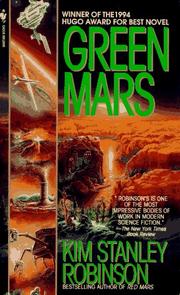
The middle book, and the one most readers rate highest: a second generation born on Mars, an atmosphere that is beginning to work, and a far more confident narrative. It assumes every character and faction from Red Mars, so do not start here.

The long payoff — oceans, independence, longevity treatments, and the slow question of what a settled Mars is actually for. It is more contemplative than plotted, which reads as a flaw if you start here and as a resolution if you have read the other two.
The Companion and the Precursor
IntermediateFill in the trilogy's edges and see the earlier form of the same obsession.
▸ Study plan for this stage
Pace: 3–4 weeks for 400 and 272 pages, and both are optional. The Martians is a collection, so read it in pieces over a fortnight rather than straight through — it is not designed to be consumed like a novel. Icehenge is short and can be done in a weekend. Read The Martians first, while the trilogy is sti
- The Martians gathers stories, fragments, poems and documents from the trilogy's margins, including an alternate first expedition in which terraforming never happens at all
- The Martian constitution is printed in full in The Martians, which makes it the best single source for what Blue Mars was arguing about
- The alternate-history strand shows Robinson checking his own work: the same colonists, the opposite decision, and a plausible outcome either way
- Icehenge predates Red Mars by nearly a decade and is built on an unreliable-narrator structure — a monument on Pluto and a Martian revolution nobody can verify
- Icehenge's real subject is memory over very long lifespans, the same problem the trilogy raises through the longevity treatment and answers less directly
- Reading the precursor after the trilogy shows how long Robinson had been circling these ideas and how much the trilogy's optimism was a choice rather than a default
- What does the alternate first expedition in The Martians change, and what does it suggest Robinson thinks was contingent about the trilogy's outcome?
- Reading the constitution as a standalone document, what does it prioritise and what does it leave unresolved?
- How does the short-story form change Robinson's writing — is he better or worse at this length?
- In Icehenge, what can the reader actually establish as having happened, and what remains only asserted?
- What does Icehenge do with unreliable memory that the Mars trilogy chooses not to do, and why might Robinson have dropped that approach?
- Read the Martian constitution in The Martians alongside your notes from Blue Mars. Seeing the finished document after the argument is the clearest demonstration of what the trilogy's politics actually amount to.
- Pick three stories from The Martians and skip the rest on a first pass. It is a collection of offcuts and treating it as compulsory is the main reason readers stall on it.
- In Icehenge, keep a note of who is asserting each fact and when. The book is constructed so that reconstructing the chain of testimony is the reading experience.
- Compare Icehenge's Martian revolution with the first revolution in Red Mars. The same event told twice, once verifiably and once not, is a short course in what Robinson gained by writing the trilogy the way he did.
Next up: Having seen where the trilogy's ideas came from, the last stage follows where they went — into a settled solar system, a hard self-critique, and finally back to the planet the whole project was always really about.
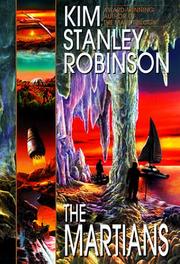
The companion collection: stories, fragments, an alternate first expedition in which terraforming never happens, and the Martian constitution in full. Strictly optional, and best read after Blue Mars, when you already care enough about these people to want the offcuts.

Robinson's early Mars novel from 1984, a decade before Red Mars, and an unreliable-narrator puzzle about a monument on Pluto and a Martian revolution nobody can verify. Read it as the trial run for the trilogy's politics and its very long timescales.
Where Robinson Went Next
IntermediateFollow the trilogy's arguments about ecology, economics and the limits of settlement into Robinson's later work.
▸ Study plan for this stage
Pace: 10–12 weeks for 569, 466 and 576 pages. These are three separate novels rather than a sequence, so gaps between them are fine and probably better. Read 2312 first, Aurora second and The Ministry for the Future last — that order runs from expansion to retraction to the present, which is the actual ar
- 2312 shows a fully settled solar system in which Mars is one place among many, and it is the most direct continuation of the trilogy's imagination without being a sequel
- The terraria of 2312 — hollowed asteroids running as ecological experiments — take the Mars project's logic to its limit and treat it as ordinary rather than heroic
- Aurora is Robinson arguing against his own earlier optimism: a generation ship that fails, and a sustained technical case that other star systems may simply not be habitable
- Aurora's narration by the ship's AI is the formal device that lets Robinson make an engineering argument feel like a bereavement
- The Ministry for the Future turns the same method — committees, engineering, economics, politics — on Earth's climate in the near term, with no interplanetary escape available
- Read as a sequence, these three retract the frontier premise the Mars trilogy was built on and land on planetary governance as the real subject
- Robinson's method is consistent across all of them: institutions and infrastructure carry the plot, and individual psychology is secondary by design
- What does 2312 assume about Mars that the trilogy had to argue for, and what does that assumption cost the novel dramatically?
- What is Aurora's central technical argument against interstellar settlement, and how much of it survives outside the novel?
- Is Aurora a repudiation of the Mars trilogy or a completion of it? Argue both sides before settling.
- How does The Ministry for the Future's structure — short chapters, mixed documents, many voices — differ from the trilogy's rotating point of view, and what does the change buy?
- Across all four books, what does Robinson think a planet is for?
- Which of these three would you hand to someone who had never read Robinson, and why is it probably not the trilogy?
- Read Aurora directly after 2312 rather than spacing them out. The whiplash between the two is deliberate and it is the clearest evidence that Robinson changed his mind in public.
- Take one page of The Ministry for the Future's economics chapters and one page of Red Mars's geology chapters. Thirty years apart, the explanatory prose is doing the same job — recognising that is the best way to see what kind of writer Robinson is.
- Write a paragraph on whether the Mars trilogy's optimism is defensible after Aurora. This is the argument the stage exists to provoke and there is no settled answer.
- List the institutions that carry the plot in The Ministry for the Future — the ministry, central banks, the Indian state, terrorist actors. Robinson's fiction is unusual in treating these as characters, and naming them is the fastest route to reading him well.
- Go back to your one-sentence Red and Green positions from the first stage and rewrite them now. The distance between the two versions is the measure of this whole path.
Next up: This is the end of the path: from the first hundred colonists arguing about a dead planet to a novel about saving the living one, the sequence closes on the argument it opened with, so the natural next move is either a reread of Red Mars with its ending known or a turn to the non-fiction climate writing Ministry draws on.

A fully settled solar system with terraformed asteroids and a Mars that is now merely one place among many. The most direct continuation of the trilogy's imagination, without being a sequel.

Robinson arguing against his own earlier optimism: a generation ship that fails, and a sustained case that other star systems may simply not be habitable. Read it as the self-critique the Mars books earned.
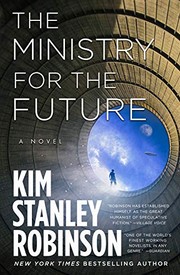
The same engineering-and-politics method turned on Earth's climate in the near term. It closes the path because it shows what the trilogy was always really about — the governance of a planet, not the romance of a red one.
Discussion
Keep reading
Paths that share books, cover the same subject, or open a related topic.