The Chernobyl literature splits along a seam, and knowing where it runs saves a lot of confusion. One set of books is about a reactor with a design flaw and a test that went wrong on a particular night in April 1986. The other is about a state apparatus deciding what its own citizens and its neighbours were permitted to know, then spending decades managing the answer. Both are true, and a book that is mainly doing one of them will feel thin if you expected the other.
The practical consequence for order is simple: get the technical sequence first. The oral testimony, the health controversies and the contamination arguments all assume you already know what an RBMK reactor is, what the test was for, and what happened in the first hours. Read them cold and they land as atmosphere.
What actually happened
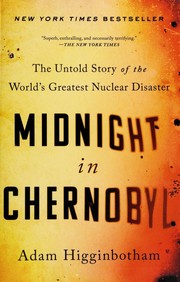
Midnight in Chernobyl is the most complete narrative reconstruction available, built from years of interviews and declassified files, and it is unusually good at making reactor physics comprehensible without simplifying it into uselessness. Start here.
Chernobyl is the essential companion. Plokhy is a historian of Ukraine rather than a science writer, and he reads the accident as a symptom of the Soviet system, running the argument forward into the union's collapse. The two books do not contradict each other so much as answer different questions about the same night.
The voices, and the first accounts
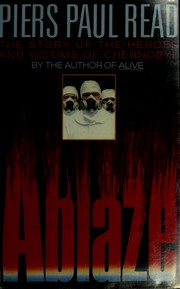
Ablaze was written in the early 1990s with access no Western journalist had previously had. Later histories correct it in places, and it remains valuable as a record of what was knowable before the archives opened.
Chernobyl 01:23:40 is short and clear, interleaving a retelling with the author's own visit to the zone. It is the most efficient way to consolidate the technical sequence before the harder reading starts.
Voices From Chernobyl is oral testimony from liquidators, widows and evacuees, assembled by a Nobel laureate into something closer to a chorus than a history. It refuses to explain anything, which is why it only lands with full force once you already know the facts.
The long aftermath
Manual for Survival is the most argumentative book on this path. Brown's archival work directly challenges the international consensus on how many people the accident harmed, and the resulting dispute — over Soviet medical records, over what counts as an attributable death, over the methodology of the official assessments — is unresolved. Read her case and read the objections to it; do not treat either as the closed verdict.
Wormwood Forest reports the exclusion zone as an accidental ecological experiment, which is a necessary counterweight to reading the zone solely as a human tragedy.
Plutopia extends Brown's framework by comparing the closed nuclear cities of Richland and Ozersk, and argues that routine plutonium production may have released more contamination than the accident itself. Read it after Manual for Survival.
Chernobyl Roulette covers the 2022 Russian occupation of the plant, written by the historian of the 1986 disaster. It makes the case that the site is a live geopolitical problem rather than a museum.
Nuclear risk beyond Chernobyl
Atomic accidents is a working nuclear engineer's survey of everything that has gone wrong with fission since the 1940s, and it places the RBMK failure inside its technical family rather than leaving it as a singularity.
Command and Control closes the path with the American nuclear weapons complex and its own long record of near-catastrophes. The point it makes is uncomfortable and well documented: institutional denial was never a uniquely Soviet trait.
Follow the whole path and the disaster stops being a single terrible night and becomes a system that produced one.
Follow the full ordered path here: Best Books on Chernobyl, in Reading Order.