Start with Senlin Ascends. Josiah Bancroft's series has exactly one entry point and one order, and the first book — a mild schoolteacher loses his wife in the crowds at the base of the Tower of Babel and climbs after her — is both the beginning of the story and the best single argument for reading the rest.
The series is complete in four volumes, which is worth stating plainly given how many fantasy sequences are not. You can start it knowing the ending exists.
The sequence
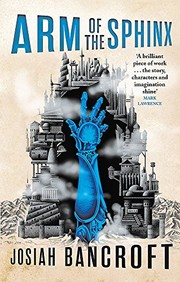
Senlin Ascends, Arm of the Sphinx, The Hod King, The Fall of Babel. Publication order, chronological order and intended order are the same thing. There are no novellas, no prequels, and no companion volumes to slot in.
Each book corresponds roughly to a different ringdom of the Tower, so the structure is a climb: new society, new rules, new form of exploitation, one level up. Bancroft changes genre slightly with each level, which is part of the appeal and part of the risk.
The book three problem
The Hod King is where readers most often stumble. Bancroft abandons the single continuous narrative and splits the volume into three long sequential blocks, each following a different character through overlapping events. You finish one character's section and jump backwards in time to pick up another. It is a deliberate and clever structure, and it costs the book a great deal of momentum — you leave a cliffhanger and do not return to it for two hundred pages.
Push through. The Fall of Babel resolves everything and is generally considered the strongest volume. But go into book three knowing it will feel like starting over twice.
Honest warnings
The first book began life self-published, and it shows in places — some early scenes are looser than the later writing, and the pacing wanders before the Tower's rules snap into focus. Give it a hundred pages.
The prose is ornate and mannered, full of aphorisms and arch narration. Readers who love it call it Dickensian; readers who do not call it twee. You will know within a chapter which camp you are in, and that first impression is reliable.
The world is deliberately underexplained. Bancroft does not deliver a systematic magic or technology; the Tower stays strange, and some questions raised in book one are answered only obliquely at the end. If you want a fully-mapped setting, this is not one.
Where to stop
Nowhere. This is a four-book series with a real ending, and stopping partway means stopping mid-climb — the individual volumes do not resolve independently. Either read all four or do not begin.
What to read alongside or afterwards
For the ancestry of the Tower itself, Swift's Gulliver's Travels is the satirical travelogue structure Bancroft is working in, one absurd society after another. Mervyn Peake's The Illustrated Gormenghast Trilogy is the great precursor for an enormous decaying structure treated as a character — slower, stranger, and more demanding than Babel.
For a similar register at a faster pace, Scott Lynch's The Lies of Locke Lamora has the same taste for elaborate cons and baroque cities. China Miéville's Perdido Street Station is the harder, grimier version of an invented metropolis. And Umberto Eco's The Name of the Rose is the model for a labyrinth building that hides a secret worth killing for.
More series reading orders are collected in Discover.
Follow the full ordered path here: The Books of Babel Reading Order and Guide.