China Mieville Reading Order: Where to Start
China Mieville does not have a single continuity, and readers who assume otherwise get stranded. Only three of his novels — Perdido Street Station, The Scar and Iron Council — share a world, and even those are loosely linked rather than sequential; everything else is a standalone set somewhere new, in a different register, sometimes for a different audience. So the order that matters is not chronological but tonal: begin with the most disciplined and conventional book, take the Bas-Lag sequence as a unit, then work outward through the standalones once you know what kind of writer he is.
Start Here: The Accessible Way In
BeginnerMeet Mieville in his tightest, least ornate mode, and learn to accept an impossible premise as a fact of the world rather than a puzzle to be solved.
▸ Study plan for this stage
Pace: 3–4 weeks, ~30 pages a day. The City & The City (384 pages) in about two weeks; it is a real detective novel and reads at that speed once the premise lands. Give Embassytown (392 pages) a fortnight too, but treat its first fifty pages as their own sitting — the vocabulary arrives well before the def
- Each of these two books turns on exactly one hard conceptual premise, and nothing in the plot means anything until the premise clicks — so the opening act of each is teaching, not stalling
- The City & The City keeps everything explicable: unseeing is a trained civic discipline, not magic, and the novel never grants you a supernatural explanation even where one would be easier to write
- Breach is the crime, the act and the police force at once, so the book's dread comes from a legal category rather than from a villain
- Embassytown's Language is spoken with two mouths simultaneously and cannot refer to anything untrue, which is why its speakers must stage real events in the world before they can use them as similes
- The prose here is much plainer than in the books that made his name; starting on this stage is a deliberate choice to meet a disciplined Miéville before you meet an ornate one
- Both novels are genre-obedient underneath — one a procedural with a solvable case, one a first-contact story — and the strangeness sits on top of a familiar frame rather than replacing it
- The disorientation in Embassytown's opening is designed, and the correct response is to keep reading rather than to reread
- Does The City & The City ever tell you whether Besźel and Ul Qoma are physically separate places, and what does the novel gain by declining to?
- What is Breach actually policing, and why does the book make it more frightening than the murderer Borlú is chasing?
- What does Orciny turn out to be worth to the people who believe in it, and does that change how you read their earlier scenes?
- Avice becomes a simile before she becomes a narrator. What does it cost her, and what does it let the Hosts say that they could not say before?
- Why does EzRa's speech work as an intoxicant rather than as a message, and what does that reveal about how Language is built?
- Both novels end by breaking the rule their world was built on. Compare the two breaks: which one does its book treat as a loss?
- Write down, in one sentence each, the rules of Besźel and Ul Qoma as you understand them by page fifty. Correct the sentence when you finish. The gap between the two versions is what the novel was doing to you.
- Mark the page in The City & The City where you stopped trying to work out whether it is fantasy or not. Most readers can point at one.
- Keep a running note of Embassytown's coined terms — immer, floaking, the Ambassador pairs — with the page each first appears on. The book defines nearly all of them late, and the note is what carries you through the opening.
- After finishing Embassytown, reread its first chapter. It is narrated from after the events and reads as a different book once you know what happened.
- Say one of the Ariekei similes aloud and then state what a human would simply have said instead. The distance between the two is the whole novel.
Next up: You now know how to hold an impossible premise on trust for a hundred pages, which is exactly what Bas-Lag demands — at three times the length and with far denser prose.

A police procedural in two cities that occupy the same ground and whose citizens are trained to unsee each other. It is his most controlled prose and a real detective novel, which makes it the best first Mieville even though it is nothing like the books that made his name. Do not start with Perdido Street Station.
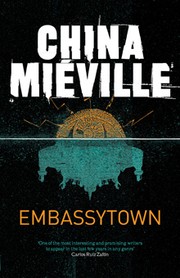
Read second: far-future science fiction about an alien species that cannot lie, and what happens when a human is inserted into their language as a simile. The opening fifty pages are deliberately disorienting, so read it once you trust him to explain later.
Bas-Lag, in Order
BeginnerRead the three novels that share a world, in publication order, and understand how each one steps sideways rather than continuing the last.
▸ Study plan for this stage
Pace: 9–10 weeks, ~30 pages a day, and expect to run slower than that in places. Perdido Street Station is 710 pages and the densest prose on this path — give it three weeks. The Scar (636 pages) about three, Iron Council (564 pages) about two and a half. Leave a day or two between each one: they are thre
- Bas-Lag is a shared setting, not a serial — no character carries from one novel to the next, nothing ends on a hook, and each book picks a different corner of the same world
- Perdido Street Station is the famous book and the wrong first one: 710 pages, a deliberately vocabulary-heavy style, and an ending that many readers experience as punishment rather than resolution
- New Crobuzon is written as a working city with an economy, a corrupt militia, a press and a labour movement, which is why the fantasy reads like reportage
- Remaking — punitive surgical body modification handed down by courts — is the world's clearest statement that this is a fantasy about power rather than about magic
- The Scar is the most conventionally satisfying of the three, a shipboard adventure whose real subject is being lied to and used, told by a narrator kept outside every decision that matters
- Iron Council is the most openly political and the most formally difficult, with a fractured chronology and a long move backwards in its middle, which is why it belongs last rather than anywhere else
- Miéville writes from an avowedly Marxist position and has been active in socialist politics; the strikes, unions and revolutions in these novels are arguments he is making, not scenery
- The whole project is a deliberate rejection of Tolkien-descended fantasy — no returning king, no pastoral, no restoration of an order that was right all along
- What exactly does Isaac refuse Yagharek at the end of Perdido Street Station, and does the novel endorse the refusal or merely record it?
- What do the slake-moths feed on, and why is that a better horror premise than a monster that simply eats people?
- The Weaver acts on aesthetic grounds nobody can predict. What does an unmanageable ally do to the tension of a rescue plot?
- Bellis is present for the whole of The Scar and party to almost none of it. What does Miéville gain by narrating through someone who is being used?
- Iron Council ends by stopping something rather than winning it. Is that a betrayal of the revolution it depicts, or the most honest form its ending could take?
- Each of the three books is angriest about a different thing New Crobuzon does to its own people. Name all three.
- Keep a one-page glossary of races and terms as you meet them in Perdido Street Station — khepri, garuda, vodyanoi, cactacae, Remade. The first two hundred pages introduce them faster than anyone holds by memory.
- Mark the page in Perdido Street Station where the worldbuilding stops and the thriller starts. Readers who abandon the book almost all quit before it.
- Put Perdido Street Station down for a day after the last chapter before opening The Scar. The novels do not continue, and the pause is what stops you reading the second as a sequel.
- As you read The Scar, keep two columns: who decides things, and who is merely present for them. Bellis stays in the second column, and that is the design.
- Map Iron Council's chronology on one sheet while you read. The middle of the book is a long step backwards, and the fracture is much easier to enjoy once you can see its shape.
- After Iron Council, write one sentence naming what New Crobuzon actually is. If the sentence would also describe a real city, that was the point.
Next up: Bas-Lag is only three of his novels; the standalones show a writer who changes genre with every book, including twice for readers half your age.
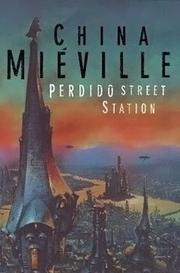
The book that founded the New Weird: the city of New Crobuzon rendered in overwhelming detail, with a rogue scientist, a beetle-headed artist and something loose in the dark. The first two hundred pages are dense with worldbuilding and this is where most abandonments happen — push through and it becomes a horror thriller.
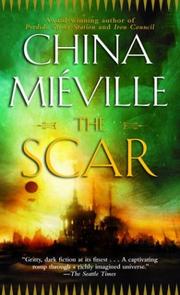
Set in the same world but almost entirely at sea, aboard a floating city of lashed-together ships. No characters carry over, so it is technically standalone, but reading it after Perdido gives you the political texture of New Crobuzon that the exiles are fleeing. Many readers think it is his best novel.

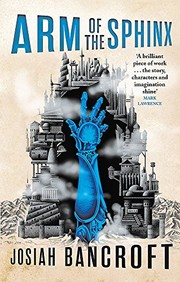
The last Bas-Lag book, and the most openly political: a perpetual train, a strike, a revolution. It is also the most formally difficult of the three, with a fractured chronology, so it belongs last in the sequence rather than anywhere else.
The Standalones
IntermediateFill in the unconnected novels, each of which is a deliberate change of genre, and see how wide the range actually is.
▸ Study plan for this stage
Pace: 6 weeks. King Rat (344 pages) and Kraken (509 pages) at ~35 pages a day, so roughly ten days and two weeks. Un Lun Dun (520 pages) and Railsea (394 pages) are written for younger readers and go at close to twice that rate — a week each is realistic, and reading them in that order works best.
- These four have nothing to do with each other or with Bas-Lag; the only continuity is a habit of taking one existing form and rebuilding it — a folk tale, a cult thriller, a portal quest, Moby-Dick
- Un Lun Dun and Railsea are children's and young adult books and are shelved that way. They are not lesser, but an adult reader should know what they are picking up rather than be surprised on page ten
- Un Lun Dun dismantles the chosen-one plot from inside it: the prophesied heroine is knocked out of the story early, her ordinary friend finishes the quest, and most of the prophesied steps get skipped on the grounds that they are a waste of everyone's time
- Miéville drew the illustrations for Un Lun Dun himself, and several of them carry jokes the prose never repeats
- Railsea replaces the word and with an ampersand throughout, then stops in a chapter of its own to explain why; the tic is an argument about the shape of the world rather than a decoration
- King Rat is a first novel and reads like one — the London drum-and-bass scene of the late nineties dates it in a way that is now part of its interest
- Kraken is the comedy of the group, and its best invention is a villain double act whose menace comes almost entirely from cheerful dialogue
- Read together these are the books where he is least anxious about being taken seriously, which is exactly why the sentences are clearer than anything in Bas-Lag
- Un Lun Dun removes its chosen one in the first act. What does the rest of the novel have to invent to keep going, and does the replacement hold?
- Railsea keeps Ahab but multiplies him, giving every captain a philosophy to hunt. What is that joke doing beyond the joke?
- What is Sham actually looking for, and how does his want differ in kind from Captain Naphi's?
- King Rat relocates a folk tale about a piper into a music scene. What does that let the book say about music that the original story cannot?
- Kraken is funny in a way none of the other novels are. What does the comedy protect the reader from, and what does it cost the ending?
- Having read all four, name the one thing a Miéville novel does regardless of genre or intended reader.
- Read the ampersand chapter of Railsea twice: once when you reach it, and once after the last page.
- Look at each illustration in Un Lun Dun before reading the chapter it belongs to, then again afterwards. Check first that your edition actually includes them — some printings and most ebook conversions do not.
- List the quest steps Un Lun Dun skips, and write beside each what a conventional fantasy would have spent a chapter doing. The list is the book's whole argument.
- Read fifty pages of King Rat and fifty pages of Kraken back to back, and describe in three sentences what changed in his prose across those twelve years.
- For each of the four, write down the existing story it is built on top of. Three are easy; the fourth is worth an argument.
Next up: The novels are finished; what remains is the short fiction, a novella and one book of history — the widest and least even part of the shelf.
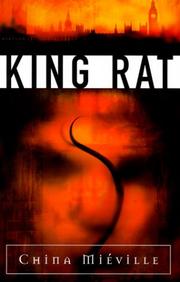
His first novel: the Pied Piper relocated to the London drum-and-bass scene of the late nineties. Rougher than everything after it, and worth reading here rather than first, as an origin rather than an introduction.

A preserved giant squid vanishes from the Natural History Museum and London's apocalyptic cults mobilise. The loosest and funniest of the novels — read it when you want to see him enjoying himself.
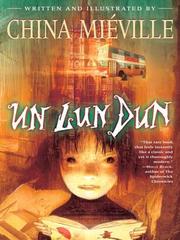
Written for younger readers, about an abcity beneath London, and it systematically dismantles the chosen-one plot from the inside. Do not skip it because of the age category: it is one of his sharpest structural jokes.
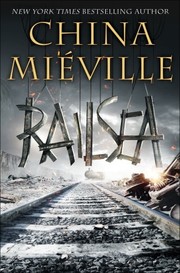
Moby-Dick rebuilt on a world of endless railway tracks and giant burrowing moles, also nominally for younger readers. Read it after Un Lun Dun; the two together show what he does when he has to be clear.
The Completist Tail
BeginnerFinish with the short fiction, the novellas and the history, which are where the range is widest and the payoff most uneven.
▸ Study plan for this stage
Pace: 5–6 weeks, deliberately read at uneven speeds. Take Looking for Jake (303 pages) and Three Moments of an Explosion (416 pages) a story or two per sitting, about three weeks across the two. The Last Days of New Paris (224 pages) goes in two or three sittings. October (377 pages) should be read straig
- October is not a novel. It is a narrative history of the Russian revolution of 1917, told month by month, and it sits at the end of a path of fiction because it states outright the politics the novels carry in disguise
- Miéville writes October from an openly declared socialist position and says so in the book rather than affecting neutrality; know that going in, and read a second account of 1917 if you want the argument tested
- Looking for Jake contains one Bas-Lag story, about a figure the New Crobuzon novels treat mostly as rumour, which is why the collection is better after the trilogy than before it
- Details is the most anthologised thing he has written and is the cleanest demonstration of his method: one rule, applied without mercy, in a dozen pages
- Three Moments of an Explosion is deliberately uneven — several pieces are trailers for films that do not exist, and some stories end without resolution because resolving was not the exercise
- The Last Days of New Paris runs on real artworks: the surrealist objects loose in occupied Paris are specific paintings, sculptures and parlour games, and the book carries an afterword identifying them
- Short fiction is where he tests premises too thin to carry a novel, so the right reading unit here is one or two stories an evening rather than a hundred pages
- In Details, what rule does the story establish, and at what point do you realise it will not be bent for anybody's benefit?
- The Bas-Lag story in Looking for Jake explains a figure Perdido Street Station leaves as a rumour. Does the explanation enrich the novel or deflate it?
- Several pieces in Three Moments of an Explosion are trailers for films nobody made. What can that form do that a finished story cannot?
- The Last Days of New Paris asks you to accept that a painting can walk. Set its handling of the impossible beside The City & The City, where nothing is supernatural at all — which book works harder?
- October is written by someone who tells you his sympathies. Where can you see those sympathies shaping the narrative, and does it make the account less useful as history?
- Now that the shelf is finished: which Miéville would you hand to someone who reads no fantasy at all, and what is the two-sentence case for it?
- Read the afterword of The Last Days of New Paris alongside the novella rather than after it, looking up each artwork as its manifestation appears. The book is built to be read that way.
- Take one or two stories a night from Looking for Jake and note which premise you would have expanded into a novel. His own choices rarely match most readers'.
- Save the Bas-Lag story until after you have finished Iron Council, then read it and go back to the New Crobuzon passages that mention its subject.
- Keep a one-page timeline of 1917 as October moves month by month; the book's structure assumes you are building one and does not recap.
- Set October beside Iron Council and mark two or three places where the same argument appears once as history and once as invention.
Next up: That is the whole shelf. You can now open any Miéville, name the form he is rebuilding inside twenty pages, and tell from the first chapter whether you have picked up the ornate one or the disciplined one.
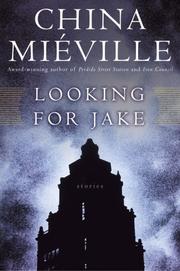
His first story collection, including one Bas-Lag story and the much-anthologised Details. Short fiction is where he tries premises too thin for a novel, and this is the better place to start with it.

The second collection, more experimental and more willing to end without resolution. Read it after Looking for Jake and after several of the novels, because a few pieces are essentially exercises.

A novella in which surrealist artworks are loose in an occupied Paris that never surrendered. It rewards knowing something about surrealism, which is why it sits near the end rather than the start.

Not fiction at all: a month-by-month narrative history of the Russian Revolution of 1917. It makes explicit the politics that Iron Council and Perdido Street Station carry in fictional form, and it is the natural last stop on this path.
Discussion
Keep reading
Paths that share books, cover the same subject, or open a related topic.