The Battle of the Bulge: books to read, in order
Germany's Ardennes offensive of December 1944 is unusually well served by books, which means the order matters: a readable modern narrative first, then the two enormous operational histories, then the soldier's-eye accounts, then the German planning and the war crimes. The through-question worth holding onto is how much of the American recovery was command and how much was simply the weather clearing on 23 December — the books on this path disagree, and the later ones disagree with evidence.
The Offensive, Told Straight Through
BeginnerHold the whole shape of the battle in your head — the surprise, the penetration, Bastogne and St Vith, the counterattack — and understand why an intelligence failure of this size was possible in December 1944.
▸ Study plan for this stage
Pace: 3-4 weeks. Beevor's Ardennes 1944 first, at around 35 pages a day; then Toland — our catalogue displays this record as Battle Story of the Bulge, and it is the 1959 narrative written when the participants could still be interviewed; then Kershaw's short The Longest Winter in a few evenings. Read Tol
- The strategic situation in December 1944: the broad-front advance, the supply crisis, and the quiet Ardennes sector held by green and refitting divisions
- The intelligence failure — Ultra's silence because the German plan moved by landline and courier, and the Allied assumption that the enemy was incapable of an offensive
- The German order of battle: Sixth Panzer Army in the north, Fifth Panzer Army in the centre, Seventh Army covering the southern shoulder
- The penetration and the shoulders — why the failure to widen the northern shoulder at Elsenborn Ridge doomed the whole operation early
- St Vith and Bastogne as road junctions, and why an offensive on a five-road network is a logistics problem before it is a tactical one
- The weather: overcast from 16 December, clearing on 23 December, and the argument about how much of the American recovery that clearing explains
- Patton's turn of Third Army to the north as a staff achievement rather than an inspirational one
- Why was the Ardennes sector held so thinly, and whose decision was that? Was it a mistake or an accepted risk?
- Explain precisely why Ultra did not warn of the offensive. What does that tell you about the limits of signals intelligence?
- Beevor writes in 2015 and Toland in 1959. Name three specific points where the newer book revises or corrects the older, and say what evidence became available in between.
- Kershaw's book covers one platoon on one morning at Lanzerath. What does that scale show that the panoramic accounts cannot?
- Hold the through-question of the path: at the end of this stage, how much of the American recovery do you attribute to command and how much to the weather clearing on 23 December?
- Draw the German plan on a map — three armies, the Meuse crossings, Antwerp — with the intended timetable, then overlay where each army actually was on 20 and 25 December. The gap is the offensive's whole story.
- Build a two-column intelligence timeline: what the Germans did to conceal the build-up on one side, what Allied intelligence concluded on the other, week by week from October.
- Trace the delaying action at Lanzerath through Kershaw and then find how Beevor treats the same morning in two sentences. Write a paragraph on what a panoramic history has to leave out and whether it should.
- Write down your provisional answer to the command-versus-weather question in one paragraph now, and date it. You will revise it twice more on this path.
Next up: The shape of the battle secured, the next stage takes it at the level of corps and divisions, where the competing explanations for the failure are actually argued.
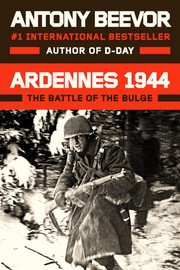
The most readable modern single volume, strong on the Allied high command's complacency and on civilian suffering in the Ardennes. The right entry point even though specialists prefer the operational histories that follow.

Toland's 1959 narrative, written when the participants were alive and interviewable, is the account that shaped everything after it. Read second, as the founding version. Open Library displays the record as Battle Story of the Bulge, dropping the colon.
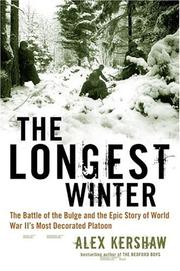
The story of a single intelligence and reconnaissance platoon that held up a German regiment at Lanzerath on the first morning. A short, tight close-up that shows what the two panoramic books above compress into a sentence.
The Operational Histories
IntermediateWork at the level of divisions and corps: be able to explain what happened at St Vith and why Bastogne mattered more to the Germans than to the Americans, and to judge the competing explanations for the intelligence failure.
▸ Study plan for this stage
Pace: 6 weeks — this is the heaviest stage on the path. A Time for Trumpets first and give it two weeks; MacDonald fought in the battle and later wrote for the US Army's official history programme, which is why the archival command detail and the combat narrative sit together. Then The Bitter Woods for tw
- St Vith: the horseshoe defence, Hasbrouck and Clarke, and the argument over the timing of the withdrawal
- Bastogne: why the Germans needed the road junction more than the Americans needed to hold it, and what the siege actually cost each side
- The northern shoulder at Elsenborn Ridge as the decisive defensive action of the battle, and why it is the least famous
- Montgomery's assumption of command of the northern half of the bulge — the operational logic and the political damage
- The intelligence failure examined at staff level: what SHAEF's G-2 said, what Twelfth Army Group said, and who was ignored
- German fuel and the arithmetic of an offensive planned to capture its own supply
- How official history is written, and what an author who fought in a battle and later works for the army brings and costs
- Set out the competing explanations for the intelligence failure across the three books. Which one does the documentary record best support?
- Why did Bastogne matter more to the Germans than to the Americans? Answer in terms of roads and fuel, not morale.
- Eisenhower interviewed his own father and the senior commanders. Identify two judgements in The Bitter Woods that you would want corroborated elsewhere, and say why.
- Caddick-Adams uses German records more fully than MacDonald or Eisenhower. Name a specific conclusion about the German conception of the offensive that this changes.
- MacDonald fought at the Bulge and wrote the standard history of it. Where in A Time for Trumpets can you detect the participant, and does it improve the book or compromise it?
- Revise your command-versus-weather answer. What in this stage moved it?
- Map the St Vith defence day by day from MacDonald, then read Caddick-Adams on the same days and mark every point where the two disagree about timing or intent.
- Take one German fuel figure — tonnage available, consumption rate, distance to the Meuse — and trace it across all three books to the source each cites. Then do the arithmetic yourself and say whether the offensive was ever supplied for its objective.
- Write the SHAEF intelligence summary for the week of 10 December as the available evidence would have supported it, then compare with what was actually issued.
- Build a table of the three authors against five contested questions — the intelligence failure, St Vith's withdrawal, Montgomery's command, Bastogne's importance, German intent — and fill in each author's position. That table is the historiography of the battle.
- Argue the case that the northern shoulder, not Bastogne, decided the battle. Use MacDonald's own account against the Bastogne-centred popular memory.
Next up: The operational picture is now firm, which makes it possible to test it against the testimony of the men who were inside it.
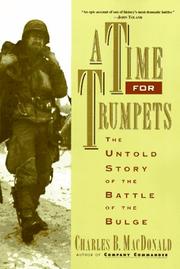
The standard American history, by an officer who fought in the battle and later became a US Army historian, combining archival command detail with combat narrative. If you read only one serious book on the Bulge, this is it.
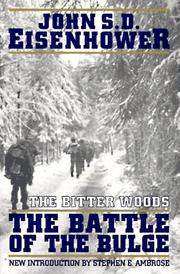
Written with unusual access to the senior commanders, including his father, and still the best on the decision-making at SHAEF and army-group level. Read after MacDonald as the view from the top of the chain.

The most recent large-scale account, using German records more fully than its predecessors and arguing hardest about how the offensive was conceived. The advanced synthesis, best read once you already know the narrative it is arguing with.
The Battle at Ground Level
IntermediateUnderstand the fighting as the infantry experienced it — cold-weather casualties, unit disintegration and improvised defence — and be able to test the operational accounts against firsthand testimony.
▸ Study plan for this stage
Pace: 3 weeks. Company Commander first — MacDonald wrote it in 1947, before he became a historian, about commanding a rifle company in the Ardennes, and reading it directly against A Time for Trumpets is the sharpest lesson on this path in what an operational history knows and what a participant knows. Th
- Cold-weather casualties — trench foot, frostbite, exposure — and their scale relative to combat losses
- Unit disintegration and reconstitution: what happens to a company that loses its officers, and how the American army rebuilt formations in the field
- Improvised defence: roadblocks, engineer demolitions, and delaying actions by units too small to hold anything
- McManus's argument that the delaying actions on the roads east of Bastogne, not the siege itself, held the position
- Replacement policy and the individual replacement system's effect on cohesion
- The distance between what a company commander knows and what a corps commander knows, and what each account is therefore able to explain
- Memoir and interview as evidence: what they establish reliably, and how they degrade over decades
- MacDonald wrote both a memoir and the standard history. Take one episode that appears in both and describe exactly what changes between them.
- How many casualties were caused by cold rather than by the enemy, and what does that proportion tell you about the conditions?
- State McManus's argument about the roads east of Bastogne. What evidence does he use, and how does it sit against MacDonald's account of the siege?
- Band of Brothers is built substantially on veteran interviews conducted forty years after the events. Name two specific claims you would want to see documented before repeating.
- Revise your command-versus-weather answer again. Does testimony from ground level support the command explanation or undercut it?
- Take one day of Company Commander and find the corresponding passage in A Time for Trumpets. Write the two accounts in parallel columns and list what each source class can and cannot establish.
- Trace the roadblock actions McManus describes onto the road network map you drew in stage one. Then judge for yourself whether the delaying actions or the siege did the decisive work.
- Pick three anecdotes from Band of Brothers about the Bastogne perimeter and try to corroborate each from Beevor, MacDonald or Caddick-Adams. Record which ones you can and cannot.
- Write a paragraph in the voice of a replacement arriving at a rifle company on 20 December, using only details you can source from Company Commander. Then annotate every sentence with where it came from.
Next up: The Allied side is now covered from three altitudes; the final stage turns the offensive over and looks at it as the Germans planned it, and at what it cost the people caught between.

MacDonald's own memoir of commanding a rifle company in the Ardennes, written in 1947 before he became a historian. Reading it next to A Time for Trumpets is the sharpest lesson available in how differently one man can describe the same events at two altitudes.
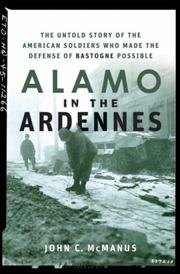
Argues that the delaying actions on the roads east of Bastogne, not the siege itself, decided the northern shoulder. A focused corrective to the Bastogne-centred popular memory.
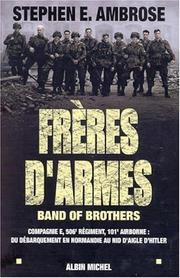
Easy Company of the 101st Airborne in the Bastogne perimeter, and the reason most readers know the battle at all. Included for what it does well — small-unit cohesion under siege — with the caveat that Ambrose is a storyteller before he is an archivist.
The German Plan, the Atrocity, and the Wider Campaign
IntermediateAssess the offensive on its own strategic terms, examine the Malmedy killings and their evidentiary record, and place the Bulge inside the whole 1944-45 campaign in north-west Europe.
▸ Study plan for this stage
Pace: 5 weeks. Parker's collection of the German commanders' postwar accounts first — read these as interested testimony, because most were produced for the US Army's historical division by officers with an obvious stake in describing an operation they had opposed. Then Dupuy's Hitler's Last Gamble for th
- Wacht am Rhein as Hitler's plan: the objective of Antwerp, the split of the Allied armies, and the political outcome it was intended to force
- The 'small solution' the generals wanted instead, and what the difference reveals about how the German command actually functioned by late 1944
- The postwar testimony problem: German commanders writing for their captors, after the fact, about an operation they can safely disown
- Dupuy's quantitative method — force ratios, combat power, attrition modelling — and the limits of applying it to a counterfactual
- The Malmedy killings: what the evidence establishes, what it does not, and how the 1946 trial's methods compromised the record
- How atrocity evidence degrades — coerced statements, memory, and the incentives of every party to a war crimes prosecution
- The Ardennes inside the campaign: what the offensive cost Germany in irreplaceable armour and men, and how it affected the timing of the Rhine crossings
- How far was the Ardennes offensive Hitler's alone? Set out what his generals say they argued, and then say why you should be careful believing them.
- Could the offensive ever have reached Antwerp? State Dupuy's answer and the assumptions his model rests on, then say which assumption you would challenge first.
- What does the evidence actually establish about Malmedy, and where does Parker say the trial damaged the record rather than clarifying it?
- Atkinson places the Ardennes inside the whole campaign. Did the offensive shorten the war, lengthen it, or neither? Argue with the figures.
- Now give your final answer on command versus weather. Which books moved you, and which specific evidence?
- Across all thirteen books, which single claim about this battle do you now consider best established, and which most contested?
- Take one German commander's account from Parker's collection and check its claims against the operational record in Snow and Steel. Mark every place the memoir is self-serving.
- Reproduce Dupuy's counterfactual on paper: fuel, force ratios, distance, Allied reserves. Then change one assumption and see whether his conclusion survives.
- Build the Malmedy timeline from Fatal Crossroads and mark each fact by the strength of the evidence behind it — physical, multiple-witness, single-witness, or contested statement.
- Write two paragraphs on the offensive's effect on the war: one arguing it cost Germany the reserves needed to defend the Rhine, one arguing it delayed the Allied advance at little net cost. Cite Atkinson and Dupuy for each.
- Return to the answer you dated in stage one. Write out what changed, book by book, and which change you are least confident in.
Next up: This closes the path: you can now read any account of the Ardennes and tell whether it is working from Toland's shape, from the operational record, or from the German memoirs.
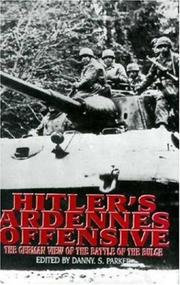
The German commanders' own postwar accounts of the plan, collected and edited. The best way to see how far the operation was Hitler's alone and how little his generals believed in it.

A quantitative military analyst's assessment of the offensive, including a counterfactual examination of whether it could ever have reached Antwerp. Read after Parker: first the intent, then the arithmetic.

A forensic reconstruction of the Malmedy massacre and of the flawed war crimes trial that followed. The most careful book on the episode, and a lesson in how atrocity evidence degrades.
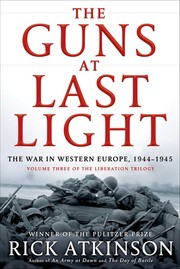
The final volume of the Liberation Trilogy sets the Ardennes inside the whole north-west Europe campaign, which is the only way to weigh whether the offensive changed the war's course at all. The right book to close on.
Discussion
Keep reading
Paths that share books, cover the same subject, or open a related topic.