Best Books on D-Day and the Normandy Landings, in Reading Order
D-Day is remembered as a single morning, but the invasion was won by two years of planning and deception and then paid for over eleven weeks of hedgerow fighting that almost nobody can describe. This path front-loads the classic narratives of 6 June, backs up to the planning and the deception that made the beaches survivable, then follows the Normandy campaign to the closing of the Falaise pocket, and ends with the modern re-examinations and the drive into Germany. The last stage assumes you already know the beach-by-beach story cold.
The sixth of June
BeginnerKnow the landings themselves — the airborne drops, the five beaches, the German response — as a single continuous morning.
▸ Study plan for this stage
Pace: Four weeks. Ryan's The Longest Day is 331 pages and reads in under a week — it is built from short cross-cut scenes and is deliberately propulsive. Ambrose's D-Day, June 6, 1944 is 656 pages and much denser in testimony; allow two to three weeks. Read Ryan first for the shape of the day and Ambrose
- The five beaches and who landed on each: Utah and Omaha (US), Gold and Sword (British), Juno (Canadian), and the gaps between them that took days to close
- The airborne plan — the US 82nd and 101st behind Utah, the British 6th on the eastern flank — and the fact that the scattered drops caused confusion the Germans read as a much larger operation
- Why Omaha was different: no successful preliminary bombardment, the 352nd Division present, high bluffs, and the loss of most of the DD tanks. The casualty asymmetry between Omaha and the other four beaches is the day's central tactical fact
- The German command failure on the morning: Rommel absent in Germany, the panzer reserves held under Hitler's personal release authority, and hours lost before any armoured counterattack could begin
- Ryan's method: thousands of participant questionnaires and interviews collected in the 1950s, from German and French as well as Allied participants, which is why his book has voices from the other side that Ambrose's largely lacks
- Ambrose's method: American veteran oral history collected decades later, which gives extraordinary tactical texture on Omaha and Utah and a correspondingly narrower national frame
- Two documented cautions about Ambrose worth carrying through this path: he was later shown to have plagiarised passages in other books, and researchers have questioned the accuracy of some of his interview-based claims. His D-Day work remains widely used and widely cited — read it as valuable testim
- The distinction between the assault and the lodgement: none of the D-Day objectives inland, including Caen, were taken on the day
- Name the five beaches, their assaulting formations, and the objectives each was meant to reach by nightfall. Which were reached?
- Why was Omaha so much costlier than the other four beaches? List the causes and rank them by how much each contributed.
- What prevented a rapid German armoured counterattack on 6 June? Distinguish command structure from Allied action.
- Where do Ryan and Ambrose describe the same event differently? Take at least two episodes and consider what each author's sourcing method would tend to produce.
- Both books are built from participant memory — Ryan's collected in the 1950s, Ambrose's decades later. What are the characteristic weaknesses of each, and how would you check a specific claim from either?
- Draw the invasion frontage from memory after finishing Ryan: five beaches west to east, the two airborne areas, and the approximate front line at nightfall. Redraw it after Ambrose and note what you got wrong.
- Build an hour-by-hour timeline of 6 June from midnight to midnight, marking airborne drops, naval bombardment, H-hour on each beach, and the first German counter-moves. Every later book in this path will slot into this timeline.
- Pick one action described in both books — the Pointe du Hoc assault is the sharpest test — and write a page on how the two accounts differ in detail and emphasis.
- Write 300 words on Omaha explaining the casualty figures to someone who knows only that it was bad. Being forced to give causes rather than adjectives is the exercise.
Next up: Knowing what happened on the day, the next stage explains why it was survivable at all — two years of planning and a deception operation that had the German reserves waiting three hundred miles away.
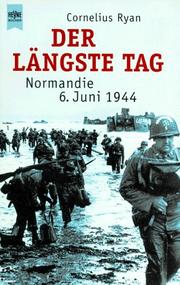
Assembled from thousands of participant accounts on both sides while the survivors were still in their forties, and still the most gripping hour-by-hour account of the day. The right first book by a wide margin.
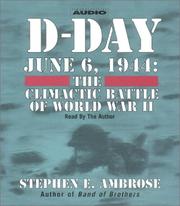
Ambrose's oral-history approach covers the same day with far more American veteran testimony and better tactical detail on Omaha. Read second, and note where he and Ryan disagree.
How the invasion was made possible
BeginnerUnderstand the planning, logistics and deception behind Overlord, and why the Germans were looking at the Pas de Calais on the morning it happened.
▸ Study plan for this stage
Pace: Six weeks for about 1,190 pages. Macintyre's Double Cross is 456 pages, written as narrative and reads in two weeks. Harrison's Cross-Channel Attack is 519 pages of official history — dry, precise, and best taken in chapter-length doses over three weeks; it is a reference you will return to. Ambrose
- Operation Fortitude and the fictional First US Army Group: a notional invasion force in southeast England aimed at the Pas de Calais, sustained by double agents, false radio traffic and physical deception
- The Double Cross System — every German agent in Britain either captured, turned or fictitious — and why total control of the network is what made the deception credible rather than merely plausible
- The individual agents Macintyre follows, Garbo above all, and the crucial post-invasion message arguing that Normandy was a diversion, which helped hold the Fifteenth Army at Calais for weeks
- The logistics Harrison explains and the popular books skip: the Mulberry harbours, PLUTO, landing craft availability as the binding constraint on the invasion date, and the shipping arithmetic that dictated the size of the assault
- The command structure — SHAEF, Eisenhower as supreme commander, Montgomery commanding 21st Army Group for the land battle — and the national frictions built into it from the start
- The tide, moon and weather conditions the plan required, why they occurred on so few days per month, and Eisenhower's 5 June decision on Stagg's forecast
- German defensive doctrine and the Rommel-Rundstedt disagreement over whether to defeat the invasion on the beaches or hold armour back for a mobile counterstroke — a dispute that was never resolved and therefore did neither
- Pegasus Bridge as the demonstration case: six gliders, a coup de main, and the whole eastern flank of the invasion depending on one company landing accurately in the dark
- How did Fortitude work in practice? Name the mechanisms — agents, signals, physical deception — and explain which the Germans could and could not verify.
- What was the binding constraint on the timing and size of Overlord? Harrison is unambiguous about it and most popular accounts are not.
- Explain the Rommel-Rundstedt dispute over the panzer reserves. What did each want, why was it not settled, and what were the consequences on 6 June?
- How narrow was the weather window, and what would have happened had Eisenhower postponed on 5 June?
- Pegasus Bridge succeeded because a small unit did something very difficult very accurately. How much of the D-Day plan depended on comparable small-unit success, and what happened where it failed?
- Draw the Fortitude deception as a diagram: the fictional order of battle, the channels feeding it to the Germans, and the German assessments it produced. Seeing the feedback loop is the point.
- Using Harrison, tabulate the landing craft requirement against availability for Overlord. The gap is the reason for the invasion's date and shape, and the table makes it concrete.
- Write 300 words on the German panzer disposition on the morning of 6 June, marking each formation's location and who could release it. Add this to the timeline you built in stage one.
- Take the Pegasus Bridge operation and write out its plan, its margin for error, and what would have followed from failure. Then find two other D-Day operations with equally thin margins.
- Read Harrison's account of an episode Ryan or Ambrose also covers, and write a paragraph on what the official history adds and what it deliberately leaves out.
Next up: With the beaches secured and their preconditions understood, the next stage follows the eleven weeks that actually decided the campaign — and that cost far more than the landings did.
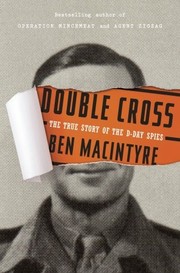
The turned German agents who sold Hitler a fictional invasion army, told as the caper it partly was. The most enjoyable book here and the clearest explanation of why the beaches were not worse.

The official US Army history of the planning and the first weeks — dry, authoritative, and the source most popular accounts quietly stand on. Read for the logistics nobody else explains.
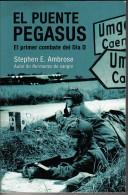
One glider assault, one bridge, one night, told in full. The best available demonstration of how much of D-Day depended on very small units doing exactly the right thing.
The campaign after the beaches
IntermediateFollow the eleven weeks from the beachhead to the Falaise pocket, and understand why the bocage fighting cost more than the landings did.
▸ Study plan for this stage
Pace: Eight to nine weeks for about 1,445 pages. Beevor's D-Day is 639 pages and readable at pace — three weeks. Hastings's Overlord is 431 pages and is the most argumentative book in the path; read it slowly and mark the passages where he states his thesis, because you will be testing them in the next st
- The bocage: Norman hedgerows on earth banks, centuries old, forming a defensive grid that negated Allied numbers and air power and made every field a separate engagement
- That the campaign, not the landing, produced the casualties — infantry losses in Normandy reached rates comparable with the Western Front of 1916 to 1918, a comparison Hastings makes explicitly
- The Caen problem: a D-Day objective not taken for weeks, the successive British and Canadian operations to take it, and the enduring argument over whether Montgomery's attritional intent was genuine strategy or retrospective justification
- Cobra and the breakout: the American penetration west of Saint-Lô, the exploitation into Brittany and eastward, and the transformation from grinding attrition to a war of movement
- The Falaise pocket and the controversy over its incomplete closure, which allowed a substantial number of German troops to escape east
- French civilian casualties — roughly twenty thousand killed in Normandy, largely by Allied bombing — which Beevor treats at length and which most Anglo-American accounts pass over
- Hastings's thesis: that German units consistently outfought Allied units of comparable size, and that the campaign was won by materiel, air superiority and firepower rather than by tactical quality. He supports it with unit-level evidence and it has been contested ever since
- Keegan's device of one national army per chapter — American, British, Canadian, Polish, French, German — which shows how differently a coalition's components experienced the same battle
- Why did the bocage neutralise Allied advantages? Be specific about which advantages, and about the tactical adaptations that eventually worked.
- What was Montgomery's stated intent at Caen, and what is the evidence for and against the claim that it was formulated after the fact? Set out both cases without deciding.
- Hastings argues that German formations outfought Allied ones. What evidence does he use, and what would count as evidence against? Note where he qualifies the claim himself.
- Why was the Falaise pocket not closed sooner? Distinguish the operational factors from the inter-Allied command factors.
- Beevor gives substantial attention to French civilian deaths from Allied bombing. What does including them change about how the campaign reads, and why do you think most earlier accounts did not?
- Keegan's national-army structure and Beevor's chronological narrative describe the same eleven weeks. What does each structure reveal that the other conceals?
- Extend your D-Day timeline through to 21 August, marking the beachhead line at weekly intervals. The near-immobility of the eastern sector for six weeks is startling when drawn rather than read.
- Write 400 words on the tactical problem of a single bocage field — the approach, the observation, the weapons available on each side — and then describe the Allied solutions, including the hedgerow cutters and the infantry-tank-engineer teams.
- Take Hastings's central claim and build an evidence table: his supporting cases in one column, the qualifications and counter-cases in another. Leave a third column empty for Holland's response in the next stage.
- Using Keegan, write one paragraph on each of six armies stating what its command's chief anxiety was during the campaign. The differences explain most of the coalition friction.
- Compare Beevor's and Hastings's accounts of the same operation — Goodwood is the best test — and write a page on where they disagree about facts as opposed to about interpretation.
Next up: With the standard campaign narrative and its sharpest critic in hand, the last stage brings the recent scholarship that answers Hastings directly, and follows what Normandy bought all the way to the German surrender.
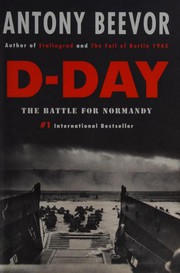
Beevor gives the landings one section and the campaign the rest, including the French civilian casualties most accounts pass over. The essential correction to a beach-only picture.
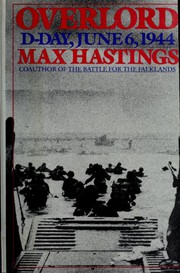
Hastings argues bluntly that German units outfought Allied ones and that materiel decided the campaign. Contentious, well evidenced, and the sharpest analytical book on this path.
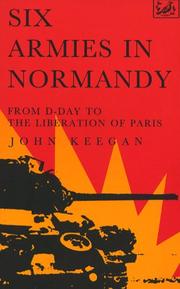
Keegan takes one national army per chapter, which is the cleanest way to grasp a coalition battle. Read after Beevor and Hastings, whose narratives it reorganises.
Re-examinations and what followed
IntermediateTest the received account against recent scholarship, and carry the story forward from Normandy to the German frontier.
▸ Study plan for this stage
Pace: Four to five months for roughly 3,020 pages — by far the longest stage in the path, and it should be taken as four separate projects rather than one push. Holland's Normandy '44 is 720 pages and answers Hastings directly, so read it first while Overlord is fresh. Caddick-Adams's Sand and Steel is 1,
- Holland's operational revision: that the campaign ran broadly to its planned timetable, that Allied doctrine — combined arms, logistics, air-ground integration, operational-level thinking — has been systematically underrated, and that comparisons of tactical quality miss the level at which the war w
- The specific counters Holland offers to Hastings: German casualty and replacement rates, the operational versus tactical distinction, and the argument that Allied firepower doctrine was a deliberate design choice rather than a substitute for skill
- That this is a live disagreement between serious historians using largely overlapping evidence. Both positions have substantial support and this path does not settle it
- Caddick-Adams's contribution: the naval dimension, the scale of the preparation, and the sheer administrative apparatus of the invasion, which is the least-narrated part of the story
- Band of Brothers as a case study rather than a foundation — one company of the 506th from Normandy to Berchtesgaden — read now so it sits inside a campaign you understand rather than substituting for one
- The same caution about Ambrose applies here: Band of Brothers is built from veteran interviews decades later, and specific details have been questioned by later researchers. It is testimony, and it is not the campaign
- Atkinson's Northwest Europe: the pursuit across France, the logistics crisis when the ports were not opened, Market Garden, the Ardennes, the Rhine and the collapse — which is what the Normandy beachhead was actually for
- The strategic question the whole path builds to: whether the Normandy campaign was won by material superiority, by operational competence, or by German exhaustion on other fronts — and how you would weigh those against each other
- State Holland's argument and Hastings's argument in a paragraph each, as strongly as you can. If one is markedly easier to write, reread the other.
- Both use unit-level evidence from the same campaign. What are they actually disagreeing about — the facts, the level of analysis, or the standard of comparison?
- What does Caddick-Adams's naval and preparatory material add that none of the campaign narratives supply, and does it bear on the Hastings-Holland dispute?
- Read Band of Brothers after five campaign histories. What does the company-level view show that the operational view cannot, and what does it distort if read alone?
- Atkinson carries the story to May 1945. What did Normandy actually buy, and how much of the subsequent campaign's shape was set by decisions made in the beachhead?
- After eleven books: what is your account of why the Allies won in Normandy? Name the evidence you are resting on and the strongest objection to your position that you cannot answer.
- Fill in the third column of the Hastings evidence table with Holland's response to each point. Where the two are not addressing the same claim, mark it — that mismatch is a large part of the dispute.
- Write 600 words arguing whichever of the two positions you find less persuasive, using only their own evidence. Then write a paragraph on what survived of your original view.
- Trace Easy Company's route on the campaign map you have been building. Seeing one company's line against the whole front is the clearest available illustration of scale.
- Take three specific claims from Band of Brothers and check them against Harrison's official history or Caddick-Adams. This is the same verification exercise you ran on Ryan and Ambrose in stage one, and by now you should be quick at it.
- Using Atkinson, write a page on the autumn 1944 logistics crisis and connect it back to the port and shipping constraints Harrison described in the planning. The campaign's beginning and end turn out to be the same problem.
- Write a final 800-word assessment of the Normandy campaign citing at least one book from each stage, and end by naming the question you would need new evidence to settle.
Next up: This is the end of the path — the day, its preconditions, the campaign, the argument about it, and its consequence through to the German surrender — and the natural next step is the Eastern Front, without which no assessment of what the Wehrmacht brought to Normandy is complete.

Holland's operational-level revision argues the campaign was fought roughly to schedule and that Allied doctrine has been badly underrated. A direct answer to Hastings.

The most exhaustive recent single volume on the invasion, strongest on the preparation and the naval side. Reference-dense — read it once you can navigate the detail.
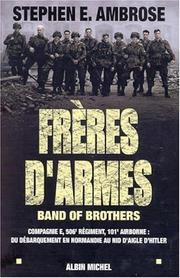
One parachute company from Normandy to the end of the war, which is how most readers first feel the human scale of the campaign. Placed late so it lands as a case study rather than an origin story.
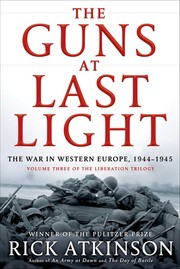
Northwest Europe from D-Day to victory, the closing volume of the Liberation Trilogy. The right ending, because it shows what Normandy actually bought.
Discussion
Keep reading
Paths that share books, cover the same subject, or open a related topic.