Rick Atkinson Reading Order: Where to Start
Rick Atkinson writes narrative military history in trilogies, and both of his major projects are strictly sequential — the Liberation Trilogy follows the American army from North Africa to Berlin, and the Revolution Trilogy is doing the same thing for the War of Independence. Start with the Liberation Trilogy, which is finished and is the work that defined him. His earlier books, written as a journalist rather than a historian, are shorter and more personal, and make a good final stage once you know what his mature narrative style is doing.
Start With The Liberation Trilogy
IntermediateMeet Atkinson's method — a whole theatre of war narrated at the level of individual soldiers — in the volume that won him the Pulitzer.
▸ Study plan for this stage
Pace: 5-7 weeks for 704 pages, and be honest with yourself about the page count: this is a large book with dense maps, a cast of hundreds and roughly 150 pages of notes and index at the back. Thirty pages a sitting is a sustainable pace; sixty will burn you out before Kasserine. The first eighty pages are
- Atkinson's method: a whole theatre narrated at the level of the individual soldier, with commanders' decisions and privates' letters in the same paragraph
- North Africa in 1942-43 as the education of an unready army - the trilogy's argument is that the American army had to be beaten before it could be good
- Kasserine Pass as the necessary humiliation, and what it changed about American command
- Coalition warfare is a real subject here, not a background condition: the friction between American, British and French commands drives as much of the story as the Germans do
- Logistics as narrative - fuel, ports, shipping and mud get as much attention as battles, which is a deliberate corrective to the great-captains tradition
- The commanders you meet here - Eisenhower, Patton, Bradley, Alexander, Montgomery - recur for two more volumes, so the personalities are an investment
- This is a self-contained campaign with a clear beginning and end, which makes it the right book to test the whole trilogy on
- What was the American army bad at in November 1942, and what specifically had changed by May 1943?
- Why does Atkinson give so much space to supply, shipping and terrain? What is he arguing against?
- What did Kasserine reveal about American command, and who paid for it?
- How does Atkinson handle the French position in North Africa, and why is it more complicated than a good-war narrative allows?
- Which commander comes off worst in this volume, and is the judgement argued or implied?
- Read with the maps. Atkinson supplies them and the North African campaign is close to unintelligible without checking each one as its chapter opens.
- Keep a one-page roster of commanders with their commands. Two more volumes assume you know who these people are without reminder.
- Note three moments where Atkinson cuts from a general's decision to a soldier's experience of it. That cut is the trilogy's basic technique and seeing it deliberately makes the next 1,700 pages easier.
- At the end, decide explicitly whether you are continuing. This volume is designed to work alone, and 1,700 more pages is a real commitment worth making consciously.
Next up: The commanders, the units and the coalition frictions established here are assumed from the first page of the next volume, which opens on the same army in a much worse campaign.
North Africa, 1942-43, and the education of an unready American army. The best single Atkinson book to test the series on, because it is a self-contained campaign with a clear beginning and end.
Finish The Liberation Trilogy
IntermediateFollow the same commanders and units through Italy and then across France and Germany, with the continuity that makes the trilogy work.
▸ Study plan for this stage
Pace: 12-16 weeks for about 1,710 pages (The Day of Battle 816, The Guns at Last Light 896). This is the largest single commitment in the path and it should not be rushed. The Day of Battle is the hardest of the three to read - Italy is a grinding, repetitive, often futile campaign and the book does not p
- Sicily and Italy as the campaign that most complicates the good-war story: enormous cost, contested strategic value, and commanders who knew it
- Anzio and Monte Cassino as case studies in what happens when a plan fails and the fighting continues anyway
- The bombing of Monte Cassino abbey, and Atkinson's treatment of decisions that were defensible at the time and indefensible afterwards
- The Guns at Last Light covers D-Day to the German surrender, and its scale forces a different narrative technique - more theatre-level, less single-division
- The trilogy's cumulative argument is about institutional learning: the army that crosses the Rhine is not the army that landed in Morocco
- Civilian suffering, atrocity and the treatment of liberated populations get sustained attention rather than a chapter
- The payoff of following the same commanders for three volumes is that their late decisions are legible as products of earlier ones - which is exactly what is lost by reading the third book alone
- Was the Italian campaign worth fighting? State Atkinson's position and the strongest case against it.
- How does Atkinson handle Cassino and Anzio without either excusing or simply condemning the commanders responsible?
- What changes in his narrative technique when the front widens in The Guns at Last Light, and what does he lose?
- Which commanders' reputations does the trilogy revise, upward or downward, across all three volumes?
- What is the trilogy's overall argument about the American army, and does the third volume prove it?
- Keep a running note of the same three or four commanders across both volumes. Their arcs are the trilogy's spine and they are easy to lose in the scale.
- Read the Anzio chapters over consecutive days rather than in fragments. The airlessness is the point and it dissipates when broken up.
- For The Guns at Last Light, track one division from Normandy to the Elbe. The theatre-level narration is easier to hold with a single thread running through it.
- After finishing, write 500 words on whether the trilogy is a celebration or an indictment. Most readers find their answer has moved between volume one and volume three.
- Read the acknowledgements and a sample of the notes. Atkinson's sourcing is a large part of what makes the books trustworthy and it is invisible if you skip the apparatus.
Next up: You now know exactly what Atkinson's mature narrative method does at trilogy scale, which is what makes it interesting to watch him apply the same technique to a completely different war.
Sicily and Italy, 1943-44 — the grinding, often futile middle volume, and the one that most complicates the good-war story. It assumes you know the personalities from An Army at Dawn.
D-Day to the German surrender. The payoff volume, and the culmination of characters you have followed for two books; reading it alone loses most of that weight.
The Revolution Trilogy
IntermediateMove to his second project, applying the same technique to the American War of Independence.
▸ Study plan for this stage
Pace: 11-14 weeks for about 1,680 pages (The British Are Coming 800, Fate of the Day 880). The same discipline as the Liberation Trilogy applies: thirty pages a sitting, maps open. The British Are Coming is the more propulsive of the two because 1775-77 has a natural narrative shape - Lexington, the invas
- The same technique transplanted: logistics, disease, weather and shipping treated as primary causes rather than context
- The British side taken seriously as a story with its own commanders, constraints and domestic politics, which is unusual in American accounts of the Revolution
- Distance as a strategic fact - an army supplied across three thousand miles of ocean is the central problem of the British war
- Washington in these books is a commander who loses repeatedly and survives, which is a very different portrait from the founding icon
- Disease, smallpox and camp mortality kill more people than combat, and Atkinson gives it the space that implies
- The Revolution rendered as a civil war within colonial society, with loyalists, neutrals and the enslaved as active parties
- Fate of the Day covers the years when the war stopped having obvious momentum, and reading it is a test of whether you value the method or the drama
- What does Atkinson's logistical emphasis change about the standard story of the Revolution?
- How well does the British command come off, and what were their actual constraints?
- Washington loses most of the battles in these volumes. What is Atkinson's account of why he mattered anyway?
- How does the method developed for a twentieth-century industrial war fare on an eighteenth-century one? Where does it strain?
- What is the argument of Fate of the Day, given that its period lacks a decisive event to organise around?
- Compare the opening chapter of An Army at Dawn with the opening of The British Are Coming. Seventeen years apart, the technique is nearly identical and the similarity is instructive.
- Track the supply situation of one army across both volumes. It is the through-line Atkinson most wants you to notice.
- Note every place where a familiar Revolutionary anecdote is corrected or complicated. There are many, and collecting them is the fastest way to see what a professional narrative historian adds to a school-taught story.
- Since the trilogy is unfinished, write down what you expect the final volume to have to explain. It is a better use of the wait than reading speculation.
Next up: Having seen the mature historian at work twice, the early journalism shows where the eye for the individual soldier came from before there were archives to support it.

Lexington to Princeton, 1775-77, told with the same logistical detail and British-side seriousness as the Liberation books. A clean entry point for the second trilogy.

The middle volume, carrying the war through its longest and least decisive years. It picks up directly where The British Are Coming stops.
The Earlier Books
IntermediateRead the journalism that preceded the histories, which explains where the trilogies' eye for the individual soldier came from.
▸ Study plan for this stage
Pace: 6-8 weeks for about 1,520 pages (The Long Gray Line 608, Crusade 575, In the Company of Soldiers 336). Much easier reading than the trilogies - these are reported books with smaller casts and no campaign maps to consult. The Long Gray Line is the longest and the most emotionally demanding despite be
- The Long Gray Line follows the West Point class of 1966 through Vietnam and after, and is his first book and arguably still his most moving
- Institutional history through individual lives - the same technique as the trilogies, but with living subjects he interviewed rather than archives
- Crusade reports the Persian Gulf War from close range, and is the most conventionally journalistic book on the shelf
- In the Company of Soldiers is two months embedded with the 101st Airborne during the 2003 invasion of Iraq, written without any hindsight at all
- Reading these last shows where the trilogies' eye came from: Atkinson was interviewing soldiers for a decade before he started reading their grandfathers' records
- The absence of archival distance changes what he can and cannot claim, and comparing that with the trilogies is the real value of this stage
- Three wars, three postures - historian, correspondent, embedded observer - and the differences between them are legible in the prose
- What does The Long Gray Line argue about what Vietnam did to a single class of officers, and how does it avoid becoming a thesis?
- How does reporting a war you are covering differ from writing one from records? What does Atkinson gain and lose in Crusade?
- What can In the Company of Soldiers say that a history of the same invasion could not, and what can it not say?
- Which of these three books most resembles the Atkinson of the Liberation Trilogy, and in what specific respect?
- Having read the whole shelf, what is the one thing Atkinson consistently believes about armies?
- Read The Long Gray Line with the class of 1966's timeline beside you - graduation, deployment, the years after. The book moves between them and the structure rewards a note.
- Compare a battle description in Crusade with one in The Guns at Last Light. The difference in what he is willing to assert is the whole point of this stage.
- In In the Company of Soldiers, mark every judgement he makes that later events complicated. Reading a book written without hindsight is an unusual exercise and worth doing deliberately.
- Write a short note on how you would now describe Atkinson's project across nine books. Anyone who has read this far has an answer that a review cannot give them.
Next up: This is the end of Atkinson's published shelf apart from the final Revolution volume, and the natural next step is the narrative military historians he is most often read alongside.
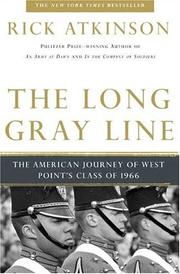
The West Point class of 1966 through Vietnam and after. His first book, more intimate than anything since, and arguably still his most moving.
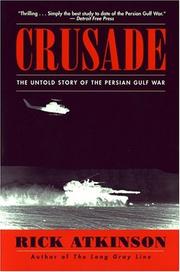
The Persian Gulf War reported from close range. Useful for seeing him work without archival distance, on a war he covered himself.
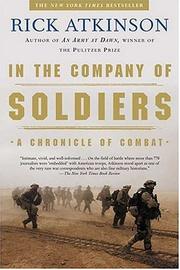
Two months embedded with the 101st Airborne during the invasion of Iraq. A short, immediate book, and a good last one because it shows the reporter under the historian.
Discussion
Keep reading
Paths that share books, cover the same subject, or open a related topic.