The Battle of Midway: books to read, in order
Midway is one of the few battles where the standard account has been genuinely overturned rather than merely refined: Parshall and Tully's Shattered Sword, built from Japanese sources, dismantled the 'five fateful minutes' story that every earlier English-language book repeated. This path therefore starts with the best modern narrative, reads the classics knowing what in them has not survived, then goes to the revision itself, the codebreaking, the squadrons and finally the battle's place in the whole Pacific war.
The Battle, Start to Finish
BeginnerCome away with a firm grip on the sequence of 4-6 June 1942 — the Japanese plan, the American ambush, the four carriers — and on why the battle is treated as the turning point of the Pacific war.
▸ Study plan for this stage
Pace: 3 weeks, roughly 30 pages a day. Symonds first — it is the only book in this stage written after Shattered Sword and it incorporates the revision, so you begin with a narrative that is not already superseded. Then Prange's Miracle at Midway, and then Walter Lord's Incredible Victory. Read the last t
- Operation MI: the Japanese plan, its Aleutian diversion, and the dispersal of force across too many objectives
- The Kido Butai as an organisation — four carriers, their air groups, and what a carrier task force could and could not do in a day
- The American position after Coral Sea: three carriers, Yorktown's repair at Pearl Harbor, and Nimitz's decision to accept battle
- The sequence of 4 June: the Midway strike, the torpedo squadron attacks, the dive-bomber strike at approximately 1020, and Hiryu's counterattacks
- Why the loss of four fleet carriers and their trained aircrew mattered more than the tonnage suggests
- The 'turning point' framing and where it comes from
- How a battle narrative is assembled — action reports, war diaries, interviews — and why timings in different accounts disagree
- State the Japanese plan in four sentences. What was Midway itself for, and what was the operation actually meant to achieve?
- Why were three American carriers at Point Luck at all, and what would have happened had Yorktown not been repaired in time?
- Symonds writes after the revision; Prange and Lord before it. Name two specific points about the Japanese carriers where you can already see the accounts diverge.
- Lord built his book from participant interviews conducted in the 1960s. What kind of evidence is that good for, and where is it least reliable?
- By the end of this stage, what is your own one-paragraph answer to why the Japanese lost?
- Build an hour-by-hour timeline of 4 June from Symonds, then overlay Prange's timings for the same events. Mark every discrepancy of more than fifteen minutes and note which events they cluster around.
- Draw the movements of both fleets from 3 to 6 June on one chart with times. Then mark the point at which each side knew where the other was.
- Take the claim that Midway was the turning point of the Pacific war and write down, from these three books alone, the strongest evidence for it. You will test the claim again in the final stage.
- Pick one episode Lord narrates from interviews and find how Symonds handles the same episode. Write a paragraph on what the later historian did with the testimony.
Next up: You now hold the traditional account in full, which is the necessary precondition for seeing exactly what Shattered Sword overturned.
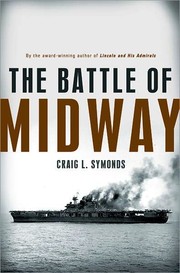
The best modern single-volume account, written after Shattered Sword and incorporating its findings, so you start with a narrative that is not already outdated. Symonds is also the strongest on the decisions above the battle — Nimitz, Spruance, Fletcher.
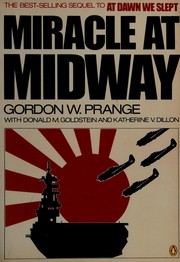
For thirty years the standard American history, and still the fullest on the intelligence and command context. Read it second, as the traditional account you are about to see revised.
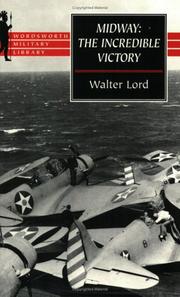
Lord's 1967 narrative, built on hundreds of participant interviews, is the book that fixed Midway's popular shape — including the myths. Read for the human texture, not the analysis. Open Library files it as Midway! Incredible Victory, which is the title some editions carry.
The Revision: The Battle from the Japanese Side
IntermediateUnderstand specifically which parts of the traditional story do not survive Japanese-source scrutiny — the 'five fateful minutes', the flight decks supposedly packed with armed aircraft, Nagumo's fatal indecision — and why the doctrine, not the luck, explains the outcome.
▸ Study plan for this stage
Pace: 3-4 weeks. Shattered Sword is long, dense and the most important book on this path — give it two and a half weeks and read the doctrine chapters carefully rather than skipping to the battle. Then read Fuchida and Okumiya's Midway: The Battle That Doomed Japan in a few evenings, and read it as a docu
- The 'five fateful minutes' claim and precisely what is wrong with it — spotting, arming and launch cycle times for a Japanese carrier air group
- Japanese carrier doctrine: why aircraft were struck below to be armed rather than left on deck, and what that means for the damage-control picture
- The rearmament decision and Nagumo's dilemma reconstructed from the actual signal traffic and reports rather than from memoir
- Structural weaknesses in Japanese carrier design — aviation fuel lines, damage control, the absence of armoured decks on some ships
- The Japanese command culture — victory disease, the wargames before the operation, and the suppression of pessimistic estimates
- Fuchida's unreliability: he was aboard Akagi but grounded by illness, and his account has been shown to contain fabricated scenes
- What it takes to overturn a battle narrative — new language sources, procedural evidence, and physical constraint arguments
- Set out the 'five fateful minutes' story as Fuchida tells it, and then set out Parshall and Tully's refutation step by step. Which part of the refutation is physical and which is documentary?
- If the decks were not packed with armed aircraft, what actually caused the catastrophic fires? Explain the mechanism.
- Nagumo has been blamed for indecision for seventy years. What does Shattered Sword say he was actually deciding between, and what were his real options?
- Parshall and Tully argue doctrine rather than luck explains the outcome. State that argument, and then state the strongest case for luck.
- Fuchida shaped the Western account for fifty years. Why was his version so readily believed, and what does that episode teach about single-source history?
- Which specific pages of Prange and Lord from stage one would you now annotate as superseded?
- Take three specific claims from Fuchida's book and write, for each, exactly what Shattered Sword uses to refute it — which document, which procedure, which timing. This is the core exercise of the path.
- Reconstruct the Akagi flight-deck cycle from Parshall and Tully's procedural account: spotting, fuelling, arming, launching, with the times. Then use your own reconstruction to show why the five-minute claim is impossible.
- Go back to your stage-one timeline and revise every entry concerning Japanese carrier operations. Mark each revision with the reason.
- Write the paragraph a 1970 historian would have written about Nagumo's decision, then the paragraph a historian writes now. Underline every sentence that changed.
- Argue the opposing case in a paragraph: that Shattered Sword overcorrects and that chance genuinely was decisive on 4 June. Use only evidence the book itself supplies.
Next up: With the Japanese side rebuilt, the question becomes how the Americans came to be in the right place at all — which is a question about intelligence.
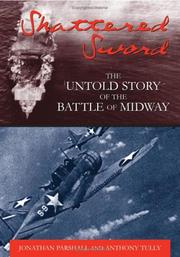
The book that rewrote the battle. Working from Japanese action reports and carrier doctrine, Parshall and Tully show the Kido Butai could not possibly have launched a strike in five minutes and that the defeat was structural. Everything before this stage should be read again in its light.

The 1955 Japanese memoir that supplied Western historians with the 'five fateful minutes' story for half a century, and which Shattered Sword demonstrates is unreliable at exactly that point. Read it here, second and deliberately, as a primary source whose failures you now understand.
Codebreaking and Command
IntermediateFollow the intelligence chain from broken JN-25 traffic to the 'AF is short of water' ruse and Nimitz's decision to gamble three carriers, and be able to weigh how much of the victory was information rather than combat.
▸ Study plan for this stage
Pace: 3-4 weeks. Layton's memoir first — our catalogue stores the title inside quotation marks as it appears on the record — then Prados's Combined Fleet Decoded, then Lundstrom's Black Shoe Carrier Admiral. Layton is a partisan primary account by Nimitz's own intelligence officer, written decades after t
- JN-25 and what partial decryption actually means — how much of a message was readable, and how estimates were built from fragments
- Station Hypo, OP-20-G in Washington and the bureaucratic dispute over the target of the coming operation
- The 'AF is short of water' ruse: how it was designed and what it actually confirmed
- Intelligence as estimate rather than fact, and Nimitz's decision to act on a contested one
- The command decisions that followed: Yorktown's repair, the ambush position at Point Luck, and the delegation of tactical command
- The construction of reputations after a battle, and how Fletcher's came to be what it is
- How much of the victory was information — the counterfactual of a Midway fought without the codebreaking
- How much of the Japanese plan did American intelligence actually know before 4 June, and how much was inference?
- Explain the water ruse in operational terms. What did it prove, and what did it leave uncertain?
- Layton is defending Hypo against Washington. Where does Prados's institutional account qualify Layton's version of that dispute?
- What is the case against Fletcher as traditionally stated, and which parts of it does Lundstrom show to rest on interested testimony?
- Run the counterfactual: no codebreaking, three American carriers somewhere in the central Pacific. What happens, and what does your answer imply about how decisive intelligence was?
- Trace the intelligence chain end to end — intercept, partial decryption, estimate, dispute, ruse, confirmation, deployment — and mark at every link what could have failed and what would have followed.
- Take one claim Layton makes about Washington's obstruction and check it against Prados. Write a paragraph on whether the institutional record supports the memoir.
- Set the traditional account of Fletcher's decisions at Coral Sea and Midway beside Lundstrom's, in two columns, and identify the specific document that changes each judgement.
- Write the estimate Nimitz received in late May, in the form and with the confidence levels it would actually have carried. Then write the decision memo you would have issued on it.
- Compare this stage's revision of Fletcher with stage two's revision of Nagumo. Write a paragraph on what the two cases have in common about how battle reputations are made.
Next up: Command and intelligence explained, the path drops to the level where the battle was actually fought — the squadrons that flew it.

Nimitz's own intelligence officer, writing decades later, on how the Midway estimate was built and fought for. An indispensable and openly partisan primary account; Open Library stores the title inside quotation marks, as some editions print it.
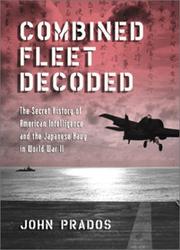
The wider institutional history of American signals intelligence against the Japanese navy, which puts Layton's personal account inside a system. Read second for the machinery behind the man.
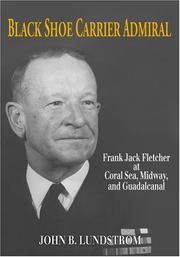
A rehabilitation of Frank Jack Fletcher, the officer traditionally blamed for the Coral Sea and Midway commands, using operational records. It closes the stage by showing how much of the received Midway story is postwar reputation management.
The Squadrons
IntermediateMove from the operational picture to the tactical one — carrier air group organisation, the Devastator torpedo squadrons' annihilation, the dive-bomber attack — and understand what the crews could and could not know.
▸ Study plan for this stage
Pace: 4 weeks. Lundstrom's The First Team is the technical foundation and the densest reading here: it is a sortie-by-sortie study of American carrier fighter combat from Pearl Harbor through Midway, and two weeks is realistic. Then A Dawn Like Thunder on Torpedo Squadron Eight, and finish with Kernan's s
- Carrier air group organisation — fighting, scouting, bombing and torpedo squadrons — and what each was for
- The Douglas TBD Devastator: speed, range, the torpedo it carried, and the attack profile it required
- The Mark 13 torpedo's performance problems and how much of the squadrons' futility they explain
- Fighter doctrine and the Thach weave as a tactical answer to the Zero's advantages
- The uncoordinated American attack of 4 June — how it happened, and the argument over whether the torpedo squadrons' sacrifice pulled the Japanese combat air patrol down to sea level
- What aircrew could and could not know in the air: navigation, radio discipline, fuel state
- Kernan's charge of poor planning, and the difference between an accusation from inside and an analysis from outside
- Describe the attack profile a Devastator had to fly. Given the aircraft's speed and the torpedo's release parameters, what was the realistic survival expectation?
- The claim that the torpedo attacks drew the Japanese fighters low and cleared the way for the dive bombers is repeated everywhere. What is the actual evidence, and what does Shattered Sword say about it?
- How much of the torpedo squadrons' failure was the aircraft, how much the torpedo, and how much the plan? Apportion it and defend the apportionment.
- Kernan is angry and he was there. Where does that make him a better witness than Lundstrom, and where a worse one?
- What did the American carriers get right on 4 June, given that almost nothing went according to plan?
- Reconstruct the launch sequence of all three American carriers on the morning of 4 June from Lundstrom, and mark why the strike arrived piecemeal.
- Take the Mark 13 torpedo's specified release envelope and compare it with what the Devastator crews actually did. Write down the gap and what it meant in practice.
- Trace the 'torpedo squadrons pulled the CAP down' claim across A Dawn Like Thunder, Shattered Sword and Kernan. Write a paragraph stating which version the evidence supports.
- Write the operations order for the American strike as it should have been issued to coordinate the squadrons, then explain, using Lundstrom, why it could not have been executed with the equipment available.
- Set Kernan's account of a decision beside Lundstrom's on the same decision. Write out what the participant sees and what the historian sees, and which you would cite.
Next up: Having taken the battle apart down to the squadron, the last stage puts it back inside the war and tests whether it deserves the weight it carries.
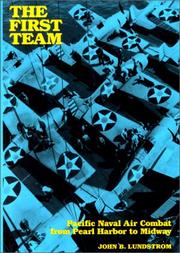
The definitive study of American carrier fighter combat from Pearl Harbor to Midway, tracing individual pilots and doctrine sortie by sortie. Dense, and the necessary technical foundation for the two accounts that follow.

Follows Torpedo Squadron Eight through its destruction at Midway and beyond. Read after Lundstrom, because the tactical futility of the Devastator attack only lands once you know the doctrine that sent them.

A veteran and later Princeton literary scholar's short, angry argument that the torpedo squadrons were squandered by poor planning. The most sceptical book here, and the right note to end a stage on.
Midway Inside the Whole Pacific War
IntermediatePlace the battle in strategic context and be able to answer honestly how decisive it actually was, given Japan's industrial position and the campaigns that followed.
▸ Study plan for this stage
Pace: 4 weeks. Toll's Pacific Crucible first — it carries the war from Pearl Harbor through Midway with the best modern operational narrative available and should be given two weeks — then Spector's Eagle Against the Sun, the standard one-volume history, for the rest. Read this stage as a corrective to ev
- The strategic situation from December 1941 to June 1942 and where Midway sits in it
- American shipbuilding and pilot-training capacity against Japanese capacity — the industrial asymmetry that made the war's outcome largely determined
- Guadalcanal as the campaign that actually broke Japanese naval air power, through attrition rather than in a day
- The replacement of aircrew as the real constraint, and why Japan's losses at Midway compounded over years
- The 'turning point' as a historiographical claim, and what it obscures about the three years that followed
- Coalition strategy, the Europe-first decision and the resource ceiling on the Pacific
- How a single battle acquires symbolic weight, and whose interests that serves
- Given American industrial capacity, how much did Midway actually change about the war's likely outcome? Argue it with numbers.
- Toll and Spector both cover Midway. What does each leave out that the specialist books insisted on, and is the omission a loss?
- If Midway had gone the other way — four American carriers lost, Midway taken — what specifically changes over the following eighteen months?
- Why is Midway remembered as the turning point rather than Guadalcanal or the Marianas? What does the answer say about how popular military history is made?
- Having read all thirteen books, what is your final answer to why Japan lost this battle, and how much of that answer would have been available to you before Shattered Sword?
- Chart carrier and trained-aircrew strength for both navies from December 1941 to December 1943. Then use the chart to state precisely how much of Japan's decline is attributable to Midway.
- Write the counterfactual essay in 500 words: Japan wins at Midway. Mark every step where you are asserting rather than reasoning from something in Toll or Spector.
- Take the phrase 'turning point' and find every place it appears across the books on this path. Write a paragraph on which authors use it as an argument and which as a convention.
- Return to the one-paragraph answer you wrote at the end of stage one. Rewrite it now, and list the specific things you have changed and the book that changed each.
Next up: This closes the path: you can now date any book on Midway by whether it repeats Fuchida or answers Parshall and Tully.
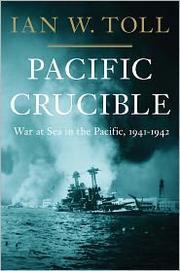
The first volume of Toll's Pacific trilogy carries the war from Pearl Harbor through Midway with the best modern operational narrative available. Read it to see the battle emerge from a campaign rather than stand alone.
The standard one-volume history of the American war against Japan, and a useful corrective to Midway-as-turning-point framing: it shows how much war was still to come. The right closing book.
Discussion
Keep reading
Paths that share books, cover the same subject, or open a related topic.