The Automotive Industry: The Best Books on Carmaking as a Business, in Order
The car business is where mass production, consumer marketing, industrial labour and financial engineering all collided first, so its history reads as a history of modern capitalism in miniature. This path starts with the two men who invented the modern car company, moves to the Toyota system that made everything they built obsolete, follows Detroit's forty-year unravelling, and ends with the safety, fraud and electrification fights that define the industry now. It is business history and investigative journalism throughout — no engineering textbooks.
The Invention of the Modern Car Company
BeginnerUnderstand the two rival templates every carmaker still runs on — Ford's single-product mass production and Sloan's multi-brand, annually-restyled, credit-financed corporation — and how unchecked that model became by the 1960s.
▸ Study plan for this stage
Pace: 4 weeks, around 35 pages a day. Lacey's Ford, the Men and the Machine is long — give it two weeks — then Sloan's My Years with General Motors for a week, then Unsafe at Any Speed, which is short and can be finished in a few evenings. Read Sloan as a primary document rather than a history: it was wri
- The moving assembly line, vertical integration and the five-dollar day as one connected system rather than three inventions
- Ford's single-product strategy and the cost of it: the Model T's twenty-year run and the near-fatal changeover to the Model A
- Sloan's counter-model — a ladder of brands at every price point, annual model changes, decentralised divisions under central financial control
- Instalment credit through GMAC as an industry-shaping innovation, and finance as a profit centre alongside manufacturing
- Planned obsolescence through styling, and the shift of competition from engineering to design
- Nader's argument that the industry had externalised the cost of unsafe vehicles onto the public, and the creation of federal safety regulation that followed
- Why an industry with no external check on it produced the products of the early 1960s
- Ford and Sloan solved different problems. State each problem in one sentence and say why Sloan's answer won in the 1920s.
- Sloan is describing decisions he made and defending them. Name three places where the book is arguing rather than reporting, and say what a critic would put in each gap.
- What did GMAC change about who could buy a car, and how is that mechanism still operating in the industry's current profit structure?
- Nader's case rests on specific engineering claims about the Corvair. What are they, what did the later federal testing conclude, and does the book's argument depend on being right about that one car?
- Both the multi-brand ladder and the annual restyle have been substantially abandoned. What replaced them, and what does that tell you about which parts of Sloan's system were structural and which were period-specific?
- Draw Sloan's organisational chart — divisions, central staff, financial controls — from his own description, then map a current carmaker's structure onto it and mark what survives.
- Trace the phrase 'a car for every purse and purpose' through Sloan's own account and then through Lacey's description of what Ford did in response. Write a paragraph on who is claiming what about the 1920s market and which claim the sales figures support.
- Take one of Nader's specific engineering claims about the Corvair and check it against the 1972 NHTSA findings. Write down what survives, what does not, and whether the book's larger case is affected.
- Write Ford's defence of the single-product strategy as of 1925, using only what Lacey reports Ford himself believed. Then write the memo Sloan would have sent in reply.
Next up: Both American templates are now clear — which is what makes the Toyota system in the next stage legible as something categorically different rather than merely better.
The best narrative account of the company that invented the moving assembly line and the $5 day, and of the family dysfunction that nearly destroyed it. Start here because everything later in the industry is either a copy of Ford's system or a reaction against it.
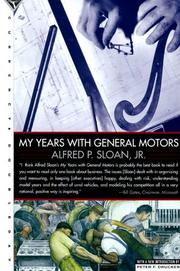
The primary document of modern corporate management, written by the man who beat Ford by segmenting the market and decentralising the divisions. Read it straight after Lacey so you see the two templates argue with each other.

The 1965 book that ended the era in which Detroit answered to nobody, and created federal auto safety regulation more or less single-handedly. It closes this stage because it marks the moment the industry stopped setting its own rules.
The Toyota System and What It Did to Everyone Else
IntermediateGrasp lean production as a complete manufacturing philosophy rather than a set of factory tricks, and understand why an entire national industry could not copy it even after it had been fully explained in public.
▸ Study plan for this stage
Pace: 4-5 weeks. The Machine That Changed the World first for the comparative data, The Toyota Way second for the management principles behind that data, and The Reckoning third and longest — Halberstam runs to well over 700 pages and is best read over two weeks as narrative. Note that The Machine reports
- Lean production as a complete system — inventory, supplier relations, product development, workforce organisation — rather than a set of factory techniques
- Just-in-time and the deliberate removal of buffers so that problems must surface immediately
- Jidoka and the andon cord: stopping the line as a designed feature, not a failure
- Kaizen, standardised work and the difference between continuous improvement and cost reduction
- Supplier partnership, target costing and long-term contracts against the American practice of annual competitive bidding
- Lean product development: heavyweight project managers and the compression of the design cycle
- Why the system was published in full and still could not be copied — the cultural, labour-relations and management-tenure preconditions Halberstam describes
- What exactly did the MIT study measure, at which plants, and what were the assembly-hours and defect gaps it reported?
- Explain how removing inventory buffers improves quality rather than merely reducing working capital. What has to be true for that to work and not simply halt production?
- The Machine measures from outside and The Toyota Way explains from inside. Where does Liker's account of a principle fail to explain a number Womack reports?
- Halberstam's explanation for Detroit's failure to copy Toyota is cultural and political. State it, then state the alternative explanation that it was a labour-cost problem, and say what evidence would separate the two.
- Lean has since been applied to hospitals, software and services. Which elements transfer and which depend specifically on repetitive high-volume manufacturing?
- Take the assembly-hours-per-vehicle and defects-per-hundred figures in The Machine That Changed the World and map them onto the plant comparison chart the authors provide. Then find current published quality survey data and write down how much of the gap remains.
- Pick a process you can observe — a kitchen, a warehouse, a service queue — and map it as a value stream, marking every buffer and every point where a defect could pass undetected. Then say what removing one buffer would surface.
- Trace the claim that Toyota's supplier relationships lowered costs through both Womack and Liker to the evidence each offers. Write a paragraph on whether the causal direction is actually demonstrated.
- Write the American manufacturing executive's 1990 rebuttal to The Machine That Changed the World in one paragraph, using Halberstam's material on labour agreements and capital markets. Then write why it did not save them.
Next up: The competitive standard set, the next stage follows the American industry through the forty years it spent failing to meet it.
The MIT study that named 'lean production' and proved with hard comparative data that Japanese plants were not just cheaper but structurally different. It is the single most consequential book about carmaking as a business.
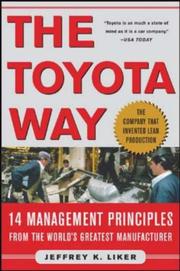
Goes inside the management principles Womack measured from the outside — jidoka, kaizen, the andon cord, supplier partnership. Read second, once you already know why these things mattered competitively.
Halberstam tells the same story as narrative, braiding Ford and Nissan across decades, and is unmatched on the culture and politics that made Detroit unable to respond. The best-written book on this list.
Detroit's Long Unravelling
IntermediateTrace the American industry from the first bailout to the 2009 bankruptcies, and be able to argue about how much was labour costs, how much was product, and how much was a finance-first management culture.
▸ Study plan for this stage
Pace: 5 weeks, one book a week with an extra week for Ingrassia. Iacocca first as a period document, Rude Awakening second, Crash Course third for the clearest narrative of the road to 2009, and Car Guys vs. Bean Counters last. The last two are both partisan in opposite directions and should be read again
- The 1979-80 Chrysler loan guarantee as the first federal rescue, and the terms attached to it
- The celebrity-CEO genre and the use of a memoir as a corporate marketing instrument
- The Sloan structure ossifying: divisional overlap, badge engineering and the loss of brand distinction
- Legacy costs — pensions and retiree healthcare — and the jobs bank, and how much of the cost gap they actually explain
- Finance-led management: hurdle rates, product decisions made on cost per unit, and the argument that this was the real disease
- The 2009 GM and Chrysler bankruptcies, the structured 363 sales, and what the government restructuring did and did not change
- The dealer franchise laws that made distribution nearly impossible to reform
- What did the 1980 Chrysler rescue actually consist of, and how do its terms compare with the 2009 restructurings?
- Iacocca is selling himself and his cars. Identify three claims in the memoir that Ingrassia's account contradicts or qualifies.
- Lutz says finance overruled product. Keller says the structure ossified. Ingrassia gives a narrative of both. Rank the three explanations by the weight of evidence and defend the ranking.
- Roughly how much of the American cost disadvantage was legacy healthcare and pensions? Find the figures Ingrassia cites and say whether they support the popular version of the story.
- The 2009 restructuring removed most of the legacy burden and the industry recovered. Does that outcome settle the labour-costs-versus-management argument, or is it consistent with both?
- Build one timeline from 1979 to 2009 marking every federal intervention, every major product failure and every management change across the three companies. Then mark where each of the four authors locates the decisive turn.
- Take a single claim about labour costs per vehicle and trace it across Rude Awakening, Crash Course and Car Guys vs. Bean Counters, noting the number each gives and the year it refers to. Write a paragraph explaining why they differ.
- Read Lutz's account of a specific product decision and then find Ingrassia's account of the same programme. Write the two-column comparison and say which one is supported by outcomes.
- Write the finance department's defence of itself against Car Guys vs. Bean Counters in one paragraph: capital discipline, return thresholds, the cost of a failed programme. Make it as strong as you can.
- Using Crash Course, list what the 2009 bankruptcies changed structurally and what they left intact. Then say which of the surviving features you would expect to cause the next crisis.
Next up: Detroit's story ends in restructuring; the final stage takes the industry's two current defining fights — a fraud and an electric transition — with the same sceptical method.
The bestselling memoir of the Chrysler rescue, and the founding text of the celebrity-CEO genre. Read it as a self-serving primary source about the first federal auto bailout, not as history. The Open Library record shortens the title from Iacocca: An Autobiography.
A close-in account of General Motors in the 1980s by the analyst who covered it, showing the Sloan structure ossifying into bureaucracy. It is the bridge between Sloan's own book and the collapse to come.

The clearest single narrative of the road to the 2009 GM and Chrysler bankruptcies, by a reporter who covered Detroit for decades. Read it after Keller so you see the diagnosis and the death together.

An unapologetic insider's argument that GM lost because finance people overruled product people. It is the industry's own account of the failure the previous two books describe from outside.
Fraud, Disruption and the Electric Turn
IntermediateUnderstand the emissions scandal as a governance failure rather than a rogue-engineer story, and read the Tesla era from both a sympathetic and a sceptical direction rather than taking either on faith.
▸ Study plan for this stage
Pace: 4 weeks. Faster, Higher, Farther first and give it a week and a half — it is the definitive reported account of the Volkswagen diesel scandal and the governance argument in it carries the stage. Then read Power Play and Ludicrous as a deliberate pair, ideally within the same fortnight, because the w
- The defeat device: what it did technically, and why the emissions gap could persist undetected for eleven years
- Governance failure as the explanation — targets set without a feasible engineering path, a culture in which reporting bad news ended careers, and a supervisory board that could not see down
- Type approval and the difference between laboratory test cycles and real-world driving emissions, which is the regulatory hole the fraud lived in
- Manufacturing at volume as the actual hard problem in the electric transition, and what Tesla's production years demonstrate about it
- Vertical integration, direct sales and over-the-air updates as genuine departures from the incumbent model
- Niedermeyer's sceptical case: subsidy dependence, quality and service records, autonomy claims and the gap between demonstration and deployment
- How to read two reported books on the same company that disagree — separating what each author witnessed from what each author concludes
- Describe the defeat device in operational terms. Who had to know for it to work, and at what level of the company did knowledge have to exist?
- Ewing argues this was governance rather than rogue engineers. What is his evidence, and what would the rogue-engineer defence have to show to be credible?
- Where exactly do Higgins and Niedermeyer report the same event and reach different conclusions? Choose two and write out the divergence.
- What did Tesla's production crisis show about the difficulty of building cars at volume that the incumbents already knew and the disruption narrative ignored?
- Direct sales are prohibited or restricted in many American states by the franchise laws described in the previous stage. Explain how that legacy shapes who can enter the industry now.
- Both the emissions fraud and the electric transition are being adjudicated by regulators rather than markets. What does that suggest about where the next decade's decisive events will happen?
- Draw the reporting chain at Volkswagen from the engineer who wrote the software to the management board, using Ewing's account, and mark at every level what that person would have had to do to stop it.
- Take one factual claim about Tesla's production rate or quality that appears in both Power Play and Ludicrous. Write the two versions side by side and go to the underlying public filings or regulatory data to see which is closer.
- Write the sceptic's paragraph on Tesla using only facts Higgins reports, and the sympathetic paragraph using only facts Niedermeyer reports. If you cannot do both, you have not read them carefully enough.
- Map the emissions test cycle against real-world driving conditions and explain, in writing, precisely where the gap that enabled the fraud arises and what the current regulatory regime does about it.
- Return to the first stage: write one paragraph arguing that the Volkswagen scandal is the same failure Nader identified in 1965, and one arguing that it is a different failure entirely. Cite both books.
Next up: This closes the path: you can now read any claim about the car industry — a bailout, a fraud, a disruption story — and locate it in the hundred-year argument these books are all conducting.

The definitive reported account of Volkswagen's diesel defeat devices, and of the corporate culture that made an eleven-year fraud survivable internally. This is what the goal's warning about engineering losing to finance looks like in practice.

A reported, largely sympathetic narrative of Tesla's near-death production years, useful for understanding how an outsider actually built cars at volume. Read it first of the two Tesla books.

The deliberate counterweight: a sceptical industry analyst's case that Tesla's story is more marketing than manufacturing. Reading it against Higgins is the point — this stage ends with an unresolved argument, which is the honest state of the question.
Discussion
Keep reading
Paths that share books, cover the same subject, or open a related topic.