The history of Japan: the best books from samurai to modern nation
This curriculum takes the reader from a broad, accessible overview of Japanese history all the way through the complexities of modern Japan's rise as a global power. Each stage builds on the last — first establishing the sweep of Japanese civilization, then diving into the feudal world of samurai and shoguns, then the seismic transformation of the Meiji era and imperial expansion, and finally the postwar economic and cultural miracle. By the end, the reader will have both narrative fluency and analytical depth across 2,000 years of Japanese history.
Foundations: The Big Picture
BeginnerGain a confident, chronological overview of Japanese history from ancient times to the modern era, building the vocabulary and mental map needed for deeper study.
▸ Study plan for this stage
Pace: 6–7 weeks, ~40–50 pages/day. Start with "Japan" by Hane (approximately 350–400 pages, 2–3 weeks), then move to "The Japanese Today" by Reischauer (approximately 400–450 pages, 3–4 weeks). Allow time for review and overlap between books.
- Japan's geographic isolation and its role in shaping cultural distinctiveness and selective cultural borrowing (especially from China and the West)
- The feudal system and samurai culture: how the daimyo-samurai hierarchy structured society for centuries and influenced modern Japanese values
- The Meiji Restoration (1868) as the pivotal modernization moment that transformed Japan from a feudal state into an industrial power
- Buddhism, Shinto, and Confucianism as the philosophical and spiritual foundations that continue to shape Japanese thought and behavior
- The rise of militarism and imperial expansion (1930s–1945) and its consequences, including WWII and post-war occupation
- Post-war reconstruction and the 'economic miracle': how Japan rebuilt itself into a modern, democratic, economically powerful nation
- Core Japanese cultural values: group harmony (wa), respect for hierarchy, aesthetic refinement, and the tension between tradition and modernity in contemporary society
- How did Japan's geographic isolation influence its approach to adopting foreign ideas and technologies throughout its history?
- What were the key features of the feudal system and samurai code (bushidō), and how do they continue to influence modern Japanese society?
- Why is the Meiji Restoration considered a turning point in Japanese history, and what specific changes did it bring about?
- How did Japan's militarism and imperial ambitions in the early 20th century lead to WWII, and what were the consequences of defeat?
- What role did the post-war American occupation and the 1947 Constitution play in shaping modern democratic Japan?
- How has Japan balanced the preservation of traditional values with rapid modernization and Westernization since the Meiji period?
- Create a detailed timeline from ancient Japan to the present day, marking major periods (Heian, Edo, Meiji, Taishō, Shōwa, Heisei), key events, and cultural shifts. Update it as you read both books.
- Maintain a 'cultural values journal': after each major historical period in Hane's book, write down the dominant values and beliefs of that era, then compare them to Reischauer's analysis of contemporary Japanese values to trace continuities and changes.
- Draw or annotate a map showing Japan's regions, major cities, and how geographic features (mountains, isolation, proximity to China/Korea) influenced historical development and cultural identity.
- Create comparison charts for three major periods: (1) Feudal Japan (samurai/daimyo structure), (2) Meiji/Taishō (modernization and militarism), and (3) Post-war Japan (democracy and economic growth). Note values, government structure, and international relations for each.
- Write three short essays (500–750 words each): one on how Buddhism and Shinto shaped Japanese aesthetics and behavior, one on the Meiji Restoration's necessity and impact, and one on how WWII defeat paradoxically enabled Japan's post-war success.
- Engage in 'perspective-taking' discussions or written reflections: After reading about militarism and WWII in Hane, use Reischauer's observations about modern Japanese attitudes toward war, pacifism, and international relations to analyze how Japan processed and moved beyond that era.
Next up: This stage equips you with a solid chronological narrative and cultural vocabulary that will allow deeper, thematic explorations—such as specialized studies of the samurai code, Zen Buddhism's influence on art and martial arts, the mechanics of the economic miracle, or Japan's contemporary role in global politics—in subsequent stages.
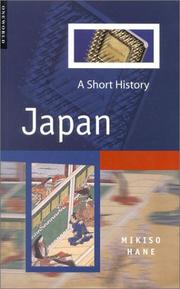
A compact, authoritative survey written for newcomers — it covers the full arc from ancient Japan to the late 20th century in plain language, giving the reader a reliable skeleton on which to hang everything that follows.
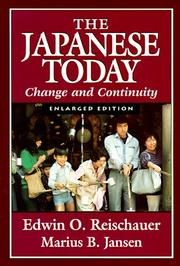
Written by a former U.S. Ambassador to Japan and Harvard scholar, this accessible classic explains not just events but the cultural logic behind Japanese society, making later, more specialized books far easier to understand.
Samurai, Shoguns & Feudal Japan
BeginnerUnderstand the rise of the warrior class, the shogunate system, and the political and cultural world of feudal Japan, including the era of isolation under the Tokugawa.
▸ Study plan for this stage
Pace: 12–14 weeks, ~40–50 pages/day (approximately 3–4 weeks per book, accounting for reflection and note-taking)
- The rise of the samurai warrior class and their code of honor (bushidō) as portrayed through William Adams's encounters in Samurai William
- The consolidation of power under Toyotomi Hideyoshi and Tokugawa Ieyasu, and how Taiko dramatizes the unification of Japan
- The shogunate system: how military rulers governed Japan while maintaining the imperial institution
- The era of sakoku (isolation) under the Tokugawa and its cultural and political consequences
- The tension between loyalty, ambition, and failure in Japanese feudal culture, as explored in The Nobility of Failure
- The transformation of samurai from warriors into administrators and bureaucrats during the Edo period
- How external contact (through figures like William Adams) challenged and reinforced Japanese isolationism
- The aesthetic and philosophical dimensions of samurai culture: tea ceremony, Zen Buddhism, and the acceptance of death
- What was William Adams's role in Japan, and how did his presence challenge the Tokugawa shogunate's isolationist policies?
- How did Toyotomi Hideyoshi and Tokugawa Ieyasu differ in their approaches to unifying Japan, and what does Taiko reveal about their personalities and methods?
- What is the shogunate system, and how did it allow military rulers to govern while preserving the imperial institution?
- What were the main causes and consequences of Japan's sakoku (isolation) policy under the Tokugawa?
- How does The Nobility of Failure reframe the concept of 'failure' in Japanese history, and what examples from the book illustrate this philosophy?
- What role did the samurai code (bushidō) play in feudal Japanese society, and how is it reflected across all three books?
- Create a timeline of major events from Samurai William and Taiko (1550–1650), marking key figures, military campaigns, and policy shifts like the sakoku edict
- Write character sketches of William Adams, Hideyoshi, and Ieyasu based on the books, noting their motivations, conflicts, and legacies
- Compare two 'failures' from The Nobility of Failure with a 'success' from Taiko—analyze how the authors frame these outcomes differently
- Map the shogunate system: create a diagram showing the relationship between the emperor, shogun, daimyo, samurai, and commoners during the Edo period
- Read and annotate a primary source excerpt (e.g., from the Bushidō Shoshinshu or a Tokugawa edict) and connect it to scenes in the three books
- Write a comparative essay: 'How do Samurai William and Taiko portray the tension between isolationism and foreign contact in early Tokugawa Japan?'
Next up: This stage establishes the political structures, cultural values, and historical turning points of feudal Japan, preparing you to explore how these foundations shaped later periods—whether examining the decline of the samurai in the Meiji Restoration, the philosophical and artistic flowering of the Edo period, or Japan's reopening to the world in the 19th century.
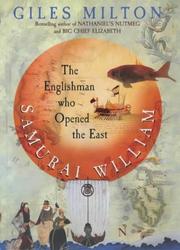
A narrative-driven, highly readable account of early contact between Japan and the West through the eyes of an English navigator — it brings the Tokugawa world vividly to life for readers new to the period.
This sweeping historical novel about Toyotomi Hideyoshi — one of Japan's great unifiers — is the ideal way to absorb the drama, politics, and code of the samurai era through story before tackling denser history.
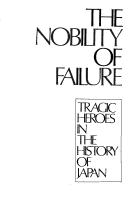
Examines the archetype of the tragic hero across Japanese history, from ancient rebels to kamikaze pilots, revealing a deep cultural thread that runs through the samurai ethos and beyond.
The Meiji Restoration & the Birth of Modern Japan
IntermediateUnderstand how Japan dismantled feudalism, modernized at breathtaking speed, and transformed itself into an imperial power — one of the most dramatic national reinventions in world history.
▸ Study plan for this stage
Pace: 8–10 weeks, ~40–50 pages/day. Start with "Emperor of Japan" (weeks 1–5, ~450 pages), then move to "The Last Samurai" (weeks 6–10, ~400 pages). Allow 1–2 weeks of overlap for reflection and note consolidation.
- The role of Emperor Meiji as a symbolic and political anchor for modernization, and how Keene portrays his personal agency and constraints
- The dismantling of the samurai class and feudal hierarchy—from the Boshin War through the Satsuma Rebellion—as depicted in both texts
- Japan's deliberate, state-directed adoption of Western technology, military structures, and institutions (the Meiji reforms) while preserving cultural identity
- The tension between tradition and modernity: how Japan balanced Confucian values, imperial authority, and rapid industrialization
- The role of regional daimyo and samurai leaders (particularly Satsuma and Choshu clans) in both enabling and resisting the Meiji transformation
- The Satsuma Rebellion (1877) as the final, violent clash between the old feudal order and the new nation-state, as Ravina's narrative centers on
- Japan's imperial expansion and militarization as a direct outcome of Meiji modernization
- The concept of 'civilization and enlightenment' (bunmei kaika) as Japan's ideological framework for rapid change
- How did Emperor Meiji's personal background and character shape his role in Japan's modernization, according to Keene, and what were the limits of his actual power?
- What were the key Meiji reforms, and how did they systematically dismantle the feudal system while building a modern nation-state?
- Why did the samurai class resist modernization, and what does the Satsuma Rebellion reveal about the incompatibility between feudal honor and the modern state?
- How did Japan balance Western military and industrial adoption with the preservation of traditional culture and imperial authority?
- What role did regional clans (especially Satsuma and Choshu) play in both the Meiji Restoration and the subsequent conflicts that followed?
- How did Japan's rapid modernization set the stage for its imperial ambitions and military expansion in the late 19th and early 20th centuries?
- Create a timeline of major Meiji reforms (1868–1895) using both texts, noting which reforms appear in Keene's biography and which Ravina emphasizes in the context of samurai resistance
- Write a character sketch of Emperor Meiji based on Keene's portrayal, identifying 3–4 key decisions he made and their consequences for modernization
- Compare the perspectives of samurai leaders (as Ravina presents them) with government reformers: what did each side value, and why was compromise impossible?
- Map the geographic and political power of the Satsuma and Choshu clans before and after the Restoration, using details from both texts to show how regional power shifted
- Analyze one specific Meiji reform (e.g., military conscription, land reform, or education) by tracing how Keene explains its conception and how Ravina shows its impact on samurai society
- Write a 500-word reflection: 'Was the Satsuma Rebellion inevitable?' Use evidence from both texts to argue whether conflict between the old and new Japan was unavoidable
Next up: This stage establishes how Japan's internal transformation into a modern nation-state created the military, industrial, and ideological foundations for imperial expansion, setting up the next stage's exploration of Japan's regional conflicts and imperial ambitions in Asia.
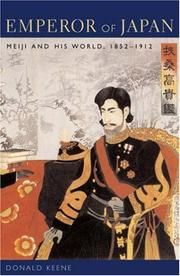
The definitive English-language biography of Emperor Meiji by Japan's foremost Western literary scholar — it places the reader at the center of the Restoration and shows how one reign reshaped an entire civilization.
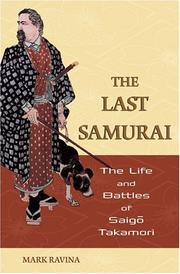
A scholarly yet accessible biography of Saigo Takamori, the real figure behind the samurai myth, which illuminates the painful human cost of modernization and the clash between old and new Japan.
Empire, War & Catastrophe
IntermediateTrace Japan's imperial ambitions, its path into World War II, the experience of total war, and the shattering defeat that set the stage for everything that followed.
▸ Study plan for this stage
Pace: 12–14 weeks, ~40–50 pages/day. Bix's biography (~650 pages) takes 3–4 weeks; Dower's narrative history (~680 pages) takes 3–4 weeks. Allow 4–6 weeks for review, integration, and exercises to absorb the dense material and cross-reference the two accounts.
- Hirohito's role in imperial ideology and military decision-making: from figurehead to active participant in Japan's imperial expansion and war strategy
- The institutional and psychological mechanisms that enabled Japan's imperial aggression: militarism, ultranationalism, and the cult of the Emperor
- Japan's path to total war: the Sino-Japanese War, the alliance with Nazi Germany and Fascist Italy, and the decision to attack Pearl Harbor
- The experience of total war on the Japanese home front: firebombing campaigns, civilian casualties, rationing, and the collapse of civilian morale
- The atomic bombings of Hiroshima and Nagasaki as the culmination of total war and their immediate psychological and physical devastation
- Unconditional surrender and the shock of defeat: how Japan's military and civilian population processed the end of empire and the occupation
- The psychological and cultural dimensions of defeat: shame, trauma, and the search for meaning in a shattered nation
- How Hirohito survived as a symbol and how the occupation authorities used him to legitimize postwar reconstruction
- What evidence does Bix present for Hirohito's active involvement in imperial military planning, and how does this challenge the postwar narrative of him as a passive figurehead?
- How did Japanese ultranationalism and the cult of the Emperor make total war psychologically and ideologically possible for both military leaders and civilians?
- Trace the key decisions and turning points that led Japan from imperial expansion in Manchuria to the attack on Pearl Harbor—what were the alternatives at each stage?
- What were the major phases of the home front experience during the Pacific War, and how did civilian morale and suffering evolve as described in Dower's account?
- How did the atomic bombings and unconditional surrender fundamentally alter Japanese consciousness, and what does Dower mean by 'embracing defeat'?
- Why did the occupation authorities decide to preserve Hirohito's position despite his wartime role, and what were the consequences of this choice?
- Create a detailed timeline of Hirohito's major decisions from 1926 (Showa Restoration) to 1945 (surrender), using Bix's evidence to mark moments where he actively shaped policy versus moments of constraint.
- Write a comparative analysis (3–4 pages) of how Bix and Dower each explain the psychological appeal of ultranationalism and militarism to different segments of Japanese society.
- Map the progression of the Pacific War using both texts: identify 5–6 critical junctures where Japan's military strategy shifted, and note what each author emphasizes about civilian and military experience at each point.
- Analyze 2–3 primary source excerpts (letters, diaries, propaganda) from the war period, using Bix and Dower to contextualize what they reveal about how Japanese people understood their own situation in real time.
- Create a visual or written comparison of the 'before and after' of Japanese imperial ideology: what did empire mean to Japanese elites and citizens in 1937, and what did it mean by 1946?
- Conduct a close reading of Dower's chapters on the atomic bombings and immediate surrender, then write a reflection on how the two texts together illuminate the gap between military leadership and civilian experience in the final months of war.
Next up: This stage establishes the catastrophic endpoint of imperial Japan and the psychological rupture of defeat, which sets up the next stage's exploration of how Japan rebuilt itself—culturally, politically, and economically—under occupation and in the postwar era.
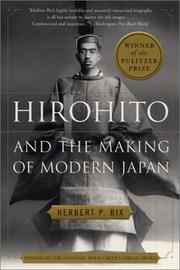
This Pulitzer Prize-winning biography of Emperor Hirohito reframes Japan's road to war through the lens of imperial responsibility — essential for understanding how militarism took hold and what it cost.
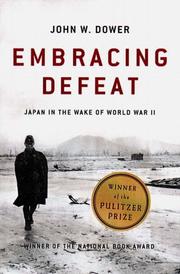
Another Pulitzer winner, this masterwork covers the American occupation of Japan (1945–1952) and the Japanese experience of defeat and reinvention — the essential bridge between wartime and postwar Japan.
Postwar Miracle & Modern Global Power
ExpertUnderstand how Japan rebuilt itself into the world's second-largest economy, grappled with its wartime past, and carved out a unique identity as a modern global power.
▸ Study plan for this stage
Pace: 8–10 weeks, ~40–50 pages/day. Start with "MITI and the Japanese Miracle" (4–5 weeks), then "Dogs and Demons" (3–4 weeks), with 1–2 weeks for synthesis and reflection.
- The developmental state model: how MITI orchestrated industrial policy to guide Japan's economic recovery and growth from 1950s–1980s
- Strategic targeting of industries (textiles, steel, automobiles, semiconductors) and the role of government-business coordination in Japan's competitive advantage
- The paradox of Japan's postwar success: economic miracle alongside cultural and environmental costs that emerge in the modern period
- Japan's relationship with its wartime past and how economic identity became a substitute for reckoning with historical trauma
- The tension between traditional Japanese aesthetics and values versus rapid modernization and Westernization
- Environmental degradation, urban sprawl, and cultural erosion as hidden prices of Japan's economic growth
- Japan's unique position as a non-Western modern power and the contradictions embedded in its global identity
- The limits of the developmental state model and early signs of Japan's economic stagnation by the 1990s
- What was MITI's role in Japan's postwar economic recovery, and how did it differ from Western free-market approaches?
- How did Japan strategically target and develop specific industries to build global competitiveness, and what were the mechanisms of government-business coordination?
- What does Kerr mean by the 'dogs and demons' metaphor, and how does he characterize the cultural and environmental costs of Japan's economic miracle?
- How did Japan's economic success become a way to avoid confronting its wartime past and imperial legacy?
- What contradictions does Kerr identify between Japan's modern global power status and its loss of traditional cultural identity?
- What evidence do Johnson and Kerr present that the Japanese developmental state model was beginning to show cracks by the 1990s?
- Create a timeline mapping MITI's industrial policy decisions (1950–1990) alongside Japan's GDP growth, export volumes, and technological breakthroughs to visualize the correlation between state guidance and economic outcomes.
- Analyze 2–3 case studies from Johnson's book (e.g., steel, automobiles, semiconductors) and write a 500-word comparative essay on how MITI's strategies differed across industries and why some sectors succeeded more than others.
- Read Kerr's descriptions of specific environmental disasters and urban decay (e.g., Minamata, Tokyo's sprawl) and research one in depth; write a 400-word reflection on how Johnson's economic narrative omits these costs.
- Create a visual comparison chart: list Japan's major cultural/aesthetic values (from Kerr) on one side and the modernization pressures that eroded them on the other; annotate with specific examples from both books.
- Write a dialogue between Johnson (the economist) and Kerr (the cultural critic) debating whether Japan's postwar miracle was worth its human and environmental costs—aim for 600–800 words with evidence from both texts.
- Research one Japanese company mentioned in Johnson (Toyota, Sony, Mitsubishi, etc.) and trace how MITI's policies shaped its rise; present findings in a 3–5 minute oral summary.
Next up: This stage establishes how Japan became a modern global power through state-directed capitalism and economic growth, while revealing the cultural and environmental contradictions embedded in that success—setting up the next stage to explore how Japan navigated the collapse of its economic model, demographic crisis, and the search for meaning beyond GDP.
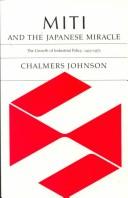
The landmark study of Japan's postwar economic rise and the role of industrial policy — it defined how the world understands the 'developmental state' and is indispensable for grasping Japan's economic power.
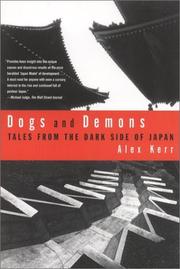
A provocative, deeply informed critique of modern Japan's bureaucratic and cultural stagnation, offering a necessary counterweight to triumphalist narratives and rounding out the reader's understanding of contemporary Japan.
Discussion
Keep reading
Paths that share books, cover the same subject, or open a related topic.