The art of conversation: learn to talk to anyone
This curriculum builds conversational mastery from the ground up — starting with mindset and social ease, moving through the mechanics of listening and questioning, and finally reaching the advanced art of deep connection and influence through dialogue. Each stage unlocks the next: you can't ask great questions until you know how to listen, and you can't truly connect until you've mastered both.
Foundations: Mindset & Social Ease
BeginnerOvercome social anxiety, understand why conversation matters, and build the basic confidence to initiate and sustain everyday interactions with anyone.
▸ Study plan for this stage
Pace: 5–6 weeks total: Weeks 1–3 for "How to Win Friends and Influence People" (~20–25 pages/day, reading one part per week and pausing to reflect); Weeks 4–5 for "The Fine Art of Small Talk" (~25–30 pages/day, one chapter per sitting); Week 6 reserved for review, journaling, and completing capstone exerc
- The fundamental desire to feel important: Carnegie's core insight that every person craves genuine appreciation and recognition, which is the master key to all positive interaction.
- Sincere appreciation vs. flattery: Carnegie's sharp distinction between honest, specific praise (which builds trust) and empty flattery (which destroys it).
- Becoming genuinely interested in others: The principle from Carnegie that interest must be real — asking about people's lives, remembering names, and listening to understand rather than to reply.
- Avoiding criticism, condemnation, and complaint: Carnegie's argument that attacking others triggers defensiveness and shuts conversation down, and that restraint here is a foundational social skill.
- The purpose and value of small talk: Fine's reframe of small talk not as trivial or fake, but as the essential social bridge that opens doors to deeper connection and opportunity.
- Conversation responsibility and initiative: Fine's concept that it is everyone's equal duty to initiate, sustain, and gracefully exit conversations — waiting to be approached is a passive trap.
- The art of the open-ended question and active listening: Fine's practical toolkit — using who/what/where/when/how questions, free information, and paraphrasing to keep conversation alive and make the other person feel heard.
- Graceful entry and exit strategies: Fine's concrete techniques for breaking into conversations with strangers and closing them without awkwardness, which directly tackle social anxiety at its most acute moments.
- According to Carnegie, what is the single most powerful thing you can give another person in a conversation, and why does it work?
- What is the difference between sincere appreciation and flattery as Carnegie defines them, and what practical test can you apply in the moment to tell them apart?
- Debra Fine argues that small talk serves a serious social function — what is that function, and how does it change the way you should think about 'trivial' conversations?
- What does Fine mean by 'conversation responsibility,' and how does accepting it shift your mindset from anxiety-driven passivity to confident initiative?
- How do open-ended questions differ from closed ones, and what specific techniques does Fine recommend for using them to sustain a conversation naturally?
- Both Carnegie and Fine address the fear of rejection or awkwardness in social situations. What overlapping mindset shift do both authors recommend to overcome this fear?
- The Name Game (Carnegie Week 1): For one full week, make a conscious effort to use every new person's name at least once during your first conversation with them. Log each instance and note how the other person responded.
- The Appreciation Journal (Carnegie Week 2): Each evening, write down one specific, sincere compliment or act of appreciation you gave someone that day. It must be concrete (not 'you're great' but 'the way you explained that problem was really clear'). Review at week's end to spot patterns in what you notice about others.
- The No-Criticism Challenge (Carnegie Week 3): Go 72 consecutive hours without criticizing, complaining about, or condemning anyone — out loud or in writing. Each time you catch yourself about to do it, write down what you were going to say and what you could say instead.
- The Small Talk Sprint (Fine Week 4): Initiate one unsolicited small talk conversation per day with a stranger or acquaintance (a cashier, a neighbor, someone in a waiting room). Use at least one open-ended question from Fine's toolkit. Aim for conversations that last at least 90 seconds.
- The Open-Question Swap (Fine Week 5): Take five closed questions you commonly ask ('Did you have a good weekend?') and rewrite them as open-ended versions ('What was the highlight of your weekend?'). Use the new versions in real conversations and journal the difference in responses.
- Capstone Role-Play (Week 6): With a friend or in front of a mirror, practice a full conversation arc: opening with a warm introduction, sustaining with open-ended questions and active listening, and closing gracefully using Fine's exit strategies. Record it if possible and review it against the key concepts from both books.
Next up: By internalizing Carnegie's people-first mindset and Fine's practical small-talk toolkit, the reader has the confidence and basic mechanics to start and hold any everyday conversation — the perfect launchpad for the next stage, which builds on this foundation to develop deeper listening skills, storytelling ability, and the art of truly meaningful dialogue.

The canonical starting point for social skill-building — it reframes conversation as an act of genuine interest in others, establishing the core mindset the entire curriculum rests on. Read first to internalize the 'other-person-first' orientation before learning any techniques.
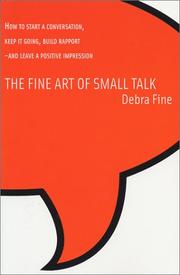
Directly tackles the beginner's biggest fear — the awkward opener and the dreaded silence. It gives concrete, low-pressure scripts for starting and exiting conversations, bridging the gap between Carnegie's philosophy and real-world practice.
The Engine: Listening & Presence
BeginnerDevelop genuine, active listening skills and learn to be fully present in a conversation — the single most underrated and highest-leverage conversational ability.
▸ Study plan for this stage
Pace: 6–8 weeks total: Weeks 1–3 on "Just Listen" (~20–25 pages/day, ~30 min/session); Weeks 4–6 on "You're Not Listening" (~20–25 pages/day, ~30 min/session); Weeks 7–8 reserved for review, journaling, and integrating exercises from both books into daily life.
- The 'Persuasion Cycle' (Goulston): moving someone from resisting → listening → considering → willing to act — and how listening is the ignition key for the whole cycle
- Disarming defensiveness: Goulston's techniques for getting through to people who are emotionally 'hijacked' (amygdala hijack), including the 'Feel Felt Found' method and the power of the fill-in-the-blank question
- The 'Empathy Jolt': leaning into another person's reality so completely that they feel genuinely understood — the foundation of all influence and connection
- Active listening vs. performative listening: Murphy's distinction between truly receiving what someone says versus waiting for your turn to talk, and why most people are far worse at this than they believe
- The role of silence and pausing: Murphy's research-backed case that comfortable silence, rather than rushing to fill gaps, signals confidence and invites deeper disclosure
- Listening shaped by our 'listening filters' (Murphy): how personal biases, assumptions, technology habits, and emotional states silently distort what we actually hear
- Presence as a physical and mental discipline: minimizing internal distraction (self-referential thinking, phone checking, mental rehearsal of replies) to stay anchored in the speaker's world
- Curiosity as the engine of listening: Murphy's argument that genuine curiosity — not technique — is what separates great listeners from average ones, and how to cultivate it deliberately
- According to Goulston, what are the stages of the Persuasion Cycle, and why must listening come before any attempt to influence or advise?
- What is an 'amygdala hijack,' how does Goulston say it shuts down productive conversation, and what specific moves does he recommend to de-escalate it?
- Murphy argues that most people are poor listeners despite believing otherwise — what structural, technological, and psychological forces does she identify as the main culprits?
- How do 'listening filters' (Murphy) silently shape — and distort — what we hear, and what practices does she suggest for becoming aware of your own filters?
- Both authors treat silence differently from mainstream conversational advice. What do Goulston and Murphy each say about the strategic and relational value of pausing and not filling silence?
- What is the difference between listening to respond and listening to understand, and how do both books suggest you can train yourself to shift from one mode to the other?
- The 24-Hour Listening Audit (Week 1): For one full day, after every significant conversation, jot down: (a) what percentage of the time you were truly present vs. mentally elsewhere, (b) how many times you interrupted or mentally rehearsed your reply, and (c) one thing the other person said that you almost missed. Use Goulston's Persuasion Cycle as your diagnostic lens.
- The Silence Experiment (Weeks 2–3, during 'Just Listen'): In three separate conversations, practice letting silence sit for at least 3–5 seconds after the other person finishes speaking before you respond. Notice what they add in that gap. Log what you discover — does the speaker go deeper? Do you feel uncomfortable? Compare your experience to Goulston's claims about the power of the pause.
- Filter Mapping (Week 4, starting 'You're Not Listening'): Draw a personal 'listening filter map' — list your top 5 biases, assumptions, or emotional triggers that you know distort how you receive information (e.g., defensiveness about a topic, impatience with slow talkers). For each filter, write one concrete counter-move you will try in real conversations.
- The Curiosity Question Challenge (Weeks 5–6): Inspired by Murphy's chapter on curiosity, enter three conversations per week with the sole goal of asking follow-up questions — no advice, no stories about yourself, no topic changes. Aim for at least two genuine follow-up questions per conversation that dig deeper into what the speaker just said. Debrief in writing afterward.
- The 'Feel Felt Found' Practice (Ongoing, from 'Just Listen'): Identify one recurring conflict or tense relationship in your life. Script and then attempt a real conversation using Goulston's Feel-Felt-Found framework. Afterward, write a one-page reflection: Did the other person's defensiveness shift? What was hard about staying in listening mode rather than problem-solving mode?
- End-of-Stage Integration Dialogue: Find a willing partner (friend, colleague, or classmate). Have a 20-minute conversation where your only job is to listen — no advice, no redirecting to your own experience, no phone. Afterward, each of you answers: 'What did it feel like to be listened to that fully?' Record the feedback and compare it to Murphy's descriptions of what people crave from a real lis
Next up: Mastering presence and listening gives you the stable, trustworthy foundation that the next stage — learning to ask great questions, express ideas clearly, and navigate conversational structure — absolutely depends on, because no technique for speaking or questioning works without the other person first feeling genuinely heard.

Reveals that being heard is the deepest human need, and teaches practical techniques to make anyone feel understood. It builds on Carnegie's mindset by giving you the specific mechanics of empathic listening.

A rigorous, research-backed examination of why we've lost the ability to listen and how to reclaim it. Read after Goulston to deepen your understanding of listening as a discipline, not just a technique.
The Craft: Asking Better Questions
IntermediateMaster the art of asking questions that open people up, move conversations forward, and signal genuine curiosity — transforming you from a passive listener into an active, engaging conversationalist.
▸ Study plan for this stage
Pace: 5–6 weeks total: Weeks 1–3 on "A More Beautiful Question" (~25–30 pages/day, including reflection pauses after each of the three parts); Weeks 4–6 on "The Coaching Habit" (~20–25 pages/day — it's shorter and dialogue-dense, so slow down to practice each of the 7 questions in real conversations befor
- The QFT (Question Formulation Technique) and why divergent, open questions outperform closed ones — drawn from Berger's research on breakthrough questioning
- The Why–What If–How arc: Berger's three-stage framework showing how transformative questions evolve from noticing a problem to imagining possibilities to acting on them
- Question-storming vs. brainstorming: generating questions first, before answers, to reframe problems and conversations
- The 'beautiful question' standard: a question ambitious enough to matter yet grounded enough to be actionable — Berger's central thesis
- Stanier's 7 Essential Questions: The Kickstart, AWE, Focus, Foundation, Lazy, Strategic, and Learning Questions — each designed to serve a specific conversational move
- The AWE Question ('And What Else?') as a master tool for deepening responses, resisting the advice trap, and signaling genuine curiosity
- Taming the Advice Monster: Stanier's concept of the default urge to jump to solutions, and how question discipline breaks that habit
- Silence and restraint as active conversational skills: letting questions breathe so the other person does the real thinking
- According to Berger, what distinguishes a 'beautiful question' from an ordinary one, and can you give an example from your own life that fits his definition?
- How does the Why–What If–How arc apply to a real conversation you've had recently — where did it stall, and which stage were you stuck in?
- What is the 'Advice Monster' (Stanier), why does it undermine conversations, and what specific question habit does Stanier prescribe to tame it?
- Walk through all 7 of Stanier's questions in order: what conversational purpose does each one serve, and when would you deploy it?
- How do Berger's ideas about question-storming complement Stanier's practical question toolkit — where do the two books agree, and where do they differ in emphasis?
- What does it feel like — for both parties — when a question genuinely opens someone up versus when it subtly closes them down?
- Question-storm a real problem: Pick a stuck situation in your life. Set a timer for 5 minutes and write only questions about it — no answers allowed. Then apply Berger's Why–What If–How arc to sort and prioritize them. Notice which questions feel 'beautiful.'
- 7-Question field test: In one conversation per day for a week, consciously deploy at least one of Stanier's 7 questions. Keep a pocket journal — note which question you used, the other person's reaction, and what opened up that wouldn't have otherwise.
- AWE drill: For three days, ban yourself from giving advice or sharing opinions in any conversation until you have asked 'And what else?' at least twice. Debrief in writing: what did you learn that you would have talked over?
- Rewrite your worst questions: Recall three recent conversations where you asked a closed, leading, or advice-disguised question (e.g., 'Have you tried just…?'). Rewrite each one using Berger's 'beautiful question' standard and Stanier's open-question structure. Read both versions aloud and notice the difference in energy.
- Conversation audit: Record (with permission) or take detailed notes on a 10-minute conversation. Afterward, categorize every question you asked: Was it open or closed? Advice-seeking or curiosity-driven? Which of Stanier's 7 does it resemble? Score yourself and set one specific goal for next week.
- Book dialogue exercise: Write a one-page imaginary dialogue between Warren Berger and Michael Bungay Stanier debating the question: 'What is the single most important question a person can learn to ask?' Use only ideas and language grounded in their actual books to sharpen your synthesis of both.
Next up: Mastering how to ask better questions gives you the ignition key for conversation — the next stage will build on this foundation by exploring how to truly hear and respond to the answers, developing the listening, empathy, and emotional intelligence skills that turn great questions into great dialogue.

Reframes questioning as a creative, powerful act and teaches you how to formulate questions that genuinely unlock new thinking. It provides the intellectual framework for why great questions matter before you practice the skill.

Distills questioning into seven essential, field-tested questions that work in almost any conversation. Read after Berger to move from theory to a practical, repeatable toolkit you can use immediately.
Going Deeper: Connection & Meaningful Dialogue
IntermediateMove beyond surface-level chat to create real intimacy, navigate difficult topics gracefully, and hold conversations that leave both people genuinely changed.
▸ Study plan for this stage
Pace: 6–8 weeks total: Weeks 1–3 on "Supercommunicators" (~25–30 pages/day, including 2–3 reflection days per week); Weeks 4–7 on "Difficult Conversations" (~20–25 pages/day, with slower pacing to allow journaling); Week 8 is an integration week — no new reading, only review, synthesis, and exercise compl
- The Three Conversations (Supercommunicators): Every meaningful exchange operates simultaneously on a practical/factual layer, an emotional layer, and a social/identity layer — missing any one layer causes disconnection.
- Matching Conversation Types: Duhigg's core insight that communication breaks down when people are having different *kinds* of conversations; the skill is detecting which type is happening and aligning with it.
- Looping for Understanding: The active-listening technique from Supercommunicators — ask, paraphrase, confirm — that signals genuine attention and invites the other person to go deeper.
- Vulnerability as a Communication Tool: How Supercommunicators shows that self-disclosure and emotional honesty, used strategically, unlock reciprocal openness in others.
- The Three Conversations Framework (Difficult Conversations): Stone's model that every hard talk contains a 'What Happened?' conversation (facts/blame), a Feelings conversation (emotions being suppressed), and an Identity conversation (what this says about me).
- Moving from Blame to Contribution: Difficult Conversations' shift away from assigning fault toward mapping each person's contribution to a problem — a foundational reframe for staying curious instead of defensive.
- The Identity Conversation: Understanding how threats to our self-image (am I competent? am I a good person?) hijack difficult dialogues, and how to stabilize your identity before and during hard talks.
- Starting from the Third Story: Difficult Conversations' technique of opening a hard talk from the perspective of a neutral observer rather than from your own position, dramatically lowering defensiveness on both sides.
- According to Duhigg in Supercommunicators, what are the three layers of every conversation, and can you give a real example from your own life where a mismatch between layers caused a breakdown?
- How does 'looping for understanding' differ from ordinary active listening, and why does Duhigg argue it is more effective at building genuine connection?
- Using Stone's framework from Difficult Conversations, break down a hard conversation you've been avoiding into its 'What Happened?', Feelings, and Identity components — what do you discover?
- What is the difference between blame and contribution as defined in Difficult Conversations, and how does shifting to a contribution lens change the emotional tone of a conflict?
- How do the two books complement each other? Where does Duhigg's work on connection and alignment set the stage for the repair and confrontation skills Stone teaches?
- What does Difficult Conversations mean by 'starting from the Third Story,' and how would you use that technique to open a conversation you currently dread having?
- The Conversation Audit (Supercommunicators): After three real conversations this week, write a one-paragraph post-mortem for each. Identify which of Duhigg's three conversation types was dominant, whether both people were in the same type, and one moment where you could have aligned better.
- Looping Practice (Supercommunicators): In your next emotionally charged conversation, consciously deploy the Ask–Paraphrase–Confirm loop at least twice. Afterward, note the other person's reaction — did they visibly relax, elaborate, or reciprocate openness? Record what you observed.
- Vulnerability Experiment (Supercommunicators): Choose one low-stakes relationship and intentionally share something slightly more personal than you normally would. Track whether it shifts the depth of the exchange over the following week.
- Three-Conversations Deconstruction (Difficult Conversations): Pick one unresolved conflict or avoided conversation from your life. Write three separate paragraphs — one for each of Stone's layers (What Happened, Feelings, Identity) — from *your* perspective, then rewrite each paragraph from the other person's likely perspective. Notice where your assumptions are weakest.
- Contribution Mapping (Difficult Conversations): For the same conflict, draw a simple two-column table. List your contributions to the problem on one side and the other person's on the other — without using the word 'fault.' Share the exercise with a trusted friend and ask if your list seems balanced.
- Third Story Scripting (Difficult Conversations): Write a full opening script (3–5 sentences) for the difficult conversation you've been avoiding, using Stone's Third Story technique. Practice it aloud, record yourself, and revise until it sounds neutral, curious, and inviting rather than accusatory.
Next up: By mastering how to align conversation types (Duhigg) and dismantle the hidden layers of conflict (Stone), the reader has built the interior architecture for deep dialogue — making them ready to study the broader social and rhetorical dimensions of conversation: how to influence, persuade, and connect across difference at scale.

Synthesizes neuroscience and social research to explain what separates people who connect deeply from those who don't — and gives a clear framework for matching the type of conversation to the moment. A perfect bridge from mechanics to mastery.
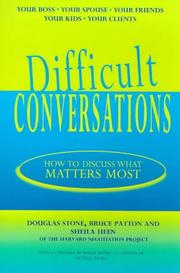
Equips you to handle the conversations most people avoid — disagreements, feedback, and emotional confrontations — without damaging the relationship. Essential at this stage because true conversational range requires comfort with discomfort.
Mastery: Rhetoric, Storytelling & Lasting Influence
ExpertElevate your conversational presence by weaving in narrative, wit, and persuasive structure — so your words don't just connect in the moment but resonate long after the conversation ends.
▸ Study plan for this stage
Pace: 6–8 weeks total: Weeks 1–3 on "Talking to Strangers" (~25–30 pages/day, including reflection pauses after each chapter); Weeks 4–7 on "The Art of Conversation" (~20–25 pages/day, slower pace to practice techniques in real time); Week 8 reserved for review, synthesis, and exercise completion.
- Default to Truth (Gladwell): Humans are wired to believe others by default — understanding this bias sharpens how you frame your own credibility and detect misalignment in dialogue
- Transparency Illusion (Gladwell): People assume emotions and intentions are legible on others' faces, but this mismatch causes catastrophic misreading — mastering conversational presence means closing that gap deliberately
- Coupling & Context (Gladwell): Behavior is inseparable from context; advanced conversationalists read the room, not just the person, adjusting narrative and tone to the environment
- The Anatomy of a Story (Gladwell's narrative journalism as model): Gladwell structures every chapter as a mini-conversation — hook, tension, revelation, resonance — a blueprint for storytelling in live dialogue
- Wit and Timing (Blyth): Humor is not decoration but architecture; Blyth shows how well-placed levity disarms, builds rapport, and makes ideas stick long after the conversation ends
- The Art of the Question (Blyth): Asking the right question at the right moment is the highest conversational skill — it signals intelligence, invites depth, and hands control gracefully to the other person
- Silence and Pacing (Blyth): Strategic silence is persuasive; Blyth frames pauses as punctuation that gives weight to what came before and anticipation for what comes next
- Lasting Influence through Narrative (Blyth + Gladwell synthesis): Conversations that endure in memory are structured like stories — they have stakes, a turning point, and a resonant close that the listener retells to others
- After reading Gladwell, can you explain the 'Default to Truth' bias and give a real example from your own life where it caused a conversational misfire — and how you would handle it differently now?
- How does Gladwell's concept of 'coupling' challenge the idea that a skilled conversationalist can succeed in any environment, and what does this mean for how you prepare for high-stakes conversations?
- Gladwell uses narrative journalism as his primary vehicle — what specific structural moves (hook, case study pivot, moral reframe) does he use, and how can you transplant those moves into a 5-minute spoken story?
- According to Blyth, what distinguishes a question that opens a conversation from one that closes it, and what are the hallmarks of a question that creates lasting engagement?
- Blyth argues that wit is a learnable craft, not a personality trait — what are the core mechanics she identifies, and how do they connect to Gladwell's insight about transparency and emotional legibility?
- Synthesizing both books: what is the difference between a conversation that feels good in the moment and one that resonates long afterward — and what specific techniques from Gladwell and Blyth produce the latter?
- The Gladwell Retell: After each chapter of 'Talking to Strangers,' retell its core case study out loud in under 3 minutes to a friend or into a voice recorder — focusing on hook, tension, and a single resonant takeaway. Review the recording for pacing and clarity.
- Transparency Audit: Over one week, after each significant conversation, journal one moment where you assumed your intent or emotion was obvious to the other person. Note whether the assumption held — and rewrite how you would have signaled it more deliberately using Gladwell's framework.
- The Blyth Question Bank: Drawing on Blyth's principles, write 10 'opening' questions tailored to three different social contexts (professional, social, intimate). Practice delivering them in real conversations and note which generated the richest responses.
- Silence Experiment: In three separate conversations this week, deploy one deliberate 3–5 second pause after making an important point. Observe the other person's reaction. Journal what the silence communicated that words could not.
- Story Architecture Workshop: Choose one real personal anecdote and rewrite it three times — once as a flat recounting of facts, once using Gladwell's narrative structure (hook → complication → revelation), and once incorporating Blyth's wit and question techniques. Deliver the final version aloud and solicit feedback.
- Influence Postmortem: Identify two conversations from the past month — one that felt forgettable and one that felt memorable. Using concepts from both books (Default to Truth, coupling, wit, pacing, narrative structure), write a one-page analysis of what made the difference and what you will do differently going forward.
Next up: Mastering rhetoric, storytelling, and narrative structure in conversation naturally sets the stage for exploring written and public communication — where these same tools must work without the real-time feedback of a live exchange, demanding even greater intentionality and craft.
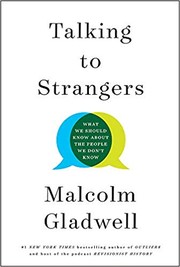
Challenges your assumptions about how well you read people and why misunderstandings happen — a humbling, advanced lesson in conversational humility that sharpens your judgment after you've built strong foundational skills.

A witty, historically rich guide to conversation as a refined art form — covering timing, silence, wit, and the rhythm of great dialogue. The ideal capstone: it rewards readers who have already internalized the earlier stages and are ready to think about conversation as craft.
Discussion
Keep reading
Paths that share books, cover the same subject, or open a related topic.