Networking without the ick: build a real network
This curriculum takes a beginner from the mindset shift required for authentic networking all the way to advanced relationship strategy and personal brand-building. Each stage builds on the last: you first internalize the "giver" philosophy, then learn practical outreach mechanics, and finally develop the long-game systems and visibility that turn a network into a genuine career asset.
Foundations: The Right Mindset
BeginnerShed the transactional, card-collecting view of networking and replace it with a generosity-first philosophy that makes relationship-building feel natural and ethical.
▸ Study plan for this stage
Pace: 6–7 weeks total: Weeks 1–3 for "Never Eat Alone" (~25–30 pages/day, including 2–3 reflection days per week); Weeks 4–6 for "Give and Take" (~25 pages/day); Week 7 is a consolidation week — no new reading, only review, journaling, and completing exercises.
- Generosity-first networking (Never Eat Alone): Ferrazzi's core thesis that the most connected people lead with giving — sharing knowledge, making introductions, and offering help before any personal gain is expected.
- The 'Friend, not contact' philosophy: Networking is not transactional card-collecting but the deliberate cultivation of genuine, long-term relationships built on mutual care and vulnerability.
- Pinging and staying top-of-mind: The discipline of maintaining relationships through small, consistent, low-pressure touchpoints rather than only reaching out when you need something.
- Building a 'connector' identity: Actively positioning yourself as someone who links people together, creating value for your entire network rather than just extracting it.
- Giver, Taker, and Matcher archetypes (Give and Take): Grant's research-backed framework showing that people operate primarily as Givers (contribute without keeping score), Takers (maximize personal gain), or Matchers (trade favors in kind).
- Why Givers finish first — and last: Understanding the critical distinction between 'selfless' Givers who burn out and 'otherish' Givers who give strategically while protecting their own energy and interests.
- The five-minute favor and the art of low-cost, high-impact giving: How small, targeted acts of generosity — sharing expertise, making introductions, offering feedback — create outsized relationship value.
- Psychological safety and earned trust: Both books converge on the idea that authentic self-disclosure and consistent follow-through are what convert acquaintances into genuine allies.
- According to Ferrazzi in Never Eat Alone, what is the fundamental mindset shift required before any networking tactic can be effective, and why does he argue that 'networking' as commonly practiced actually backfires?
- What specific behaviors does Ferrazzi recommend for staying connected to your network between major interactions, and how do these prevent relationships from feeling transactional?
- Using Grant's three archetypes from Give and Take, how would you classify your own default networking style, and what evidence from your recent interactions supports that classification?
- Grant distinguishes between 'selfless' and 'otherish' Givers. What is the practical difference, and why does it matter for long-term networking success and personal sustainability?
- How do the core arguments of Never Eat Alone and Give and Take reinforce each other, and where, if anywhere, do they appear to be in tension?
- What does Grant's research reveal about how Givers build trust and reputation over time, and how does this challenge the common assumption that generosity is a competitive disadvantage in professional settings?
- Relationship audit (Week 1): List 15–20 people in your current network. For each, note the last time you reached out and whether it was need-driven or value-driven. Use Ferrazzi's 'friend, not contact' standard to honestly assess how many are real relationships vs. dormant contacts.
- The 'ping' practice (Weeks 2–3, ongoing): Identify 5 people you've lost touch with. Send each a brief, genuine, no-ask message — share an article relevant to them, congratulate a recent achievement, or recall a specific shared memory. Log their responses and your own comfort level.
- Giver/Taker/Matcher self-assessment (Week 4): After reading Part 1 of Give and Take, write a one-page honest self-assessment of your dominant style. Include two specific past networking interactions that reveal your default pattern — one you're proud of and one you'd handle differently now.
- Five-minute favor challenge (Weeks 5–6): Each week, perform three deliberate 'five-minute favors' from Grant's playbook — make an introduction between two people who should know each other, share a useful resource unprompted, or give substantive feedback someone didn't explicitly request. Reflect in writing on how it felt and what resulted.
- Connector mapping exercise (Week 6): Draw a simple network map of your professional world. Identify two or three 'structural holes' — pairs or groups of people who don't know each other but would benefit from an introduction. Make at least one of those introductions before the stage ends.
- Stage synthesis journal (Week 7): Write 500–700 words answering: 'How has my definition of networking changed after these two books, and what is one concrete belief or habit I am committing to carry into the next stage?' Share it with an accountability partner or post it somewhere you'll revisit it.
Next up: Having internalized a generosity-first mindset and understood the Giver archetype as a sustainable identity, the reader is now ready to move from philosophy to strategy — learning the concrete skills of how to initiate, structure, and deepen professional relationships with intention and craft.

The canonical starting point for professional networking — Ferrazzi's core argument that generosity and genuine interest in others is the engine of a powerful network sets the philosophical foundation for everything that follows.
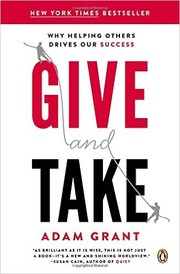
Backs the 'givers gain' mindset with rigorous research, proving that being a giver is not naive but strategically superior — read second so the data reinforces the philosophy you just absorbed from Ferrazzi.
Human Connection: The Emotional Core
BeginnerDevelop the interpersonal skills — listening, empathy, and making people feel valued — that turn an introduction into a lasting relationship.
▸ Study plan for this stage
Pace: 4–5 weeks total: Weeks 1–3 cover "How to Win Friends and Influence People" (~20–25 pages/day, reading one part per week); Weeks 4–5 cover "The Like Switch" (~25–30 pages/day, one section every 2–3 days). Allow 1–2 days between books for reflection journaling.
- The Fundamental Techniques in Handling People (Carnegie): avoid criticism, give honest appreciation, arouse eager want — the bedrock of all positive interaction
- Genuine interest in others: Carnegie's principle that people respond to those who are sincerely curious about them, not those who talk about themselves
- The power of a person's name: using names deliberately as the simplest signal of respect and recognition
- Listening as an active skill: letting others talk, asking about their interests, and making them feel heard rather than performing your own story
- The Friend Signal framework (Schafer): the non-verbal and verbal cues — eyebrow flash, head tilt, smile, eye contact — that instantly communicate 'I am not a threat; I like you'
- The FORD technique (Schafer — Family, Occupation, Recreation, Dreams): a structured, low-pressure method for sustaining warm conversation and discovering what matters to someone
- Empathy and validation: Schafer's emphasis on acknowledging feelings before offering solutions or opinions, so the other person feels truly understood
- The Law of Attraction in conversation (Schafer): people are drawn to those who make them feel good about themselves — shifting focus from impressing others to elevating others
- According to Carnegie, why is criticism almost always counterproductive in building relationships, and what should you do instead when you need to change someone's behavior?
- Carnegie describes six ways to make people like you — can you name and briefly explain each one, and give a real-life scenario where you would apply at least three of them?
- What are the core components of Schafer's 'Friend Signal,' and why does he argue that non-verbal cues must be established before verbal rapport can take hold?
- How does the FORD framework from 'The Like Switch' help sustain a conversation with someone you've just met, and what pitfalls does it help you avoid?
- Both Carnegie and Schafer stress making the other person feel valued — how do their approaches complement each other, and where do they differ in method or emphasis?
- Schafer introduces the concept of 'empathic statements' as superior to questions for drawing people out. What makes an empathic statement different from a question, and when is each most effective?
- The 21-Day Name Game: For three weeks, make a conscious effort to use every new person's name at least twice during your first conversation and once at the end. Log each instance and note the reaction.
- Active Listening Audit: In your next five conversations, set a personal rule — do not speak about yourself unless directly asked. Practice asking one follow-up question per thing the other person shares. Debrief in a journal: What did you learn about them? How did the conversation feel different?
- Friend Signal Practice: Before your next in-person social or professional event, review Schafer's non-verbal cues (eyebrow flash, open posture, genuine smile, slight head tilt). Consciously deploy them when greeting the first three people you meet and record whether the interaction felt warmer or opened more easily.
- FORD Conversation Map: Choose one upcoming conversation with a stranger or acquaintance. Beforehand, sketch a simple mind-map with the four FORD categories. Afterward, note which topics surfaced naturally, which you steered toward, and what you learned that you wouldn't have discovered otherwise.
- Appreciation Journal (Carnegie-inspired): Each day for two weeks, write down one specific, honest compliment or expression of appreciation you gave to someone — not flattery, but a genuine observation. Note how you delivered it and how the person responded.
- Empathic Statement Swap: Identify three upcoming moments where your instinct would be to ask a question (e.g., 'Why do you feel that way?'). Instead, craft and deliver an empathic statement (e.g., 'It sounds like that situation left you feeling overlooked.'). Compare the depth of the response you receive versus your usual question-based approach.
Next up: Mastering the emotional core of human connection — making people feel heard, valued, and at ease — creates the warm foundation of trust that the next stage will build on, shifting focus outward to strategically growing and mapping a broader professional network.

Timeless principles for making people feel genuinely heard and appreciated; reading it here gives you the human-interaction vocabulary that makes every networking tactic in later books land authentically.

A former FBI agent distills the behavioral science of rapport and likability into concrete, low-pressure techniques — a practical complement to Carnegie that deepens your ability to build instant trust.
Practical Mechanics: Reaching Out and Following Up
IntermediateBuild a repeatable, non-slimy system for initiating contact, having great conversations, and staying in touch with your network over time.
▸ Study plan for this stage
Pace: 3–4 weeks, ~20–25 pages/day — Lowndes' book is divided into short, punchy techniques, so read 2–3 techniques per sitting, pause to reflect, and resist the urge to binge; spaced repetition of each chapter matters more than speed here.
- The 'Flooding Smile' and slow, deliberate warmth — Lowndes' foundational idea that delaying your smile makes it feel genuine and targeted, setting the tone for every first impression
- Eye contact as a power signal — maintaining strong, intentional eye contact before, during, and after speaking to project confidence and sincere interest
- The 'Big Baby pivot' — giving someone your full-body attention the moment you meet them, signaling they are the most important person in the room
- Eavesdropping on your own vocabulary — eliminating 'cheap talk' (complaints, filler, negativity) and replacing it with language that positions you as a positive, high-value contact
- The 'Swiveling Spotlight' technique — keeping conversational focus on the other person by asking follow-up questions that dig into their world rather than redirecting to your own
- 'Never the naked thank-you' and conversational hooks — always attaching a specific, memorable detail to expressions of gratitude or compliments so they stick and invite further dialogue
- Mirroring body language and matching energy — subtly reflecting posture, pace, and vocabulary to build unconscious rapport quickly
- The 'Be a Word Detective' principle — listening for the emotional hot-button words and phrases people use, then feeding those exact words back to make them feel deeply heard
- According to Lowndes, why does a slow, delayed smile create a stronger first impression than an immediate one, and how would you apply this in a networking event context?
- What is the 'Swiveling Spotlight' and how does it prevent the most common networking conversation mistake — talking too much about yourself?
- How does Lowndes distinguish between 'cheap talk' and meaningful conversation, and what practical steps can you take to eliminate the former from your networking interactions?
- Lowndes argues that body language precedes and outweighs words in impact — which three non-verbal techniques from the book would you prioritize when initiating contact with a stranger, and why?
- How can the 'never the naked thank-you' principle be applied to a follow-up email after a networking coffee chat to make your message memorable and relationship-building?
- How do the mirroring and 'word detective' techniques work together to create a feeling of deep rapport, and what is the risk of using them inauthentically?
- 'Smile Delay' field test: For one full week, consciously practice the flooding smile with at least three new people per day (barista, colleague, stranger) — journal what reactions you notice compared to your default greeting
- Conversation audit: Record (with permission) or mentally replay two recent professional conversations and annotate them — mark every moment you redirected focus to yourself vs. kept the spotlight on the other person; set a concrete goal to improve the ratio
- Vocabulary detox: For 48 hours, ban all 'cheap talk' from your speech (complaints, self-deprecating filler, negative openers) — replace each instance with a curiosity question or a genuine observation about the other person
- Follow-up message rewrite: Take the last three thank-you or follow-up messages you sent and rewrite each using the 'never the naked thank-you' principle — attach a specific detail, callback, or next step to every expression of gratitude
- Networking event simulation: Attend one real or virtual professional event with a pre-set goal of using at least five Lowndes techniques consciously (big baby pivot, eye contact, mirroring, spotlight, word detective) — debrief in writing within 24 hours
- Build a 'keep-in-touch' trigger list: Identify 10 people in your existing network and, using Lowndes' rapport principles, draft a short, specific, non-generic outreach message for each — focus on referencing something personal and relevant to them, then send at least three
Next up: Mastering Lowndes' mechanics of warmth, attention, and memorable conversation gives you the interpersonal toolkit to make contact feel natural — the next stage builds on this foundation by introducing strategic frameworks for mapping, growing, and leveraging a network with intentionality and long-term purpose.
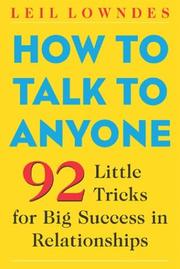
Provides 92 specific, actionable techniques for starting conversations and keeping them going — bridges the mindset stages into real-world execution at events, online, and in cold outreach.
Strategy and Systems: Building a Network That Works
IntermediateMove from ad-hoc relationship-building to an intentional, strategic network designed around your specific career goals, including understanding network structure and weak ties.
▸ Study plan for this stage
Pace: 5–6 weeks total: Weeks 1–3 cover "Superconnector" (~25–30 pages/day, including reflection time); Weeks 4–6 cover "The Tipping Point" (~20–25 pages/day, with heavier annotation on social dynamics chapters). Reserve the final 3–4 days for cross-book synthesis and exercise completion.
- Superconnector identity: shifting from transactional networking to value-first relationship building, as Gerber defines the Superconnector archetype
- Habitual generosity and the 'give before you get' operating principle central to Gerber's framework
- Community-driven networking: deliberately cultivating and convening groups rather than managing one-on-one contacts in isolation
- Selectivity and intentionality: Gerber's argument that strategic networkers curate relationships aligned with specific goals rather than maximizing contact volume
- The Law of the Few from Gladwell: how Connectors, Mavens, and Salesmen play structurally distinct roles in spreading ideas and opportunities through a network
- Weak ties and bridge relationships: Gladwell's illustration (drawing on Granovetter's research) of how acquaintances — not close friends — are the primary conduit for new information and career opportunities
- The Stickiness Factor applied to personal brand: how the memorability and clarity of your professional message determines whether your network acts on your behalf
- Network epidemics and tipping points: understanding the threshold conditions under which a reputation, idea, or opportunity spreads virally through professional circles
- According to Gerber, what fundamentally distinguishes a Superconnector from a conventional networker, and how does that distinction change the daily behaviors you should adopt?
- How does Gerber's concept of community-building reframe the goal of networking from collecting contacts to creating ecosystems — and what does that look like in practice for your specific career field?
- Gladwell identifies three types of people critical to social epidemics (Connectors, Mavens, Salesmen). Which type are you naturally closest to, and how should you deliberately recruit the other two types into your network?
- How does the concept of weak ties (as illustrated in The Tipping Point) challenge the intuitive instinct to deepen only your closest professional relationships, and what is the strategic implication for how you spend your networking time?
- What does Gladwell's Stickiness Factor suggest about how you should craft and consistently communicate your professional identity so that your network can accurately and compellingly refer you?
- How do the frameworks from both books combine into a single coherent system — where does Gerber's intentional generosity intersect with Gladwell's structural view of how influence actually travels through networks?
- Network audit and role-mapping: List your current 30 most important professional contacts. Using Gladwell's Law of the Few, classify each as a Connector, Maven, or Salesmen. Identify which category is underrepresented and write a one-paragraph plan to deliberately add two people from that category within 60 days.
- Superconnector behavior sprint: For two consecutive weeks, practice Gerber's 'give before you get' principle by making one value-first outreach per day — share an article, make an introduction, or offer a specific skill — with no immediate ask attached. Journal what responses you receive and what patterns emerge.
- Weak-tie activation: Identify five contacts you haven't spoken to in 12+ months (your dormant weak ties). Craft a personalized, low-friction re-engagement message for each that leads with value or genuine curiosity. Track response rates and note what language worked best.
- Stickiness stress-test: Write your professional 'pitch' — who you are, what you do, and what you're looking for — in exactly three sentences. Share it with five people outside your industry and ask them to repeat back what they understood. Revise until their playback matches your intent, applying Gladwell's Stickiness Factor to your own personal brand.
- Community convening experiment: Organize one small, intentional gathering (virtual or in-person, 5–10 people) around a specific professional theme relevant to your goals, as Gerber advocates. Prepare one concrete way to add value to every attendee before the event ends. Debrief afterward: what connections formed that wouldn't have otherwise?
- Integrated network map: Draw (digitally or on paper) a visual map of your professional network, marking strong ties, weak ties, and structural holes (gaps where two clusters of your network don't know each other). Using both Gerber's selectivity principles and Gladwell's connector logic, identify the three highest-leverage relationships to invest in over the next quarter and write a specific actio
Next up: By internalizing both the behavioral habits of a Superconnector and the structural mechanics of how influence spreads through weak ties and key social roles, the reader is now equipped to move into more advanced territory — exploring how to sustain, deepen, and leverage a mature network over the long arc of a career, including navigating power dynamics, reciprocity at scale, and digital networking

Introduces the idea of becoming a hub — someone who connects others — and provides a framework for building a curated, high-value network rather than a large, shallow one.
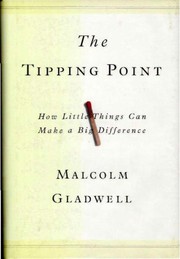
Gladwell's analysis of Connectors, Mavens, and Salesmen reveals the structural dynamics of how ideas and opportunities spread through networks — understanding this helps you identify and cultivate the most leveraged relationships.
Long Game: Visibility, Reputation, and Career Capital
ExpertLeverage your network through a strong personal brand and a reputation for expertise so that opportunities come to you — the ultimate payoff of years of genuine relationship-building.
▸ Study plan for this stage
Pace: 6–8 weeks total: Weeks 1–4 on "Promote Yourself" (~25–30 pages/day, including reflection time); Weeks 5–8 on "The 2-Hour Job Search" (~20–25 pages/day, with active system-building alongside reading)
- Personal branding as a career-long asset: Schawbel's argument that your brand is the intersection of your skills, passions, and the value you deliver — and that managing it proactively is non-negotiable at the advanced career stage
- The shift from job-seeker to opportunity-magnet: moving from reactive networking to a posture where your visible expertise attracts inbound opportunities, referrals, and collaborations
- Soft skills as brand differentiators: Schawbel's emphasis that technical skills get you in the room but soft skills (communication, leadership, adaptability) define your reputation and career trajectory
- Content and thought leadership as networking leverage: using writing, speaking, and social media presence to scale your reach far beyond one-on-one relationship maintenance
- Dalton's LAMP list methodology: a systematic, prioritized framework (List, Alumni, Motivation, Posting) for converting your existing network into warm introductions rather than cold outreach
- The Informational Interview as a career capital engine: Dalton's structured approach to converting conversations into advocates — people who will refer you even when no open role exists
- Employer and contact prioritization: Dalton's 6-point contact ranking system to focus energy on the highest-probability connectors, avoiding the spray-and-pray trap
- Reputation compounding over time: the synthesis of both books — consistent visibility (Schawbel) combined with disciplined outreach systems (Dalton) creates career capital that grows exponentially rather than linearly
- According to Schawbel, what are the three pillars of a personal brand, and how should an advanced professional audit and refresh their brand as their career evolves?
- How does Schawbel distinguish between online and offline brand-building, and what specific platforms and behaviors does he recommend for establishing thought leadership in your field?
- What is Dalton's LAMP list, how is each column weighted, and why does he argue that most job seekers waste time by skipping directly to the 'Posting' column?
- Walk through Dalton's recommended sequence for a 2-hour job search session — what happens in each phase, and how does this discipline prevent the 'networking fatigue' trap?
- How do Schawbel's personal branding principles and Dalton's outreach systems reinforce each other? Where might they create tension, and how would you resolve it?
- What does Dalton mean by a 'Boosted' contact, and how does the informational interview process convert a cold contact into a genuine career advocate?
- Brand Audit (Week 1): Before opening Promote Yourself, Google yourself and screenshot the first two pages of results. Write a one-paragraph 'current brand statement.' Revisit and rewrite it after finishing the book — compare the two versions to identify blind spots.
- Personal Brand One-Pager (Weeks 2–3): Using Schawbel's three-pillar framework, draft a one-page personal brand document covering: your top 5 differentiating skills, your target audience, your unique value proposition, and your chosen content channels. Share it with one trusted colleague for honest feedback.
- Content Commitment Sprint (Weeks 3–4): Publish at least two pieces of thought-leadership content (LinkedIn article, blog post, recorded talk, or podcast appearance) that directly reflect your stated expertise. Track engagement metrics and note which topics resonate most with your target network.
- LAMP List Construction (Week 5): Following Dalton's exact methodology, build a LAMP list of at least 40 target organizations. Score each on the Alumni and Motivation columns, then rank your top 10 priority targets. Keep this as a living spreadsheet throughout the rest of the stage.
- Informational Interview Blitz (Weeks 6–7): Using Dalton's email templates and conversation frameworks, schedule and conduct at least 3 informational interviews with contacts from your LAMP list. After each, write a one-paragraph debrief: What did you learn? Did they offer a referral or follow-up? What would you do differently?
- Integrated Visibility + Outreach Review (Week 8): Map every contact from your informational interview blitz onto your personal brand one-pager. Identify where your visible content (Schawbel) opened doors or was referenced in conversations (Dalton). Write a 'career capital inventory' — a living document of your growing reputation assets, warm relationships, and next 90-day visibility goals.
Next up: By internalizing Schawbel's brand-building discipline and Dalton's systematic outreach, the reader has transformed their network from a passive contact list into an active career engine — setting the foundation for the next stage, which explores how to sustain, deepen, and lead within that network at the highest levels of professional influence.

Bridges networking and personal branding, showing how your online presence and professional reputation amplify the relationships you've built — a natural capstone to the outreach and connection skills developed earlier.

A highly systematic, proven method for activating your network to unlock hidden opportunities; reading it last means you already have the relationships and mindset to execute its LAMP framework with full effectiveness.
Discussion
Keep reading
Paths that share books, cover the same subject, or open a related topic.