Build emotional intelligence
This curriculum builds emotional intelligence from the ground up — starting with the science and self-awareness foundations, then moving into emotion regulation and social reading skills, and finally applying deep EQ to the most demanding real-world arenas: relationships, parenting, and leadership. Each stage assumes the vocabulary and frameworks built in the one before it, so reading in order is essential.
Foundations: What EQ Is and Why It Matters
BeginnerUnderstand what emotional intelligence actually is, where it comes from scientifically, and why it predicts life outcomes better than IQ alone — building the core vocabulary (self-awareness, self-regulation, empathy, motivation, social skill) you'll use throughout the rest of the curriculum.
▸ Study plan for this stage
Pace: 8–10 weeks total: Weeks 1–6 for Goleman's "Emotional Intelligence" (~25–30 pages/day, 5 days/week), then Weeks 7–10 for Barrett's "How Emotions Are Made" (~20–25 pages/day, 5 days/week). Barrett's denser neuroscience warrants a slower pace. Reserve one day per week for reflection, journaling, and ex
- The five domains of EQ (Goleman): self-awareness, self-regulation, motivation, empathy, and social skill — and how each domain builds on the previous one
- The 'emotional hijack' (amygdala hijack): how the brain's limbic system can override rational thought, and why this matters for everyday decision-making (Goleman, Part I)
- EQ vs. IQ: Goleman's argument that IQ accounts for only ~20% of life success, and the research base (longitudinal studies, workplace data) supporting emotional competence as a stronger predictor
- The constructed emotion theory (Barrett): emotions are not hardwired, universal programs but are actively built by the brain using past experience, body budget, and cultural concepts — directly challenging the 'basic emotions' model Goleman implicitly relies on
- Interoception and the 'body budget' (Barrett): the brain continuously predicts and regulates the body's internal state, and these signals are the raw material from which emotional experiences are constructed
- Affect vs. emotion (Barrett): the distinction between core affect (the continuous background of valence and arousal) and the discrete emotion categories we label and experience — foundational for understanding self-awareness at a deeper level
- Emotional granularity (Barrett): people with a richer emotional vocabulary construct more precise, nuanced emotional experiences and show better regulation outcomes — a key bridge between the two books
- The neuroplasticity of emotion: because emotions are learned constructions (Barrett), the EQ competencies Goleman describes are genuinely trainable skills, not fixed personality traits
- According to Goleman, what are the five domains of emotional intelligence, and how does a deficit in one domain (e.g., self-awareness) undermine the others downstream?
- What does Goleman mean by an 'amygdala hijack,' and what neurological mechanism does he use to explain why strong emotions can short-circuit rational decision-making?
- How does Barrett's 'theory of constructed emotion' challenge the classical view of emotions as universal, hardwired programs — and what evidence (e.g., cross-cultural studies, facial action coding critiques) does she marshal to support her position?
- What is 'emotional granularity' as Barrett defines it, and how does having a larger emotional concept vocabulary lead to measurably better emotional regulation and mental health outcomes?
- How do Barrett's concepts of interoception and the 'body budget' provide a biological mechanism that enriches — or complicates — Goleman's claim that we can learn to manage our emotions?
- In what ways do Goleman and Barrett agree, and in what ways do they tension each other? How should a reader reconcile Goleman's relatively modular brain model with Barrett's predictive-processing framework?
- **EQ Domain Self-Audit (Goleman-based):** After finishing Part I of 'Emotional Intelligence,' rate yourself 1–5 on each of Goleman's five domains. Write 2–3 sentences of evidence for each rating — specific recent situations, not general impressions. Revisit and revise the audit after finishing Barrett to see if your self-descriptions change.
- **Emotion Journal with Granularity Tracking (Barrett-based):** For 14 consecutive days, log every significant emotional moment: (1) the first word that came to mind, (2) three more specific words after reflection, (3) the body sensations present, and (4) what prediction or past experience might have constructed this feeling. This directly trains the 'emotional granularity' Barrett identifies as a
- **Amygdala Hijack Incident Report (Goleman-based):** Recall or observe three instances of emotional hijacking — your own or someone else's. For each, document the trigger, the physical sensations, the behavioral response, and what a regulated response might have looked like. Use Goleman's framework to analyze what domain failure occurred.
- **Concept Vocabulary Expansion (Barrett-based):** Using Barrett's appendix or her recommended resources, learn 10 emotion words you don't currently use (from any language — e.g., 'schadenfreude,' 'saudade,' 'amae'). Write a paragraph describing a past experience you can now label more precisely with one of these new concepts. Notice whether the relabeling changes how you feel about the memory.
- **Goleman ↔ Barrett Synthesis Map:** Create a two-column comparison chart. On the left, list each of Goleman's five EQ domains. On the right, annotate each with Barrett's mechanisms — e.g., 'Self-awareness' maps to interoception + emotional granularity; 'Self-regulation' maps to body-budget management + concept reappraisal. This forces active integration of both books.
- **Body Budget Check-In Practice (Barrett-based):** Three times a day for two weeks (morning, midday, evening), pause for 60 seconds and answer: What is my energy level? What is my stress load? Have I eaten, moved, slept adequately? Then name the emotion you're experiencing. This builds the interoceptive habit Barrett argues is the biological foundation of emotional awareness.
Next up: By establishing both the *what* (Goleman's five-domain vocabulary) and the *why it works biologically* (Barrett's constructed-emotion framework), this stage gives you the conceptual scaffolding needed to engage productively with more applied or domain-specific EQ material — such as how these skills operate under pressure in relationships, leadership, or clinical contexts — in the next stage of the
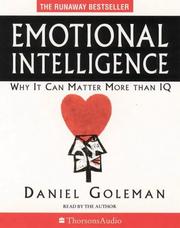
The book that defined the field for a general audience. Read it first to get the foundational framework and the compelling science showing why emotions matter more than we thought.

Corrects common myths about emotions (they are not universal, hard-wired reactions) and replaces them with a constructionist model — essential for naming and understanding your own emotions accurately before trying to regulate them.
Self-Awareness and Emotion Regulation
BeginnerDevelop a rich emotional vocabulary, learn to identify what you are feeling in real time, and acquire concrete, evidence-based tools for regulating difficult emotions rather than suppressing or being hijacked by them.
▸ Study plan for this stage
Pace: 6–8 weeks total: Weeks 1–3 for "Permission to Feel" (~25–30 pages/day, including journaling pauses); Weeks 4–6 for "Emotional Agility" (~20–25 pages/day with reflection exercises); Week 7–8 for integration, review, and exercise consolidation. Aim for 5 reading days per week, leaving 2 days for pract
- The Mood Meter (Permission to Feel): a four-quadrant tool (Yellow/Red/Blue/Green) that maps emotions by energy and pleasantness, used to pinpoint feelings in real time
- Emotional vocabulary expansion (Permission to Feel): moving beyond 'fine,' 'good,' or 'bad' to a precise, nuanced lexicon of emotions — because naming an emotion accurately reduces its intensity (affect labeling)
- The RULER framework (Permission to Feel): Recognizing, Understanding, Labeling, Expressing, and Regulating emotions as an integrated, learnable skill set
- Meta-moment (Permission to Feel): the pause between stimulus and response — catching yourself before reacting and choosing a wiser action aligned with your 'best self'
- Emotion suppression vs. emotion acceptance (Emotional Agility): why bottling or 'positive-thinking away' difficult feelings backfires, and why acceptance is the evidence-based alternative
- Hooking vs. unhooking (Emotional Agility): recognizing when you are fused with a thought or feeling ('hooked') and learning to step back and observe it without being controlled by it
- The four steps of Emotional Agility (Emotional Agility): Show Up, Step Out, Walk Your Why, and Move On — a practical cycle for navigating difficult inner experiences
- Values-driven action (Emotional Agility): using your core personal values as a compass so that emotion regulation serves meaningful living, not mere comfort
- Can you place a specific emotion you felt today on the Mood Meter's four quadrants, and explain why energy level and pleasantness both matter for identifying it accurately?
- What is the difference between suppressing an emotion, venting it, and regulating it — and what does Marc Brackett say about the long-term costs of suppression?
- Walk through the five steps of RULER for a recent difficult emotional experience. Where did the process break down, and why?
- Describe a moment when you were 'hooked' by a thought or feeling this week. Using Susan David's language, what story were you telling yourself, and how could you 'step out' and observe it instead?
- How does identifying your personal values (Walk Your Why) change the way you respond to uncomfortable emotions, rather than simply trying to make them go away?
- What is a 'meta-moment,' and how does it connect to Susan David's concept of creating space between stimulus and response? Give a concrete personal example.
- Mood Meter Daily Check-In (Weeks 1–3): Every morning and evening, open a journal and place your current emotional state on the Mood Meter quadrant. Write the single most precise emotion word you can find (use Brackett's expanded vocabulary list). Track patterns across the week.
- Emotion Word Expansion Drill (Week 1): Take the three words you use most often ('stressed,' 'fine,' 'tired') and brainstorm 5–8 more specific alternatives for each using the vocabulary introduced in Permission to Feel. Practice using one new word per day in conversation or writing.
- RULER Incident Log (Weeks 2–3): After any emotionally charged event, write a short entry applying all five RULER steps: What did you Recognize? What caused it (Understanding)? What is the precise Label? How did you Express it — or not? What Regulation strategy did or could you use?
- Meta-Moment Rehearsal (Week 3): Identify one recurring trigger in your life. Write a 'best self' script: who do you want to be in that moment? Practice visualizing the trigger → pause → best-self response sequence for 5 minutes daily for one week.
- Unhooking Practice — 'Leaves on a Stream' (Weeks 4–5): As described in the Emotional Agility framework, sit quietly for 10 minutes and imagine your thoughts and feelings as leaves floating down a stream. Practice naming each one ('I notice I am having the thought that…') without acting on or suppressing it. Journal what you observed.
- Values Clarification + Action Mapping (Week 6): List your top 5 personal values using Susan David's values exercises. For each, write one way a difficult emotion you commonly experience is actually signaling that a value is being threatened or unmet. Then write one small, concrete action this week that honors that value despite the discomfort.
Next up: Mastering self-awareness and regulation creates the stable emotional foundation needed to turn attention outward — the next stage builds on this inner clarity to develop empathy, social attunement, and emotionally intelligent relationships with others.

Brackett, founder of the Yale Center for Emotional Intelligence, introduces the RULER framework — a practical system for Recognizing, Understanding, Labeling, Expressing, and Regulating emotions. Read before the regulation-focused books so you have a clear map.
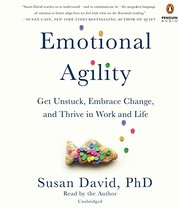
Builds directly on emotional labeling skills to show how to unhook from difficult thoughts and feelings and act on your values instead — the bridge between awareness and flexible self-regulation.
Reading Others: Empathy and Social Accuracy
IntermediateMove from internal self-awareness outward — learn to read facial expressions, body language, and hidden emotions accurately, and develop genuine empathy as a skill rather than a personality trait.
▸ Study plan for this stage
Pace: 6–8 weeks total: Weeks 1–4 for "Telling Lies" (~25–30 pages/day, including time to pause and practice micro-expression observation); Weeks 5–8 for "Empathy" (~20–25 pages/day, with slower reading to reflect on the six habits Krznaric outlines and journal between sessions).
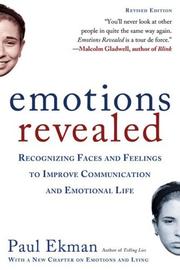
- Micro-expressions and the universality of facial expressions (Ekman): seven basic emotions — anger, fear, disgust, contempt, sadness, surprise, and happiness — are cross-culturally consistent and involuntary
- Leakage and deception cues (Ekman): how the body and face 'leak' concealed emotions through fleeting expressions, voice pitch, and verbal-nonverbal mismatches
- The Othello Error (Ekman): the danger of misreading truthful but nervous people as liars — context and baseline behavior are essential before drawing conclusions
- Reliable vs. unreliable cues to deception (Ekman): debunking folk myths (e.g., gaze aversion) and replacing them with evidence-based signals
- Empathy as a learnable, practiced skill rather than a fixed trait (Krznaric): the distinction between affective and cognitive empathy, and why both matter
- The Six Habits of Highly Empathic People (Krznaric): curiosity about strangers, challenging prejudices, discovering commonality, listening hard and opening up, inspiring mass action, and developing an ambitious imagination
- Experiential empathy (Krznaric): stepping into another's life circumstances — not just imagining their feelings — as the deepest form of perspective-taking
- The social and political dimensions of empathy (Krznaric): how empathy scales beyond one-on-one interactions to drive social change and reduce systemic 'us vs. them' thinking
- According to Ekman, what distinguishes a micro-expression from a regular facial expression, and why does it matter for detecting concealed emotion?
- What is the Othello Error, and how should a reader of nonverbal cues guard against it in real-world interactions?
- Which deception cues does Ekman identify as genuinely reliable, and which popular beliefs does he debunk with evidence?
- How does Krznaric define the difference between affective empathy and cognitive empathy, and in what situations is each more useful?
- What does Krznaric mean by 'experiential empathy,' and how does it differ from simply imagining yourself in someone else's shoes?
- How do the two books complement each other — where does Ekman's accuracy-focused, scientific lens end and Krznaric's humanistic, habit-building approach begin?
- Micro-expression flash training (Ekman-based): Use free online tools (e.g., Paul Ekman Group's free resources or YouTube slow-motion clips) to practice identifying the seven universal emotions in under 1/25th of a second. Log your accuracy weekly and note which emotions you most frequently confuse.
- Baseline mapping exercise (Ekman-based): Choose two or three people you interact with regularly. Over one week, consciously observe their 'normal' nonverbal behavior — resting expression, typical gesture rate, voice pace — before attempting to read any emotional deviations. Write a short baseline profile for each person.
- Deception audit journal (Ekman-based): After watching a recorded interview, debate, or press conference, pause every 5 minutes and note any verbal-nonverbal mismatches, voice changes, or micro-expressions you observe. Then read a transcript or fact-check to see if your 'leakage' readings correlated with known deceptions or emotional concealment.
- Stranger curiosity challenge (Krznaric-based): Once per week for four weeks, initiate a genuine, open-ended conversation with someone outside your usual social circle — a different background, profession, or worldview. Afterward, journal: What assumption did you arrive with? What surprised you? Which of Krznaric's six habits did you practice?
- Experiential empathy immersion (Krznaric-based): Select one of Krznaric's examples of experiential empathy (e.g., spending a day doing someone else's job, volunteering in an unfamiliar community). Complete the experience and write a 1–2 page reflection distinguishing what you imagined beforehand from what you actually felt and observed.
- Integration synthesis (both books): Write a 1-page personal 'empathy protocol' that merges Ekman's accuracy tools with Krznaric's habit framework — a concrete checklist you would use before and during a high-stakes conversation (e.g., a difficult talk with a colleague or a family conflict) to both read the other person accurately and respond with genuine empathy.
Next up: By mastering the outward-facing skills of reading emotions accurately (Ekman) and practicing deliberate empathy (Krznaric), the reader has built the perceptual and relational foundation needed to move into the next stage — applying these insights dynamically in conversation, conflict, and influence.

Ekman's research on micro-expressions and the science of detecting concealed emotion gives you a rigorous, evidence-based lens for reading others — foundational before tackling empathy at a deeper level.

Shifts from detection to genuine perspective-taking, presenting empathy as a learnable habit with real-world exercises — a natural next step after Ekman's more analytical approach.
EQ in Relationships and Parenting
IntermediateApply emotional intelligence to the highest-stakes personal contexts — intimate relationships and raising children — using research-backed frameworks for communication, conflict, and emotional coaching.
▸ Study plan for this stage
Pace: 6–7 weeks total: Weeks 1–4 cover "The Seven Principles for Making Marriage Work" (~25–30 pages/day, including journaling pauses); Weeks 5–7 cover "Raising an Emotionally Intelligent Child" (~20–25 pages/day, with reflection exercises after each chapter).
- Gottman's Four Horsemen (criticism, contempt, defensiveness, stonewalling) and their antidotes — the core predictors of relationship breakdown from 'The Seven Principles'
- The Sound Relationship House: seven layered principles (Love Maps, Fondness & Admiration, Turning Toward, Positive Perspective, Managing Conflict, Making Life Dreams Come True, Creating Shared Meaning) as a structural model for lasting partnership
- Bids for connection: recognizing, turning toward, and the cumulative emotional bank account that determines relationship resilience
- Gridlocked vs. solvable conflicts: distinguishing perpetual problems rooted in differing values/dreams from situational disagreements, and applying dialogue tools for each
- Emotion Coaching vs. Emotion Dismissing/Disapproving parenting styles: Gottman's five-step Emotion Coaching model from 'Raising an Emotionally Intelligent Child'
- Meta-emotion philosophy: understanding a parent's own emotional history and attitudes toward feelings as the hidden driver of how they respond to a child's emotions
- The role of empathy and emotional validation in both partnership and parenting — treating emotions as opportunities rather than problems to be solved
- Physiological flooding and self-soothing: recognizing when the nervous system hijacks rational response in adults (relationships) and children (parenting), and strategies to de-escalate
- According to 'The Seven Principles,' what distinguishes a 'master' from a 'disaster' couple, and which of the Four Horsemen is Gottman's single strongest predictor of divorce — and why?
- How does the concept of 'turning toward bids' function as an emotional bank account, and what does the research in 'The Seven Principles' say about the ratio of positive-to-negative interactions in stable relationships?
- What is a 'perpetual problem' in a relationship, and how does Gottman recommend couples manage (rather than solve) gridlocked conflict through the exploration of underlying dreams?
- What are the five steps of Emotion Coaching outlined in 'Raising an Emotionally Intelligent Child,' and how does a parent's meta-emotion philosophy shape whether they can execute those steps authentically?
- How does Gottman differentiate Emotion Coaching from Emotion Dismissing and Emotion Disapproving parenting, and what are the documented long-term outcomes for children raised under each style?
- In what ways do the frameworks in both books reinforce each other — specifically, how does a couple's conflict style (from 'The Seven Principles') directly affect the emotional climate in which children are raised (from 'Raising an Emotionally Intelligent Child')?
- Love Maps audit: Using the Love Maps questionnaire from 'The Seven Principles,' quiz yourself (and a partner if applicable) on 20+ details about each other's inner world; identify gaps and schedule one 'update' conversation per week for a month.
- Four Horsemen self-monitoring log: For two weeks, keep a brief daily journal noting any conflict interactions — label which Horseman appeared (if any), what triggered it, and practice writing out the recommended antidote response (e.g., rewriting a criticism as a gentle startup complaint).
- Bids tracking exercise: For one week, consciously tally every bid for connection you make or receive in a close relationship; note whether you turned toward, away, or against — then reflect on patterns using the framework from 'The Seven Principles.'
- Perpetual vs. solvable conflict mapping: List 3–5 recurring conflicts in a key relationship; classify each as solvable or perpetual using Gottman's criteria, then write a one-page 'dream exploration' for one perpetual problem, articulating the underlying value or life dream on both sides.
- Emotion Coaching role-play: Using the five-step model from 'Raising an Emotionally Intelligent Child,' script and then practice (with a partner, friend, or in writing) three scenarios — one with a young child, one with a teenager, one with an adult — noticing where you default to dismissing or disapproving.
- Meta-emotion reflection journal: Write a 1–2 page personal history of how emotions were handled in your family of origin (were feelings named, validated, dismissed, or punished?); map how those patterns appear in your current parenting or caregiving style, using Gottman's meta-emotion framework as a lens.
Next up: Mastering EQ in intimate relationships and parenting builds the relational self-awareness and empathy skills that translate directly into the next stage's focus on emotional intelligence in professional and social contexts, where the same dynamics of trust, conflict, and connection play out at scale.
Gottman's decades of research on couples distills EQ into concrete relationship skills: building emotional maps of your partner, managing conflict without contempt, and repairing ruptures — essential applied EQ.

Introduces 'emotion coaching' — how to help children identify and regulate their own emotions — which also deepens your own self-awareness as a parent and adult.
EQ in Leadership and High-Stakes Influence
ExpertIntegrate everything into a leadership context — understand how emotional climate drives team performance, how to lead with empathy at scale, and how to use EQ under pressure when the stakes are highest.
▸ Study plan for this stage
Pace: 6–8 weeks total: ~3 weeks on "Primal Leadership" (~25–30 pages/day) and ~3–4 weeks on "Dare to Lead" (~20–25 pages/day), with a dedicated reflection/integration week at the end to synthesize both books into a personal leadership framework.
- Primal Leadership & Resonance vs. Dissonance: Goleman's foundational argument that a leader's primary job is to manage their own emotions to create a resonant emotional climate — and how dissonant leadership neurologically undermines team performance.
- The Six Leadership Styles (Visionary, Coaching, Affiliative, Democratic, Pacesetting, Commanding): Understanding when each style is emotionally appropriate, which styles build resonance, and how to fluidly switch between them based on situational demands.
- The Neurological Basis of Emotional Contagion: How a leader's mood literally spreads through a team via mirror neurons and the open-loop limbic system, making emotional self-regulation a strategic — not just personal — leadership competency.
- Developing EQ as a Leadership Discipline (Goleman): The deliberate, neuroplasticity-based process of building new emotional habits through self-directed learning, including the five discovery steps for sustained leadership development.
- Vulnerability as Operational Courage (Brown): Brown's reframing of vulnerability not as weakness but as the foundational act of courageous leadership — the willingness to show up uncertain and emotionally exposed in high-stakes moments.
- Rumbling with Vulnerability & the BRAVING Inventory: Brown's concrete tools — including the Rumble, the BRAVING trust framework (Boundaries, Reliability, Accountability, Vault, Integrity, Non-judgment, Generosity) — for building trust and psychological safety at scale.
- Armored vs. Daring Leadership: Brown's taxonomy of the self-protective behaviors leaders default to under pressure (perfectionism, cynicism, numbing) versus the daring alternatives, and how to recognize and interrupt armor in real time.
- Leading with Empathy at Scale Under Pressure: The synthesis of both books — how Goleman's resonant styles and Brown's daring behaviors combine to sustain empathic, high-EQ leadership not just one-on-one, but across teams, cultures, and crises.
- According to Goleman, why is emotional climate the single most important driver of team performance, and what is the neurological mechanism that makes a leader's mood contagious — for better or worse?
- What distinguishes a resonant leader from a dissonant one in Goleman's framework, and which of the six leadership styles reliably build resonance versus which ones risk dissonance if overused?
- How does Goleman's model of self-directed neuroplastic change challenge the idea that leadership style is fixed — and what are the five discovery steps he prescribes for developing new emotional habits?
- How does Brené Brown define vulnerability in a leadership context, and why does she argue that avoiding vulnerability is itself the greatest risk a leader can take in high-stakes situations?
- Using Brown's BRAVING inventory, how would you diagnose a specific trust breakdown on a team — and what concrete behaviors would you change to rebuild it?
- How do the concepts of 'armored leadership' (Brown) and 'dissonant leadership' (Goleman) reinforce each other, and what does a leader who integrates both frameworks actually do differently under pressure?
- Leadership Style Audit (Goleman): Over one full week, keep a daily log of which of the six leadership styles you used in each significant interaction. At the end of the week, identify your default style, which styles you never used, and one situation where a different style would have produced a more resonant outcome.
- Emotional Climate Mapping (Goleman): Interview 3–5 teammates or direct reports using open-ended questions about how they feel working on your team. Map their responses against Goleman's resonance/dissonance spectrum. Write a one-page honest assessment of the emotional climate you are currently creating.
- BRAVING Self-Assessment (Brown): Apply Brown's seven BRAVING elements to your most important current professional relationship. Score yourself honestly on each element, identify your lowest-scoring behavior, and commit to one specific, observable change for the next 30 days.
- Armor Identification Journal (Brown): For two weeks, keep a private journal specifically tracking moments when you felt the urge to 'put on armor' — perfectionism, cynicism, controlling, blaming. For each entry, name the underlying vulnerability that triggered the armor and write what a 'daring' response would have looked like instead.
- High-Stakes Rumble Simulation (Brown): Identify one real, ongoing difficult conversation you have been avoiding at work. Using Brown's Rumble framework, script the opening — including a clear statement of your own uncertainty and your genuine curiosity about the other person's perspective. Conduct the conversation and debrief in writing afterward.
- Integrated Leadership Manifesto: After finishing both books, write a 1–2 page personal leadership manifesto that explicitly draws on both Goleman and Brown. It must answer: What emotional climate am I committed to creating? How will I practice vulnerability as a leadership act? What is my plan for developing one EQ competency over the next 90 days?
Next up: Mastering EQ in leadership and high-stakes influence establishes the internal and interpersonal foundation needed to apply emotional intelligence to its most complex frontier — navigating organizational systems, cultural differences, and sustained behavior change at the institutional level.
Goleman applies his EQ framework specifically to leadership, showing how a leader's emotional state is literally contagious and how the six leadership styles map onto EQ competencies — a direct capstone to Stage 1.
Brown's research on vulnerability, shame resilience, and courageous leadership adds the final dimension: how authentic emotional openness — not just competence — is what makes leaders truly trusted and effective.
Discussion
Keep reading
Paths that share books, cover the same subject, or open a related topic.