Modern etiquette: poise in any situation
This curriculum moves from timeless foundational principles to nuanced, modern-context mastery — covering social grace, dining, professional conduct, and digital manners. Each stage builds on the last: you first absorb the "why" behind etiquette, then learn the "what" in specific settings, and finally develop the refined judgment to navigate any situation with confidence and warmth.
Foundations: The Spirit of Etiquette
BeginnerUnderstand that etiquette is not about rigid rules but about making others feel comfortable — and absorb the core mindset that underpins all good manners.
▸ Study plan for this stage
Pace: 6–8 weeks total: Weeks 1–4 for "Emily Post's Etiquette" (~25–30 pages/day, focusing on the introductory philosophy chapters and selected topical sections rather than reading it cover-to-cover as a reference work); Weeks 5–8 for "How to Win Friends and Influence People" (~15–20 pages/day, reading eve
- Etiquette as empathy, not rule-following: Peggy Post's foundational argument that all manners flow from genuine consideration for others, not from memorizing a code of conduct.
- The three pillars of Post's etiquette — consideration, respect, and honesty — as a decision-making framework for any social situation.
- Adaptability over rigidity: Post's teaching that rules evolve with society and that the spirit behind a rule always outweighs its letter.
- First impressions and the power of making others feel seen: Carnegie's principle that people's deepest need is to feel important and appreciated.
- The distinction between sincere interest and flattery: Carnegie's insistence that genuine curiosity about others is the engine of all positive social interaction.
- Listening as an active social skill: Carnegie's demonstration that being a good listener is more socially powerful than being a good talker.
- Avoiding criticism and judgment: Carnegie's case — echoing Post's tone of graciousness — that condemning others almost never produces the result we want.
- The convergence of both books: that good manners and winning relationships are two expressions of the same underlying attitude — other-centeredness.
- According to Peggy Post, what are the three core principles that underpin all etiquette, and can you give a real-life example of each?
- How does Post distinguish between following an etiquette 'rule' and acting in the true spirit of etiquette? When might the two conflict?
- Carnegie argues that the only way to get someone to do something is to make them want to do it — how does this idea relate to Post's vision of considerate behavior?
- What does Carnegie mean by 'becoming genuinely interested in other people,' and how is this different from being polite out of obligation?
- Both Post and Carnegie address how to handle disagreement or mistakes gracefully — what strategies do they each offer, and where do their approaches overlap?
- After reading both books, how would you define 'modern etiquette' in your own words, and what single mindset shift do both authors agree is most essential?
- The 'Spirit vs. Rule' journal: Each day for one week, note one social situation you encountered. Write down what the 'rule' might say and what the spirit of consideration would say — then reflect on whether they aligned or diverged.
- The Carnegie listening challenge: In three separate conversations this week, commit to asking at least two follow-up questions and saying nothing about yourself until the other person has finished. Afterward, journal how the other person responded and how it felt.
- Post's three-pillar audit: Choose three recent interactions (a meal, an email, a phone call) and score yourself honestly on consideration, respect, and honesty. Identify one concrete thing you would do differently in each.
- The name practice: Inspired by Carnegie's chapter on remembering names, consciously use the name of every new person you meet within the first 30 seconds of conversation for one full week. Track how people react.
- Rewrite a rude message: Find a past email or text you sent that was blunt or thoughtless. Rewrite it applying both Post's principle of consideration and Carnegie's principle of making the other person feel valued. Compare the two versions.
- Synthesis essay (one page): After finishing both books, write a personal 'etiquette manifesto' — your own statement of the values and mindset that will guide your social behavior, drawing explicitly on ideas from both Post and Carnegie.
Next up: By internalizing the other-centered mindset from Post and Carnegie, the reader has the philosophical foundation needed to engage confidently with the more specific, situational etiquette guidance that comes in later stages — approaching those rules not as arbitrary obligations, but as practical expressions of the principles already absorbed here.

The canonical American etiquette reference, now modernized by the Post family. Starting here gives you the authoritative vocabulary and a comprehensive map of the entire subject before diving into specifics.

Etiquette is ultimately about human connection; Carnegie's classic instills the empathetic, other-focused mindset that makes every rule of manners feel natural rather than performative.
Social Grace: Everyday Interactions and Dining
BeginnerHandle social situations — introductions, conversation, hosting, and formal dining — with ease and without anxiety.
▸ Study plan for this stage
Pace: 8–10 weeks total: ~3 weeks on "Miss Manners' Guide to Excruciatingly Correct Behavior" (read selectively by chapter topic, ~25–30 pages/day); ~3 weeks on "The Art of Civilized Conversation" (~20 pages/day, with reflection pauses); ~2–3 weeks on "Fork It Over" (~25 pages/day, read as narrative essays
- The foundational principle that etiquette exists to make others comfortable, not to judge or exclude — Judith Martin's core thesis throughout her guide
- Navigating introductions, greetings, and forms of address correctly and without awkwardness, as laid out by Miss Manners
- The architecture of good conversation: opening, sustaining, and gracefully closing exchanges — Margaret Shepherd's framework in 'The Art of Civilized Conversation'
- Listening as an active social skill: Shepherd's emphasis on curiosity, restraint, and genuine engagement over performance
- Taboo topics, conversational repair, and how to exit or redirect a conversation that has gone wrong — covered in depth by Shepherd
- Formal and informal dining etiquette: place settings, utensil use, ordering, pacing, and host/guest roles, grounded in Miss Manners' prescriptions
- The culture and social meaning of food and restaurants as a lens on human behavior — Alan Richman's essays in 'Fork It Over' illustrate real-world dining dynamics
- Hosting responsibilities vs. guest responsibilities: what each role demands in both home and restaurant settings
- According to Judith Martin in 'Miss Manners' Guide,' what is the underlying purpose of etiquette rules, and how does that purpose change the way you should think about 'breaking' a rule to avoid embarrassing someone?
- What does Margaret Shepherd in 'The Art of Civilized Conversation' identify as the most common mistakes people make when trying to keep a conversation going, and what does she recommend instead?
- How does Shepherd distinguish between a conversation that is merely polite and one that is genuinely civilized? What qualities elevate the latter?
- Using Miss Manners' guidance, walk through the correct way to introduce two people of different social or professional ranks — who is introduced to whom, and why?
- Alan Richman's essays in 'Fork It Over' frequently expose the unwritten social codes of restaurant culture. What recurring tensions between diner expectations and restaurant realities does he highlight, and what do they reveal about dining etiquette in practice?
- Drawing on all three books, how would you handle the role of host for a formal dinner — from issuing invitations through the end of the meal — and what are the top three ways a host can put guests at ease?
- **Introduction drill:** Practice introducing two people (friends, family members, or colleagues) using Miss Manners' hierarchy rules. Do this in at least three real or role-played scenarios — a professional context, a social context, and a mixed-age context — and note where it felt unnatural.
- **Conversation mapping:** After any social gathering or phone call, write a brief journal entry using Shepherd's framework: How did the conversation open? Who sustained it and how? Did it close gracefully? Identify one moment you could have listened better or redirected more skillfully.
- **Taboo topic rehearsal:** With a trusted friend, practice Shepherd's techniques for redirecting a conversation that has veered into uncomfortable territory (politics, money, personal conflict). Take turns being the one who introduces the awkward topic and the one who steers away.
- **Table-setting exercise:** Using Miss Manners' dining chapter as your guide, physically set a formal place setting at home — including all utensils, glassware, and napkin placement. Then set an informal one. Photograph both and compare them against the book's descriptions.
- **Restaurant observation log:** Visit a sit-down restaurant (or recall a recent visit) and read one of Richman's essays from 'Fork It Over' that touches on restaurant culture beforehand. Observe: How does the staff handle seating, pacing, and complaints? How do diners treat staff? Write a one-page reflection connecting your observations to Richman's insights.
- **Host simulation:** Plan and execute a simple hosted meal (even just 2–3 guests) applying all three books: use Miss Manners' guidance on invitations and seating, Shepherd's principles to keep table conversation flowing, and Richman's awareness of food and atmosphere as communication. Debrief afterward — what worked, what didn't?
Next up: Mastering everyday interactions and dining gives the reader a confident social baseline, making them ready to tackle more nuanced or high-stakes etiquette contexts — such as professional settings, written correspondence, digital communication, or cross-cultural situations — that build directly on these foundational skills.

Martin's witty, precise Q&A format makes social rules memorable and enjoyable; read after the Post foundation to see the same principles applied with sharp, real-world nuance.

Conversation is the engine of all social etiquette; this focused guide teaches you to listen, respond, and engage gracefully — a skill every subsequent stage depends on.

A celebrated food writer's essays on dining culture build genuine fluency around the table — understanding not just which fork to use, but the spirit and pleasure of shared meals.
Professional Presence: Workplace and Business Manners
IntermediateProject credibility and respect in professional settings — meetings, correspondence, networking events, and cross-cultural business interactions.
▸ Study plan for this stage
Pace: 6–7 weeks total. Week 1–3: "The Essentials of Business Etiquette" by Barbara Pachter (~20–25 pages/day, reading in thematic chunks: introductions & first impressions → meetings & communication → digital & phone etiquette → dining & networking). Week 4–7: "Kiss, Bow, or Shake Hands" by Terri Morrison
- First impressions and professional image: Pachter's framework for how appearance, posture, handshakes, and introductions establish instant credibility in business settings
- Business communication hierarchy: Pachter's guidance on choosing the right channel (in-person, phone, email, text) for the right message, and the tone/format rules for each
- Meeting etiquette: protocols for punctuality, seating, turn-taking, device use, and follow-up that signal respect and competence
- Dining and networking manners: Pachter's rules for business meals (ordering, utensils, hosting vs. guest roles) and working a room at networking events without appearing transactional
- Digital and electronic etiquette: email subject lines, reply-all discipline, voicemail clarity, and social-media professionalism as covered in Pachter's chapters on technology
- Cultural dimensions of business behavior: Morrison's country-by-country analysis of how greetings, gift-giving, negotiation styles, hierarchy, and time orientation vary across global business cultures
- Reading cultural cues and adapting in real time: Morrison's framework for researching a country's background (history, religion, government) before a meeting and adjusting communication style accordingly
- Avoiding ethnocentrism: the core lesson across both books that one's own cultural defaults are not universal standards, and that flexibility is a professional skill, not a compromise
- According to Pachter, what are the key elements of a strong business introduction, and who should be introduced to whom first?
- How does Pachter differentiate appropriate versus inappropriate uses of email, text, and in-person communication in a professional context?
- What specific dining etiquette rules does Pachter outline for a business meal, and how do the roles of host and guest differ?
- Using Morrison's framework, how would you prepare for a first business meeting with a counterpart from Japan versus one from Brazil — what greetings, topics, and behaviors would differ?
- What does Morrison identify as the primary drivers of business culture variation (e.g., religion, history, political system), and how should a professional use that background research before an interaction?
- How do the lessons from Pachter's domestic etiquette rules need to be modified or suspended when applying Morrison's cross-cultural guidance — where do the two books complement or tension-test each other?
- Handshake & introduction audit: Practice the Pachter-prescribed handshake and two-way introduction formula with a friend or colleague, then ask for honest feedback on firmness, eye contact, and name clarity. Repeat until it feels natural rather than rehearsed.
- Email rewrite drill: Pull three recent professional emails you sent and rewrite each using Pachter's guidelines — sharpen the subject line, trim filler phrases, check tone, and verify the channel was appropriate for the message.
- Business meal simulation: Arrange a lunch or dinner with a peer and deliberately practice Pachter's dining rules: correct utensil use, ordering strategy, device-free table, and picking up the check as the 'host.' Debrief afterward on what felt awkward.
- Country profile brief: Choose three countries from Morrison's book that are relevant to your industry or career goals. Write a one-page 'cultural briefing' for each covering: greeting protocol, business card customs, negotiation style, and one common mistake a foreigner makes. Use only Morrison as your source.
- Cross-cultural role-play: With a partner, simulate a first business meeting where one person plays a counterpart from a country profiled in Morrison. The 'visitor' must apply Morrison's guidance; afterward, swap roles with a different country. Discuss what felt most counterintuitive.
- Etiquette gap self-assessment: After finishing both books, create a two-column list — 'Pachter habits I already do well' and 'Morrison-informed adjustments I need to make.' Set one concrete, measurable goal for each column to act on within 30 days.
Next up: Mastering professional presence in workplace and cross-cultural settings builds the behavioral foundation needed to explore the next stage's deeper focus on social etiquette, personal relationships, and the nuanced manners that govern life outside the office.

A practical, scenario-driven guide to modern workplace manners; Pachter's direct style translates etiquette principles into concrete professional behaviors you can apply immediately.
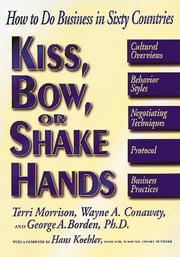
As workplaces and networks become global, cultural fluency is essential; this reference expands your professional etiquette to cover customs and expectations across dozens of countries.
Digital & Modern Manners: Navigating the New Landscape
IntermediateApply etiquette principles confidently to email, social media, video calls, texting, and the blurred lines between public and private life online.
▸ Study plan for this stage
Pace: 5–6 weeks total: Week 1–2 — Read "Netiquette" by Virginia Shea (~20–25 pages/day, including re-reading the 10 Core Rules closely); Week 3–5 — Read "Digital Etiquette" by Victoria Turk (~15–20 pages/day, pausing to journal after each chapter); Week 6 — Review, synthesize, and complete capstone exerci
- Shea's 10 Core Rules of Netiquette — the foundational framework for all online behavior, from remembering the human behind every screen to respecting others' time and bandwidth
- The concept of 'netiquette' as an extension of real-world manners into cyberspace, not a replacement for them
- Context-switching: how the appropriate register, tone, and formality shift dramatically between email, forums, social media, and messaging platforms
- The permanence and publicness of digital communication — understanding that online words can be copied, forwarded, and archived indefinitely
- Turk's framework for navigating the blurred public/private boundary: what we share, with whom, and the social consequences of oversharing or digital surveillance
- Consent and digital boundaries: tagging, photographing, and posting others without permission as a modern etiquette failure
- Platform-specific norms: the unwritten rules that differ between professional email, Twitter/X, Instagram, group chats, and video calls
- The ethics of attention and presence: phone use at the table, notification culture, and the etiquette of being 'always on'
- According to Shea, what does it mean to 'remember the human' in digital communication, and how does this single rule underpin all the others in her framework?
- How does Turk argue that the public/private distinction has collapsed in the social media age, and what responsibilities does this place on individuals?
- In what ways do Shea's 1990s-era rules hold up in today's digital landscape, and where does Turk's more contemporary work update or challenge them?
- What does Turk identify as the key etiquette considerations specific to group chats and messaging apps, and how do they differ from email norms outlined by Shea?
- How should you handle a situation where someone posts a photo or tags you online without your consent, according to the principles in these books?
- Both authors address the tension between self-expression and consideration for others online — how do their approaches to resolving this tension compare?
- **The Netiquette Audit:** Review your last 20 sent emails and 20 social media posts. Score each against Shea's 10 Core Rules and Turk's platform-specific norms. Note patterns — which rules do you consistently follow or break?
- **Tone Translation Exercise:** Take one blunt or ambiguous email or text you have sent or received and rewrite it three ways: for a professional email, a casual group chat, and a social media comment. Reflect on how context changes every word choice.
- **Privacy Mapping:** Draw a simple diagram of your digital life — list every platform you use and classify the content you share on each as 'public,' 'semi-public,' or 'private.' Use Turk's framework to identify at least two places where your current habits may be misaligned with your actual privacy intentions.
- **Video Call Simulation:** Host or join a video call (work, study group, or social) and deliberately apply the video-call etiquette principles from Turk's book (background, lighting, muting, eye contact, turn-taking). Afterward, write a short reflection on what felt unnatural and why.
- **The 24-Hour Rule Journal:** For one full week, before posting anything online or sending any non-urgent message, wait 24 hours if the content is emotionally charged or potentially sensitive. Log what you chose not to send and what you ultimately changed — connect your decisions back to specific principles from both Shea and Turk.
- **Comparative Essay (500 words):** Write a short essay arguing which of Shea's 10 Core Rules is most urgently needed in today's digital world, using at least two concrete examples from Turk's book to support your argument.
Next up: Mastering digital and modern manners establishes the self-awareness and situational judgment needed to tackle the next stage's focus on professional and workplace etiquette, where the stakes of tone, boundaries, and communication choices carry formal career consequences.

The foundational text on digital manners — its core rules of online conduct remain strikingly relevant and provide the principled framework for all modern digital etiquette.

A contemporary, up-to-date companion covering smartphones, social media, messaging, and video calls — read after Shea to apply timeless principles to today's specific platforms and dilemmas.
Mastery: Refinement, Judgment, and Lasting Grace
ExpertMove beyond rules to internalized judgment — reading any room, recovering from social missteps, and embodying the deeper philosophy that true elegance is about generosity of spirit.
▸ Study plan for this stage
Pace: 6–8 weeks total. Week 1–4: Read "Choosing Civility" (~20–25 pages/day, ~15–20 min/session), journaling after each of the 25 rules. Week 5–8: Read "The Fine Art of Small Talk" (~15–20 pages/day), practicing one conversation technique per day in real-world interactions.
- Civility as a moral discipline, not mere politeness — Forni's argument that considerate conduct is an ethical obligation rooted in respect for human dignity
- The 25 rules as a diagnostic framework — using Forni's rules (e.g., 'Pay Attention,' 'Speak Kindly,' 'Don't Exclude') not as a checklist but as lenses for self-auditing behavior
- Internalized judgment over rule-following — moving from 'what is the rule here?' to 'what does genuine respect require of me in this moment?'
- Generosity of spirit as the unifying philosophy — Forni's thesis that civility is ultimately an outward expression of inner character and care for others
- The architecture of small talk — Fine's framework that small talk is a learnable skill with a clear structure: opening, sustaining, and gracefully exiting conversations
- Recovering from social missteps — Fine's strategies for handling awkward silences, conversational dead-ends, and graceful recovery when you've said the wrong thing
- Reading the room through conversation — using Fine's listening and questioning techniques to detect social cues, adjust tone, and meet people where they are
- The bridge between civility and connection — synthesizing Forni's ethical foundation with Fine's practical conversational tools to embody lasting, effortless grace
- According to Forni in 'Choosing Civility,' why is civility more than surface-level politeness, and what philosophical foundation does he argue it rests on?
- Select any five of Forni's 25 rules and explain how each one reflects a deeper principle of generosity of spirit rather than social performance.
- How does Forni suggest we handle situations where civility feels costly or inconvenient — and what does his answer reveal about the nature of true elegance?
- According to Fine in 'The Fine Art of Small Talk,' what are the most common mistakes people make when entering or exiting a conversation, and how can they be corrected?
- How does Fine's approach to asking questions and active listening transform small talk from superficial exchange into genuine human connection?
- How do the philosophies of Forni and Fine complement each other? Where does Forni's ethical framework end and Fine's practical toolkit begin — and how do you integrate both in a single real-world interaction?
- Rule-a-day reflection (Forni): Over 25 days, focus on one of Forni's rules each day. At day's end, write 3–5 sentences on a moment where you applied it, failed to apply it, or witnessed it in others — building genuine self-awareness rather than theoretical knowledge.
- The misstep journal: Each week, record one social misstep (your own or observed). Using Forni's rules and Fine's recovery strategies, write out exactly what happened, what went wrong, and a concrete script for how you would handle it with more grace next time.
- Conversation mapping (Fine): After three real-world small talk interactions, map each one: How did it open? What questions were asked? How did it end? Score yourself on Fine's principles — did you listen more than you spoke? Did you exit gracefully? Identify one improvement per conversation.
- The 'no dead-ends' challenge (Fine): For one full week, commit to never letting a conversation end with a yes/no answer. Practice Fine's technique of answering questions with a response plus a follow-up question, and note how the quality of your interactions shifts.
- Civility audit of a social environment (Forni): Attend a meeting, dinner, or social event and silently observe which of Forni's 25 rules are upheld or violated by those around you. Write a one-page reflection on what the aggregate behavior reveals about the group's culture — and what one rule, if adopted, would most improve it.
- Integration role-play: With a trusted friend or colleague, role-play a high-stakes social scenario (a networking event, a tense family dinner, a first meeting with a VIP). Deliberately introduce one awkward moment. Practice using Fine's conversational tools within Forni's ethical framework to navigate and recover — then debrief together on what felt authentic versus performed.
Next up: By internalizing Forni's ethical philosophy of civility and Fine's practical conversational mastery, the reader has moved from learning rules to embodying judgment — the essential foundation for any advanced study of leadership presence, cross-cultural etiquette, or professional diplomacy that may follow.

A Johns Hopkins professor distills etiquette into 25 rules of considerate conduct rooted in ethics and philosophy — this elevates your practice from rule-following to genuine character.

The capstone skill of any gracious person is making everyone around them feel seen and welcome; Fine's expert guidance on small talk synthesizes everything learned and turns it into effortless, warm presence.
Discussion
Keep reading
Paths that share books, cover the same subject, or open a related topic.