Best Books on the Armenian Genocide, in Order
This curriculum moves from accessible historical narrative and context through primary survivor testimony, rigorous scholarly analysis, and finally the politics of denial and memory. Starting at an intermediate level, each stage builds the conceptual and factual foundation needed to engage the next, culminating in a sophisticated understanding of how the genocide happened, how it was experienced, and how it has been contested ever since.
Late Ottoman Context & Historical Overview
IntermediateUnderstand the collapse of the Ottoman Empire, the rise of the Committee of Union and Progress (CUP), and the structural conditions that made genocide possible — giving you the vocabulary and timeline to read everything that follows.
▸ Study plan for this stage
Pace: 4–5 weeks, ~40–50 pages/day (approximately 300 pages total)
- The Ottoman Empire's structural decline in the 19th century: military defeats, economic strain, and territorial losses that eroded state capacity
- The Young Turk Revolution (1908) and the rise of the Committee of Union and Progress (CUP) as a modernizing but increasingly authoritarian force
- The concept of 'Ottomanism' vs. Turkish nationalism: how the empire's multi-ethnic identity gave way to ethnic exclusion
- The Balkan Wars (1912–1913) and their catastrophic impact on Ottoman morale, military resources, and the psychological shift toward viewing minorities as threats
- The Ottoman entry into World War I and the strategic vulnerabilities that made the empire dependent on radical solutions
- How wartime conditions, military defeat, and nationalist ideology created the preconditions for mass violence against Armenians
- The role of key CUP figures (Enver, Talaat, Djemal) and their vision of a Turkish nation-state built on ethnic homogeneity
- What were the main causes of Ottoman decline in the 19th century, and how did these shape the empire's political culture by 1908?
- How did the Young Turk Revolution and the CUP's rise represent both modernization and the seeds of authoritarianism?
- What was 'Ottomanism' and why did it fail as a unifying ideology in the face of rising Turkish nationalism?
- How did the Balkan Wars (1912–1913) change Ottoman attitudes toward minorities, particularly Armenians?
- What strategic and ideological factors drove the Ottoman Empire to enter World War I, and how did this decision destabilize the state?
- How did the combination of military defeat, wartime conditions, and nationalist ideology create the structural conditions for genocide?
- Create a timeline of Ottoman territorial losses from 1878–1914, marking key wars and treaties; annotate how each loss affected the empire's sense of vulnerability
- Write a 2–3 page comparative analysis of 'Ottomanism' vs. Turkish nationalism using specific examples from Rogan's text; explain why the former could not survive the pressures of the latter
- Map the Ottoman Empire's borders in 1878, 1908, 1912, and 1914; use this visual to understand the accelerating pace of territorial collapse
- Identify and profile the three main CUP leaders (Enver, Talaat, Djemal) based on Rogan's account: their backgrounds, ideologies, and roles in decision-making
- Write a 1–2 page reflection on how the Balkan Wars functioned as a psychological turning point for Ottoman elites—what fears did they create, and how might these fears have influenced later policies?
- Create a cause-and-effect diagram showing how Ottoman entry into WWI, military defeats, and nationalist ideology converged to create conditions for mass violence
Next up: This stage equips you with the historical vocabulary, timeline, and structural understanding of Ottoman collapse and CUP ideology needed to comprehend the specific decisions, actors, and mechanisms of the 1915 genocide in subsequent stages.
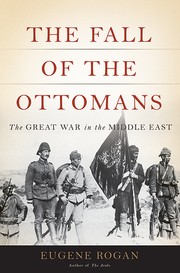
A highly readable, authoritative narrative of the Ottoman Empire's final decades and World War I, placing the Armenian genocide in its full military and political context. Read this first to anchor all subsequent reading in time and place.
The Deportations & Massacres — Core Scholarship
IntermediateDevelop a detailed, evidence-based understanding of how the genocide was planned and executed — the deportation orders, the killing squads, the death marches, and the scale of destruction.
▸ Study plan for this stage
Pace: 8–10 weeks, ~40–50 pages/day, with 2–3 days per week for review and note-taking
- The role of the Ottoman state apparatus and military leadership in planning and authorizing mass violence
- The distinction between centralized orders and decentralized killing: how local actors, militias, and officials interpreted and executed genocide
- The mechanics of deportation: logistics, routes, conditions, and the deliberate design of death marches
- The composition and methods of killing squads (Teşkilat-ı Mahsusa, local gendarmes, Kurdish irregulars) and their operational patterns
- Documentary evidence, eyewitness testimony, and survivor accounts as sources for reconstructing perpetrator intent and victim experience
- The scale and geography of destruction: regional variations in killing methods, deportation routes, and survival rates
- The relationship between ideology (pan-Turkism, Islamization), military strategy, and genocidal practice
- The psychological and social dynamics that enabled ordinary officials and soldiers to participate in mass killing
- What evidence does Bartov present for centralized planning versus decentralized initiative in the Armenian genocide, and how does he resolve this tension?
- How did the Ottoman state use deportation as a mechanism of genocide, and what were the conditions and mortality rates on the death marches?
- Who were the primary perpetrators and killing squads involved in the genocide, and what were their operational methods and chain of command?
- How does Bartov use documentary sources, testimony, and survivor accounts to reconstruct both perpetrator intent and victim experience?
- What regional variations existed in how the genocide was carried out, and what factors explain these differences?
- How did Ottoman ideology and military strategy intersect with the decision to eliminate the Armenian population?
- Create a detailed timeline of deportation orders, massacres, and key events from 1915–1923 based on Bartov's account; annotate with perpetrator names, locations, and death tolls
- Map the major deportation routes and killing sites across Anatolia and Syria using Bartov's geographic references; mark survival rates and regional variations
- Compile a source analysis chart: for each major claim about perpetrator intent or victim experience, identify whether Bartov relies on documents, testimony, survivor accounts, or perpetrator confessions, and assess the reliability of each source type
- Write a 2–3 page analytical essay on one of the following: (a) the role of the Ottoman military in planning vs. executing genocide, (b) how ideology shaped killing methods, or (c) how local actors adapted or exceeded central orders
- Create a perpetrator profile chart for 3–4 key Ottoman officials or military leaders mentioned by Bartov, including their roles, documented actions, and evidence of intent
- Conduct a close reading of one chapter focusing on a specific massacre or deportation segment; write a detailed reconstruction of what happened, who was responsible, and what evidence Bartov uses to support his account
Next up: This stage equips you with a granular, evidence-based understanding of how the genocide was systematically planned and executed—the perpetrator structures, killing methods, and documentary record—preparing you to examine the international response, legal accountability, and long-term consequences in the next stage.

A comparative genocide study that includes deep analysis of the Armenian case alongside others, helping the reader understand the mechanics and logic of mass killing — essential for moving from 'what' to 'how and why.'
Survivor Testimony & Living Memory
IntermediateEncounter the genocide through the voices of those who lived it — building empathy, humanizing the statistics, and understanding how trauma was transmitted across generations.
▸ Study plan for this stage
Pace: 8–10 weeks, ~40–50 pages/day (accounting for dense historical fiction and memoir passages requiring reflection)
- Survivor testimony as historical evidence: how first-person accounts fill gaps in official records and challenge erasure
- Intergenerational trauma: how genocide trauma manifests across generations and shapes identity, memory, and family relationships
- Humanization through narrative: how individual stories transform abstract statistics into lived experience and emotional reality
- Resistance and agency: how survivors maintained dignity, cultural identity, and hope amid systematic dehumanization
- The role of witness and testimony: the psychological and ethical weight of bearing witness and transmitting memory to future generations
- Trauma's embodiment: how physical, psychological, and spiritual wounds are inscribed in the body and psyche of survivors and their descendants
- Memory as contested terrain: competing narratives, silences, and the politics of remembrance in diaspora communities
- How do the narrative perspectives in Werfel's *The Forty Days of Musa Dagh*, Balakian's *Black Dog of Fate*, and Mardiganian's *Ravished Armenia* differ, and what does each reveal about the genocide that the others do not?
- What specific examples from these texts demonstrate how trauma was transmitted across generations, and how did survivors' experiences shape their descendants' identities?
- How do the three authors use personal testimony to counter historical denial or erasure of the Armenian genocide?
- What acts of resistance, cultural preservation, or human dignity appear in these accounts, and what do they suggest about survivor agency?
- How does reading these survivor accounts change your understanding of the genocide compared to historical facts alone?
- What role does memory—both individual and collective—play in each author's narrative, and how do they grapple with gaps, silences, or fragmented recollections?
- Close-read 2–3 pivotal testimony passages from each book (one per author) and annotate for emotional register, sensory detail, and what the passage reveals about the author's inner life during trauma
- Create a three-column comparison chart: *Werfel's fictional survivors* vs. *Balakian's family memory* vs. *Mardiganian's direct testimony*—noting differences in narrative authority, emotional tone, and what each reveals
- Write a 500-word reflective essay: 'How did these survivor voices change my understanding of genocide?' Ground it in specific passages
- Interview a family member or community elder about a difficult family history or trauma they've witnessed, then reflect on how their testimony compares to the narrative strategies used by Werfel, Balakian, and Mardiganian
- Create a visual timeline or map tracing the geographical and psychological journey of one survivor across the three texts; annotate with key moments of loss, resistance, or resilience
- Develop a 'testimony analysis' document for each book identifying: What is the author's stated or implied purpose in bearing witness? Who is the intended audience? What silences or gaps remain?
Next up: This stage anchors you in the human reality of the genocide through intimate testimony; the next stage will likely expand outward to examine the historical, political, and institutional contexts that enabled the genocide and shaped its denial and remembrance.
A monumental historical novel based on a real act of Armenian resistance, written in 1933 by an eyewitness-informed author. It remains the most powerful literary rendering of the genocide and is read worldwide as a quasi-testimonial document.
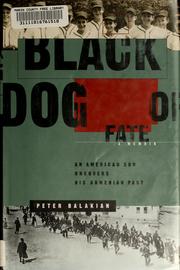
A celebrated memoir by an American-Armenian poet discovering his family's genocide history — an ideal bridge between lived testimony and modern diaspora identity, and beautifully written.

One of the earliest and most harrowing first-person survivor accounts, dictated by a young woman who survived deportation and enslavement. Read after Balakian to ground the personal narrative in direct testimony.
Denial, Memory & International Politics
ExpertCritically analyze how and why Turkey has denied the genocide, how denial functions as a political tool, and how the international community — including the United States — has been complicit in suppressing recognition.
▸ Study plan for this stage
Pace: 4–5 weeks, ~25–30 pages/day (approximately 150–180 pages total)
- The anatomy of denial: how Turkey systematically constructed and maintained official denial narratives about the Armenian genocide
- Remembrance as resistance: how Armenian communities preserved memory and testimony despite state suppression and international silence
- The role of international politics in enabling denial: how geopolitical interests (Cold War alliances, NATO membership, strategic partnerships) superseded moral and legal accountability
- The complicity of silence: how the United States and Western powers strategically avoided recognition to maintain diplomatic relationships
- Collective memory versus official history: the tension between grassroots Armenian remembrance and state-sanctioned historical narratives
- Legal and moral frameworks for genocide recognition: why denial persists despite evidence and how international law has been selectively applied
- The psychology and politics of denial: understanding denial as both a defensive mechanism and a deliberate political strategy
- What are the primary mechanisms through which Turkey constructed and maintained its denial of the Armenian genocide, according to Hovannisian?
- How does Hovannisian analyze the relationship between remembrance practices and political resistance in Armenian communities?
- What role did Cold War geopolitics play in the international community's failure to recognize the Armenian genocide?
- How has the United States specifically balanced its strategic interests against pressure to recognize the genocide?
- What is the distinction Hovannisian makes between individual/collective memory and official state narratives regarding the genocide?
- How does denial function as a tool of political power, and what are its consequences for victims and survivors?
- Create a timeline mapping key moments when Turkey officially denied the genocide and corresponding international political events (Cold War developments, NATO decisions, U.S. foreign policy shifts) to identify correlations
- Analyze 3–5 primary source documents (Turkish government statements, U.S. diplomatic cables, or Armenian testimony) and categorize the rhetorical strategies used to either deny or assert genocide recognition
- Write a 2–3 page critical essay: 'How does Hovannisian explain the paradox of widespread Armenian remembrance coexisting with international denial?'
- Conduct a comparative analysis of how two different countries (e.g., the U.S. and France, or Germany and Sweden) have approached Armenian genocide recognition, using Hovannisian's framework to explain the differences
- Interview or document a conversation with someone familiar with Armenian diaspora communities about how denial has affected collective identity and intergenerational trauma
- Create a visual map or infographic showing the key stakeholders in denial (Turkish state, U.S. government, NATO, international organizations) and their interconnected interests, based on Hovannisian's analysis
Next up: This stage equips you to recognize how denial operates as a political mechanism and prepares you to examine specific strategies of resistance, counter-narratives, and contemporary movements for justice and recognition in the next stage.
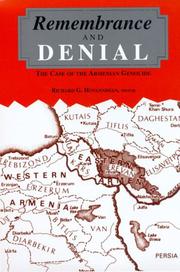
An edited volume by the dean of Armenian genocide studies, gathering key essays on the politics of denial across states and decades. It provides the analytical framework for understanding denial as a system, not merely a position.
Discussion
Keep reading
Paths that share books, cover the same subject, or open a related topic.