Timothy Snyder Reading Order: Where to Start
Snyder writes in two very different registers — dense archival East European history and short, urgent political pamphlets — and reading him in the wrong order gives a badly distorted picture of what he does. This path starts with the short books because they are how most readers arrive, moves to Bloodlands and Black Earth where the actual historical argument lives, then goes back to the specialist monographs that earned him the authority to write the rest. The final stage is deliberately adversarial: Snyder's framings are contested by serious historians, and the path is incomplete without them.
Start With the Short Books
BeginnerGet Snyder's political argument in its most compressed form, and see the historical claims he compresses it from.
▸ Study plan for this stage
Pace: 1–2 weeks. On Tyranny is 128 pages and can genuinely be read in an hour; On Freedom is a full-length book and needs a fortnight of ordinary evenings. A warning that applies to the whole path rather than to this stage: Snyder's central work is about mass killing, and he describes it in detail — famin
- On Tyranny is twenty short lessons drawn from twentieth-century Europe, each of them an unexplained compression of something argued at length in Snyder's histories
- The book's method is to treat historical experience as directly usable advice, which is both why it sold in the hundreds of thousands and why some historians object to it
- 'Do not obey in advance' is the load-bearing lesson and the one with the most historical work behind it — anticipatory compliance is a real mechanism Snyder documents elsewhere
- On Freedom is the more ambitious of the two, arguing for positive freedom — freedom to become something — against the negative, obstacle-removing conception dominant in Anglo-American politics
- On Freedom draws heavily on Ukraine and on Snyder's own life, which makes it a more personal and more arguable book than On Tyranny
- Read in this order because On Freedom assumes you have already accepted the diagnosis On Tyranny offers
- These are the books most people mean when they say they have read Snyder; the path exists because they are the least representative thing he has written
- Which of the twenty lessons in On Tyranny rest on historical evidence you could name, and which are assertions you are being asked to take on trust?
- What does Snyder mean by obeying in advance, and what historical episodes is he compressing when he says it?
- How does On Freedom define positive freedom, and what does it claim negative freedom fails to deliver?
- What work does Ukraine do in On Freedom — as evidence, as example, or as something closer to a moral centre?
- What kind of authority is Snyder claiming in these books, and is it the authority of a historian or of a citizen?
- Read On Tyranny in one sitting and then list which lessons you could defend to a sceptic with a concrete example. The gap between the list and the twenty is exactly what the rest of this path fills.
- Note every time On Tyranny gestures at an event without narrating it. Those gestures are your reading list for Bloodlands and Black Earth.
- Write a one-paragraph summary of On Freedom's argument in your own words before reading anyone else's account of it. It is a book that is easier to agree with than to restate.
- Decide now how you will handle the graphic material later in this path — reading in daylight, in shorter sessions, with breaks between chapters. Making that decision in advance is more effective than improvising it at page two hundred of Bloodlands.
Next up: You now hold the compressed conclusions; the next stage supplies the archival history they were compressed from, which is where Snyder's actual claim on your attention lies.

Twenty short lessons drawn from twentieth-century Europe, readable in an hour. It is the book most people mean when they say they have read Snyder, and it works as an entry point precisely because every lesson is an unexplained compression of something argued at length in Bloodlands.
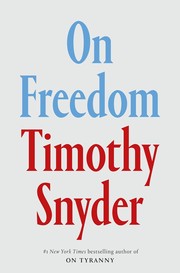
The 2024 companion and the more ambitious of the two, arguing for positive rather than negative freedom and drawing heavily on Ukraine and on his own life. Read second because it assumes you already accept the diagnosis On Tyranny offers.
The Major History
IntermediateRead the two books Snyder's reputation rests on and understand the geographic argument at their core.
▸ Study plan for this stage
Pace: 8–10 weeks for 544 and 480 pages, and these should be read more slowly than their length suggests. A plain warning: Bloodlands is a sustained account of the deliberate killing of roughly fourteen million civilians, and Snyder's method is to keep returning to individual deaths — a specific child, a s
- The bloodlands are a place, not a period: the territory between Berlin and Moscow — Poland, Ukraine, Belarus, the Baltics, western Russia — where both regimes killed most of their civilian victims
- Snyder's central move is to treat that space as one connected zone rather than as two separate national histories, so Soviet and Nazi killing appear in the same frame and often in the same villages
- The count is of civilians and prisoners of war killed by deliberate policy between 1933 and 1945, which deliberately excludes combat deaths — the definition is doing a lot of work and is worth examining
- The Holodomor, the Great Terror, the German-Soviet occupation of Poland, the starvation of Soviet prisoners of war, the Holocaust by bullets and the death facilities are treated as a sequence rather than as separate subjects
- Bloodlands is the source of nearly every claim compressed into On Tyranny, which is why the two books read as different genres by the same argument
- Black Earth argues that the Holocaust happened most completely where states had been destroyed, and that Hitler's thinking was driven by an ecological panic about land and food
- Black Earth's closing chapter warns about climate change producing comparable conditions, and this is the most contested part of Snyder's work — read it as an argument being made, not as a finding
- What does Snyder's geographic frame reveal that a national or a single-regime history would not?
- Who exactly is counted in the fourteen million, and who is deliberately excluded — and what would the figure look like under a different definition?
- What is the argument for treating Soviet and Nazi killing in one book, and what is the strongest objection to doing so?
- What is Black Earth's state-destruction thesis, and what evidence does Snyder offer for the correlation between statelessness and Jewish death rates?
- How does Snyder's use of individual testimony change the reading experience, and does it change the argument?
- Where does Black Earth move from history to prediction, and does the historical work support what the prediction claims?
- Read Bloodlands in chapter-sized sessions with real breaks. It is the single most demanding thing in this path emotionally, and pacing it is not squeamishness but the way to actually retain it.
- Keep a map open. Snyder's argument is geographic and the book is far more legible with Volhynia, Galicia, Belarus and the Baltic states physically located.
- Write down Snyder's definition of a victim as he states it, and keep it beside you. Almost every serious criticism of the book engages that definition rather than the research.
- After Black Earth's final chapter, separate the historical claims from the contemporary warning in writing. Snyder does not separate them, and doing so yourself is the fairest way to assess both.
- Return to your On Tyranny list from the first stage and mark which lessons you can now source. That is the clearest measure of what these two books gave you.
Next up: Having read the work Snyder's public reputation rests on, the monographs that preceded it show what kind of historian was making those arguments and where the framework came from.
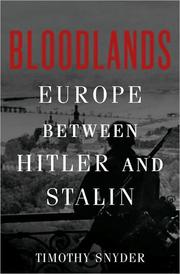
The central work: fourteen million people killed by deliberate policy between Berlin and Moscow from 1933 to 1945, treated as one connected space rather than two separate regimes. It is the book to read if you read only one, and it is the source of nearly every claim in On Tyranny.
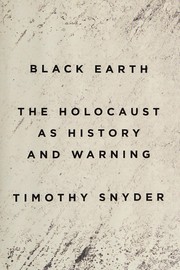
The follow-up, arguing that the Holocaust happened where states were destroyed and that ecological panic drove Hitler's thinking. Substantially more contested than Bloodlands, especially its closing warning about climate and future genocide — which is exactly why it belongs after it.
The Academic Snyder
IntermediateRead the specialist monographs that came first, and see the East European historian underneath the public intellectual.
▸ Study plan for this stage
Pace: 10–12 weeks for 376, 374 and 352 pages. These are academic monographs and read at perhaps half the speed of Bloodlands — The Reconstruction of Nations in particular assumes familiarity with East European nationalism and is the hardest reading in the path. Fifteen pages a day is honest. Read them in
- The Reconstruction of Nations traces Poland, Ukraine, Lithuania and Belarus from 1569 to 1999, and explains why Snyder thinks about nationhood as a modern construction laid over a much older shared polity
- The Polish-Lithuanian Commonwealth is the starting point, which is why Snyder consistently treats the region as a single historical space rather than as four national stories
- The book's account of the Polish-Ukrainian ethnic cleansing in Volhynia and Galicia in the 1940s is the foundation for the later work on the same territory
- Sketches from a Secret War is a biography of Henryk Jozewski, the Polish official who tried to construct a Polish-Ukrainian accommodation in Volhynia — narrow, archival, and evidence that Snyder can work at the scale of a single life
- The Red Prince follows Wilhelm von Habsburg, an archduke who attempted to become a Ukrainian king, and is the most readable of the monographs
- Both biographies are about people who tried to make national identity a choice rather than an inheritance, which is the thread connecting them to everything else Snyder writes
- Reading these makes clear that the grand syntheses were built on genuine archival and multilingual work, which is the strongest response to the charge that Snyder is a popularizer
- What does The Reconstruction of Nations argue about how modern national identity was produced in this region, and over what timescale?
- Why does Snyder start in 1569 rather than in the nineteenth century, and what does the earlier starting point let him claim?
- What was Jozewski trying to achieve in Volhynia, and why did it fail?
- What does Wilhelm von Habsburg's career show about the malleability of national belonging in the early twentieth century?
- How do these three books' methods differ from Bloodlands' — in sources, in scale, and in what they are willing to assert?
- Does reading the monographs strengthen or weaken your confidence in the popular books?
- Read the introduction and conclusion of The Reconstruction of Nations first, then the body. It is a structured academic argument and knowing where it lands makes the middle chapters far easier.
- Keep a list of the languages Snyder cites sources in. It is the most concrete evidence available about the basis of his authority, and it is easy to overlook.
- Read The Red Prince before Sketches from a Secret War if you stall — it is the most narrative of the three and can rebuild momentum.
- Compare a passage on Volhynia in The Reconstruction of Nations with the corresponding material in Bloodlands. The same events, written for two different audiences, is the clearest available demonstration of what popularisation does and does not change.
Next up: With the archival historian established, you can read the contemporary political writing knowing exactly how far it is travelling from its evidentiary base — which is the question the next two books raise.
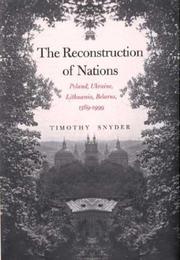
Poland, Ukraine, Lithuania and Belarus from 1569 to 1999, and the book that explains why Snyder thinks about nationhood the way he does. Harder going than anything else here, and the foundation for all of it.
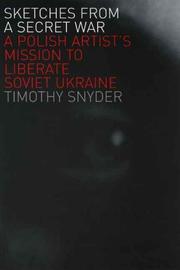
A biography of Henryk Jozewski, the Polish official who tried to build a Ukrainian-Polish accommodation in Volhynia. Narrow, archival, and the clearest demonstration that Snyder can work at the scale of a single life.
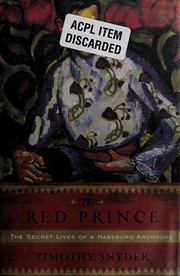
Wilhelm von Habsburg, an archduke who tried to become a Ukrainian king. The most readable of the monographs and a good bridge between the academic and popular halves of the career.
Snyder on the Present
IntermediateFollow the historical method into contemporary politics, and hear Snyder in conversation rather than in argument.
▸ Study plan for this stage
Pace: 5–7 weeks for 368 and 432 pages. The Road to Unfreedom is dense with contemporary detail and reads faster than the monographs but slower than On Tyranny. Thinking the Twentieth Century is a transcribed conversation and can be read a chapter a night. Read Road to Unfreedom first; it is the argument,
- The Road to Unfreedom reads Russia, Ukraine, Brexit and the 2016 American election through the philosophy of Ivan Ilyin and a distinction between the politics of inevitability and the politics of eternity
- The politics of inevitability is the belief that the future is a version of the present; the politics of eternity is the belief that there is no future, only a cyclical return to a wounded past
- This is the book where the distance between historian and commentator is shortest, and where Snyder's evidentiary standards are most often challenged — the Ilyin thesis in particular is disputed by specialists on Russian thought
- Thinking the Twentieth Century is a book-length conversation between Tony Judt, then dying of ALS and unable to write, and Snyder, who shaped and conducted it
- Judt is the senior figure here and much of the book is his intellectual autobiography, but Snyder's questions reveal his own formation as clearly as any of his own books
- The conversation is also the bridge to the final stage, since Judt's history of postwar Europe frames the same continent very differently from Bloodlands
- Read together, these two show Snyder choosing to become a public intellectual and give you the material to judge whether the choice cost him anything
- What are the politics of inevitability and eternity, and does the distinction do explanatory work or mainly rhetorical work?
- How central is Ivan Ilyin to actual Russian state ideology, and how would you go about checking that claim?
- Where in The Road to Unfreedom does Snyder move from documented fact to interpretation, and is the move signposted?
- What does Judt believe about the twentieth century that Snyder does not, and where do they visibly disagree?
- How does the conversational form change what can be said compared with a monograph?
- Has Snyder's method changed between The Reconstruction of Nations and The Road to Unfreedom, or only his audience?
- Mark the sourcing in one chapter of The Road to Unfreedom — how much rests on archives, how much on journalism, how much on inference. Doing it once tells you how to read the rest.
- Read the chapters of Thinking the Twentieth Century on Eastern Europe and on the Holocaust closely. They are where Judt and Snyder are most nearly arguing rather than agreeing.
- Write down Judt's objections to grand historical narrative as he states them in the conversation. You will use them directly in the final stage.
- Compare the tone of The Road to Unfreedom with On Tyranny. The same author addressing the same crisis at two lengths is a useful test of whether compression distorts him.
Next up: Judt is already objecting inside the conversation, which is the natural cue for a stage built entirely on historians who dispute Snyder's framings — the path is not complete without them.

Russia, Ukraine, Brexit and the 2016 US election read through Ivan Ilyin and the politics of eternity. The most directly polemical of the major books, and the one where the distance between historian and commentator is shortest.

A book-length conversation between Judt, then dying of ALS, and Snyder, who shaped and conducted it. Read it for Snyder's own intellectual formation, and as the bridge into the final stage's critics.
Read Him Against the Field
IntermediateTest Snyder's framings against historians who dispute them, and come away able to say where the disagreements actually lie.
▸ Study plan for this stage
Pace: 10–12 weeks for 915 and 407 pages. Postwar is the longest book in this path by a wide margin and is best treated as a reference-grade history read a chapter at a time over two months. Anatomy of a Genocide is a normal-length monograph but is difficult in the same way Bloodlands is — it reconstructs
- Postwar is Tony Judt's history of Europe after 1945 and is the standard single-volume account — a very different Europe from Snyder's, organised around reconstruction, welfare states, memory and the Cold War rather than around killing
- Reading Postwar beside Bloodlands shows how much of Snyder's picture is a choice of frame: the same continent, a different centre of gravity, and a different sense of what the century was mainly about
- Judt is explicitly sceptical of grand narrative and of history written to deliver a moral, which is a methodological objection to Snyder rather than a factual one
- Anatomy of a Genocide reconstructs four centuries of the town of Buczacz, in the heart of Snyder's bloodlands, ending in the destruction of its Jewish community
- Bartov's conclusions centre on neighbours, local participation and long-accumulated communal hostility — a picture in which killing is intimate and local rather than driven primarily by the destruction of states
- That is a real and specific disagreement with Snyder's more structural account, and it is sharpest precisely because Bartov works on the same ground
- Bartov's method — decades of archival work on one town, in many languages — is the microhistorical alternative to synthesis, and the contrast in method is as instructive as the contrast in conclusions
- What is Postwar's Europe centrally about, and what does that emphasis push to the margins that Bloodlands puts at the centre?
- What is Judt's objection to history written to deliver a lesson, and does On Tyranny fall under it?
- In Anatomy of a Genocide, what role do local non-German participants play, and how does Bartov establish it?
- How would Bartov's account of Buczacz have to be modified to fit Snyder's state-destruction thesis — or does it fit?
- Is the disagreement between Snyder and Bartov about evidence, about scale, or about what a historical explanation is supposed to do?
- Having read all three, what would you now say Snyder gets right, and where would you tell someone to read against him?
- Read Judt's chapters on the memory of the war and on Eastern Europe alongside your notes on Bloodlands. That pairing is the most efficient version of this whole stage if time is short.
- Locate Buczacz on the same map you used for Bloodlands. Seeing Bartov's town inside Snyder's territory makes the disagreement concrete rather than theoretical.
- List three claims in Bloodlands that Anatomy of a Genocide complicates, with page references if you can. This is the exercise that turns the stage from reading into judgement.
- Write a one-page assessment of Snyder that a sceptical historian would accept as fair. If you can do that, the path has done its job.
- Note which of the two methods — synthesis or microhistory — you find more persuasive, and why. The answer says as much about what you want from history as about these books.
Next up: This is the end of the path: you have Snyder's popular arguments, the archival history beneath them, the specialist monographs behind that, and two serious historians reading the same ground differently — so the natural next step is deeper into the historiography, either through more microhistory of the region or through the wider debate about how the Holocaust should be explained.
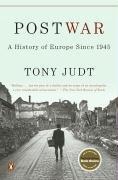
The standard history of Europe after 1945, and a very different account of the same continent — less centred on the killing fields, more on reconstruction and memory. Reading it beside Bloodlands shows how much of Snyder's picture is a choice of frame.

The bloodlands region reconstructed at the scale of a single town, Buczacz, over four centuries. Bartov reaches conclusions about neighbours and complicity that sit uneasily with Snyder's more structural account, which makes it the sharpest possible closing book.
Discussion
Keep reading
Paths that share books, cover the same subject, or open a related topic.