The killing and deportation of Ottoman Armenians in 1915 and after did not happen in a vacuum; it happened inside a multi-front war that was destroying the empire that ordered it. Readers who start with atrocity accounts get the horror without the machinery — the Committee of Union and Progress, the wartime emergency, the Russian front, the property seizures that made local participation profitable. Read the war first and the sequence of decisions becomes legible.
The second thing to know before you start is that this subject carries a live political dispute. The overwhelming consensus of genocide scholars, and of most historians of the late Ottoman Empire, is that the events constitute genocide. The Turkish state has long rejected that characterisation, arguing wartime relocation and mutual civil conflict. That disagreement is itself a subject with a literature, and one book on this path is devoted to it.
The imperial and wartime frame
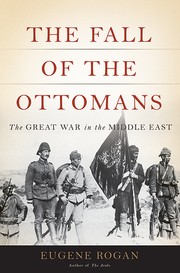
Start with The fall of the Ottomans, Eugene Rogan's history of the Ottoman Middle East in the First World War. It gives you Gallipoli, the Arab provinces, the Russian Caucasus front, and the internal politics of the CUP government, with the Armenian deportations placed within that broader collapse. Rogan is measured and clear about the evidence, which makes him a good first voice on a contested subject.
Then read Anatomy of a genocide. Omer Bartov's book works at the opposite scale — the town of Buczacz over four centuries, and how neighbours came to kill neighbours. It is about Galicia rather than Anatolia, and it is on this path because it is the best available account of the local mechanics of communal violence: how the intimate, small-town dimension operates alongside orders from a capital. Read it as a method for asking questions about 1915, not as a narrative of it.
Testimony and literature
The forty days of Musa Dagh is Franz Werfel's 1933 novel about the Armenian villagers who resisted deportation on a mountain near the Mediterranean coast. It is fiction built on documentary research, it was banned in several countries under pressure, and it did more than any history to fix the events in European consciousness. Read it as literature that carries testimony, and check its specifics against the histories.
Black dog of fate, Peter Balakian's memoir, comes at it a generation later: an American childhood in a family whose silences turn out to be structural, and the slow discovery of what the grandparents survived. It is the best book here on inherited memory and on how a diaspora keeps a history alive when the archives are closed.
Ravished Armenia is a survivor account attributed to Aurora Mardiganian, published in 1918 and adapted into a film. It is a primary document of enormous power and a complicated one — heavily mediated by its American ghostwriter and produced partly as wartime relief advocacy. Read it, and read it aware of how it was made.
The argument itself
Close with Remembrance and denial, the Hovannisian-edited collection that takes the historiographical dispute as its subject: the evidentiary record, the state and academic mechanisms through which denial has operated, and the politics of recognition in Turkey, Armenia, and the diaspora. Reading it last means you meet the argument after you know the events, which is the only order in which it can be evaluated properly.
That is a hard but coherent sequence — context, mechanism, testimony, argument. Follow the full path to keep it in order.
Follow the full ordered path here: Best Books on the Armenian Genocide, in Reading Order.