The Alexandria Quartet Reading Order and Guide
This curriculum is designed for expert-level readers who want to engage with Lawrence Durrell's Alexandria Quartet not just as novels but as a unified philosophical and structural experiment. The path moves through the four novels in their published sequence, then deepens understanding through the literary, philosophical, and historical contexts Durrell wove into the work — from Einsteinian relativity and Hermeticism to the Alexandrian world itself.
The Quartet Itself — In Published Order
ExpertExperience the Quartet as Durrell intended: each novel refracting the same events through a different perspective and dimension (space × space × space × time), building the reader's understanding of why sequence is the meaning.
▸ Study plan for this stage
Pace: 10–14 weeks total; roughly 2–3 weeks per novel at ~20–25 pages/day. Suggested pacing: Justine (weeks 1–3), Balthazar (weeks 4–6), Mountolive (weeks 7–9), Clea (weeks 10–12), with weeks 13–14 reserved for cross-novel review and synthesis. Keep a reading journal active throughout — it is essential for
- The 'space-time' architecture: Durrell's stated formula of three spatial refractions (Justine, Balthazar, Mountolive) plus one temporal extension (Clea) — understanding why this structure is not a gimmick but the novel's philosophical argument about the limits of subjective knowledge
- Unreliable narration and the palimpsest: Justine is the 'base layer,' and each subsequent novel does not correct it so much as re-illuminate it, teaching the reader that truth in the Quartet is always layered, never final
- The Interlinear: Balthazar's handwritten corrections to the narrator's manuscript are a literal, physical metaphor for how memory and perspective overwrite one another — tracking every major revision Balthazar introduces and what it does to the reader's trust
- Mountolive as generic rupture: the shift from lyrical first-person subjectivity to third-person omniscient political realism (the Nessim/Leila conspiracy, the Coptic nationalist plot) and what Durrell signals by making the 'objective' novel feel the most conventionally readable yet the most morally
- Character as prism, not person: Justine, Nessim, Pursewarden, Melissa, and Clea are not psychologically stable individuals — they refract differently depending on which novel's lens is active; mapping these refractions is the central intellectual task
- Alexandria as co-protagonist: the city's sensory texture, its layered history (Hellenic, Arab, colonial British, Jewish, Coptic), and its function as an embodiment of the Quartet's epistemological theme — the city, like truth, cannot be known from a single vantage point
- Pursewarden's notebooks and the artist-figure: his aphorisms (especially in Balthazar and Clea) constitute Durrell's embedded aesthetic manifesto; reading them as a key to the Quartet's own ambitions
- Clea as temporal fourth dimension and earned resolution: how the final novel transforms the static, recursive world of the first three into one of loss, change, and the possibility of artistic becoming — Darley's departure and Clea's severed-and-reborn hand as the Quartet's closing symbols
- After reading all four novels, can you reconstruct the 'true' sequence of events in the Nessim/Narouz political conspiracy — and does doing so feel like it enriches or diminishes the reading experience? What does your answer reveal about Durrell's intentions?
- How does your understanding of Justine-the-character change between Justine, Balthazar, and Mountolive? Identify at least three specific moments where a later novel forces you to reread an earlier scene with completely different emotional weight.
- Mountolive is written in the third person while the other three novels are written in the first person (Darley's voice). What is the effect of this shift on the reader's sense of authority and objectivity — and does the third-person perspective actually deliver more 'truth'?
- Pursewarden dies before Clea begins, yet he is arguably the most present intellectual force in the final two novels. How does Durrell use his posthumous notebooks and letters to make him function as a structural and thematic anchor?
- Clea ends with Darley sailing away to write — implying he will write the very novels we have just read. How does this circular, self-consuming ending reframe the entire Quartet as an artifact of artistic self-creation rather than autobiographical confession?
- Alexandria is described differently in each novel — sometimes decadent and erotic, sometimes politically sinister, sometimes elegiac. Choose one specific location in the city (e.g., the harbor, the rue Lepsius, the carnival) and trace how its meaning accumulates and shifts across all four books.
- The Refraction Log: Keep a dedicated notebook divided into columns — one per novel. Each time a character, scene, or 'fact' appears in more than one book, record both versions side by side. By the end of Clea, this log becomes a tangible map of the Quartet's epistemological argument.
- The Interlinear Exercise: After finishing Balthazar, go back and re-read the first 30 pages of Justine with Balthazar's corrections in mind. Annotate your Justine copy as if you are Balthazar — physically write in the margins what you now know to be different. This recreates the reading experience Durrell engineered.
- Character Dossiers: Create a one-page dossier for Justine, Nessim, Pursewarden, Melissa, and Clea. After each novel, update the dossier — crossing out, adding, and revising. The visible revision history of the dossier IS the exercise; do not start fresh.
- The Genre Audit of Mountolive: List every scene in Mountolive that could belong to a conventional 20th-century political thriller or realist novel. Then write a one-paragraph argument for why Durrell placed this 'realist' novel third rather than first — what would be lost if Mountolive were the opening volume?
- Pursewarden's Aphorisms — Close Reading: Collect every aphorism or notebook entry attributed to Pursewarden across Balthazar and Clea. Arrange them in the order you encounter them. Write a 500-word essay arguing whether they form a coherent aesthetic philosophy or are deliberately contradictory — and what either answer means for reading the Quartet.
- The Alexandria Map: Draw or annotate a map of Alexandria marking every named location in the Quartet. For each location, note which novel(s) use it and what emotional or thematic register it carries in each. At the end, write three sentences on what the city's geography reveals about the Quartet's structure.
Next up: Reading the Quartet in sequence instills the experience of meaning-as-refraction; the next stage should move outward to Durrell's theoretical and contextual writings — his letters, his 'Key to Modern Poetry,' and critical responses to the Quartet — so the reader can test whether the intellectual framework they have built from inside the novels holds up against Durrell's own stated intentions and h
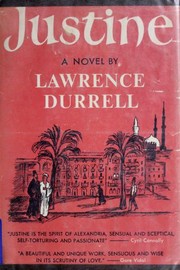
The first novel establishes the narrator Darley's subjective, lyrical account of Alexandria and its central figures. Reading it first immerses you in Durrell's dense prose and the city's erotic-political atmosphere before the later volumes systematically dismantle and reframe everything here.
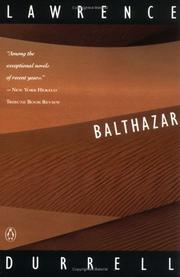
Balthazar arrives as a 'sibling' to Justine, not a sequel — it corrects and contradicts the first novel's account, introducing the Interlinear (Balthazar's annotations on Darley's manuscript). Reading it second is essential: it teaches the reader that no single perspective is reliable and that the Quartet's form is its argument.

The only novel written in the third person, Mountolive shifts to an omniscient political thriller register, revealing the geopolitical machinery invisible to Darley. Placed third, it delivers the structural shock Durrell designed: objective reality crashing into the two prior subjective accounts.

The fourth novel moves forward in time rather than sideways in perspective, resolving (and refusing to fully resolve) the Quartet's tensions. Reading it last honors Durrell's stated four-dimensional design — three spatial dimensions of perspective, one temporal — and allows the reader to feel the full arc of transformation.
Durrell's Own Theoretical Frame
ExpertUnderstand the intellectual scaffolding Durrell explicitly built the Quartet upon — his stated debt to Einstein's relativity, the novel-as-space-time-continuum, and his broader poetic vision.
▸ Study plan for this stage
Pace: 4–5 weeks total: Week 1–3 — "A Key to Modern British Poetry" (~20–25 pages/day, reading closely with annotation; Durrell's prose is dense and allusive, so budget extra time for re-reading key passages on relativity and poetic space-time). Week 4–5 — "The Big Supposer" (~15–20 pages/day; this is a di
- Durrell's adaptation of Einsteinian relativity as a structural metaphor: the idea that a 'complete' reality requires multiple observers occupying different positions in space-time, directly mapped onto the Quartet's four-volume architecture
- The novel-as-space-time-continuum: Durrell's argument in 'A Key' that modern literature must abandon linear Newtonian time in favor of a relativistic, multi-dimensional narrative field
- The 'Heraldic Universe': Durrell's poetic doctrine (elaborated in 'A Key') that poetry and serious fiction should operate as symbolic, mythopoeic systems rather than realistic representations of social life
- The influence of the Alexandria landscape as a 'character': Durrell's theoretical insistence (confirmed in 'The Big Supposer') that place is not backdrop but a fourth-dimensional co-determinant of human consciousness and event
- Durrell's debt to modern science communicated through poetry: how 'A Key' positions figures like T.S. Eliot, Dylan Thomas, and others as intuitive respondents to the same paradigm shift Einstein produced in physics
- The self-declared artistic manifesto: how 'The Big Supposer' functions as Durrell in his own voice, retrospectively rationalizing and clarifying the theoretical intentions behind the Quartet — and where his account diverges from or simplifies 'A Key'
- The relationship between language, reality, and perception: Durrell's argument that words, like observers in relativity, do not neutrally record reality but actively constitute it
- Limits and contradictions of Durrell's theoretical frame: moments in both books where his analogies between physics and fiction strain credulity or reveal more about his aesthetic ambitions than about actual Einsteinian science
- According to 'A Key to Modern British Poetry,' in what specific ways does Einstein's theory of relativity demand a new form for the novel, and how does Durrell distinguish this from earlier, Newtonian narrative conventions?
- What does Durrell mean by the 'Heraldic Universe,' and how does this concept — as laid out in 'A Key' — help explain the symbolic density and apparent 'unrealism' of the Quartet's Alexandria?
- In 'The Big Supposer,' how does Durrell describe his intentions for the Quartet's four-volume structure in his own retrospective voice, and does this account align with, complicate, or contradict the theoretical framework he built in 'A Key'?
- How does Durrell use the poets discussed in 'A Key' (e.g., Eliot, Thomas) as evidence for his claim that modern literature was already, intuitively, moving toward a relativistic world-view before he formalized it?
- What role does place — specifically Alexandria — play in Durrell's theoretical framework as articulated across both books, and why does he insist it must be understood as more than setting?
- Where do Durrell's analogies between Einsteinian physics and narrative fiction most visibly break down or reveal themselves as metaphor rather than rigorous theory, and what does this tell us about his actual artistic priorities?
- Annotation map: As you read 'A Key,' create a two-column running document — left column records every claim Durrell makes about science/physics; right column records the literary or poetic consequence he draws from it. At the end, identify which claims are genuinely Einsteinian and which are Durrell's own poetic extrapolations.
- Cross-reference dialogue: Each time Durrell makes a theoretical assertion in 'The Big Supposer,' locate the corresponding passage in 'A Key' where the same idea appears in its more formal, argued form. Write a one-paragraph note on whether the interview version clarifies, simplifies, or subtly revises the earlier argument.
- Heraldic Universe glossary: Compile a personal glossary of 10–15 terms Durrell uses in 'A Key' with specialized or idiosyncratic meanings (e.g., 'heraldic,' 'space-time,' 'the continuum,' 'observer'). Write your own definition of each in plain language, then note how each term might apply to a specific moment in the Quartet if you have already read it.
- Manifesto stress-test: Write a 400–600 word critical response to Durrell's central thesis in 'A Key' — that relativity necessitates a new novel form. Steel-man his argument first, then identify the single weakest link in his reasoning. This trains you to engage with his ideas rather than simply absorb them.
- Place-as-character exercise: Using only evidence from 'The Big Supposer,' reconstruct Durrell's theory of place in your own words. Then write a half-page applying that theory to a city or landscape you know personally — does the framework hold outside Alexandria?
- Comparative voice portrait: Write a one-page character sketch of 'Durrell the Theorist' as he appears in 'A Key' versus 'Durrell the Conversationalist' as he appears in 'The Big Supposer.' Note differences in tone, certainty, and self-presentation — this will sharpen your ability to read authorial voice critically when you return to the Quartet's fiction.
Next up: Having internalized the intellectual scaffolding Durrell consciously built — the relativistic structure, the Heraldic Universe, the primacy of place — the reader is now equipped to encounter the Quartet's actual novels not as mysterious or impressionistic texts but as deliberate executions of a stated theoretical program, making every narrative choice legible as both artistic and philosophical dec

Durrell's own critical manifesto, written just before the Quartet, lays out his theory of how modern physics — especially relativity and the space-time continuum — should reshape literary form. Reading this reveals the Quartet's architecture from the inside, in Durrell's own words.

A book-length interview with Marc Alyn in which Durrell reflects directly on the Quartet's composition, its Hermetic and Gnostic underpinnings, and his conception of Alexandria as a mythological rather than merely geographical city — invaluable for expert readers seeking authorial context.
The Alexandrian World — History and Myth
ExpertGround the Quartet's invented Alexandria in its real historical and spiritual dimensions: the city of Neoplatonism, Gnosticism, Hermeticism, and cosmopolitan decadence that Durrell was consciously invoking.
▸ Study plan for this stage
Pace: 5–6 weeks total: Weeks 1–3 cover Forster's "Alexandria: A History and a Guide" (~20–25 pages/day, alternating between the History and Guide sections); Weeks 4–6 cover Pagels' "The Gnostic Gospels" (~15–20 pages/day, with slower re-reading of dense theological chapters).
- Alexandria as a deliberately constructed cosmopolis — founded by Alexander, shaped by the Ptolemies — whose layered Greek, Jewish, Egyptian, and Roman identities make it a city of perpetual cultural collision and synthesis, exactly the palimpsest Durrell dramatizes
- Neoplatonism and the Alexandrian philosophical tradition: how thinkers working in Alexandria fused Platonic metaphysics with Eastern mysticism, producing a worldview in which matter is a degraded emanation of a transcendent One — the spiritual atmosphere Durrell's characters breathe
- Gnosticism as a distinctly Alexandrian spiritual revolt: the Gnostic insistence that the material world is the creation of a lesser, ignorant deity (the Demiurge), and that salvation comes through secret inner knowledge (gnosis) rather than faith or works
- The politics of orthodoxy vs. heresy as Pagels frames it: early Christian authorities suppressed Gnostic texts not merely on theological grounds but to consolidate institutional power — a theme of hidden truth vs. official narrative that echoes throughout the Quartet
- Hermeticism and the figure of Hermes Trismegistus: the Hermetic corpus, produced in Alexandria, blended Greek philosophy with Egyptian religion and promised initiates a transformative knowledge of cosmic structure — a direct source for Balthazar's Cabal in the novels
- The physical city as spiritual geography: Forster's Guide reveals how specific Alexandrian sites (the Serapeum, the Jewish Quarter, the catacombs, the harbor) carry the sediment of competing civilizations, teaching the reader to read space as layered meaning
- The role of secrecy, initiation, and esoteric transmission: both Forster and Pagels show that Alexandrian spiritual life was organized around hidden knowledge passed between initiates — the structural model for Durrell's Cabal and for the Quartet's own withheld revelations
- Decadence and cosmopolitan eroticism as historical fact, not just literary atmosphere: Forster documents the city's reputation for sensual excess and its tolerance of transgressive identities, grounding what might otherwise seem like Durrell's private fantasy in documented historical reality
- After reading Forster, how did the successive waves of conquest — Macedonian, Roman, Arab — each transform Alexandria's cultural and spiritual identity, and which layer does Durrell's fictional city most visibly inhabit?
- Pagels argues that the suppression of Gnostic gospels was as much a political act as a theological one. How does this dynamic — official truth concealing a richer, more dangerous inner truth — map onto the narrative structure of the Quartet, where each volume revises the 'official' account of the previous one?
- What is the Gnostic concept of the Demiurge, and how does it differ from orthodox Christian or Jewish understandings of the creator God? Why would this distinction matter to a novelist interested in the unreliability of surface reality?
- Forster describes the Serapeum and the Mouseion as twin poles of Alexandrian life — sacred and intellectual. How do these institutions embody the city's fusion of religion and philosophy, and where do you see that fusion in Durrell's characters?
- Both books deal with the tension between esoteric inner circles and the uninitiated public. What does each author suggest about the social and psychological costs of belonging to a secret tradition of knowledge?
- Having read both books, how would you define 'the Alexandrian sensibility' as a coherent historical phenomenon — and what specific elements of it does Durrell appear to have consciously borrowed for his fictional world?
- Annotated map exercise: Using Forster's Guide section, draw or annotate a map of ancient and modern Alexandria, marking every site Forster discusses. Then re-read the opening pages of 'Justine' and plot every location Durrell names onto the same map, noting where he is faithful to geography and where he distorts it — distortions are often thematically significant.
- Concept glossary: Build a personal reference card (physical or digital) defining at least ten terms — Gnosis, Demiurge, Pleroma, Logos, Neoplatonism, Hermeticism, Pneumatics vs. Hylics, Serapeum, Mouseion, Cabal — in your own words, with a one-sentence note on where each concept surfaces in Durrell's world.
- Parallel-text comparison: Choose one passage from Pagels describing a Gnostic text's view of hidden knowledge (e.g., the Gospel of Thomas's sayings on inner light) and one passage from Forster on Alexandrian philosophical syncretism. Write a one-page synthesis explaining what these two passages together suggest about the spiritual climate Durrell was invoking.
- Heresy and orthodoxy journal entry: Pagels frames Gnosticism as the 'road not taken' by Christianity. Write a 300–400 word reflection on how the Quartet itself might be read as a 'Gnostic novel' — one that withholds, layers, and ultimately refuses a single authoritative reading.
- Site biography: Pick one physical location Forster describes in depth (the Pharos, the Library, the Catacombs of Kom el Shoqafa). Research its history using only Forster's text, then write a 200-word 'biography' of that site tracing its meaning across different eras. Keep this note for later comparison when the site appears in the Quartet.
- Dialogue exercise: Write a short imagined dialogue (one page) between a Gnostic initiate as Pagels describes them and a character from Forster's historical Alexandria (a Ptolemaic librarian, a Neoplatonist philosopher). The goal is to make the theological and philosophical tensions feel like lived human disagreements, not abstract doctrines.
Next up: By establishing Alexandria as a real city saturated with layered history, competing spiritual systems, and a documented culture of secrecy and sensual excess, this stage gives the reader the historical and philosophical vocabulary needed to recognize — rather than merely feel — what Durrell is doing when the Quartet's characters enact Gnostic, Hermetic, and Neoplatonic dramas against that specific

Forster's classic guide to Alexandria — written while he lived there during WWI — is one of Durrell's acknowledged sources. Reading it reveals the layered Hellenistic, Jewish, Christian, and Arab city that Durrell mythologized, and shows how Durrell transformed historical fact into poetic geography.
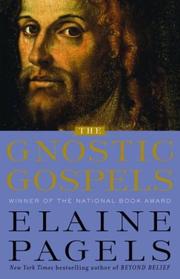
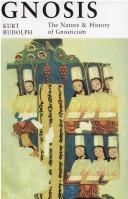
Durrell saturates the Quartet with Gnostic and Hermetic symbolism — the Cabal, Nessim's secret society, and Clea's spiritual transformation all draw on this tradition. Pagels provides the most accessible expert-level entry into the Gnostic worldview that underlies the Quartet's metaphysics.
Literary Parallels — Form, Perspective, and the Modern Novel
ExpertPlace the Quartet within the tradition of modernist and post-modernist experiments in multiperspectival narrative, understanding what Durrell was responding to and what he uniquely achieved.
▸ Study plan for this stage
Pace: 6–8 weeks total: Week 1–2 — The Sound and the Fury (~30 pages/day, reading each section at least twice — once for plot, once for technique); Week 3–4 — Proust and Signs (~20 pages/day, slow philosophical reading with annotation pauses); Week 5–6 — The Craft of Fiction (~25 pages/day, reading with a
- Multiperspectival narrative: how a single story can be fractured across unreliable, partial, and temporally dislocated consciousnesses, as demonstrated by Faulkner's four-section structure in The Sound and the Fury
- The distinction between 'picture' and 'scene' as articulated by Lubbock in The Craft of Fiction — panoramic summary vs. dramatized immediacy — and how modernist novels deliberately blur or subvert this boundary
- Point of view as an ethical and epistemological problem: Lubbock's argument that the choice of 'who sees' is the novelist's most consequential formal decision
- The sign-system in Deleuze's Proust and Signs: worldly signs, love signs, sensory signs, and art signs as a taxonomy for understanding how meaning is produced non-linguistically across a narrative
- Time, memory, and involuntary recollection as structural (not merely thematic) forces — Deleuze's reading of Proust as a machine for producing truth through apprenticeship to signs
- The unreliable interior monologue and stream of consciousness as a formal response to the inadequacy of omniscient narration — Benjy's section in The Sound and the Fury as a limit-case
- The novel as a spatial rather than linear form: Lubbock's 'architectural' metaphor for fiction and how it anticipates Durrell's own spatial-form ambitions in the Quartet
- Repetition and difference: how the same event narrated from multiple perspectives does not simply 'add up' to a truth but produces irreducible surplus meaning — a concept linking all three books
- According to Lubbock in The Craft of Fiction, what is the fundamental tension between 'picture' and 'scene,' and how does Faulkner's handling of Benjy's section in The Sound and the Fury either fulfill or violate Lubbock's prescriptions for point of view?
- Deleuze argues in Proust and Signs that the novel is not primarily about memory but about an 'apprenticeship to signs.' How does this framework illuminate the way Faulkner's four narrators each inhabit a different sign-regime — and what sign-regime does Quentin's section most closely resemble in Deleuze's taxonomy?
- Lubbock insists that the novelist must choose between 'showing' and 'telling' and that the greatest art conceals this choice. How does the radical stream-of-consciousness technique in The Sound and the Fury challenge, confirm, or complicate this claim?
- Deleuze describes art signs as the only signs that compel genuine thought and produce truth. Using evidence from The Sound and the Fury, argue whether Faulkner's formal fragmentation functions as an 'art sign' in Deleuze's sense — and what implications this has for how Durrell might be read.
- How does Lubbock's concept of the 'central intelligence' (derived from Henry James) both anticipate and fail to account for the kind of multiperspectival structure Faulkner employs — and what new critical vocabulary would be needed to bridge the gap?
- Taken together, what do these three books suggest about the relationship between formal experimentation and the representation of time? What is lost and what is gained when linear chronology is abandoned?
- Close-reading log for The Sound and the Fury: Create a four-column table (one column per narrator — Benjy, Quentin, Jason, Dilsey) and map each section's temporal jumps, recurring images, and what each narrator cannot or will not say. Then write a one-page synthesis asking: what does the reader know that no single narrator knows?
- Apply Lubbock's 'picture vs. scene' taxonomy: Select five passages from The Sound and the Fury (at least one from each section) and classify each as 'picture,' 'scene,' or a deliberate hybrid. Write a paragraph for each explaining how Faulkner's choice affects the reader's epistemological position — then ask whether Lubbock's vocabulary is adequate to describe what Faulkner is doing.
- Deleuzian sign-mapping exercise: Using the four sign-types from Proust and Signs (worldly, love, sensory, art), assign each of Faulkner's four narrators a dominant sign-regime and write a 300-word justification for each assignment. Consider: which narrator is most 'apprenticed' to signs, and which is most imprisoned by them?
- Write a 500-word critical comparison: In what ways does Lubbock's ideal of the 'controlled point of view' conflict with Deleuze's celebration of the involuntary, sign-driven encounter with truth? Use specific passages from The Craft of Fiction and Proust and Signs to stage the debate, then adjudicate it.
- Prospective Durrell exercise: Before moving to the Quartet, write a one-page speculative memo predicting — based solely on what you have learned from these three books — what formal problems Durrell would have faced in writing four novels about the same events from different perspectives. What would Lubbock warn him against? What would Deleuze encourage him toward?
- Annotated re-reading sprint: Re-read the Dilsey section (Section IV) of The Sound and the Fury with Lubbock open beside it. Annotate every moment where Faulkner shifts between 'picture' and 'scene,' and mark any passage that functions as a Deleuzian 'art sign.' Write a concluding paragraph on whether this final section resolves or deepens the novel's epistemological fragmentation.
Next up: Having internalized how multiperspectival form works technically (Lubbock), philosophically (Deleuze), and in radical practice (Faulkner), the reader is now equipped to encounter the Alexandria Quartet itself as a conscious, sophisticated intervention in this tradition — able to ask not just what Durrell does, but precisely why and at what cost.

Faulkner's masterpiece of radical perspectival fragmentation — the same events refracted through radically different consciousnesses — is the closest structural ancestor to Durrell's method. Reading it alongside the Quartet sharpens the contrast: where Faulkner fractures time, Durrell fractures space.

Durrell openly acknowledged Proust as a presiding influence on the Quartet's treatment of memory, desire, and time. Deleuze's philosophical reading of Proust provides the conceptual vocabulary — signs, apprenticeship, involuntary memory — that maps directly onto Darley's narrative arc across all four novels.
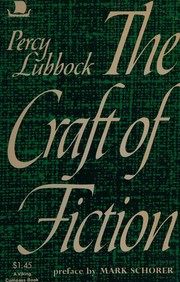
Lubbock's foundational study of point of view in the novel — still the sharpest classical account of how narrative perspective constructs reality — gives the expert reader a precise critical language for analyzing exactly what Durrell does and subverts across the four volumes.
Discussion
Keep reading
Paths that share books, cover the same subject, or open a related topic.