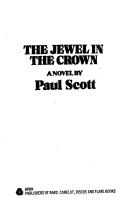
Start with The jewel in the crown. The quartet is a single novel in four volumes with one continuous plot, and there is no alternative entry point that works. What there is instead is a difficulty: the opening book is not narrated conventionally. It circles one event in 1942 — an assault in the Bibighar Gardens and the arrests that follow — through depositions, memoirs, letters and interviews recorded years later, by narrators who contradict each other and are sometimes lying.
Give it a hundred pages before you judge it. Once you accept that Scott is showing you an event no single Englishman in India could see whole, the technique stops being an obstacle and becomes the point. And once book one is behind you, the difficulty largely ends: The day of the scorpion, The towers of silence and A Division of the Spoils are told far more conventionally, with a clear cast and a forward-moving plot through to Partition in 1947.
The order
- The jewel in the crown (1966) — the Bibighar affair, told from many angles. The hard one, and the one that sets every theme.
- The day of the scorpion (1968) — the Layton family enters, the war widens, and Ronald Merrick becomes the quartet's dreadful centre of gravity.
- The towers of silence (1971) — the quietest volume, largely Barbie Batchelor's. Slow, and for many readers the most moving thing Scott wrote.
- A Division of the Spoils (1975) — Partition, independence, and the reckoning. Long, and worth every page.
Where Staying on fits
Staying on (1977) won the Booker Prize and is a short, funny, unbearably sad novel about two minor characters from the quartet who remain in India after 1947. Read it last, always. It works as a standalone but its power is almost entirely in knowing what these people were peripheral to. Do not let anyone hand it to you first because it is the shortest.
Honest warnings
The quartet is roughly two thousand pages and the cast is large. Scott gives characters different names in different registers — a woman may be Mildred, Mrs Layton and Mother within three pages — and readers routinely lose the thread in book two. Keeping a note of the Layton and Bibighar names for the first fifty pages of each volume is not a sign of failure.
Volume three is the one people stall on. It is deliberately becalmed, set among ageing missionaries and army wives in a hill station while the war happens elsewhere. If you find it slow you are reading it correctly; it is also the volume most readers name as their favourite once they finish.
Reading around the quartet
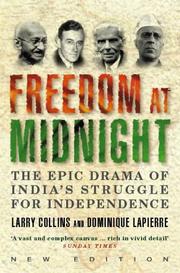
John Keay's India is the best single-volume history for the background Scott assumes, and Freedom at Midnight by Dominique Lapierre and Larry Collins gives a fast, vivid, sometimes contested popular account of the 1947 handover that the fourth volume dramatises. E. M. Forster's A Passage to India is the obvious ancestor — Scott is answering it directly, forty years on and with independence in view. Hilary Spurling's biography, listed here as Paul Scott, is excellent on how much of Merrick's cruelty came out of Scott's own service.
Where to stop
Nowhere useful. This is a single book; stopping after volume two leaves you holding half a plot. If two thousand pages is beyond you, read Staying on alone — it stands up, and it will tell you whether you want the rest.
More long-form fiction sequences are on the Alexandria Quartet path.
Follow the full ordered path here: The Raj Quartet Reading Order and Guide.
Ready to learn something deeply?
Build a reading path — free